Artwork
Mary and Child
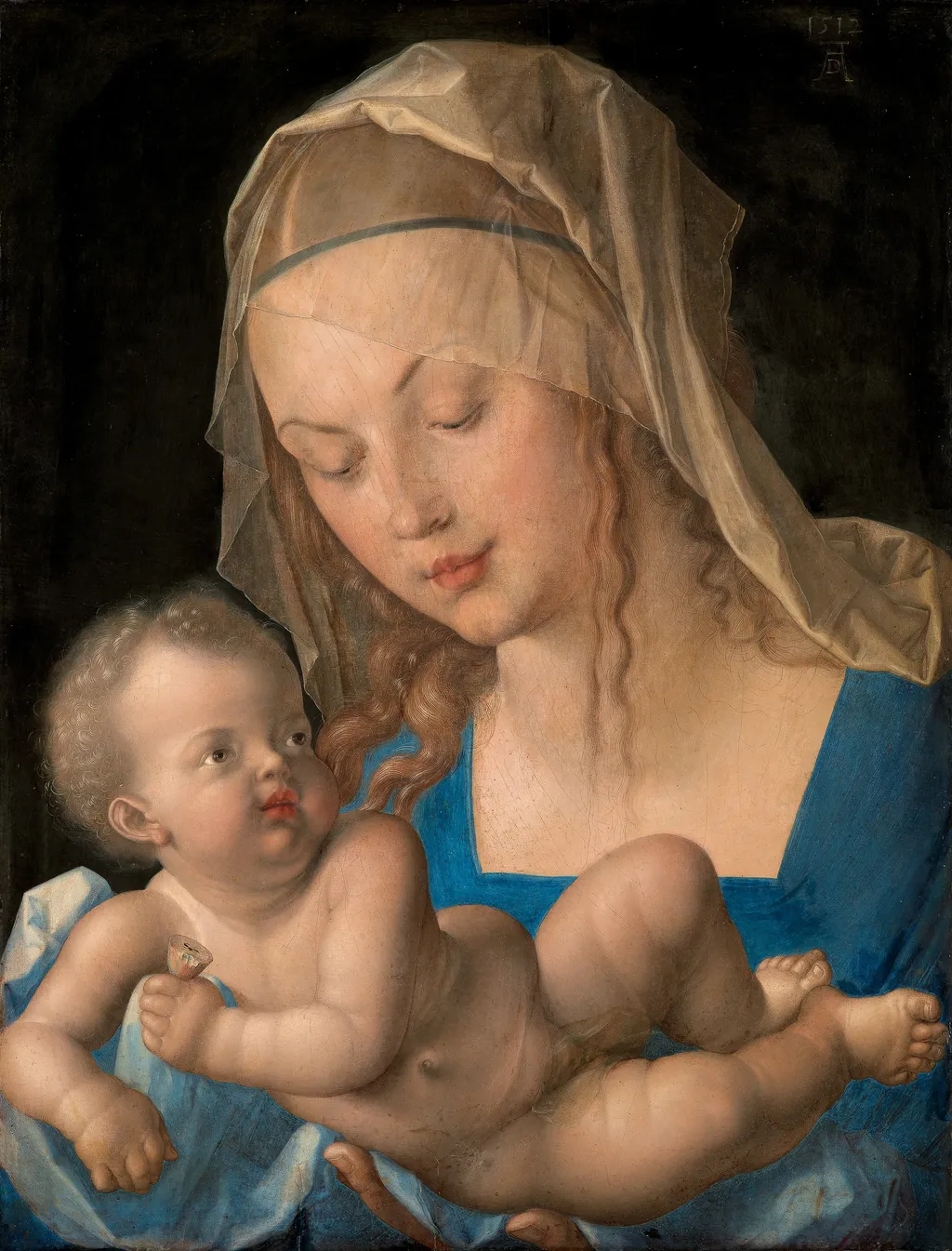
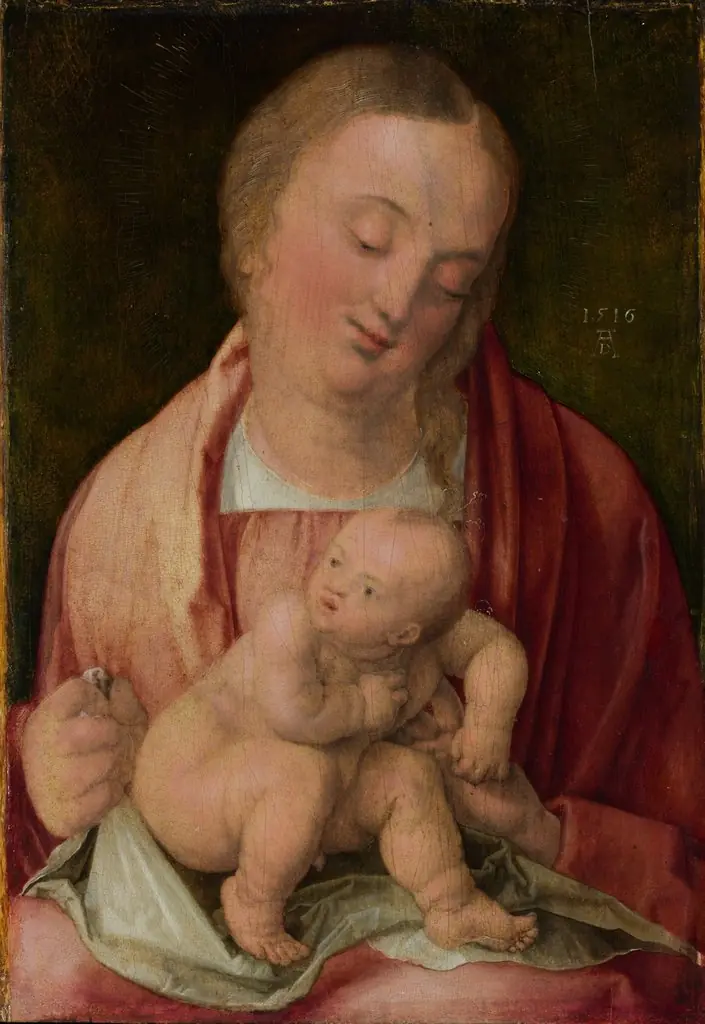
Mary and Child is an oil painting by the High Renaissance artist Albrecht Dürer. It dates from 1512 and is held in the collection of the Kunsthistorisches Museum.
About this work
Subject & Meaning
Some modern readings also note medicalized features in the Child, linking them to historical interpretations of vitamin D deficiency.
The painting depicts the Virgin Mary holding the Christ Child in a close, intimate bust format against a dark ground. Mary’s inward-turning gaze, together with the originally violet cloth beneath the child, now faded, has been read as alluding to the Passion and Christ’s future sacrifice. The Christ Child holds a pear slice with visible bite marks; the fruit’s sweetness has been interpreted as a symbol of love, while the visible seeds evoke the germination of the redemptive sacrifice.
The absence of halos underscores the humanist emphasis on Mary and Jesus as mother and child, focusing attention on their tender bond and the mother’s quiet concern for her son’s fate. Some modern readings also note medicalized features in the Child, linking them to historical interpretations of vitamin D deficiency.
Technique & Style
The work is executed in oil on a lime‑wood panel that was originally primed white and later reduced by parquet work to a mere 4 mm thickness. Dürer’s underdrawing for the Virgin is rendered with fine, parallel and cross‑hatching strokes, while the child’s outline is only loosely sketched; the final painting follows the Virgin’s drawing almost without alteration and employs thin glazes, whereas the child’s surface uses a higher proportion of dark pigments and is modeled with sfumato‑like shading and finger‑smudged transitions. The panel’s current thinness and the faded violet cloth held by the figures are the only surviving signs of handling, and the composition’s intimate bust format, dark background, and subtle colour harmony emphasize a quiet, introspective mood.
History & Provenance
Albrecht Dürer created Mary and Child (also known as Madonna with the Pear Slice) in Nuremberg in 1512. The specific patron for this oil-on-linden-panel work remains unknown, though the meticulous underdrawing suggests it was intended as a private devotional image rather than a casual commission. Stylistically, the painting reflects both Dutch and Italian influences, with the Virgin's introspective pose echoing northern traditions and the Christ Child's vitality recalling Italian sculpture.
The work entered the Imperial collection when Emperor Rudolf II acquired it, likely in 1600, possibly from the estate of the artist's friend Willibald Pirckheimer or from the collection of Antoine Perrenot de Granvelle. It subsequently formed part of the Habsburg holdings before becoming a centerpiece of the Kunsthistorisches Museum in Vienna.
The painting is held in the collection of the Kunsthistorisches Museum in Vienna. While the specific inventory number is not provided in the available texts, the institution maintains an official record for the work in its image database. The artwork's early history suggests it may have entered the imperial collections around 1600, when Emperor Rudolf II acquired two unspecified Marian images from the estate of Antoine Perrenot de Granvelle for his residence in Prague.
Alternative provenance theories propose that Rudolf II might have obtained the piece directly from the heirs of Willibald Pirckheimer, the artist's close friend. No specific public exhibition history or loan records are detailed in the provided sources.
Context
Der画作, datiert auf 1512, gilt als exemplarische Figur der deutschen Hochrenaissance und spiegelt Dürers Auseinandersetzung mit humanistischem Denken wider. Die Darstellung derMadonna und des Kindes ohne Nimbus betont ihre irdische Menschlichkeit, während dasholding of a pear and the subtle violet cloth serve as symbols of love and foreshadowing of the Passion, a reading noted by scholars. Dürers technische Innovation – feine Unterzeichnung der Figur der Maria und die sfumatoartige Modellierung des Kindes – wurde in der Kunstgeschichte mehrfach diskutiert.
Das Werk wurde 1600 in die Sammlung Rudolfs II integriert und gelangte später ins Kunsthistorisches Museum, wo es heute als zentrales Beispiel für die Verbindung von religiöser Symbolik und naturwissenschaftlicher Beobachtung gilt.
Legacy
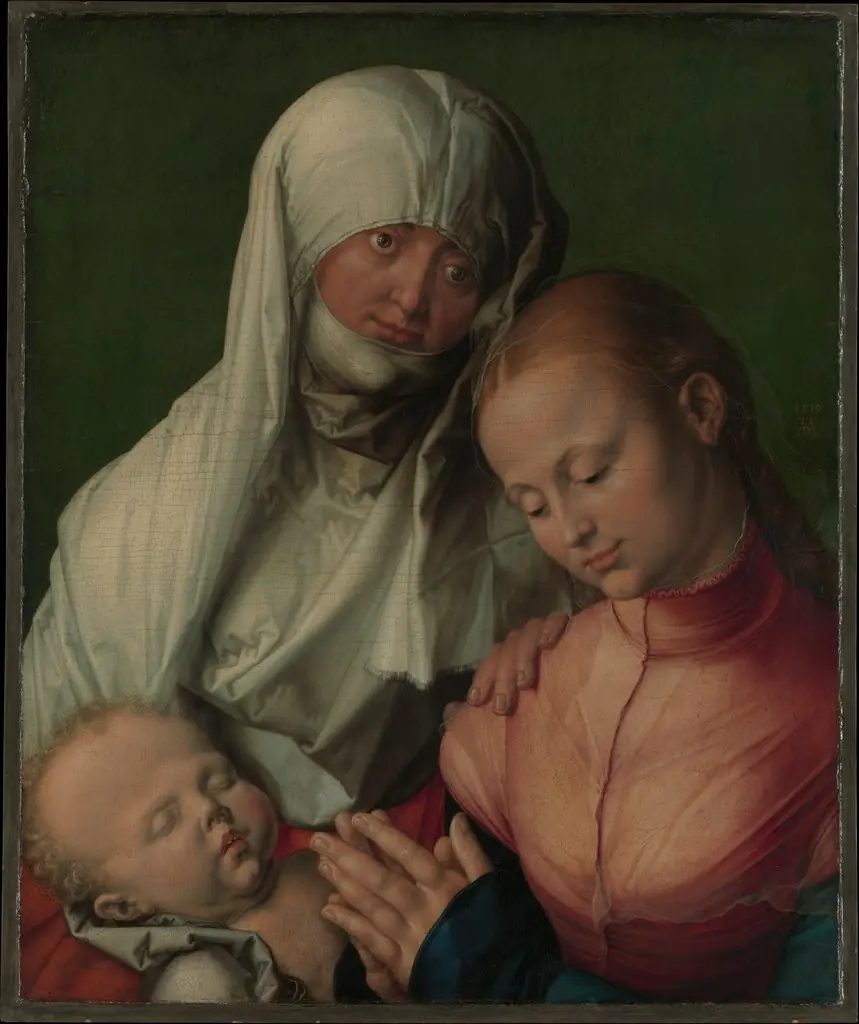
The painting's legacy is marked by its direct influence on Albrecht Dürer's own later work, specifically the 1519 painting Holy Anna Selbdritt, which further developed the motif and pictorial concept established here. The composition also inspired numerous copies and paraphrases by other artists across Germany and Italy shortly after its creation. Notable derivatives include works attributed to Daniel Fröschl from just after 1600, such as a version held by the National Gallery in Prague and another known as the Grape Madonna located in the Capuchin Monastery in Prague.
These adaptations demonstrate the work's enduring resonance in both religious and humanistic contexts during the centuries following its inception.
Overview
Albrecht Dürer, a prominent artist of the German Renaissance, completed Mary and Child in 1512 using oil paint. This religious painting depicts the Virgin Mary tenderly holding the Christ Child, accompanied by a young boy. The work exemplifies Dürer's mastery of the High Renaissance style, characterized by its balanced composition and naturalistic rendering of figures. It is currently housed in the Kunsthistorisches Museum.
Own this work as a print
Artist & collection
Artist
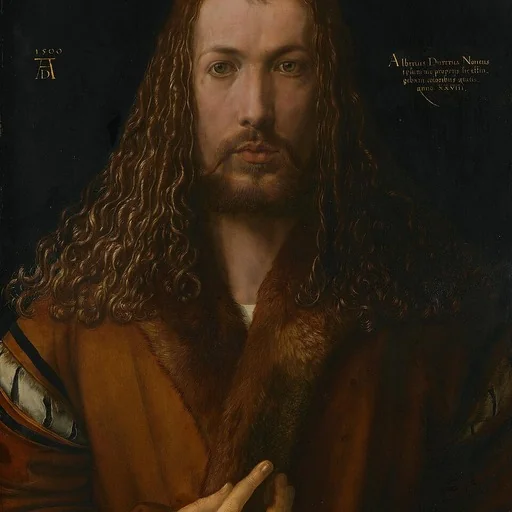
Albrecht Dürer spent his life in Nuremberg, a busy German city where artists traded prints like currency.

![Madonna and Child [obverse], by Albrecht Dürer](https://artifactworldgallery.com/img/albrecht-durer--madonna-and-child-obverse--d7b8ebf05d22ebe5-w320.webp)
![Lot and His Daughters [reverse], by Albrecht Dürer](https://artifactworldgallery.com/img/albrecht-durer--lot-and-his-daughters-reverse--b4ebf9b282faa17a-w320.webp)