Artwork
Fisherman at the forest pond (with self portrait)
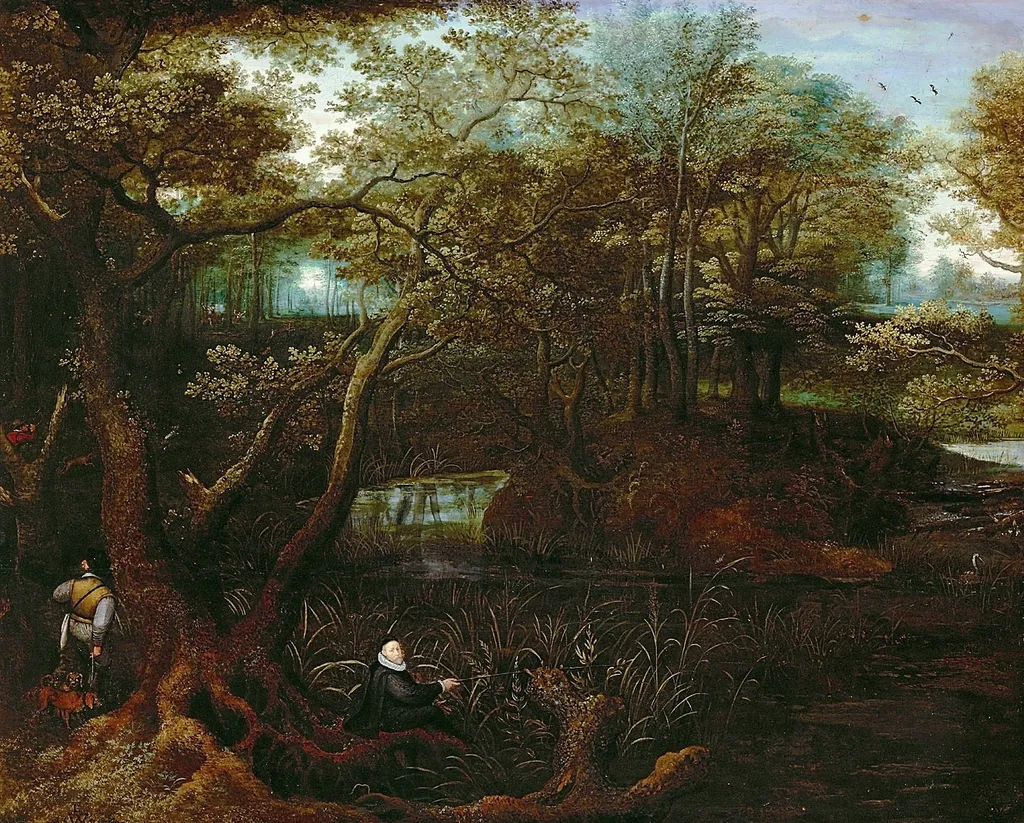
Fisherman at the forest pond (with self portrait) is an oil painting by the Dutch Golden Age artist Lucas van Valckenborch. It dates from 1596 and is held in the collection of the Kunsthistorisches Museum.
About this work
Subject & Meaning
The self portrait element emphasizes the creator’s presence within a natural scene, suggesting a contemplation of personal role within the broader environment.
The painting shows a fisherman standing beside a forest pond while also portraying the artist himself, merging everyday labor with self representation. This dual imagery conveys both the humble working life and the artist’s introspection, reflecting Renaissance themes of the interconnectedness of nature and identity. The self portrait element emphasizes the creator’s presence within a natural scene, suggesting a contemplation of personal role within the broader environment.
Symbolically, the pond and surrounding forest evoke tranquility and reflection, while the act of fishing underscores sustenance and patience, reinforcing ideas of perseverance and the artist’s engagement with both material and spiritual realms. Together, these components illustrate a nuanced commentary on the relationship between humanity, labor, and self awareness.
The work is housed in the Kunsthistorisches Museum, where it remains part of the institution’s collection of early modern paintings.
History & Provenance
The painting Fisherman at the forest pond (with self portrait) was executed by Lucas van Valckenborch in 1590 as an oil on canvas work. It entered the collection of the Kunsthistorisches Museum in Vienna, where it remains today. No records of an earlier commission or subsequent owners are provided in the available sources, so the known provenance begins with its creation and its current institutional holding.
The work is classified as a landscape painting that incorporates a self-portrait, reflecting the artist’s dual interest in genre and portraiture.
Context
Lucas van Valckenborch painted Fisherman at the forest pond (with self portrait) in 1590, an oil on canvas work now housed in the Kunsthistorisches Museum. The painting combines a genre scene with an autobiographical element, reflecting the artist’s engagement with landscape painting and self-representation in the late Renaissance. Scholarship highlights its dual function as both a naturalistic depiction and a subtle self-portrait, situating it within broader discussions of artistic identity in Northern European art.
Its inclusion in the Kunsthistorisches Museum’s collection underscores its significance within the artist’s oeuvre and the period’s evolving genre conventions.
Overview
Lucas van Valckenborch’s oil painting Fisherman at the forest pond (with self‑portrait) was executed in 1596. The work belongs to the period commonly identified as the Dutch Golden Age, though the artist was active in the Southern Netherlands and later in the Habsburg lands. It is presently part of the collection of the Kunsthistorisches Museum in Vienna.
Technique & Style
Valckenborch employs a restrained palette of greens, browns and muted reds, rendering the dense foliage and dappled light with careful brushwork. The interplay of illumination and shadow creates a subtle chiaroscuro effect, giving depth to the forest interior and emphasizing the reflective surface of the water.
Artist & collection
Artist
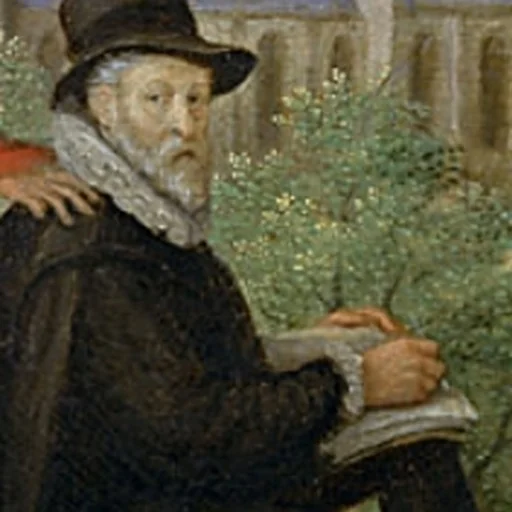
Lucas van Valckenborch or Lucas van Valckenborch the Elder (c. 1535 in Leuven – 2 February 1597 in Frankfurt am Main) was a Flemish painter, mainly known for his landscapes. He also made contributions to portrait…

 Untitled
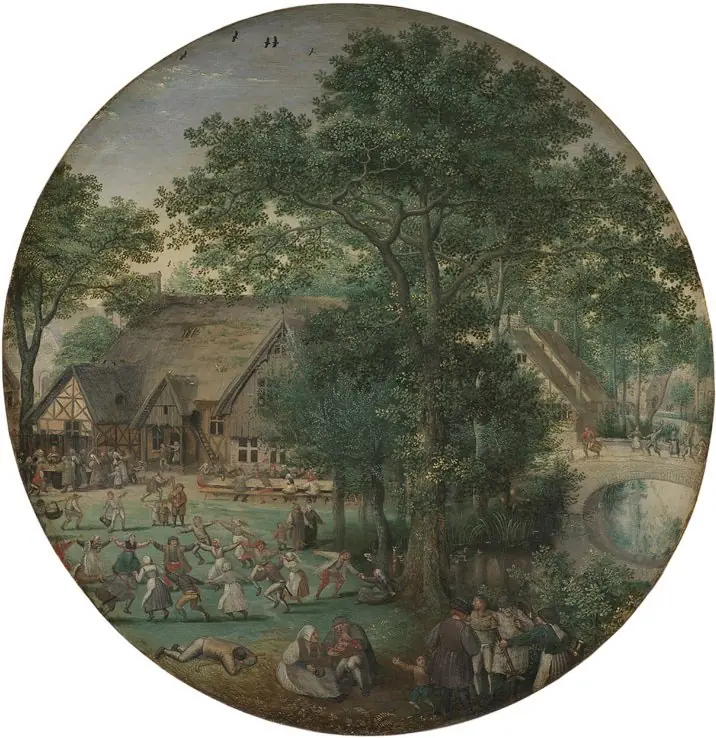 Peasant Wedding. The Wedding Dance in the open Air
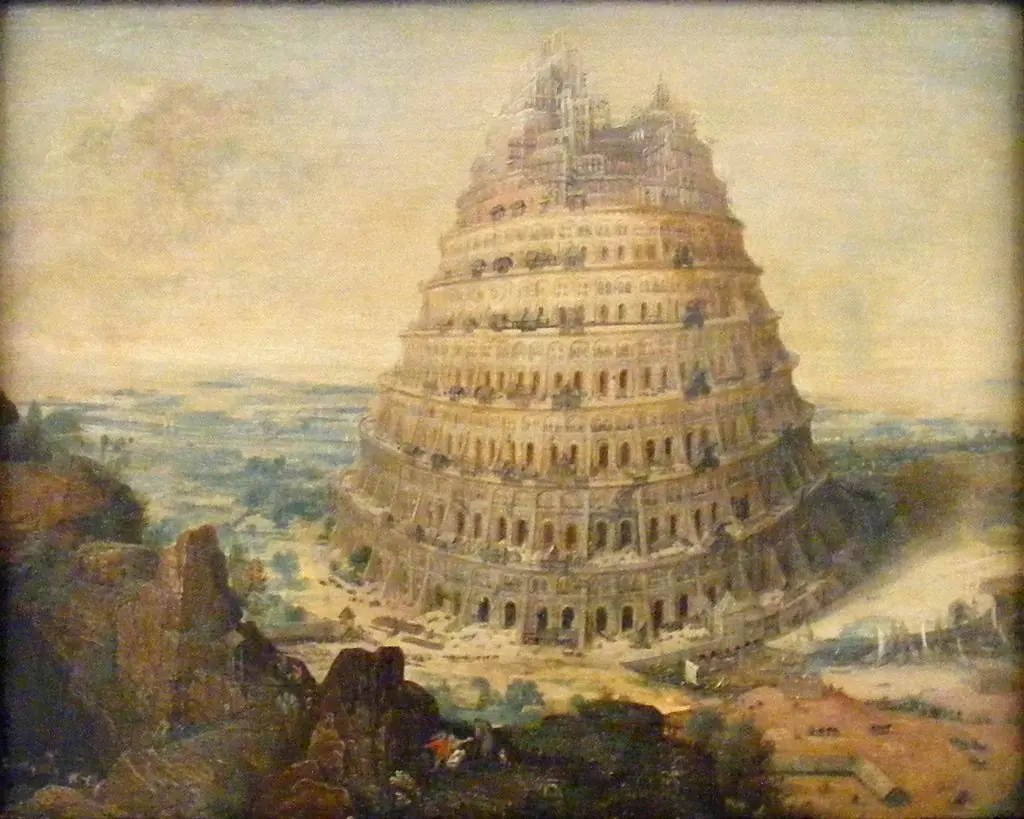 The Tower of Babel
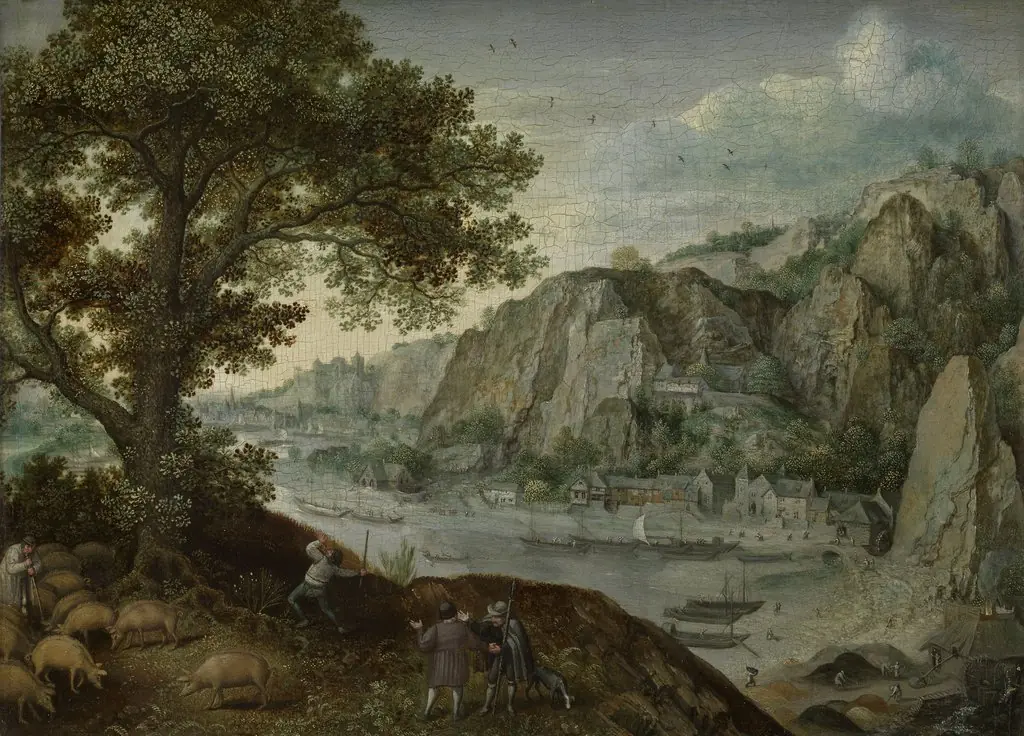 Huy, Seen from Ahin
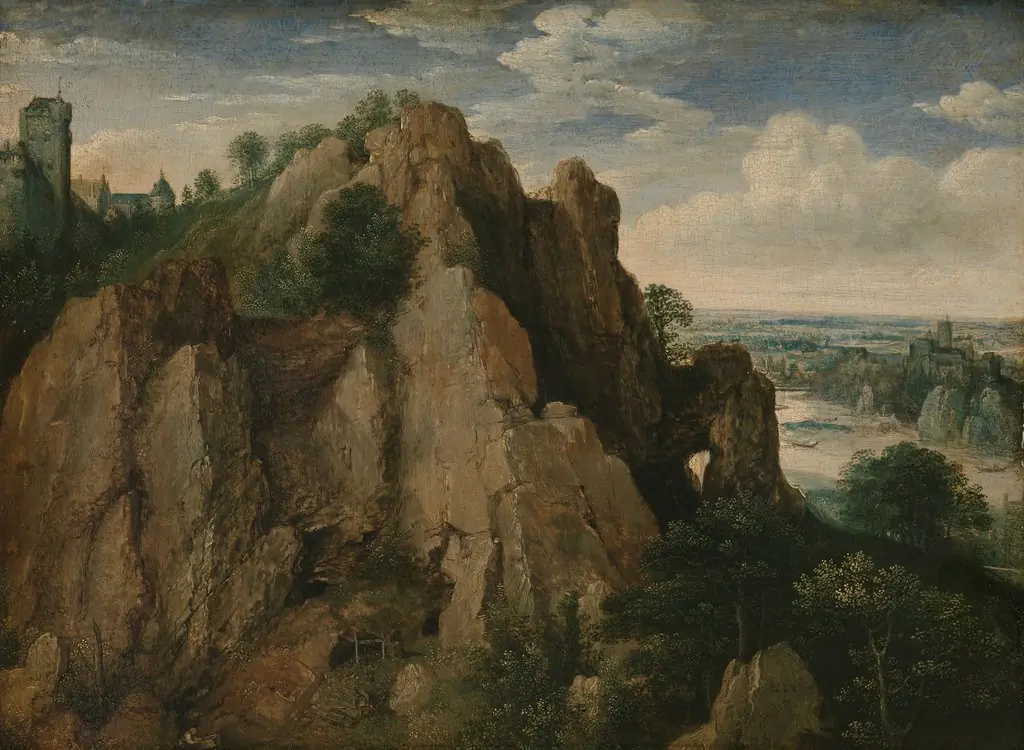 Mountainous landscape
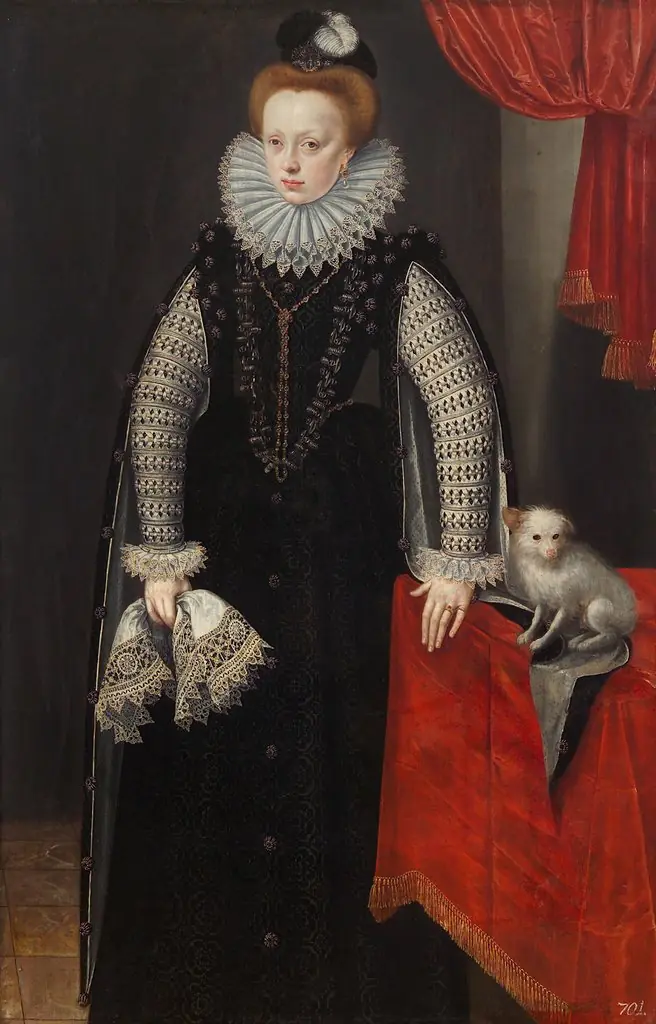 Duchess Sibylle (1557-1627) von Jülich-Cleve-Berg
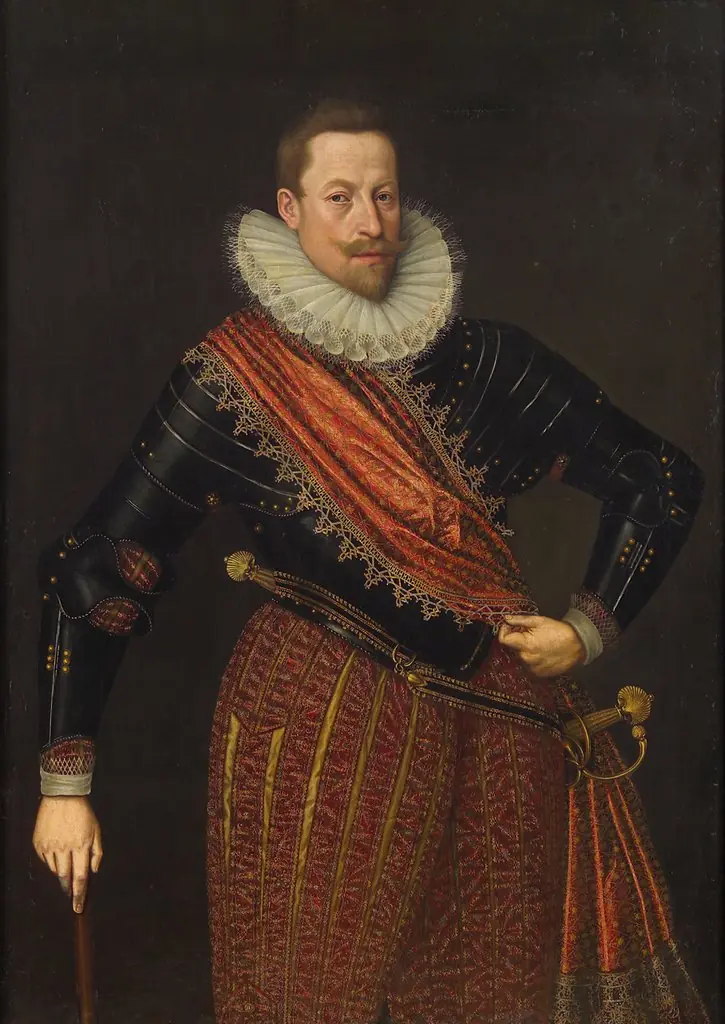 Portrait of Matthias II of Habsburg (1557-1619), the future Holy Roman Emperor
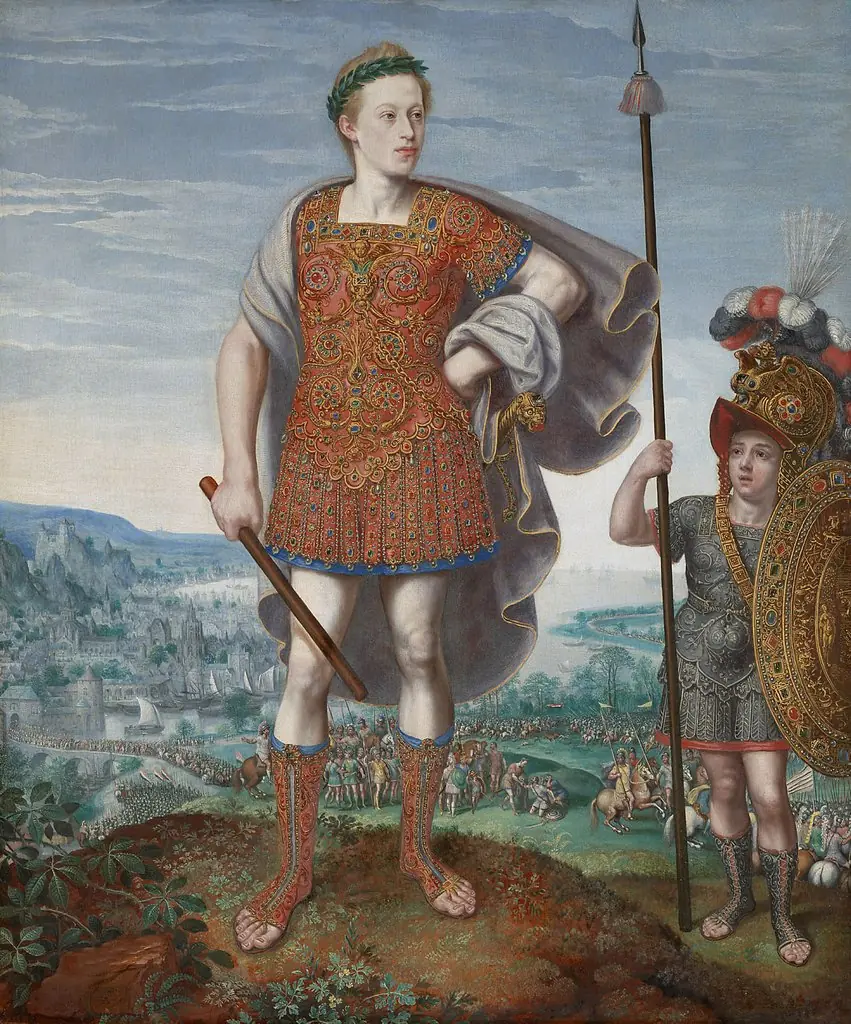 Portrait of Emperor Matthias (1557-1619) when Archduke, in the guise of P. Cornelius Scipio Major
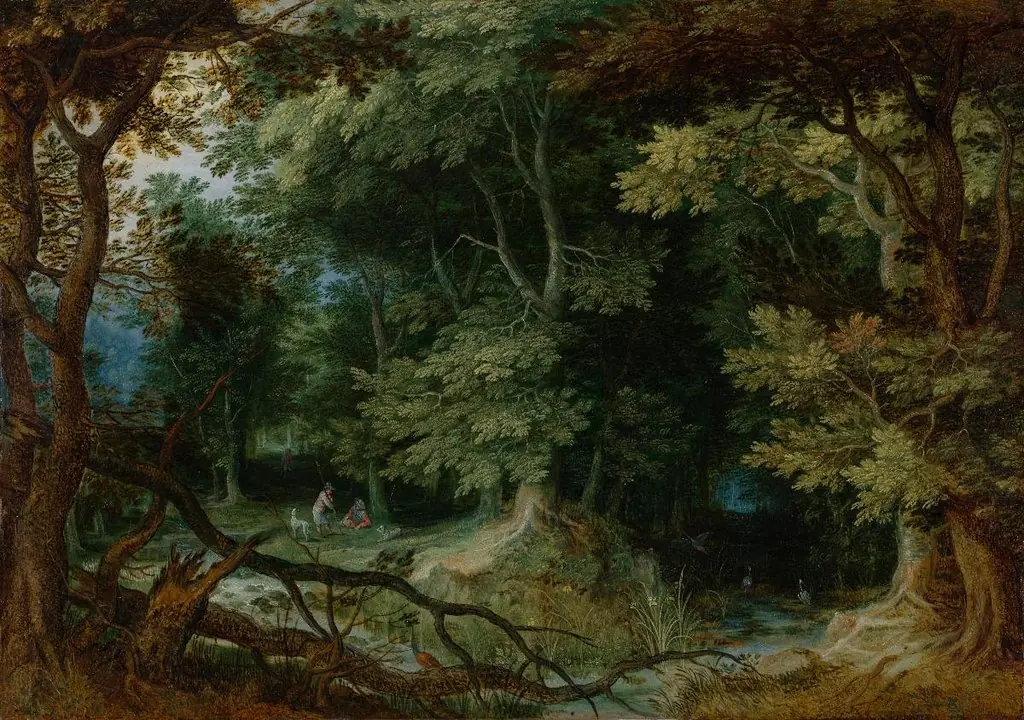 Waldinneres
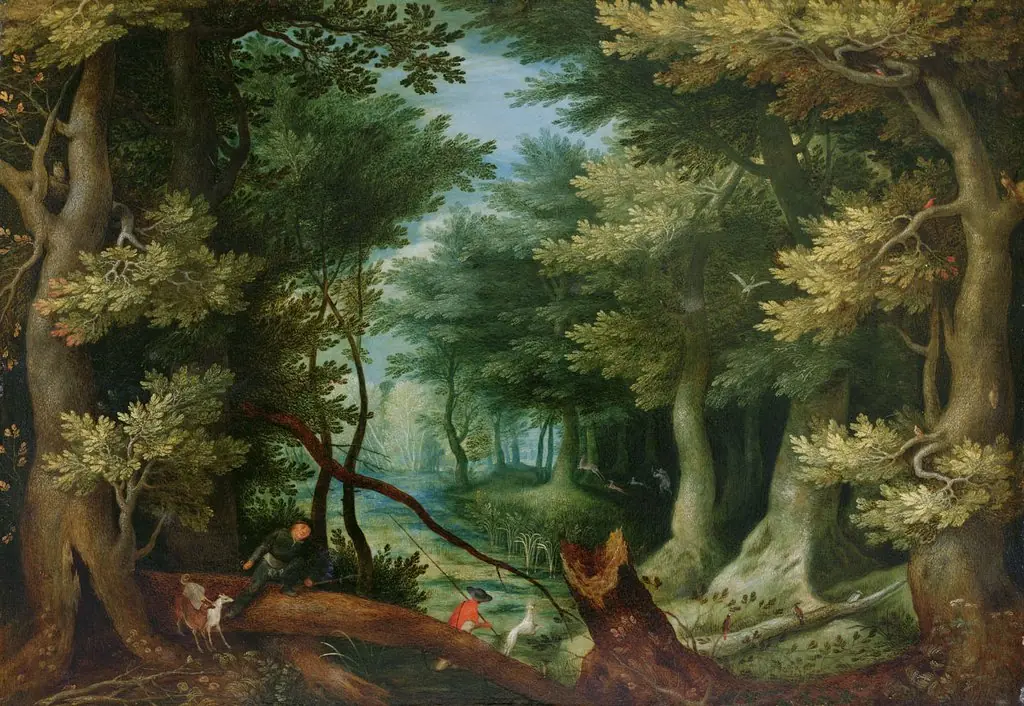 Forest landscape with deer hunt
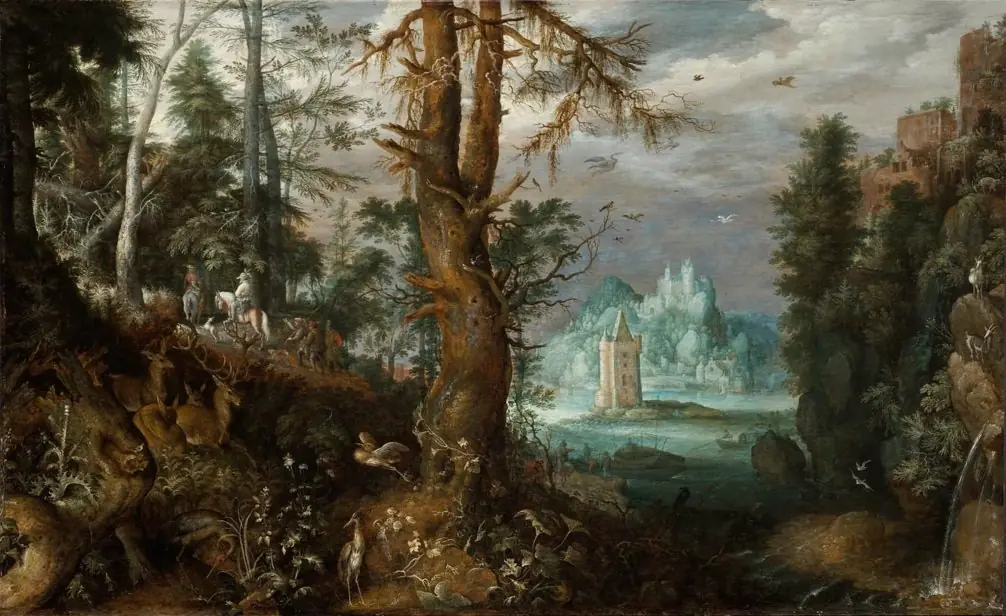 Forest Scene with Hunters
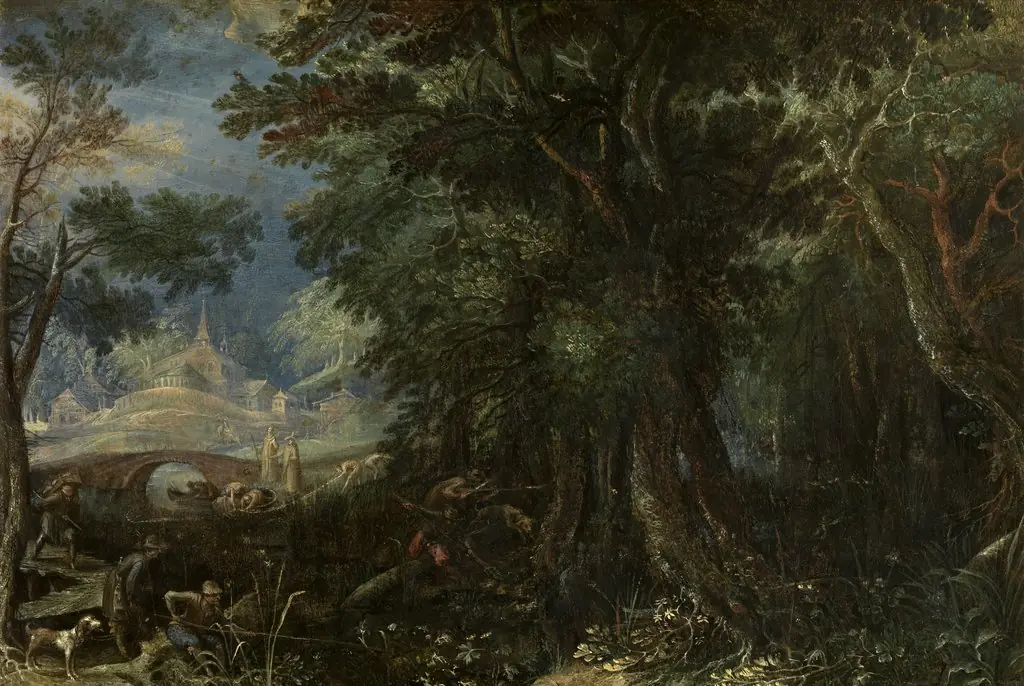 Landscape
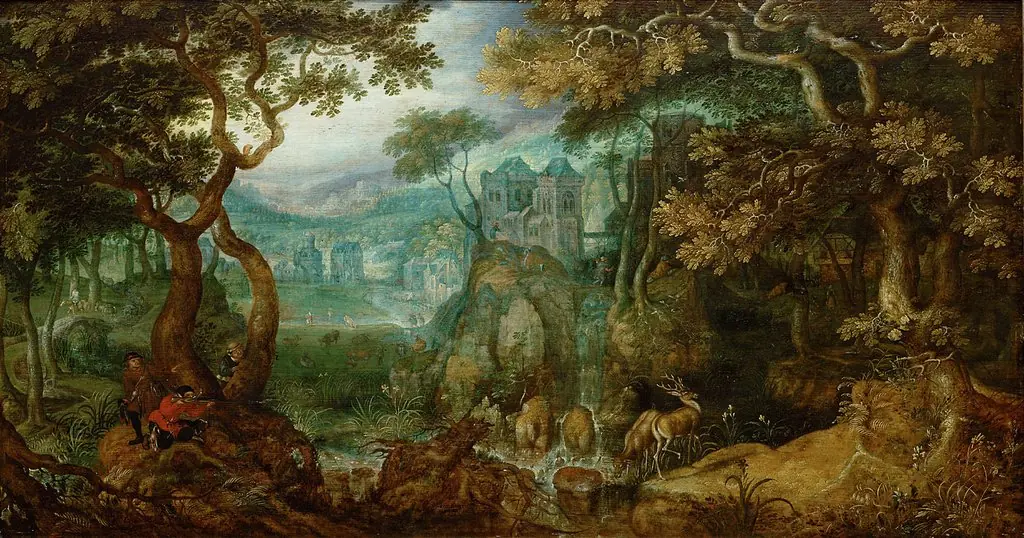 Forest Landscape with Hunters
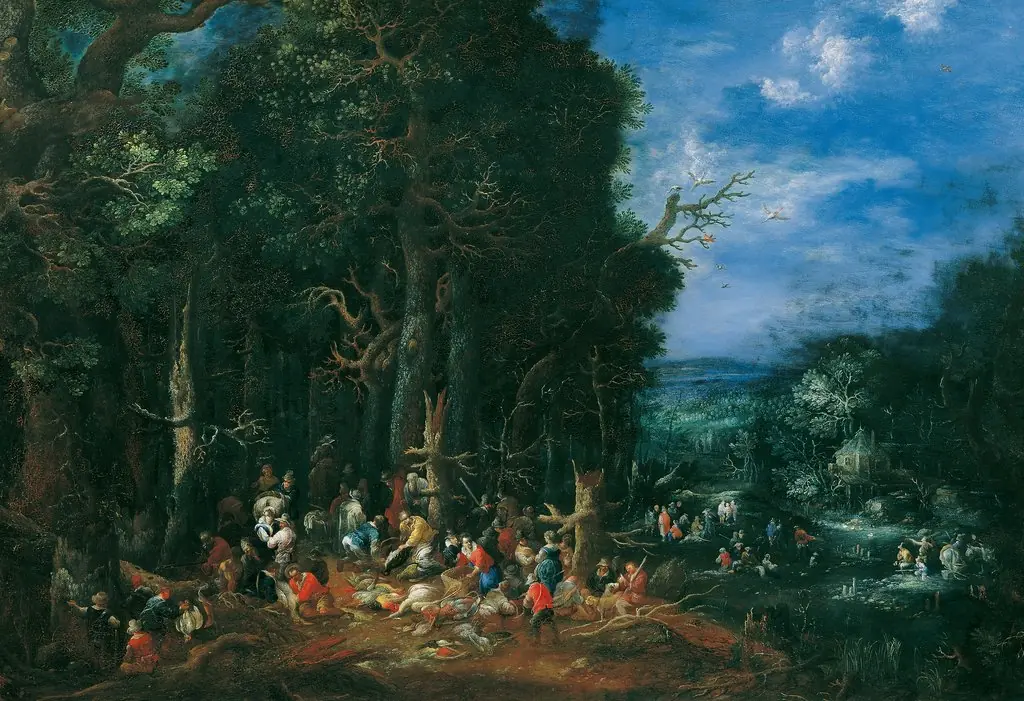 The four elements: Air
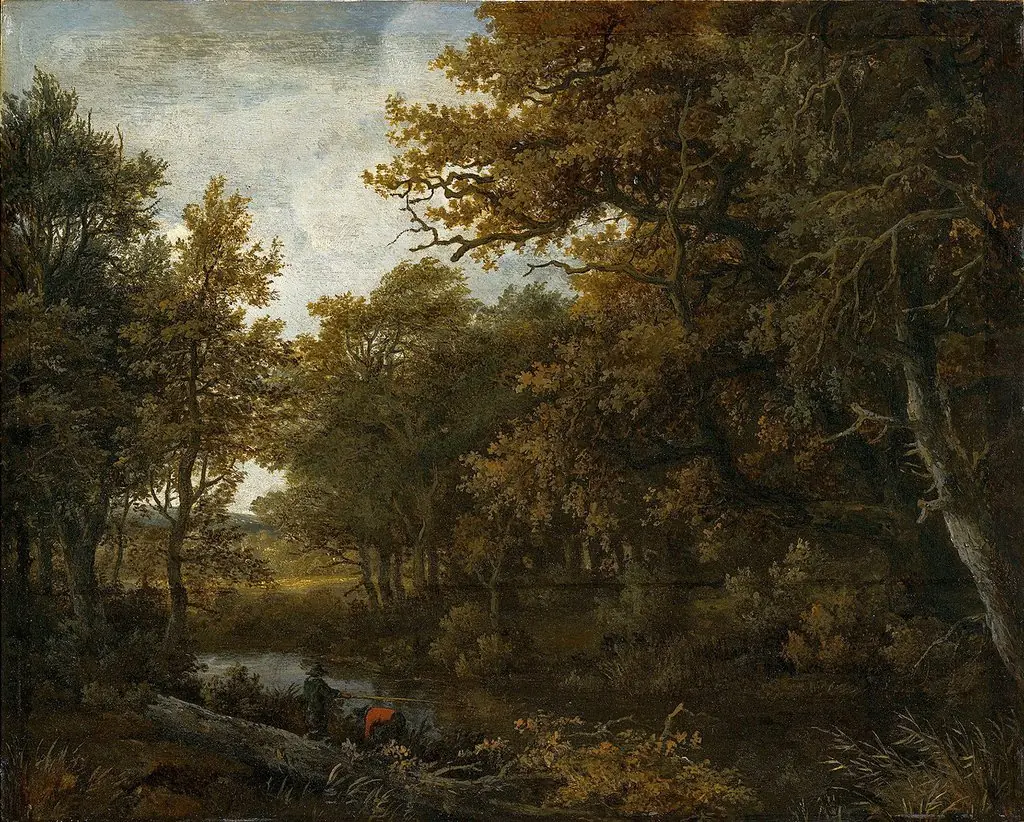 Forest
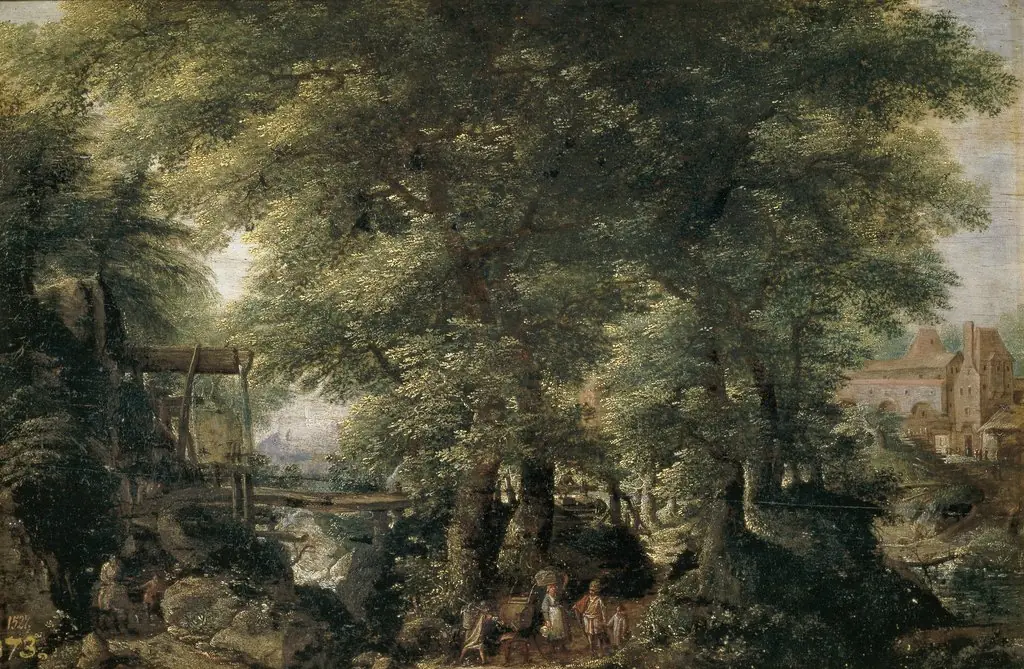 Wooded landscape with a lake on the left and a stream on the right
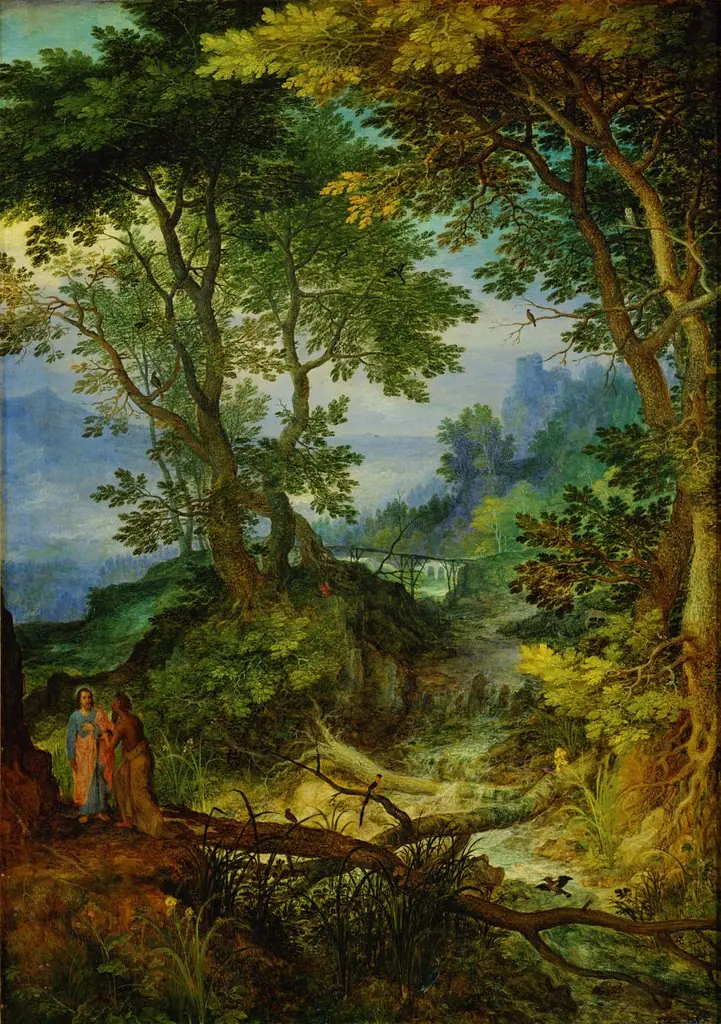 Landscape with the temptation of Christ
 Wooded Landscape with the Castle of Bentheim
 Latona and the Lycian Peasants
- A Wooded Landscape with a Pond