Artwork
The Adoration of the Magi
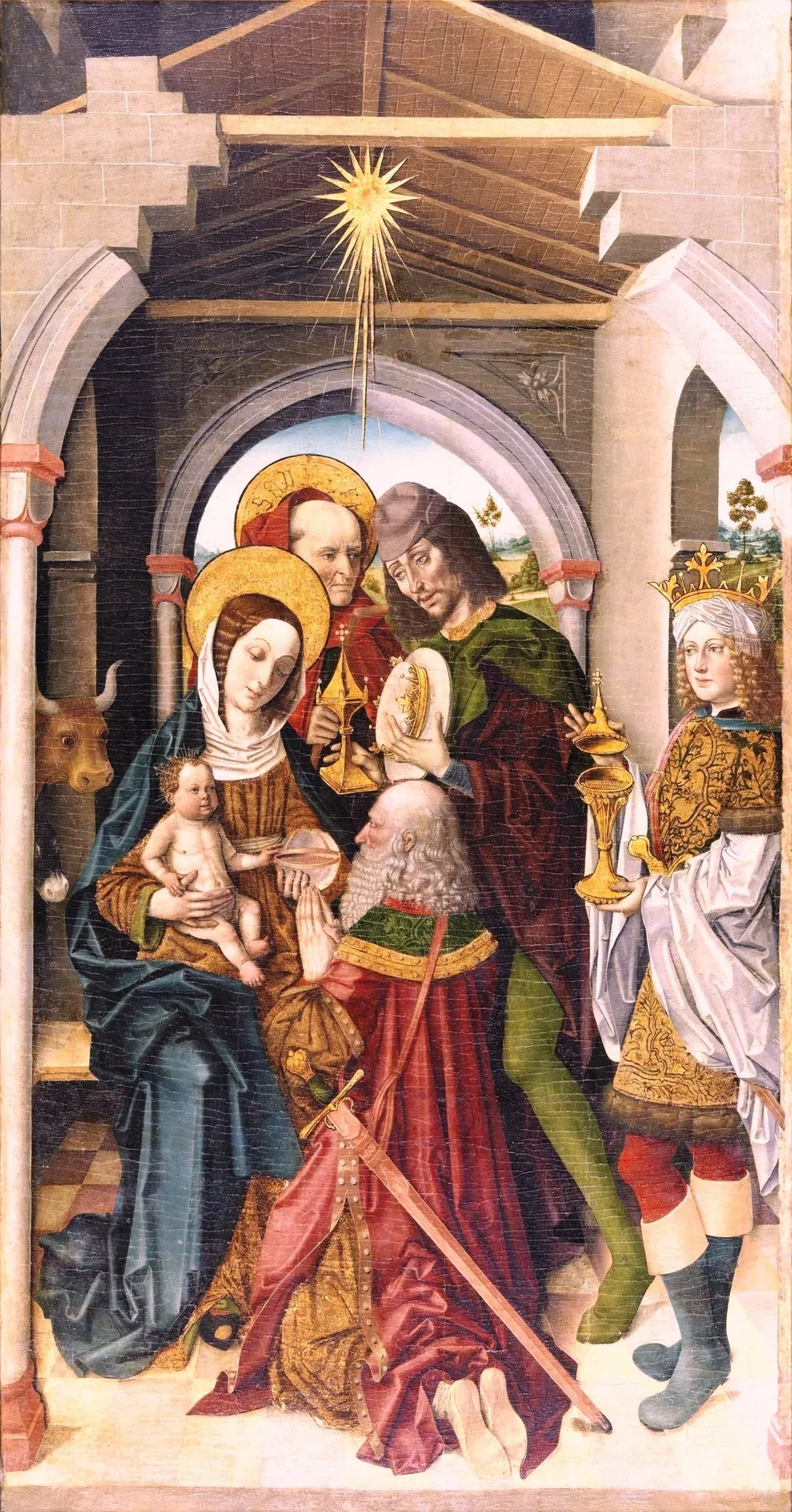
The Adoration of the Magi is a mixed painting by the High Renaissance artist Maestro de la Sisla. It dates from 1500 and is held in the collection of the Museo del Prado.
About this work
Subject & Meaning
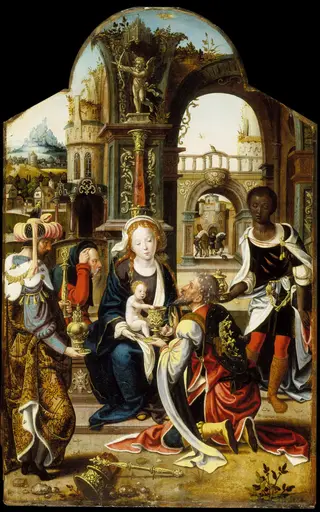
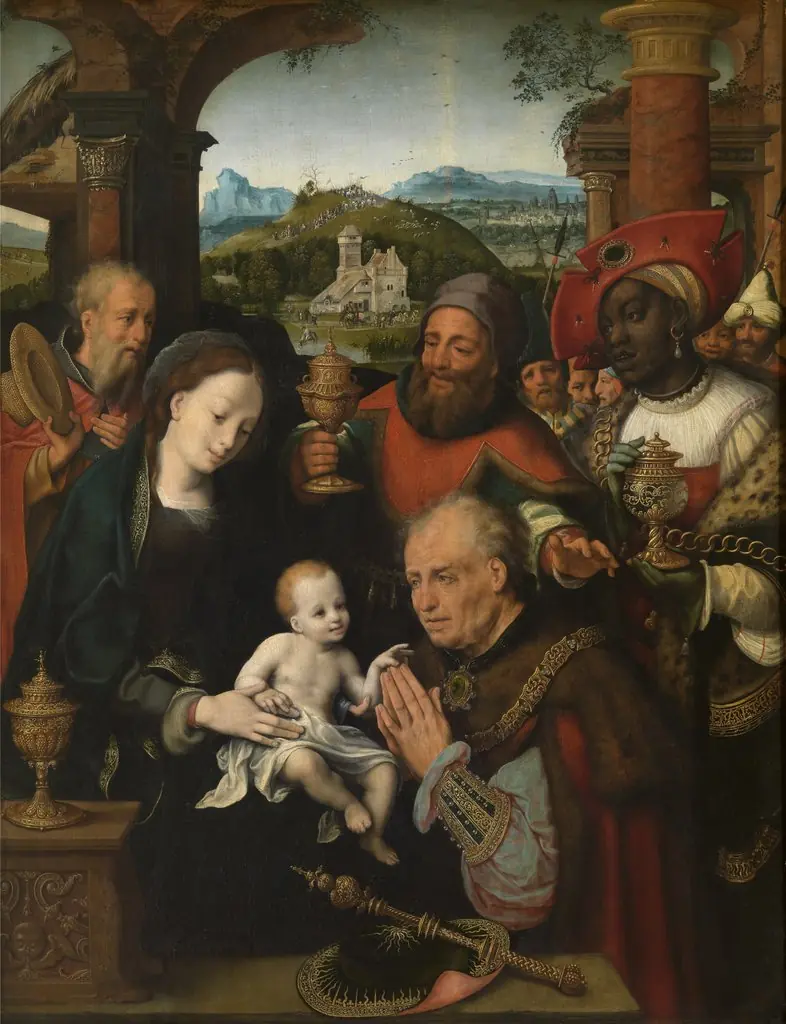
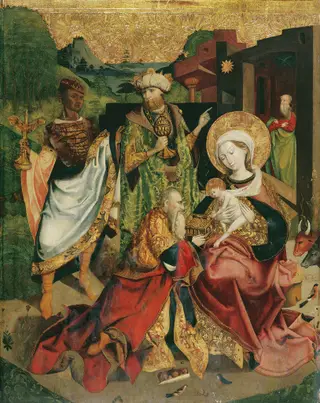
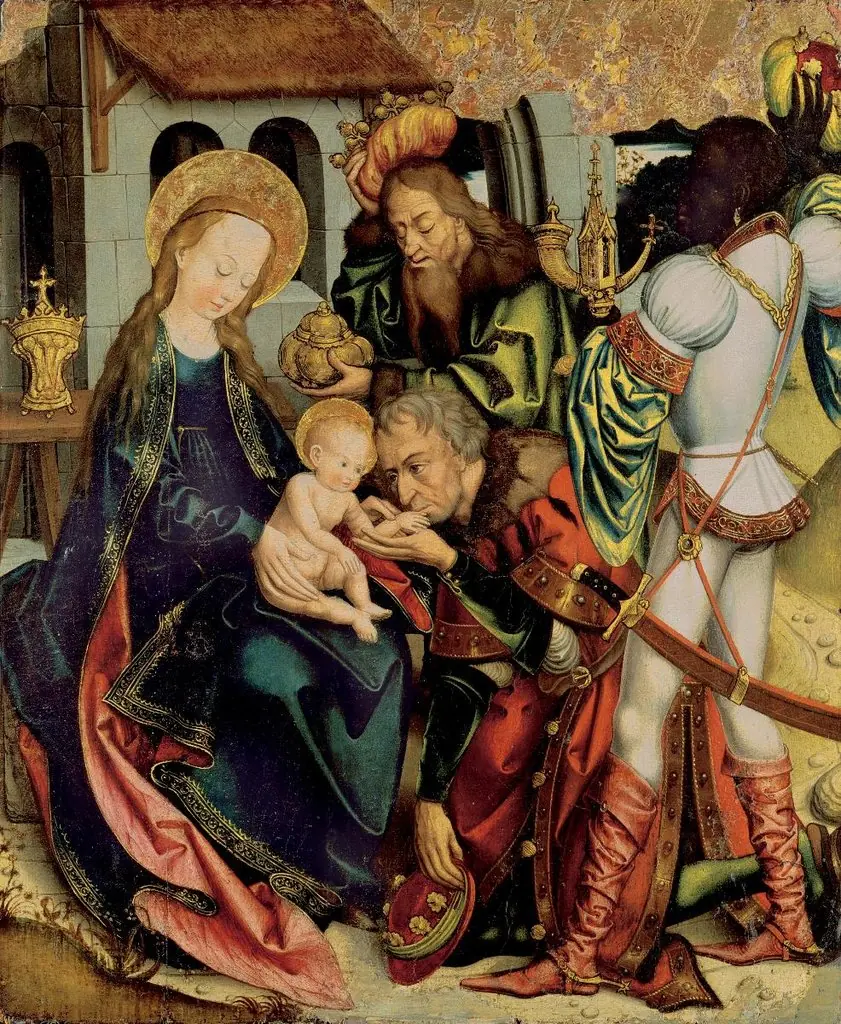
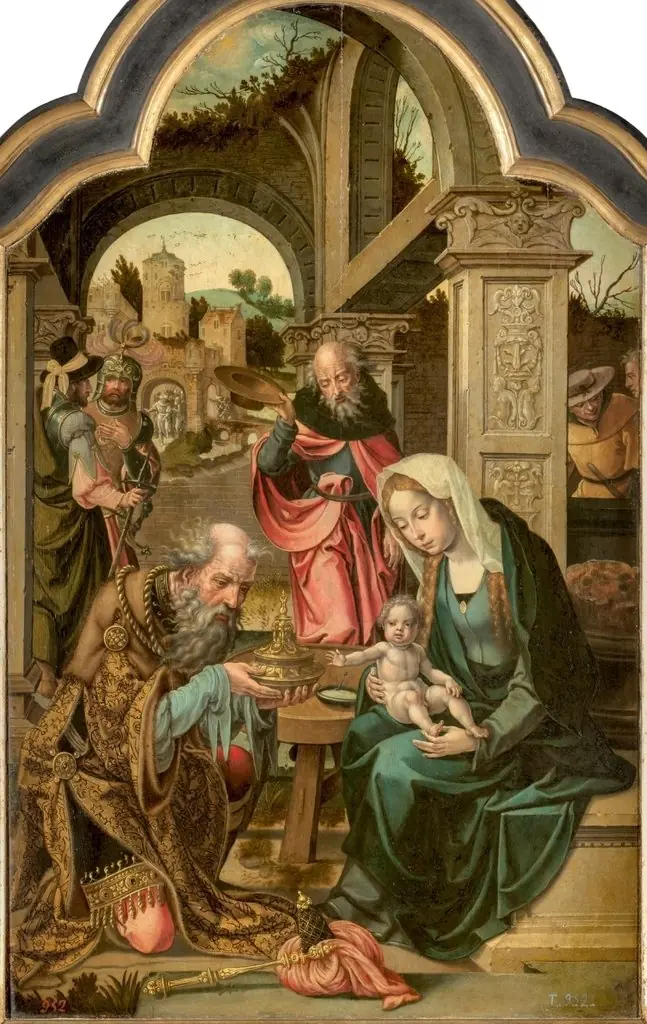
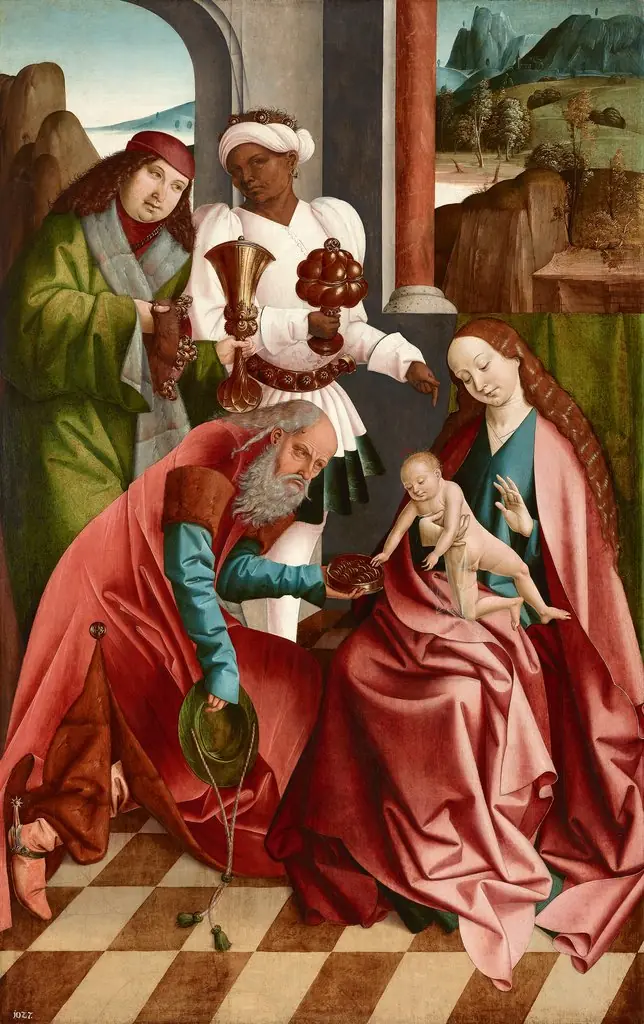
The composition centers on the Christ Child seated with the Virgin Mary, who receives the visiting kings as they present their gifts in an act of worship.
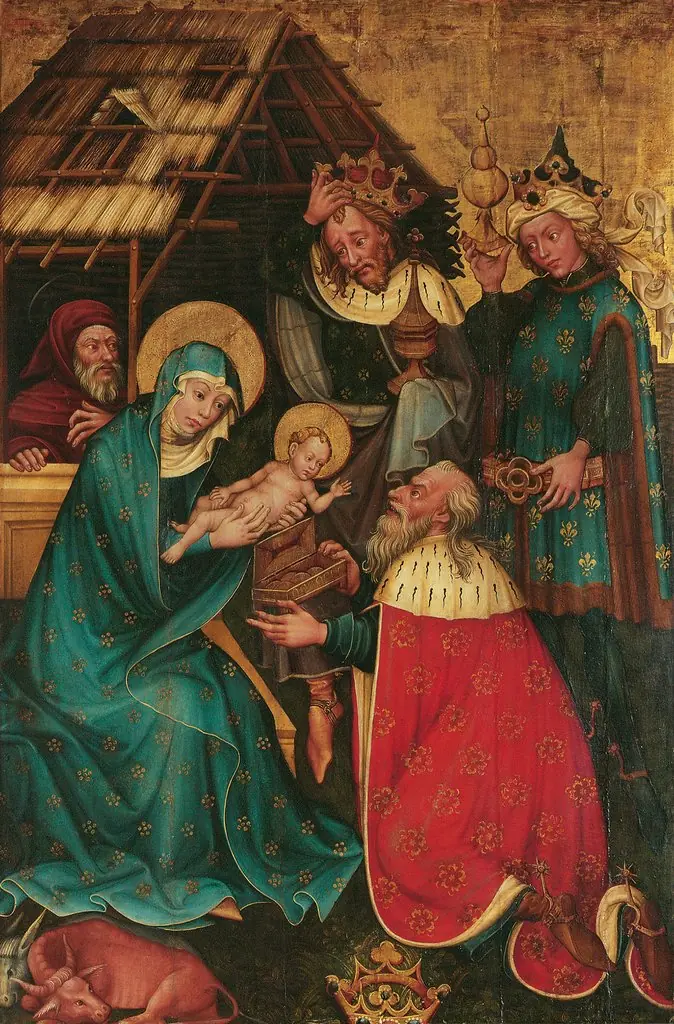
The painting depicts the Adoration of the Magi, a devotional scene drawn from the Gospel of Matthew in which the three Magi travel to pay homage to the newborn Jesus. The composition centers on the Christ Child seated with the Virgin Mary, who receives the visiting kings as they present their gifts in an act of worship.
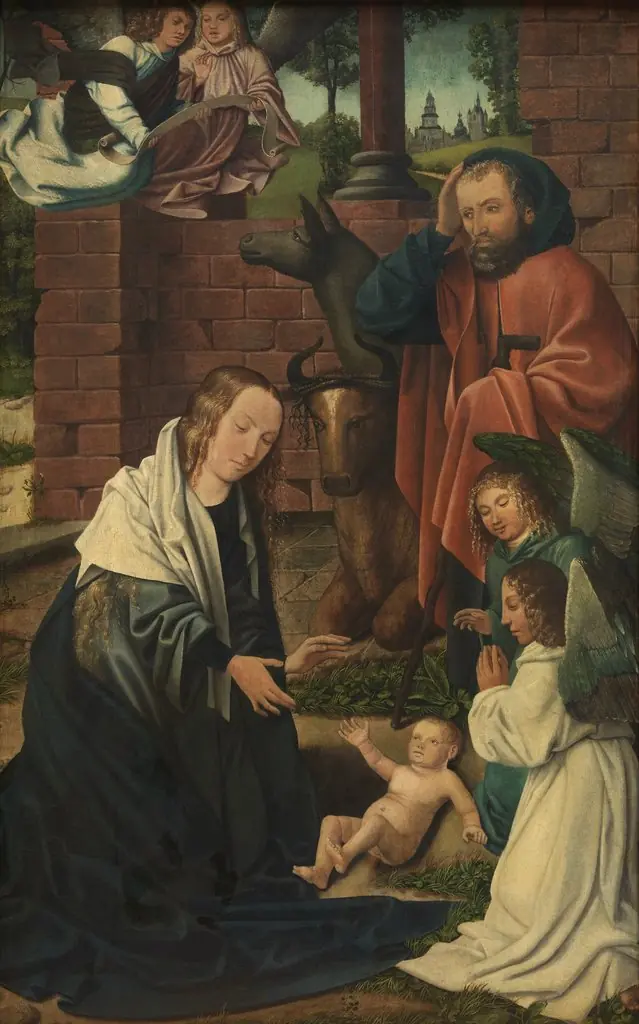
The iconography follows the traditional elements of the Adoration theme: the Christ Child and Mary are joined by the Biblical Magi, while a donkey and cattle appear in the stable setting, evoking the humble Nativity environment. The presence of the animals reinforces the identification of the scene as the birth of Christ, while the Magi's act of worship signals the recognition of Jesus's divine kingship by the Gentile world.
As a religious work, the painting conveys the theological meaning of revelation and homage, presenting the moment when the Magi acknowledge the infant Jesus through their offerings and prostration.
Technique & Style
Created around 1500 by the Maestro de la Sisla, this religious painting employs a mixed technique on a panel support. The work measures 214 cm in height and 109 cm in width. Stylistically, the composition focuses on the Adoration of the Magi, depicting the Christ Child, the Virgin Mary, and the Biblical Magi in an act of worship.
The scene is further populated by animals, specifically a donkey and cattle, which frame the central holy figures. The artwork is currently held in the collection of the Museo del Prado.
History & Provenance
The Adoration of the Magi is a religious painting executed around 1500 by the Castilian artist known as the Maestro de la Sisla. The work was created using mixed technique on a wooden panel and measures 214 cm by 109 cm, depicting the Virgin Mary, the infant Christ, and the visiting Magi alongside attendant figures. Its iconography follows traditional biblical narrative and it belongs to the genre of devotional art.
The painting entered the holdings of the Museo del Prado and was also retained by the Museo de la Trinidad, where it has been displayed as part of their permanent collection.
The Adoration of the Magi by Maestro de la Sisla is held in the Museo del Prado, Madrid. The painting is cataloged under the inventory number P001256, a designation it retains from its earlier inclusion in the Museo de la Trinidad collection before its integration into the Prado’s holdings.
While the work’s permanent display history within the Prado is not exhaustively documented in available sources, its accession reflects its significance as part of the museum’s core collection of Spanish religious art from the late medieval and early Renaissance periods.
Context
The Adoration of the Magi is a 1500 mixed‑technique panel painting attributed to the Spanish artist known as Maestro de la Sisla. Executed in a religious genre, the work depicts the Christ Child surrounded by the Biblical Magi, Mary, a donkey, cattle and attendant figures, a composition recorded in the Museo del Prado’s catalogue. Its dimensions measure 214 cm by 109 cm, and it is part of the museum’s collection as well as that of the Museo de la Trinidad.
Scholarship situates the piece within the early sixteenth‑century Spanish devotional tradition, emphasizing the artist’s role in transmitting Netherlandish influences to Iberian altarpiece painting.
Overview
This painting, titled The Adoration of the Magi, was created around 1500 by an artist known only as the Master of La Sisla. Executed in a mixed technique, this High Renaissance work portrays the traditional biblical scene where the Magi offer gifts to the infant Christ, held by the Virgin Mary. It is a significant example of religious art from the period, reflecting the devotional practices and artistic conventions prevalent at the turn of the 16th century.
Artist & collection
Artist
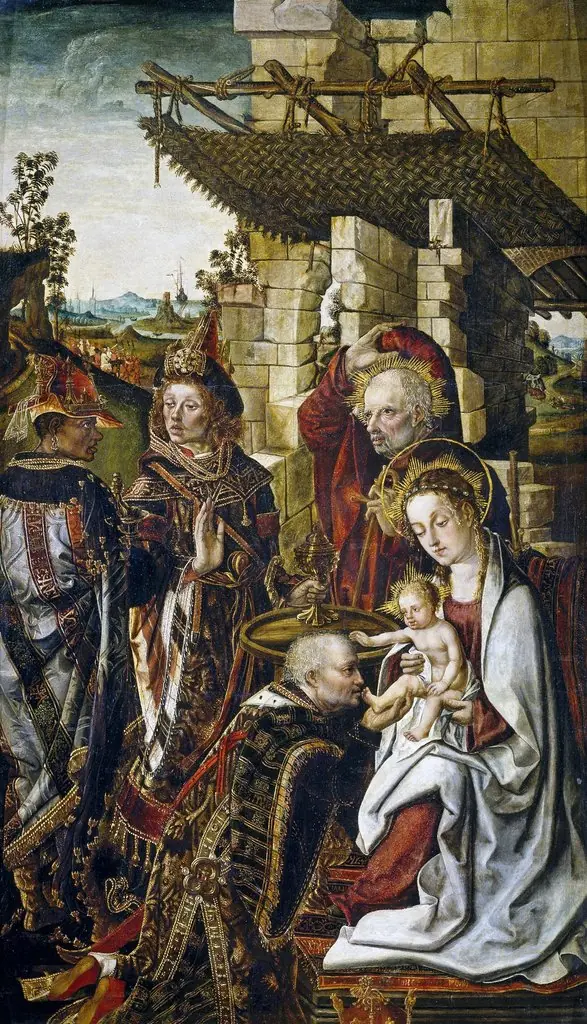
The Master of La Sisla (active c.1500) is the name given to an anonymous artist who painted the panels for the altarpiece at the Monastery of Santa María de Sisla, near Toledo; now preserved at the Museo del Prado.