Artwork
Line in Front of the Butcher Shop (Queue devant la boucherie)
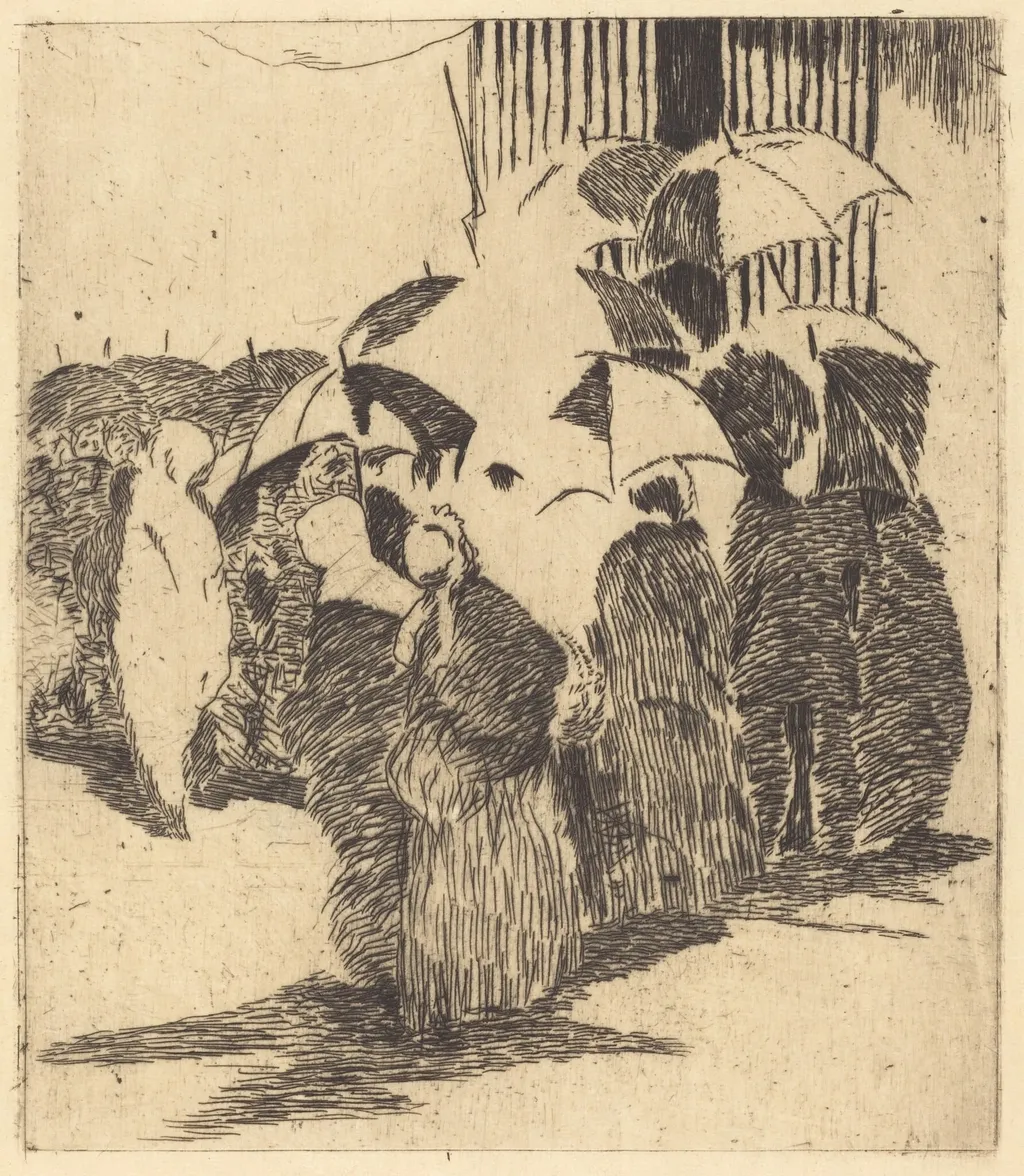
Line in Front of the Butcher Shop (Queue devant la boucherie) is an ink print by the Impressionist artist Édouard Manet. It dates from 1870 and is held in the collection of the National Gallery of Art.
- Inscription
- Inscribed:lower right, in graphite, by later hand: MN 45; verso, lower center, in graphite, by later hand: Manet [underlined] / La Queue à la Boucherie / Siège de Paris / MN 45
- Markings
- Marked:verso, stamped in black ink: National Gallery of Art Rosenwald Collection (Lugt 1932d)
About this work
Overview
Edouard Manet’s etching Line in Front of the Butcher Shop (Queue devant la boucherie) was produced in 1870. Executed on wove paper, the work presents a brief, everyday scene: three figures waiting outside a meat shop. The composition is rendered in a single, compact plate, offering a snapshot of urban life in late‑nineteenth‑century Paris.
Subject & Meaning
The foremost figure turns slightly away, eyes directed downward, while the two behind face the viewer, emphasizing the anonymity of the crowd.
The image captures three pedestrians in a queue, their attire plain and utilitarian, suggesting working‑class individuals. The foremost figure turns slightly away, eyes directed downward, while the two behind face the viewer, emphasizing the anonymity of the crowd. By focusing on a mundane moment, Manet highlights the ordinary rhythms of the city and the social interactions that occur in public spaces.
Technique & Style
Manet employed a traditional copper‑plate etching, but his handling is notably loose. Lines appear scratchy and uneven, produced with rapid, gestural strokes that convey movement and texture. The use of wove paper provides a smooth surface that contrasts with the roughness of the incised marks, creating a visual tension between the medium’s precision and the artist’s spontaneous execution.
History & Provenance
Created in the early years of the Franco‑Prussian War, the print reflects Manet’s interest in contemporary street scenes. While the original plate’s ownership history is not extensively documented, the work has appeared in several 20th‑century exhibitions of Manet’s graphic oeuvre and is held in the collections of major European museums, confirming its place within the artist’s printmaking legacy.
Own this work as a print
Artist & collection
Artist
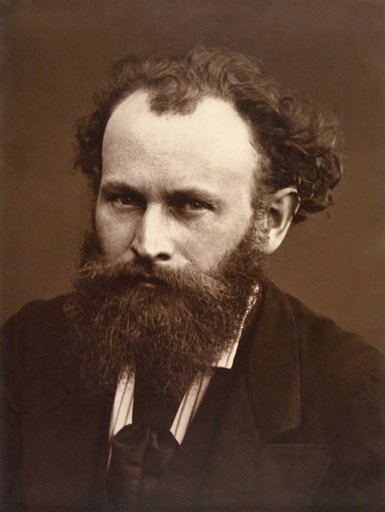
Édouard Manet was a French modernist painter. He was one of the first 19th-century artists to paint modern life, as well as a pivotal figure in the transition from Realism to Impressionism.

 Les Noctambules (The Night Prowlers)
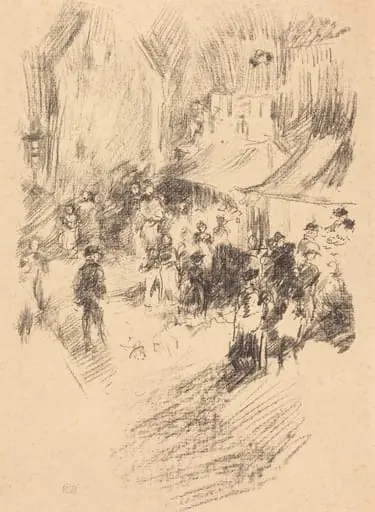 The Fair
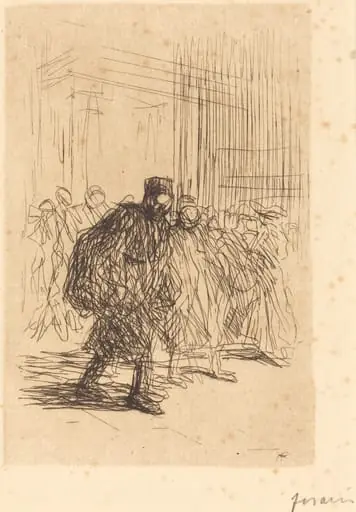 Les couloirs du Palais (The Corridors of the Palace of Justice)
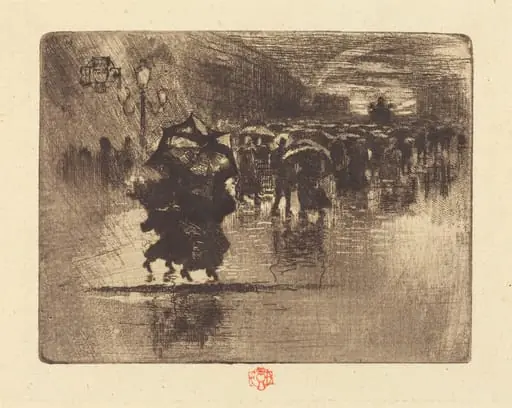 Le Petit Enterrement (The Burial - Small Plate)
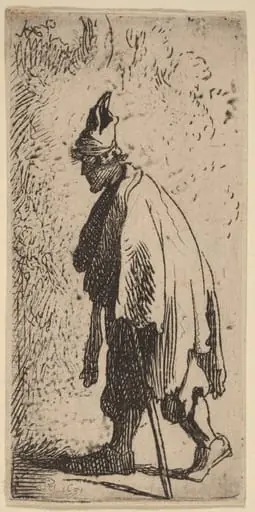 Beggar with a Stick, Walking to the Left
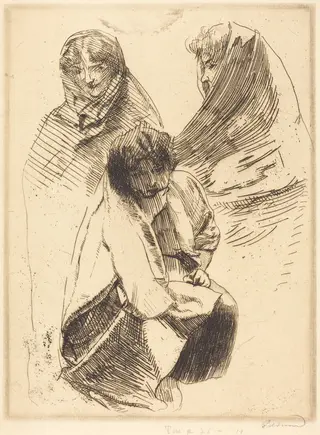 Three Veiled Women (Trois femmes voilées)
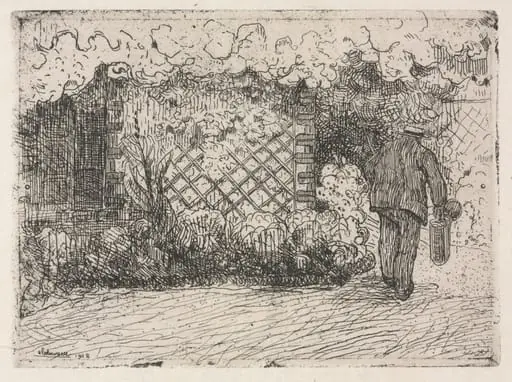 Watering Can
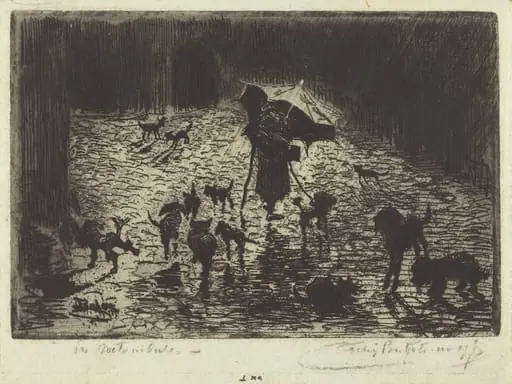 Les Noctambules (The Night Prowlers)
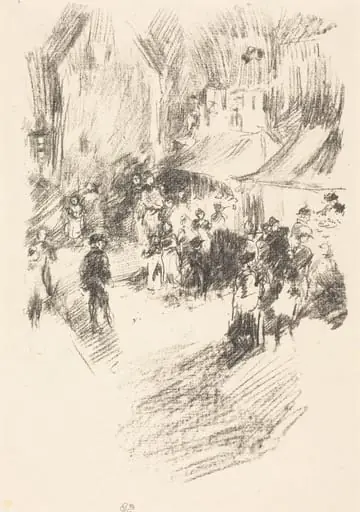 The Fair
 At the Prado (Au Prado)
 Via Garibaldi
- Line in Front of the Butcher Shop