Artwork
Plum Brandy
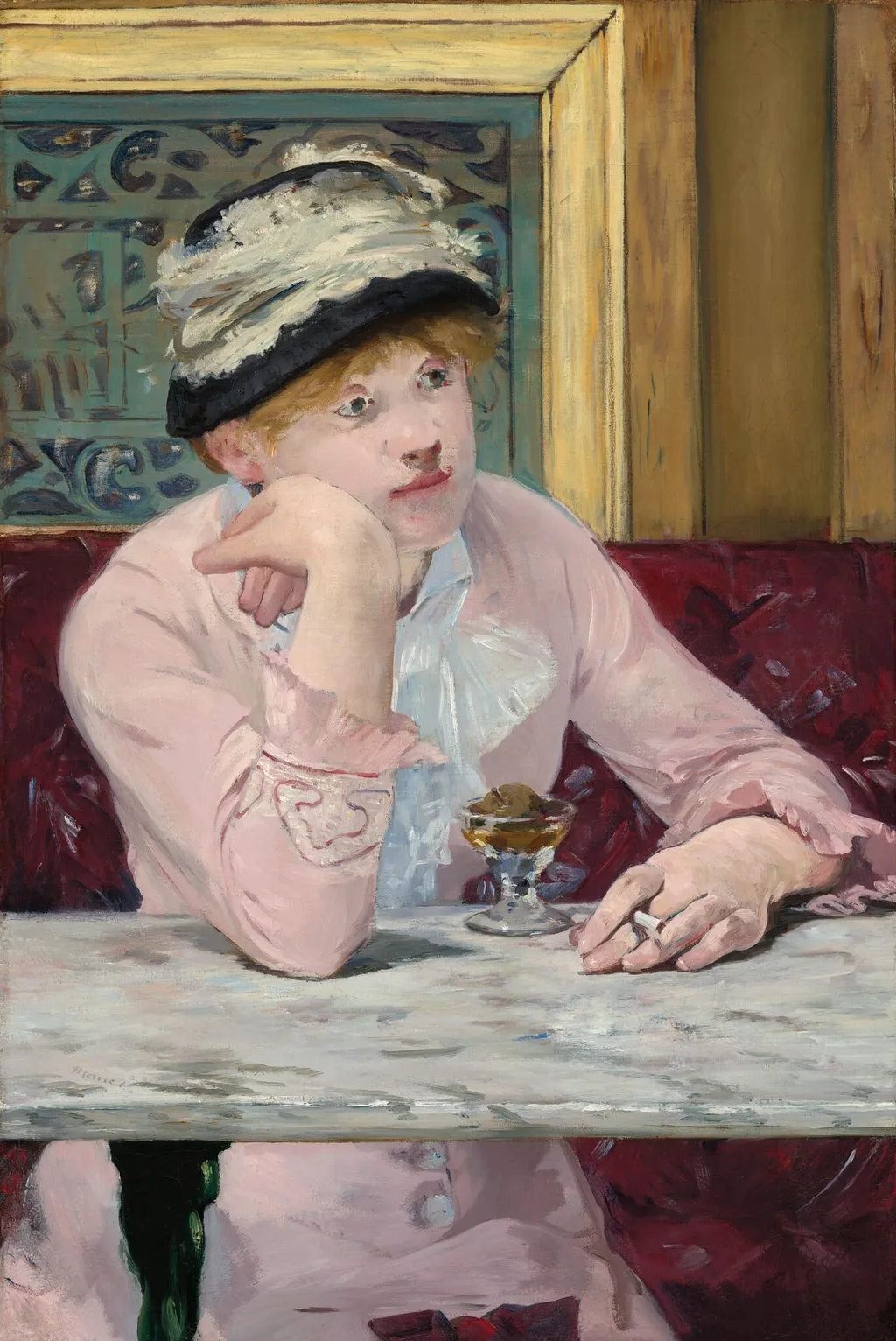
Plum Brandy is an oil painting by the Impressionist artist Édouard Manet. It dates from 1877 and is held in the collection of the National Gallery of Art.
- Inscription
- Inscribed:lower left on table: manet
About this work
Subject & Meaning
Art historians interpret the scene as a study of urban loneliness, possibly portraying a working girl or prostitute waiting for a client.
The painting depicts a solitary young woman, likely the actress Ellen Andrée, seated at a marble café table. She wears a pink dress and black hat, leaning forward with her cheek on her right hand while holding an unlit cigarette in her left. Before her sits a glass containing a plum soaked in brandy, a Parisian café specialty that provides the work's title.
Her gaze is directed dreamily outward, suggesting a state of melancholy reverie rather than deep depression. Art historians interpret the scene as a study of urban loneliness, possibly portraying a working girl or prostitute waiting for a client. The composition is frequently analyzed as Manet's deliberate response to Edgar Degas's L'Absinthe; while Degas depicted despair and social alienation through absinthe, Manet offers a more hopeful atmosphere where the sitter's isolation might be transient. The untouched fruit and unlit cigarette reinforce a sense of suspended anticipation rather than ruin.
History & Provenance
Created circa 1877 or 1878, likely in Manet's studio using a café-style table rather than on location, the painting features the actress Ellen Andrée as the model. Manet sold the work to the collector Charles Deudon around 1881 for 3,500 francs. Following Deudon's death in 1914, the piece passed to his widow, who sold it to the Paris dealer Paul Rosenberg by 1919; Rosenberg subsequently exhibited it in New York in the early 1920s.
By 1927, the American banker Arthur Sachs had acquired the canvas, retaining it until at least 1948. The firm M. Knoedler & Co. later facilitated its sale to Paul Mellon in 1961. Mellon ultimately donated the painting to the National Gallery of Art in Washington, D.C., in 1971.
The painting is held by the National Gallery of Art in Washington, D.C. Its provenance traces from Édouard Manet to collector Charles Deudon circa 1881; after Deudon's death it passed to his wife, who sold it to Paul Rosenberg in 1919. Rosenberg then sold it to Arthur Sachs around 1927, and it remained in Sachs's collection until at least 1948 before being handled by M. Knoedler & Co., which sold it to Paul Mellon in 1961. Mellon donated the work to the National Gallery of Art in 1971. Exhibition records show it was shown at Georges Wildenstein in New York during 1921-1922.
Context
Plum Brandy occupies a pivotal place in Édouard Manet's late oeuvre, positioned between his café scenes and portraits of modern women. Scholars frequently read the work as a deliberate counterpoint to Edgar Degas's L'Absinthe (1876), a comparison first articulated by contemporaries and later reinforced in art-historical literature. While Degas's composition stages two figures in a bleak tableau of absinthe-induced despair, Manet's solitary sitter, identified as the actress Ellen Andrée, presents a more ambiguous mood: her dreamy detachment suggests loneliness rather than ruin, aligning with interpretations that emphasize possibility over desolation.
The painting's luminous palette and balanced composition, noted by critics such as Hajo Düchting, further distinguish it from Degas's darker palette and fragmented space. Within Manet's broader practice, Plum Brandy exemplifies his ongoing engagement with contemporary social types and Parisian leisure culture, themes also central to works like A Bar at the Folies-Bergère. Its provenance, passing through Charles Deudon, Paul Rosenberg, and Paul Mellon before entering the National Gallery of Art, reflects its status as a sought-after example of late-19th-century French genre painting.
Legacy
Plum Brandy is frequently interpreted as a nuanced response to Edgar Degas's L'Absinthe, distinguished by its brighter palette and a subject who appears dreamy rather than despairing. While Degas's figures seem socially isolated and lost, Manet's sitter retains a sense of potential hope, suggesting her loneliness is temporary. Art historians note this thematic divergence as a key element of the work's critical reception, contrasting the destructive nature of absinthe with the relatively benign plum brandy.
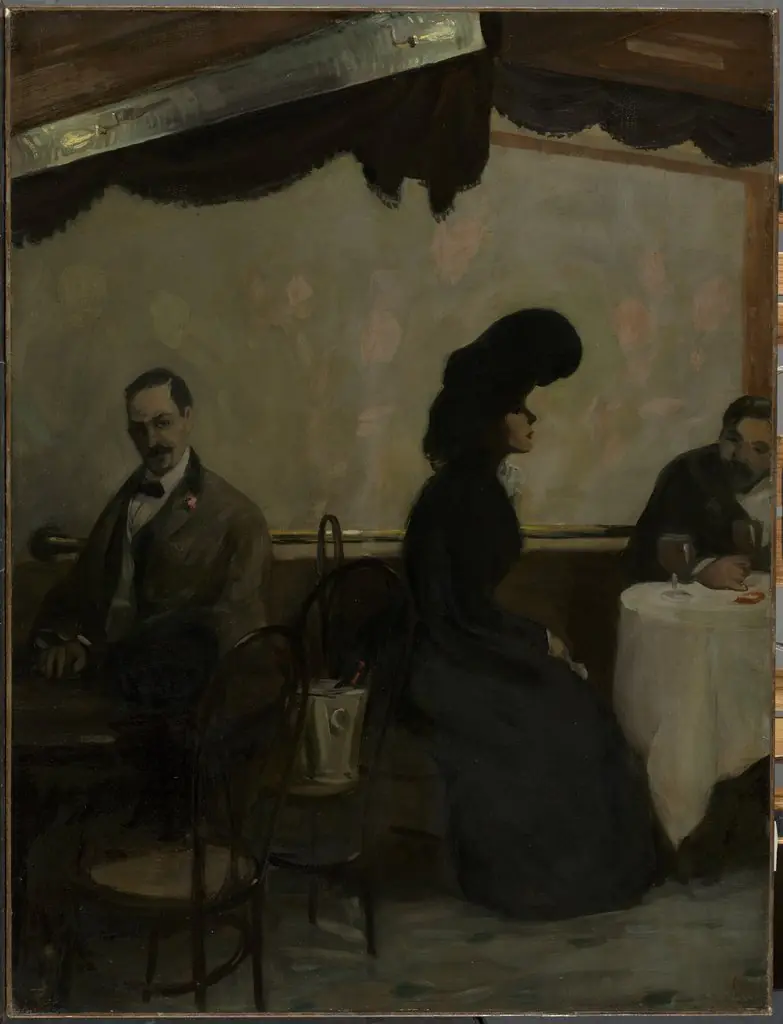
The painting's legacy is further cemented by its visual parallels to later works, such as Edward Hopper's 1927 Automat, which echoes its solitary café atmosphere. Since its donation to the National Gallery of Art in 1971, the work has remained a significant example of Manet's late genre scenes, illustrating the melancholy yet resilient side of Parisian urban life.
Overview
Édouard Manet's oil painting, Plum Brandy (also known as La Prune), is believed to have been created around 1877. This work, measuring 73.6 by 50.2 centimeters, depicts a solitary woman in a cafe setting. It is currently housed in the collection of the National Gallery of Art in Washington, D.C., offering a glimpse into a quiet, introspective moment from everyday life.
Technique & Style
Executed in oil on canvas, Manet employed techniques that contribute to the painting's serene atmosphere. The artist's use of glazing likely contributed to the soft, smooth transitions of color, enhancing the tranquil quality of the scene. This approach allows the viewer to focus on the subtle nuances of the woman's expression and the quiet intimacy of her surroundings, characteristic of Manet's observational style.
Own this work as a print
Artist & collection
Artist
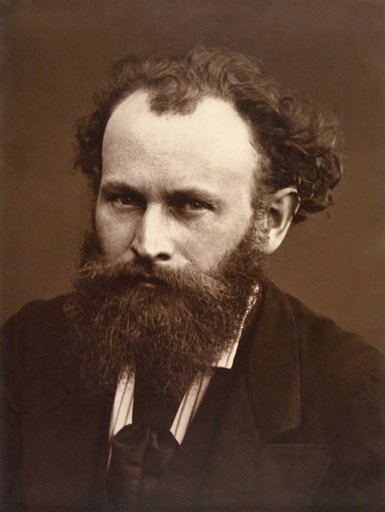
Édouard Manet was a French modernist painter. He was one of the first 19th-century artists to paint modern life, as well as a pivotal figure in the transition from Realism to Impressionism.