Artwork
Seated Arab
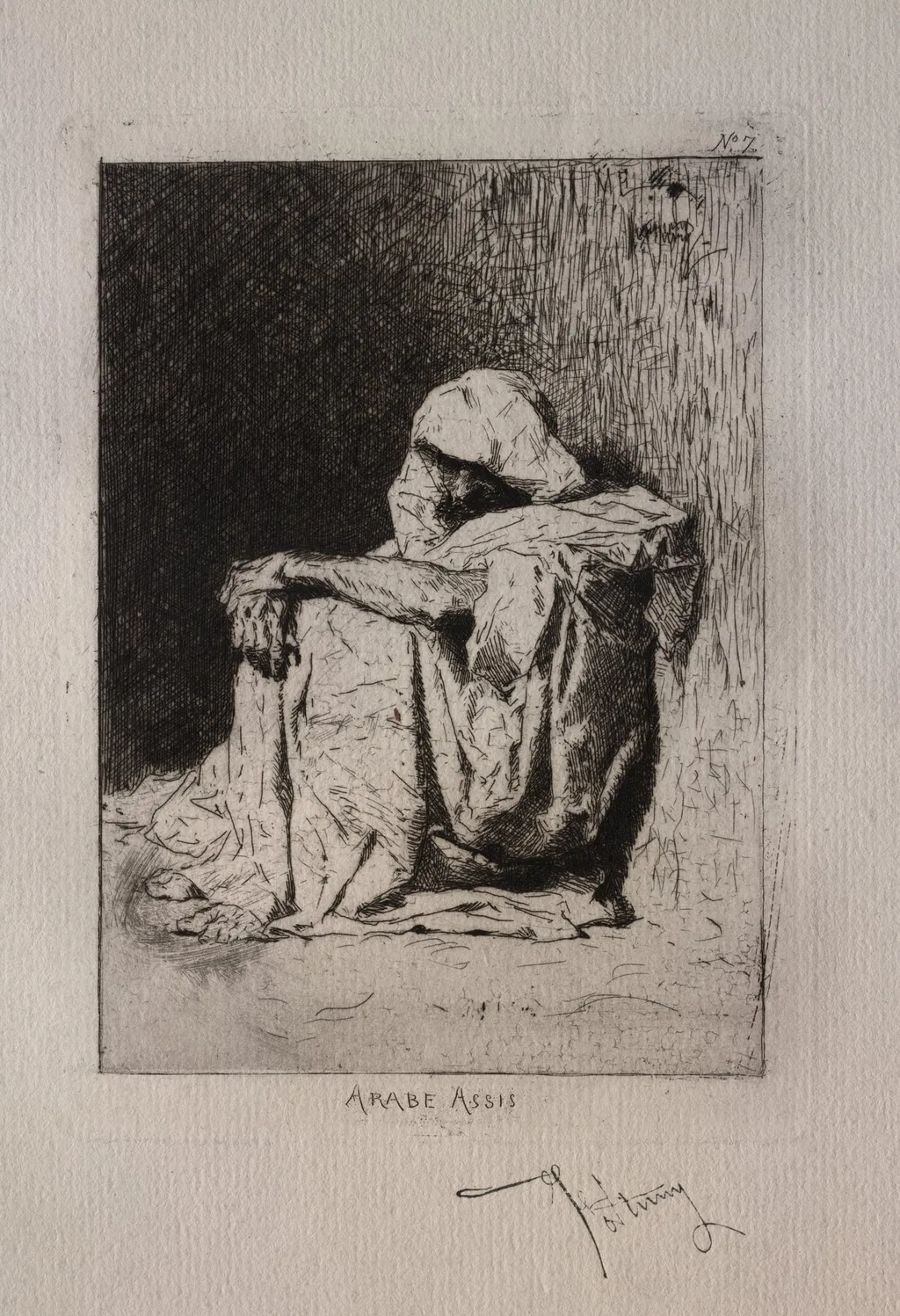
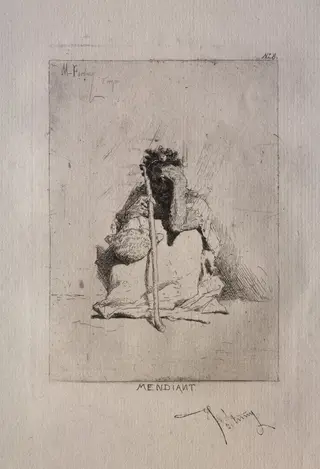
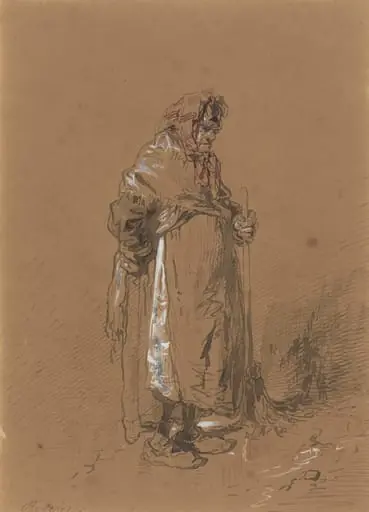
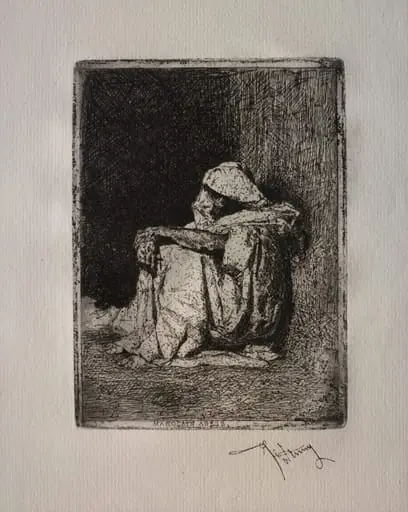
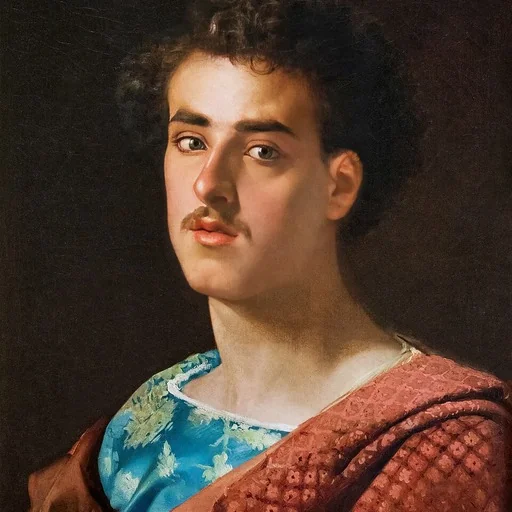
Seated Arab is a print by the Impressionist artist Mariano Fortuny Marsal. It dates from 1873 and is held in the collection of the Cleveland Museum of Art.
- Accession no.
- 1921.286
About this work
Overview
The work reflects Fortuny’s interest in ethnographic observation and his travels in the Maghreb, where he studied local customs and dress.
Created in 1873, Seated Arab is a charcoal or ink drawing by Spanish artist Mariano Fortuny. It captures a solitary figure in North African dress, seated with quiet stillness. The work reflects Fortuny’s interest in ethnographic observation and his travels in the Maghreb, where he studied local customs and dress. Unlike grand historical scenes, this piece focuses on intimate, unidealized presence.
Subject & Meaning
The figure, dressed in a draped robe and seated with bowed head and hands resting on knees, conveys contemplation rather than narrative. Fortuny avoids exoticizing the subject; instead, he presents a restrained, dignified posture. The absence of context or action invites quiet reflection, aligning with a shift in Orientalist representation toward psychological depth over spectacle.
Technique & Style
Fortuny employs strong chiaroscuro to model the figure’s form, using dense, layered strokes to define the folds of fabric and the contours of the body. The background is rendered with loose, scratchy marks that suggest shadow or texture without detail. This contrast isolates the figure, emphasizing volume and stillness. The medium’s immediacy suggests a study made on-site, capturing a fleeting moment with precision.
History & Provenance
The work entered the collection of The Cleveland Museum of Art in the 20th century, though its earlier ownership is undocumented. It was likely produced during Fortuny’s travels in North Africa in the early 1870s, a period when he produced numerous sketches and studies. These works were later referenced in his larger paintings but often retained their raw, observational character.
Context
In the 19th century, European artists increasingly turned to North Africa as a subject, drawn by colonial expansion and romanticized notions of the 'Orient.' Fortuny’s approach, however, diverged from theatrical Orientalism. His sketches, including this one, prioritize direct observation over fantasy, reflecting a more personal, documentary impulse within a broader cultural trend.
Legacy
Though less known than his finished paintings, Fortuny’s drawings like Seated Arab reveal his commitment to visual authenticity. They influenced later artists seeking to move beyond stereotypes in depicting non-European subjects. The work remains a quiet example of how sketching could serve as both artistic practice and cultural record, preserving the dignity of its subject through restraint.
Own this work as a print
Artist & collection
Artist
Mariano Fortuny y Marsal (Catalan: Marià Fortuny i Marsal, pronounced; June 11, 1838 – November 21, 1874) was a Spanish painter known for works focusing on Romantic fascination with Orientalist themes, historicist genre…