Artwork
A Yellow Rose Against a Cloudy Sky
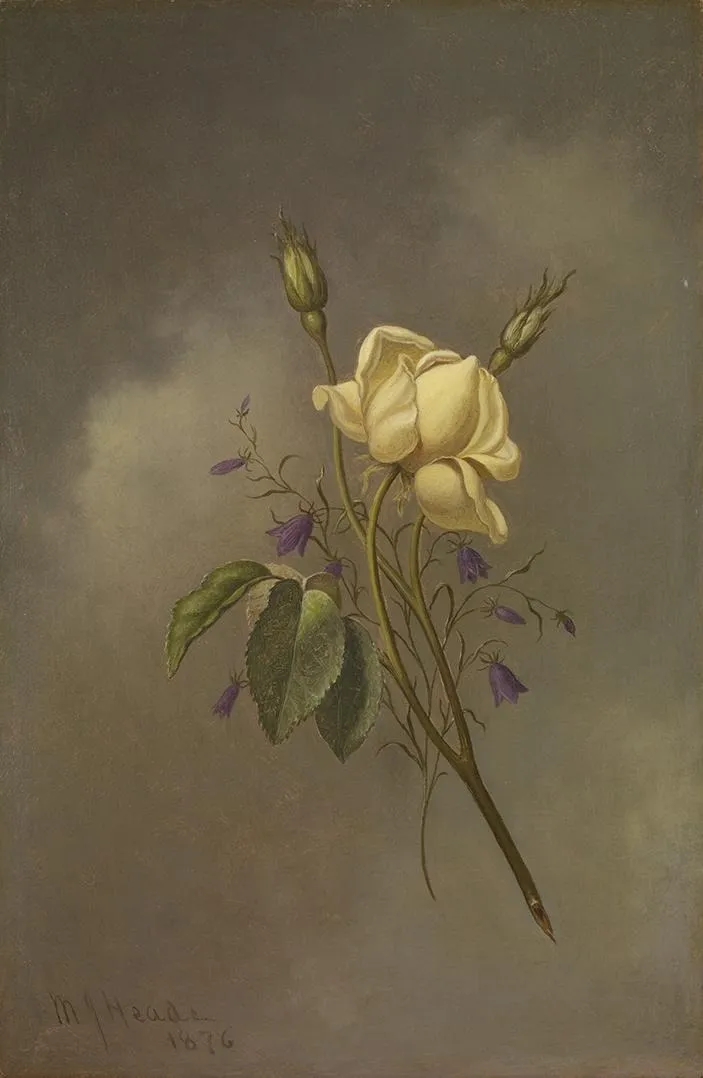
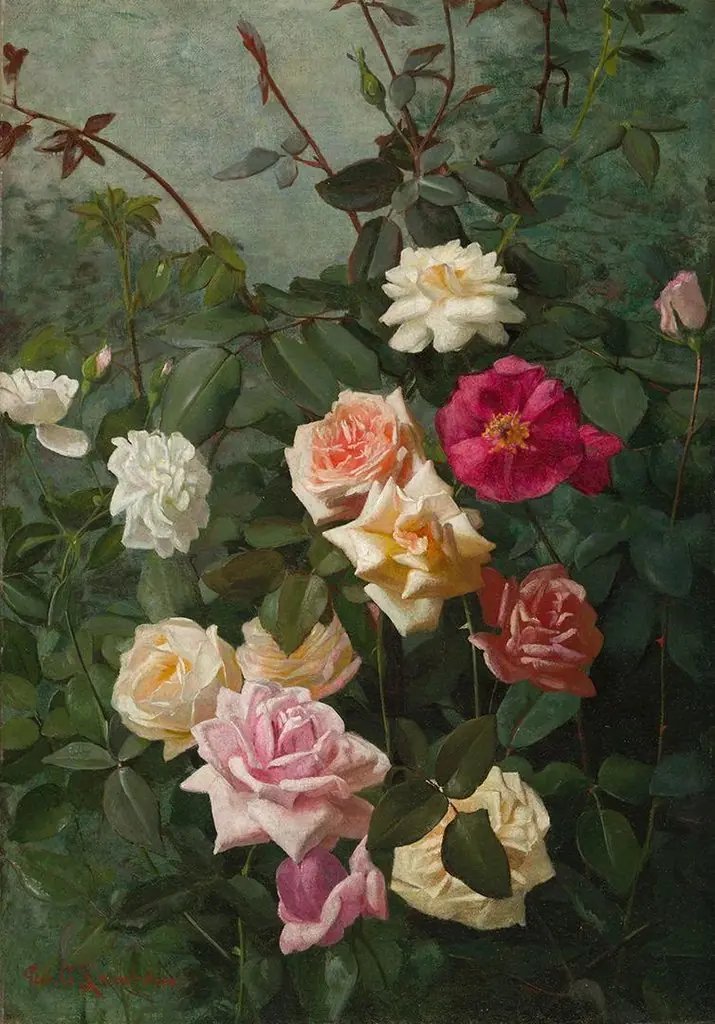
A Yellow Rose Against a Cloudy Sky is an unspecified painting by the American Impressionist artist Martin Johnson Heade. It dates from 1888 and is held in the collection of the Crystal Bridges Museum of American Art.
About this work
Overview
Painted in 1888 by Martin Johnson Heade, this work presents a solitary yellow rose against a muted, overcast sky.
Painted in 1888 by Martin Johnson Heade, this work presents a solitary yellow rose against a muted, overcast sky. Unlike his more widely known marsh and coastal scenes, this piece shifts focus to a quiet floral subject. Heade’s approach here is intimate and restrained, emphasizing natural form over dramatic narrative. The painting resides in the collection of Crystal Bridges Museum of American Art.
Subject & Meaning
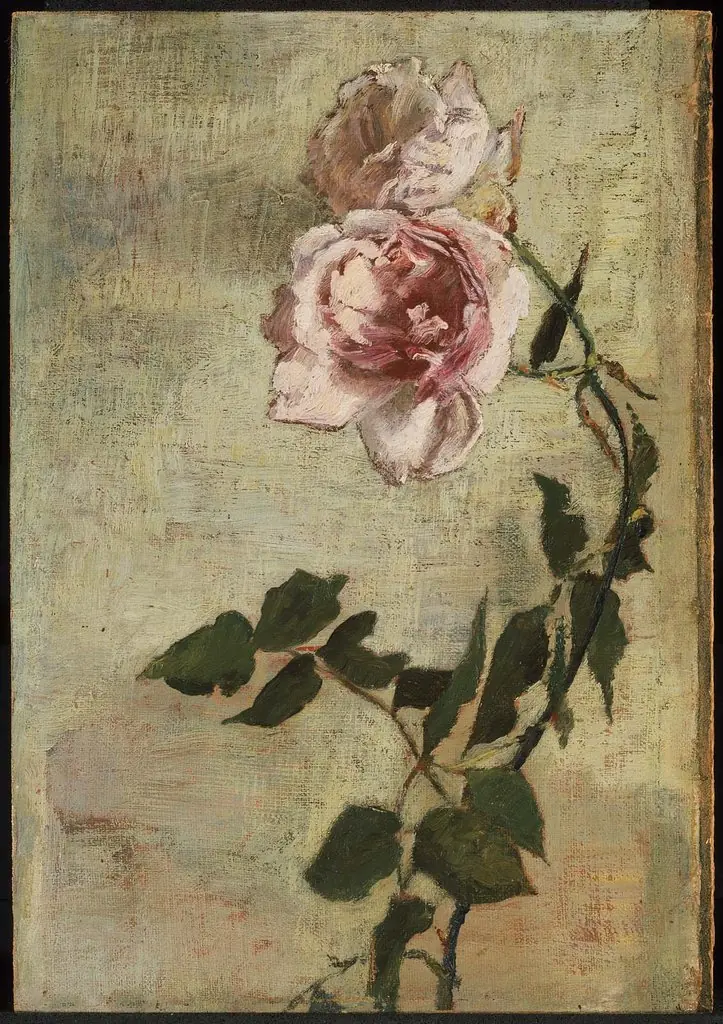
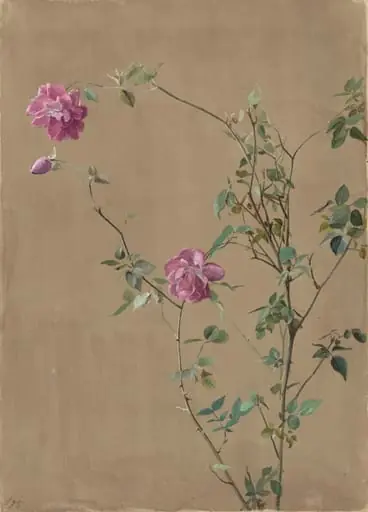
The composition centers on a single bloom, surrounded by subtle clusters of small purple buds and leaves. The rose, rendered with precision, stands apart from its soft, indistinct background, suggesting solitude or quiet contemplation. There is no overt symbolism; instead, the work invites attention to the delicate beauty of a transient natural object, reflecting Heade’s sustained interest in understated naturalism.
Technique & Style
Heade employed fine brushwork to capture the rose’s petals and stems with delicate realism, using subtle gradations of yellow and green to suggest light and volume. The sky, rendered in soft gray-brown tones, lacks defined clouds but conveys atmospheric depth through tonal variation. His method avoids the loose brushwork of American Impressionism, favoring a controlled, almost photographic clarity rooted in 19th-century naturalist traditions.
History & Provenance
Created late in Heade’s career, the painting reflects his continued exploration of botanical subjects after decades of landscape work. It entered the Crystal Bridges Museum of American Art’s collection through established acquisition channels, though its earlier ownership history remains undocumented in public records. The work’s survival and preservation highlight its quiet significance within Heade’s broader oeuvre.
Context
While contemporaries like Winslow Homer and John Singer Sargent pursued bold social or narrative themes, Heade turned inward, focusing on solitary natural elements. This rose painting aligns with his late-period interest in still lifes and intimate botanical studies, a departure from the grandeur typical of American art at the time. It reflects a personal, meditative response to nature rather than a public statement.
Legacy
Though not widely exhibited during Heade’s lifetime, this painting now contributes to reassessments of his artistic range. Scholars recognize it as part of a quiet but persistent body of floral works that challenge assumptions about his solely landscape-oriented legacy. Its presence in a major museum underscores its role in expanding the understanding of American art beyond grand narratives.
Artist & collection

Artist
Martin Johnson Heade (August 11, 1819 – September 4, 1904) was an American painter known for his salt marsh landscapes, seascapes, and depictions of hummingbirds, often depicted with orchids, as well as lotus blossoms and other still lifes.

Museum
Crystal Bridges Museum of American Art
Continue through works from the same source collection.