Artwork
High Tide on the Marshes
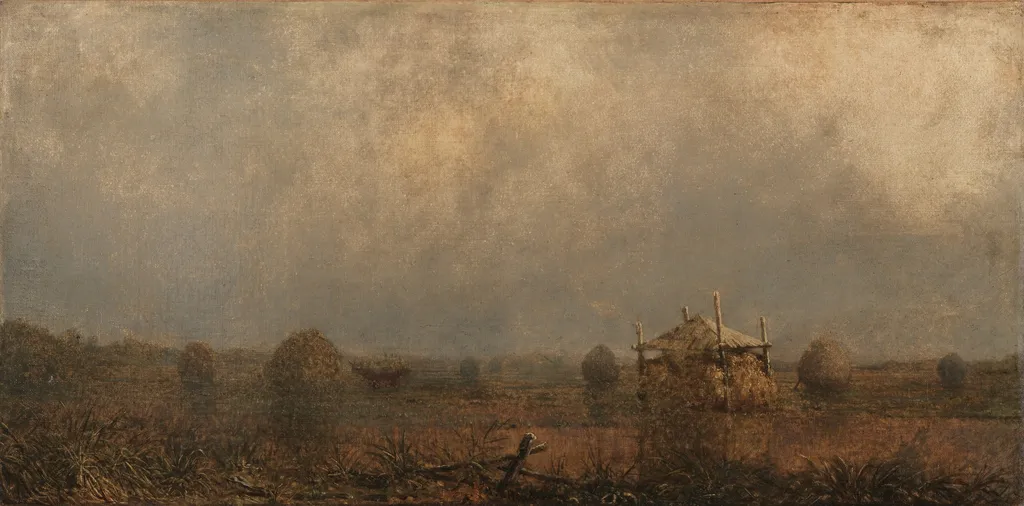
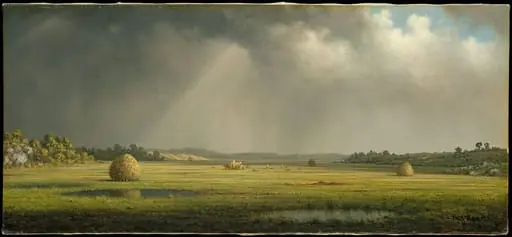
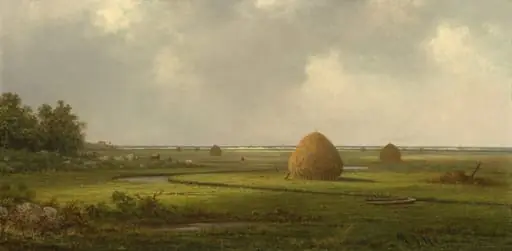
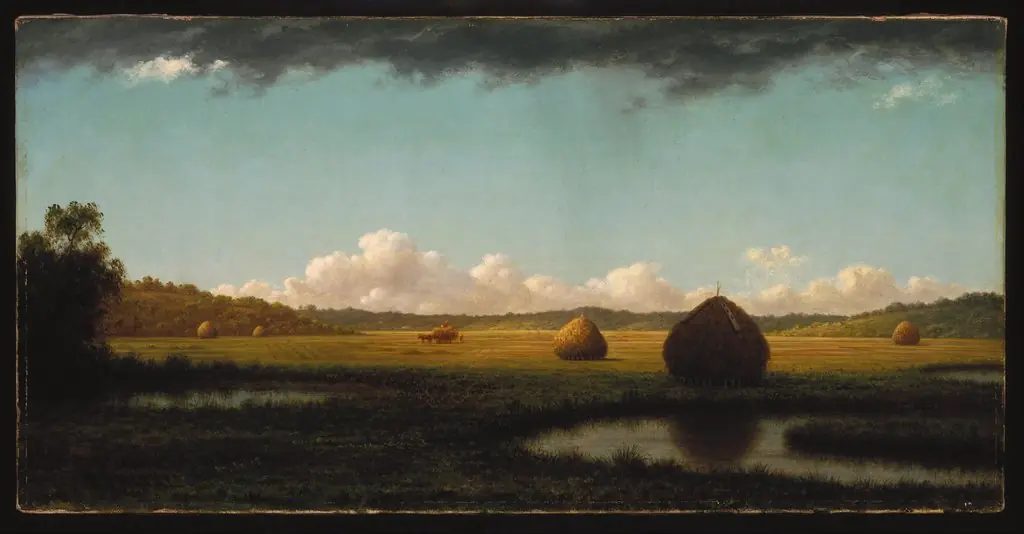
High Tide on the Marshes is an oil painting by the American Impressionist artist Martin Johnson Heade. It dates from 1872 and is held in the collection of the Cleveland Museum of Art.
About this work
Technique & Style
3 cm in width, a pronounced panoramic format that accommodates the broad expanse of marshland and the low horizon line characteristic of his coastal scenes.
High Tide on the Marshes is executed in oil paint on canvas, a medium and support consistent with Heade's broader landscape practice. The composition is developed on a horizontal canvas measuring 38.3 cm in height by 76.3 cm in width, a pronounced panoramic format that accommodates the broad expanse of marshland and the low horizon line characteristic of his coastal scenes. The horizontal orientation, combined with the oil medium, allows for the smooth blending and atmospheric tonal gradations associated with his luminist-influenced marsh paintings, producing a unified, tranquil surface treatment across the salt marsh landscape.
History & Provenance
High Tide on the Marshes was created by Martin Johnson Heade in 1872, executed in oil paint on canvas. The work entered the collection of the Cleveland Museum of Art, where it is held today. Its accession number, 490.1915, indicates it was accessioned by the museum in 1915.
No information is available in the provided sources regarding the original commission, prior ownership, or intermediate provenance of the painting between its creation and its acquisition by the Cleveland Museum of Art.
Overview
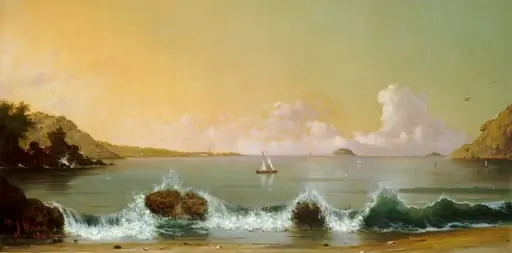
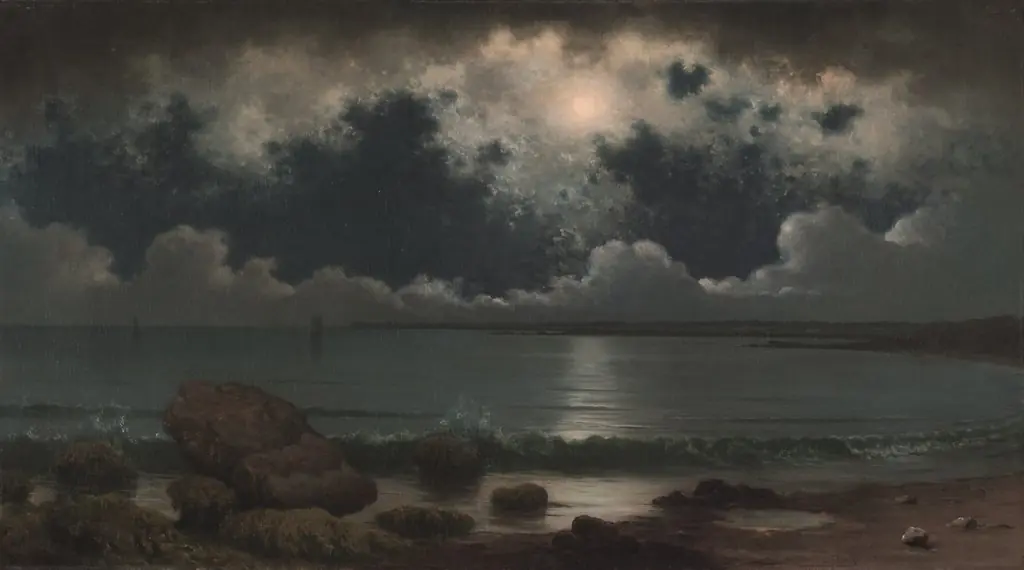
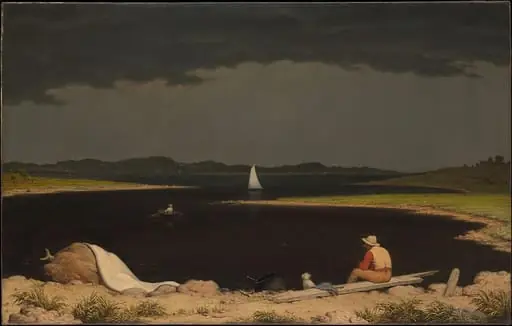
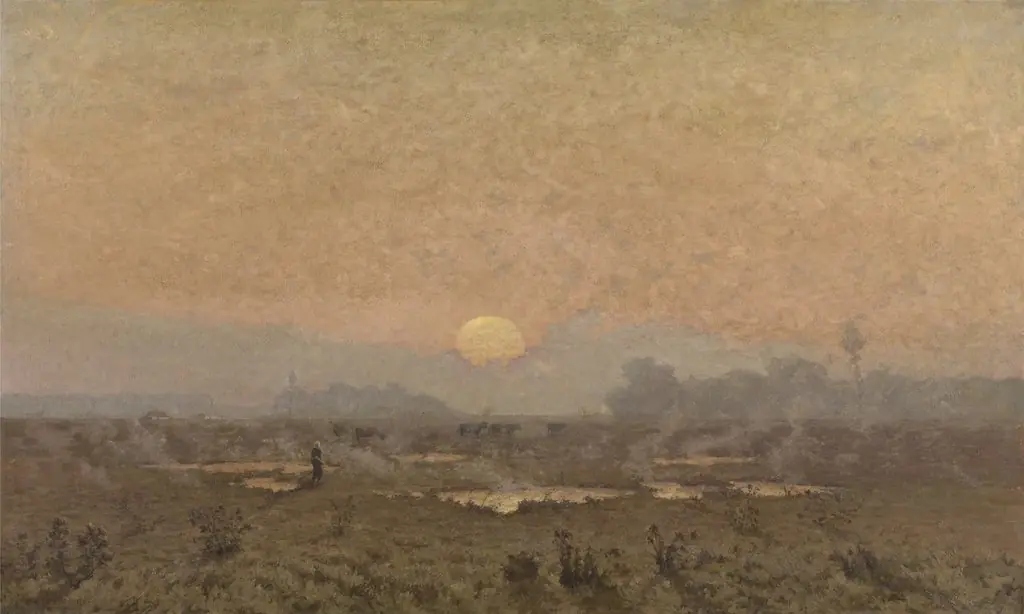
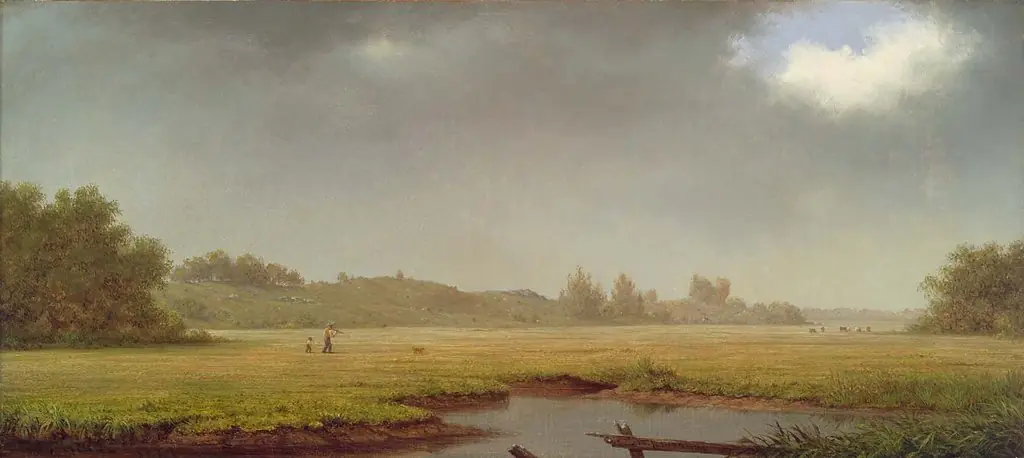
Created in 1872, High Tide on the Marshes is an oil painting by American artist Martin Johnson Heade. The work depicts a tranquil, expansive marsh at low light, its muted palette dominated by grays and faint earth tones. The composition stretches horizontally, emphasizing the flatness of the landscape and the subtle rise of a distant horizon.
Subject & Meaning
The scene presents a quiet tidal marsh, its surface dotted with dry grasses and sparse, leaf‑less shrubs. A modest thatched shelter sits near the right edge, suggesting human presence without disrupting the natural stillness. The overall atmosphere conveys a sense of solitude and the fleeting nature of the tide, inviting contemplation of the landscape’s quiet endurance.
Context
Heade’s marsh scenes diverge from the dominant romanticized vistas of his era, favoring a more observational, understated portrayal of the natural world. Working in the post‑Civil War period, he aligned with a growing interest among American artists in capturing local environments with a quieter, more empirical eye, laying groundwork for later Impressionist tendencies.
Artist & collection

Artist
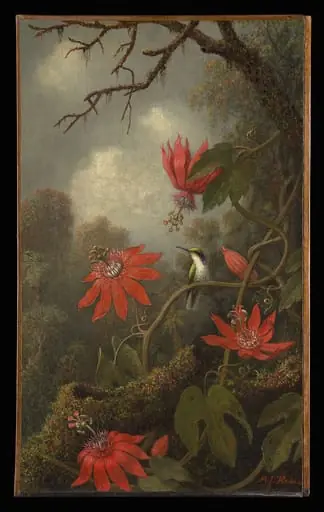
Martin Johnson Heade (August 11, 1819 – September 4, 1904) was an American painter known for his salt marsh landscapes, seascapes, and depictions of hummingbirds, often depicted with orchids, as well as lotus blossoms and other still lifes.