Artwork
Saint Anne Enthroned with the Virgin and Child
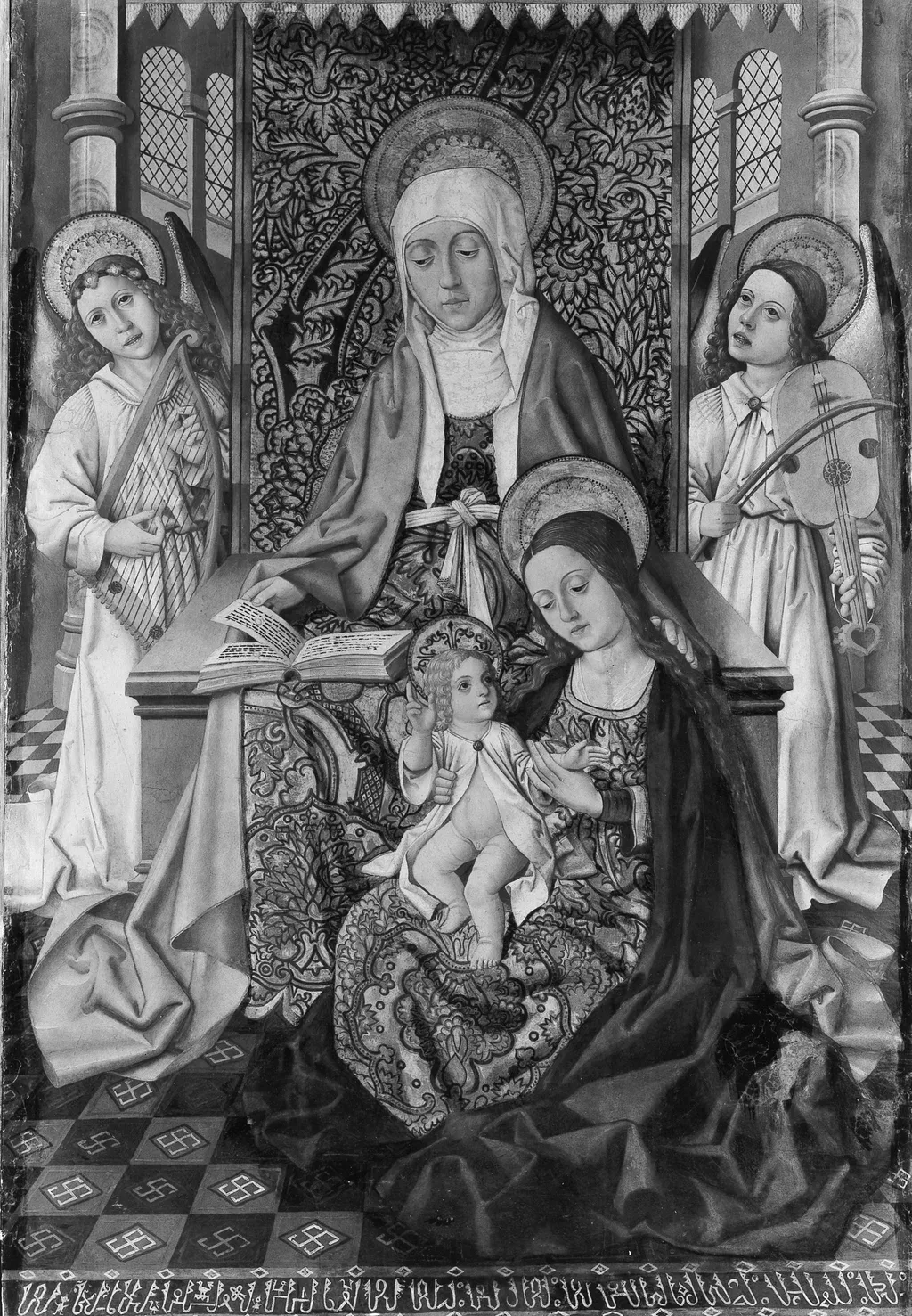
Saint Anne Enthroned with the Virgin and Child is a tempera painting by the Northern Renaissance artist Master of Osma. It dates from 1500 and is held in the collection of the Metropolitan Museum of Art.
About this work
Subject & Meaning
This iconography emphasizes the three‑generation holy family and the transmission of divine teaching, a common devotional motif in late medieval Spanish art.
The work portrays Saint Anne seated on a throne, flanked by the Virgin Mary holding the infant Jesus, with a musical instrument present in the composition. This iconography emphasizes the three‑generation holy family and the transmission of divine teaching, a common devotional motif in late medieval Spanish art. The inclusion of the instrument suggests a lyrical element, reinforcing the sacred narrative.
As a religious painting, the piece functions as a visual meditation on lineage and maternal intercession, inviting contemplation of the sacred bond between grandmother, mother, and child.
Technique & Style
The panel is painted in tempera on wood, with extensive use of gold leaf applied in punch-work patterns for the halos and throne back. The figures are modeled with fine, parallel tempera strokes, while the Virgin’s drapery shows subtly blended glazes over a reddish imprimatura. The Child’s flesh is rendered with delicate, translucent layers, and Saint Anne’s mantle uses deeper, more opaque tempera to contrast with the luminous gold ground.
The composition’s symmetry and hieratic scale reflect late medieval conventions, reinforced by the rigid verticality of the throne and the stacked arrangement of the three principal figures. Handling reveals careful underdrawing visible in infrared reflectography, indicating adjustments to the Virgin’s gesture before painting.
History & Provenance
Painted circa 1500, the panel is attributed to the Master of Osma and depicts the Virgin and Child with Saint Anne enthroned. It entered the collection of Mme d’Oliviera before passing to the Metropolitan Museum of Art, where it is currently held. The work was first recorded in the exhibition “5 Centuries of Spanish Art” and later in “Spanish Art: Fifteenth Century to Modern,” indicating early public display and scholarly attention in the mid-twentieth century.
The painting Saint Anne Enthroned with the Virgin and Child is held in the collection of the Metropolitan Museum of Art. While the work is attributed to the Master of Osma and dated to approximately 1500, its provenance includes a previous association with Mme d'Oliviera. The artwork, executed in tempera and gold leaf on wood, has been featured in specific exhibitions, including '5 Centuries of Spanish Art' and 'Spanish Art: Fifteenth Century to Modern.'
The source material confirms the museum's location as the primary holding institution for this religious panel, though a specific accession number is not provided in the available records.
Context
Created circa 1500 by the Master of Osma, Saint Anne Enthroned with the Virgin and Child stands as a significant example of Spanish religious painting from the turn of the sixteenth century. Executed in tempera and gold leaf on wood, the work reflects the enduring influence of late Gothic traditions while contributing to the broader narrative of Iberian devotional art. The painting's attribution to the anonymous Master of Osma situates it within a specific regional workshop context, characterized by its distinct stylistic approach to figural representation and sacred iconography.
Its inclusion in major exhibitions, such as "5 Centuries of Spanish Art" and "Spanish Art: Fifteenth Century to Modern," underscores its recognized importance in the canon of Spanish art history. Currently held in the collection of the Metropolitan Museum of Art, the piece serves as a key reference for scholars studying the transition of religious imagery in early modern Spain.
Overview
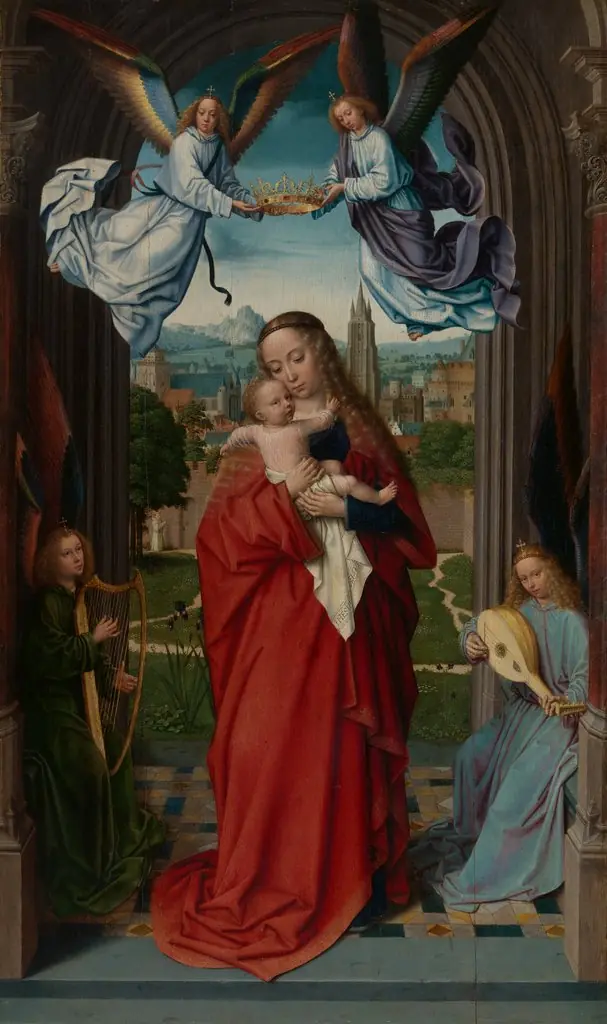
This painted panel, titled Saint Anne Enthroned with the Virgin and Child, depicts a central religious scene. It features Saint Anne, crowned and holding the Christ Child, alongside the Virgin Mary who is engrossed in a book. Two musical children flank the main figures, contributing to a tightly composed arrangement. The artwork is rendered on wood, presenting a devotional image that emphasizes familial piety and spiritual contemplation.
Own this work as a print
Artist & collection
Artist
The Master of Osma is the conventional name given to an anonymous Spanish painter active in Castile in the later fifteenth century.

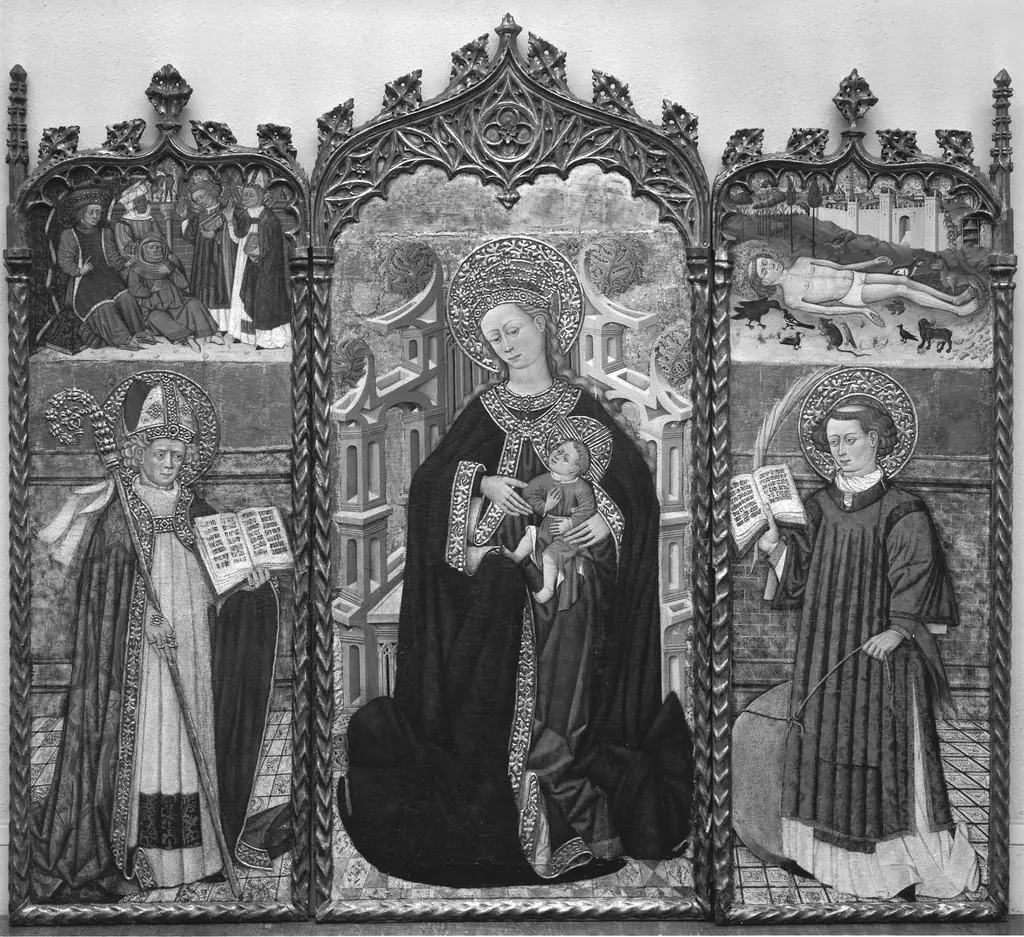
- Virgin and Child Enthroned with Saints Valerius and Vincent
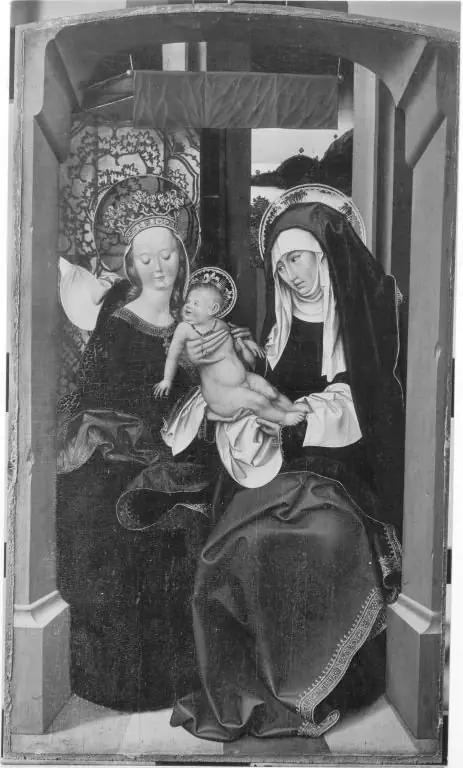 Teile eines Altares: Hl. Anna Selbdritt
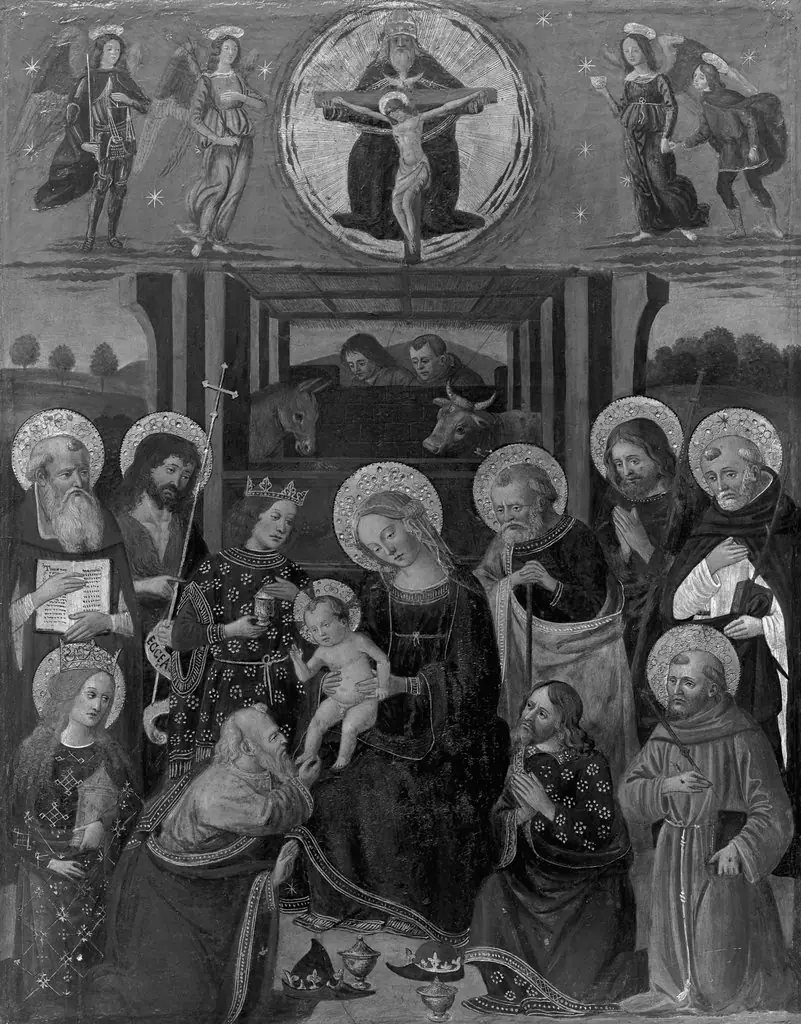 Adoration of the Kings
 Madonna and Child Enthroned with Two Angels and a Donor
 Madonna and Child with Angels
 Virgin and Child with Saints Mary Magdalen and John the Baptist
 Virgin and Child Enthroned
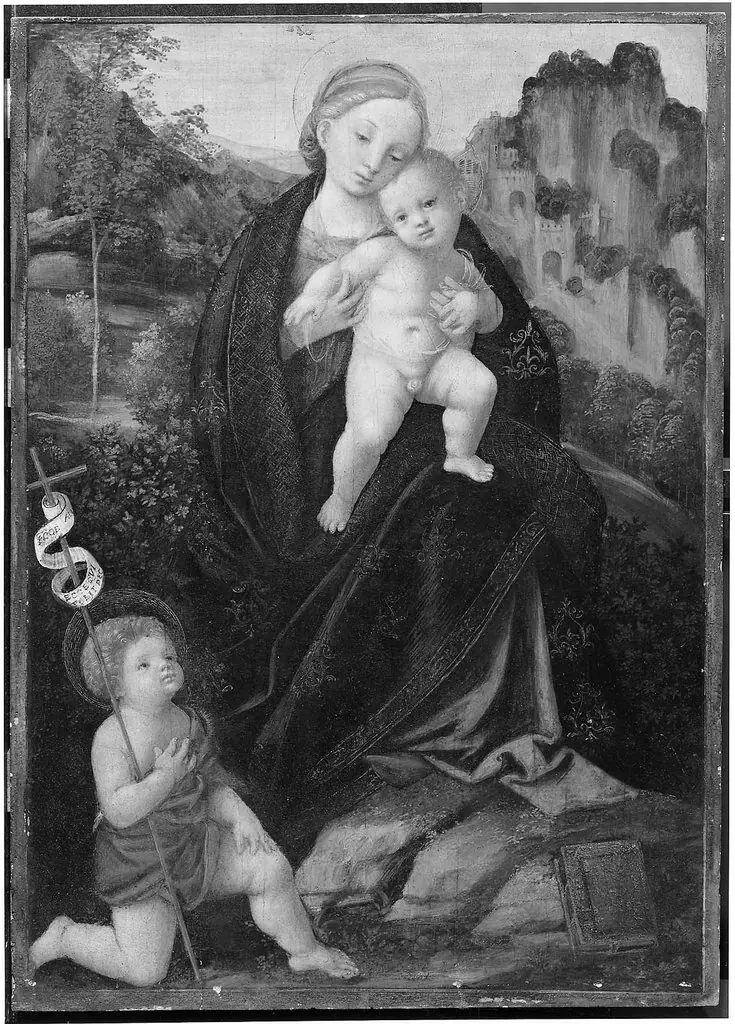 Virgin and Child with the Infant Saint John the Baptist
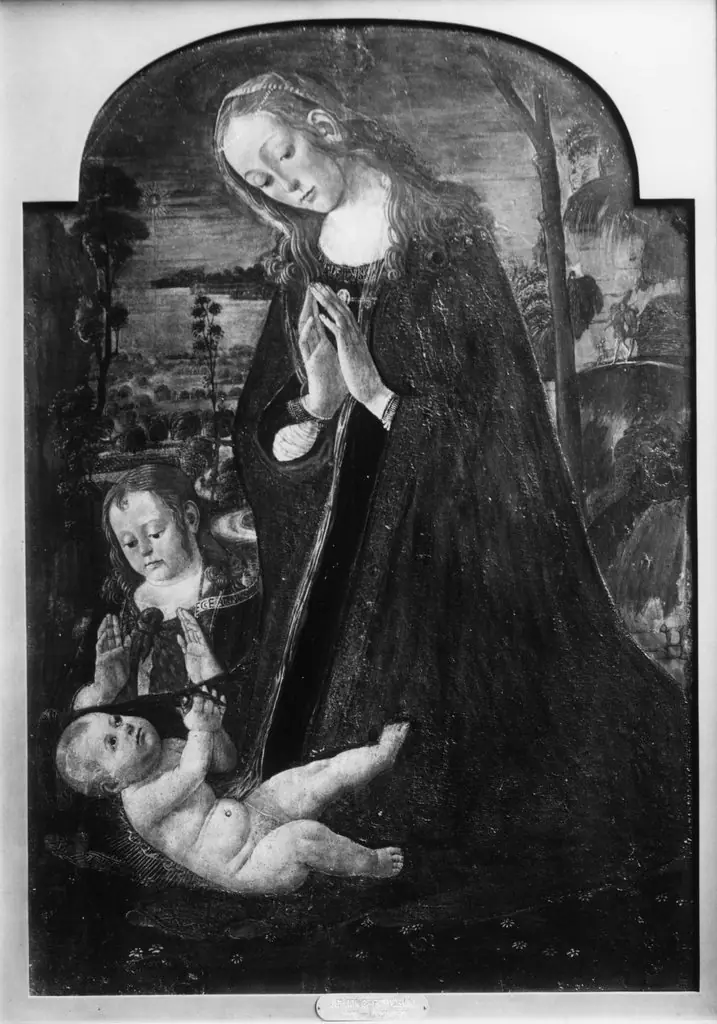 Madonna Adoring the Child
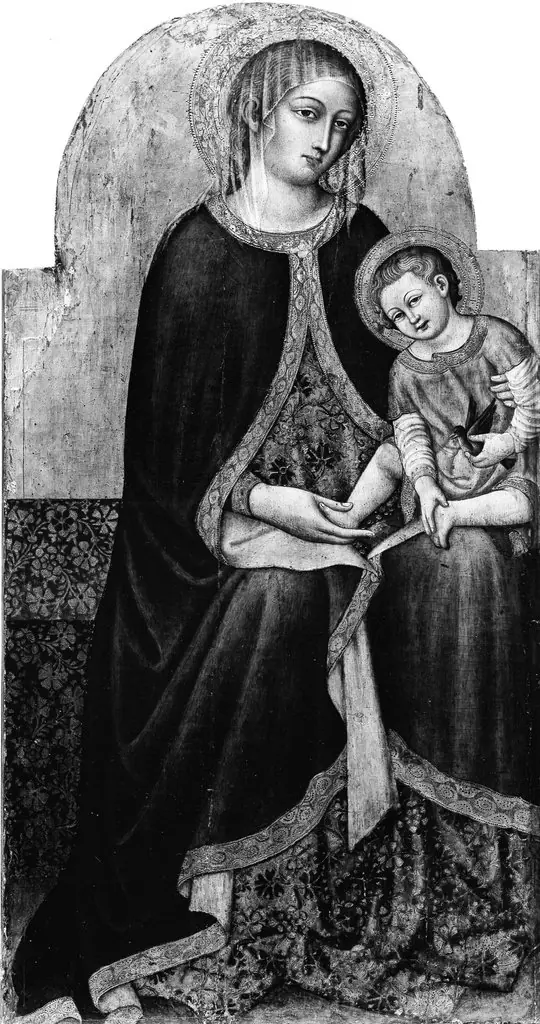 Madonna and Child with Saints
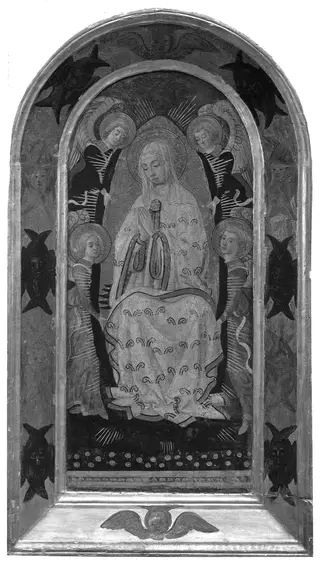 Mary in Glory
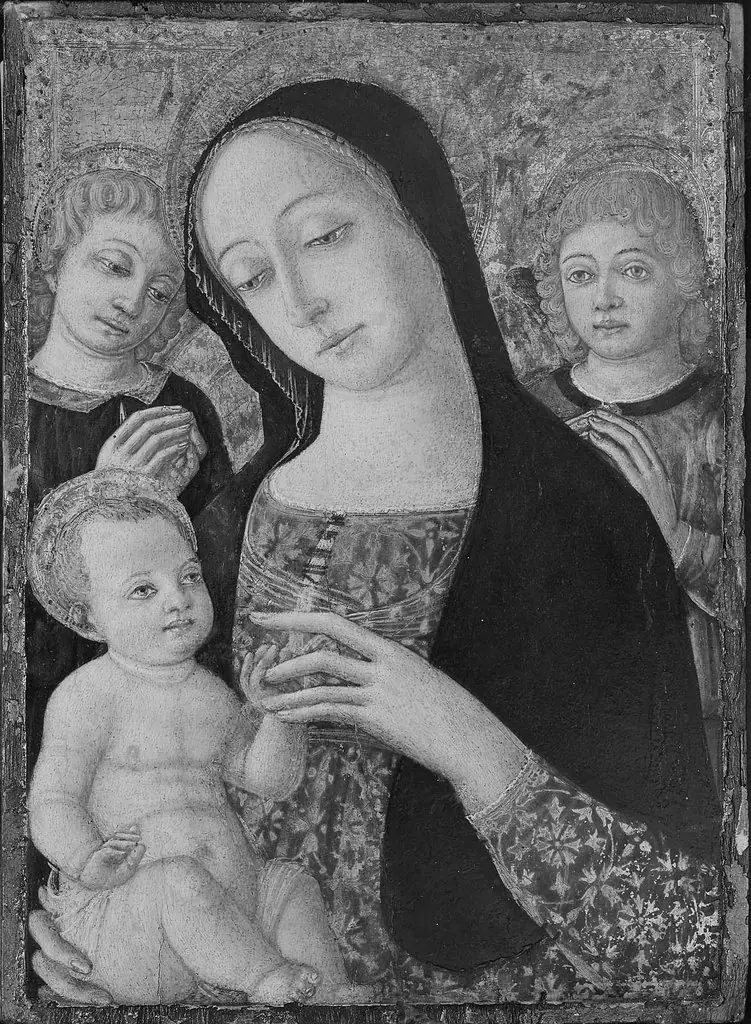 Virgin and Child with Two Angels