Artwork
Vision of St Augustine
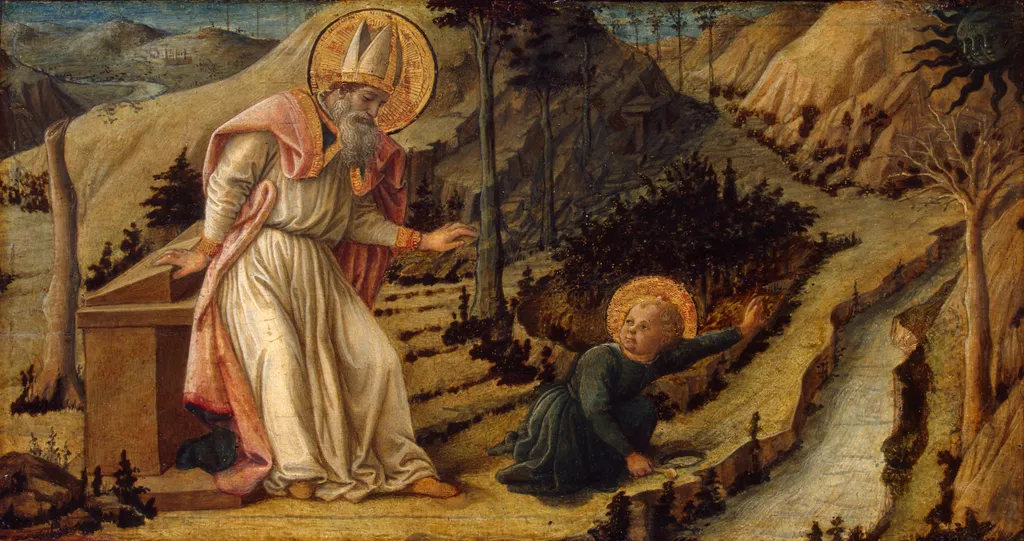
Vision of St Augustine is a tempera painting by the Early Renaissance artist Filippo Lippi. It dates from 1452 and is held in the collection of the Hermitage Museum.
About this work
Overview
5 centimetres, this small devotional panel depicts a rare iconographic subject: the mystical vision experienced by Augustine of Hippo.
The Vision of St Augustine is a tempera painting on panel by the Florentine Renaissance master Filippo Lippi, dated to 1452. Measuring 28 by 51.5 centimetres, this small devotional panel depicts a rare iconographic subject: the mystical vision experienced by Augustine of Hippo. The work is held in the collection of the Hermitage Museum in Saint Petersburg, where it arrived after confiscation from the collection of Princess of Oldenburg (1845-1925). Though modest in scale, the painting exemplifies Lippi's innovative approach to religious narrative, merging sacred subject matter with a carefully observed Tuscan landscape and sophisticated perspectival construction.
Subject & Meaning
The painting illustrates an uncommon vision attributed to Saint Augustine, in which the saint encounters a small child attempting to remove water from the sea with a spoon or shell. According to the legend, when Augustine questions this futile labour, the child explains that human comprehension of the divine mystery of the Holy Trinity, Augustine's own scholarly preoccupation, is as vain as emptying the ocean with such a small vessel. Lippi adapts this narrative with notable modifications: the sea becomes a river positioned at the right of the composition, and the child kneels on rocky ground rather than a beach. Augustine appears in full episcopal regalia, wearing a white mitre and long white robes with pink and red accents, his right hand resting on a wooden lectern while his left extends toward the child. Both figures bear inscribed gold halos. The sun in the upper right appears with three faces, a direct symbol of the Trinity that anchors the theological meaning of the scene. The distant walled city visible at the left may allude to Augustine's City of God.
Technique & Style
Executed in tempera on panel, the work displays the characteristic precision and luminosity of the medium. The surface shows fine craquelure throughout, consistent with its age. Lippi renders the figures with linear drapery folds and relatively flat modelling, set against a stylised yet perspectivally coherent landscape. The palette consists of earthy browns, muted greens, soft pinks and whites, with gold accents reserved for the halos. Light is even and diffused, with minimal deep shadow, creating a contemplative atmosphere. The landscape includes sparse trees, dark green shrubs, distant mountains under a pale blue sky, a small structure with a pitched roof in the middle distance, and a winding stream or path in the lower right foreground. The overall effect balances intimate human interaction with mounting spatial depth, demonstrating Lippi's engagement with contemporary developments in linear perspective while maintaining a lyrical, meditative quality.
History & Provenance
The panel was painted in 1452 in Italy, though the French Wikipedia suggests a broader dating of 1452 to 1465. It originally formed part of an unidentified multi-panel altarpiece. Before the Russian Revolution, the painting belonged to the collection of Princess of Oldenburg (1845-1925), from whom it was confiscated by the Bolsheviks. It subsequently entered the Hermitage Museum in Saint Petersburg, where it remains today. The French Wikipedia notes its inclusion in the Fondation Federico Zeri database, indicating its established place in scholarly literature.
Context
Filippo Lippi, a Carmelite friar working in Florence and its environs, was among the most influential painters of the early Renaissance. His treatment of sacred subjects with psychological immediacy and naturalistic detail profoundly shaped subsequent Florentine painting, from his own workshop assistant Botticelli to later generations. The Vision of St Augustine demonstrates Lippi's characteristic interest in narrative innovation: the substitution of a river for the sea in Augustine's legend, the placement of the scene within a recognisably Tuscan landscape, and the graceful, conversational pose attributed to the saint all reveal an artist reshaping traditional iconography to enhance human engagement. The Italian Wikipedia's observation that the river may evoke the Lethe of Dante's Paradiso canto XXXI, where the damned receive divine faith, suggests the layered literary and theological culture within which Lippi operated, though this specific identification remains a matter of interpretive speculation rather than established fact.
Legacy
The Vision of St Augustine occupies a significant though specialised place in the study of early Renaissance art. Its value lies less in wide reproduction or popular fame than in its exemplary demonstration of how Lippi and his contemporaries negotiated the demands of theological accuracy, narrative clarity, and emerging naturalism within the confined format of predella or devotional panels. The work's presence in the Hermitage, following its confiscation from aristocratic private ownership, illustrates the dramatic redistribution of European art collections during the twentieth century. For scholars of Renaissance iconography, the painting remains an important witness to the visualisation of Augustine's vision, a subject treated by few other artists with comparable subtlety.
Artist & collection
Artist
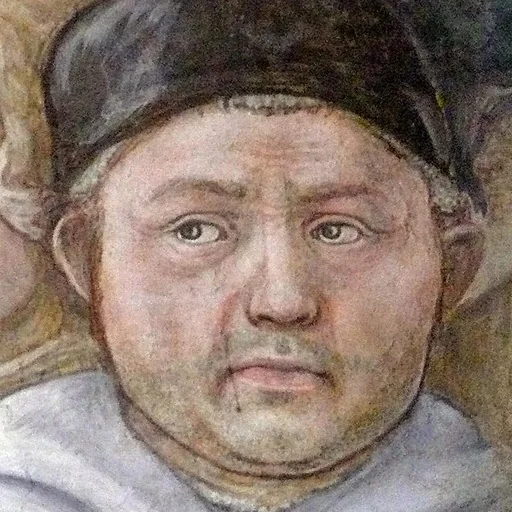
Filippo Lippi (c. 1406 – 8 October 1469), also known as Lippo Lippi, was an Italian Renaissance painter of the Quattrocento (fifteenth century) and a Carmelite priest. He was an early Renaissance master of a painting…

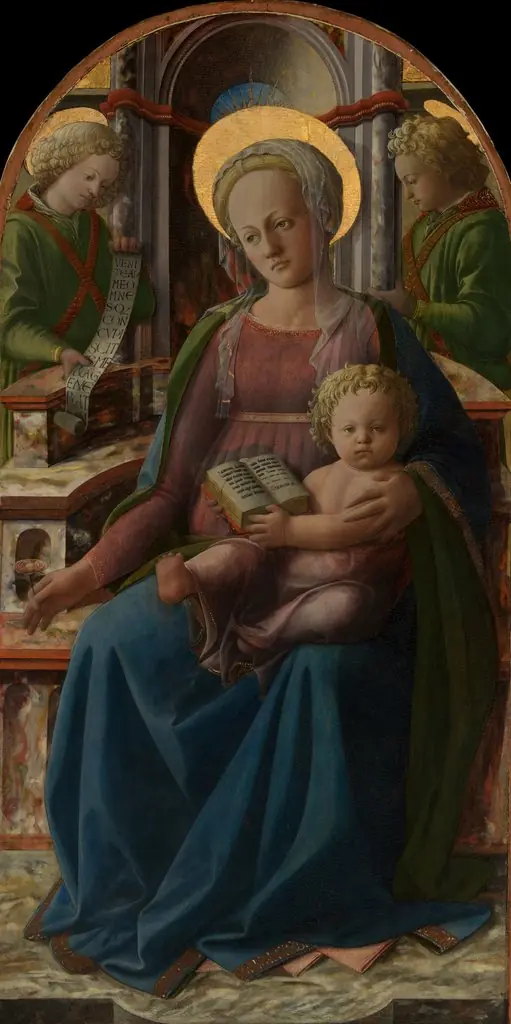 Madonna and Child Enthroned with Two Angels
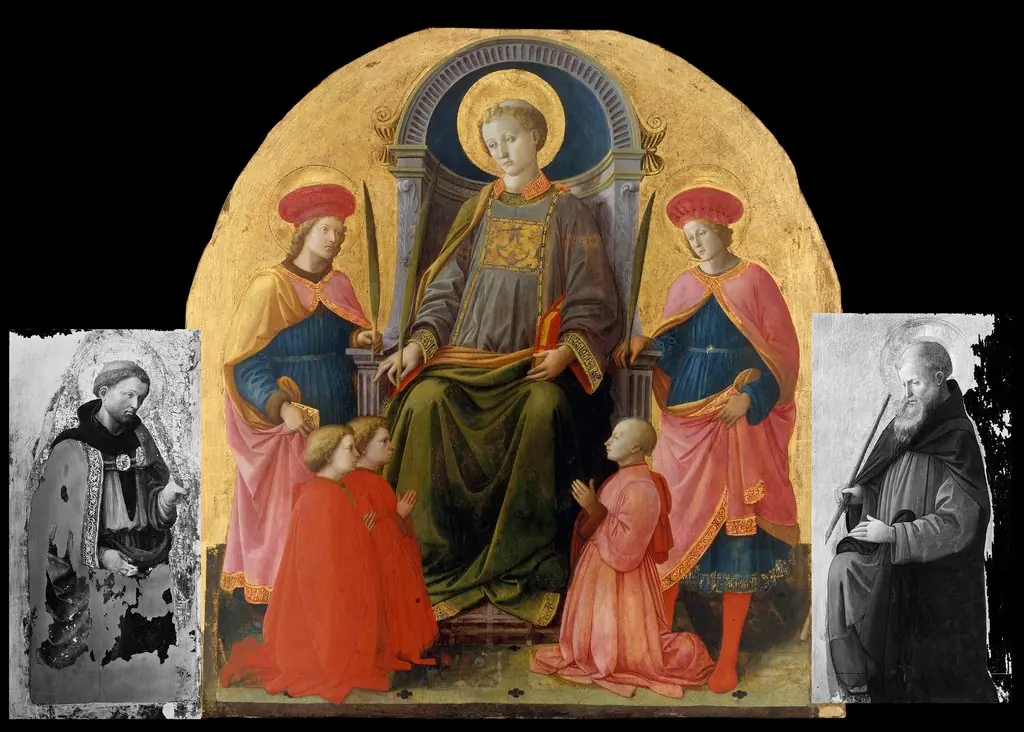 Saint Lawrence Enthroned with Saints and Donors
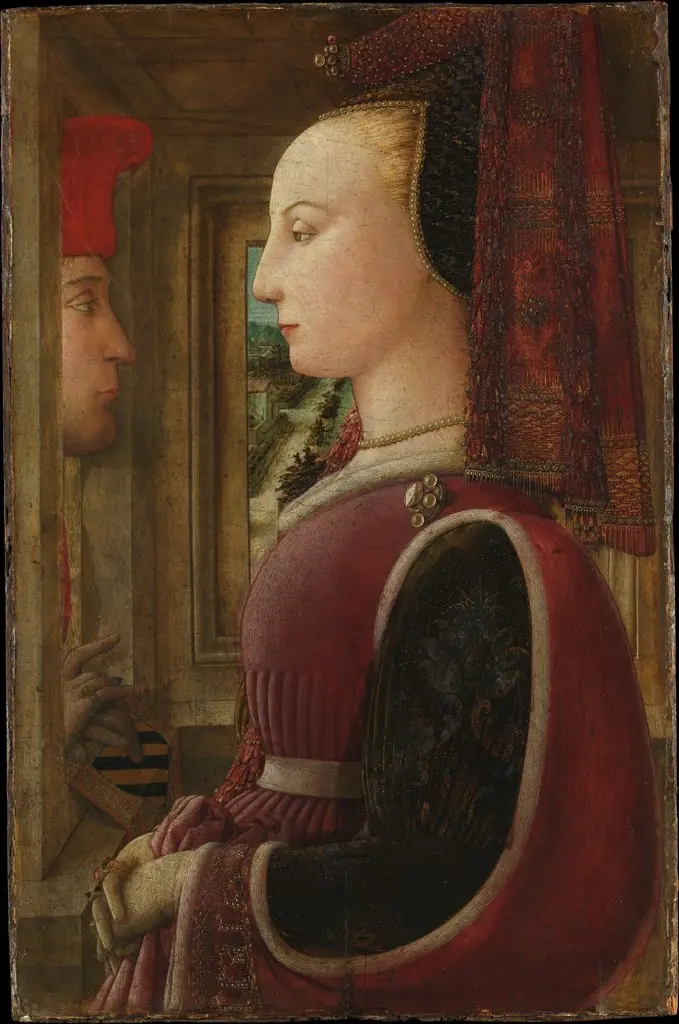 Portrait of a Woman with a Man at a Casement
 Saints Augustine and Francis, a Bishop Saint, and Saint Benedict
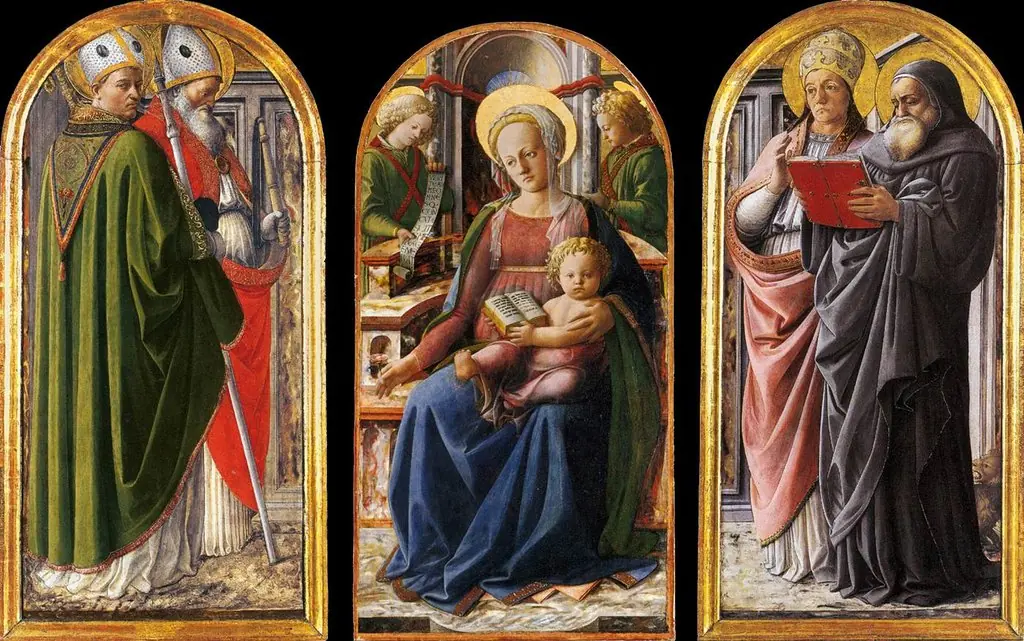 Madonna and Child with Angels and Saints
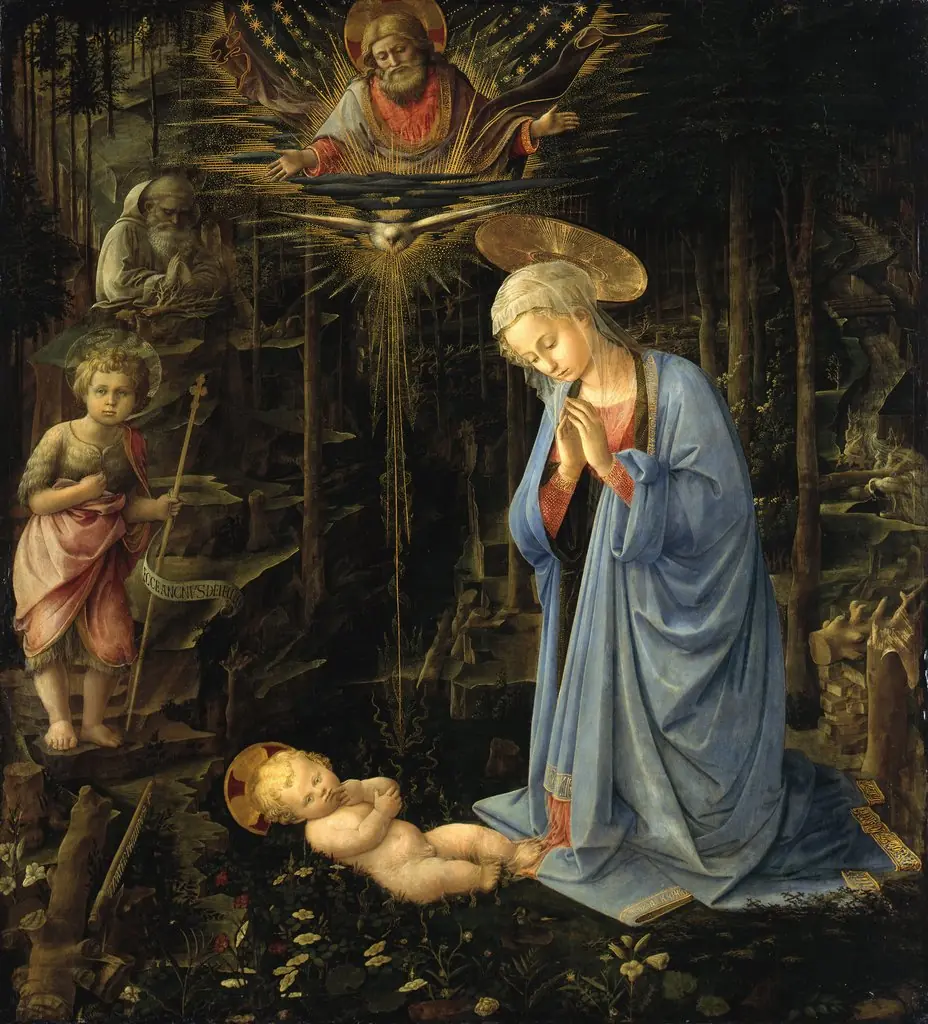 Adoration in the Forest
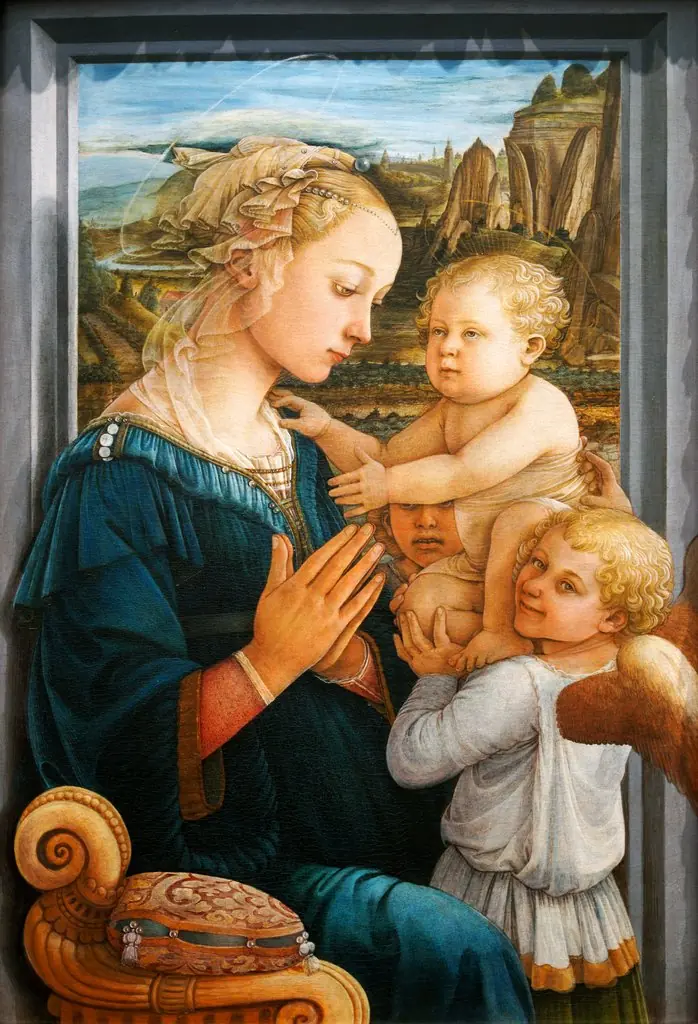 Madonna and Child
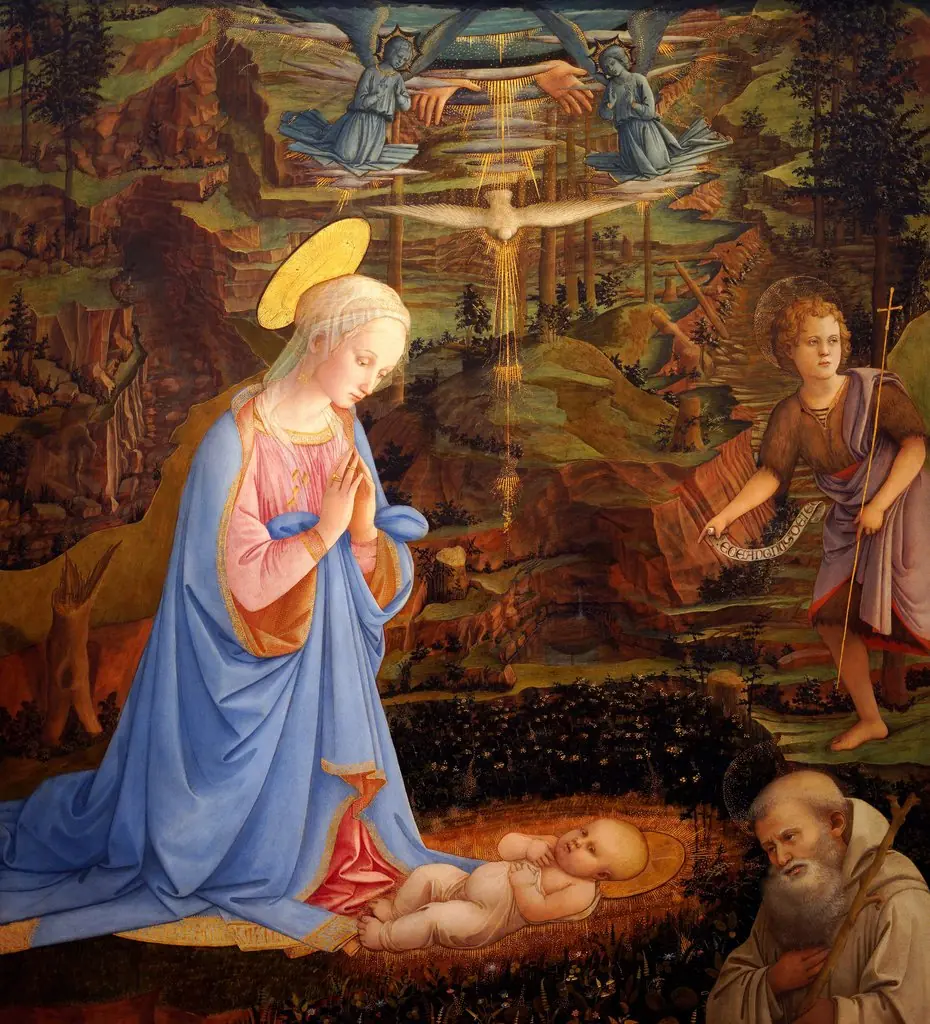 Adoration of Camaldoli
- Stoning of St. Stephen
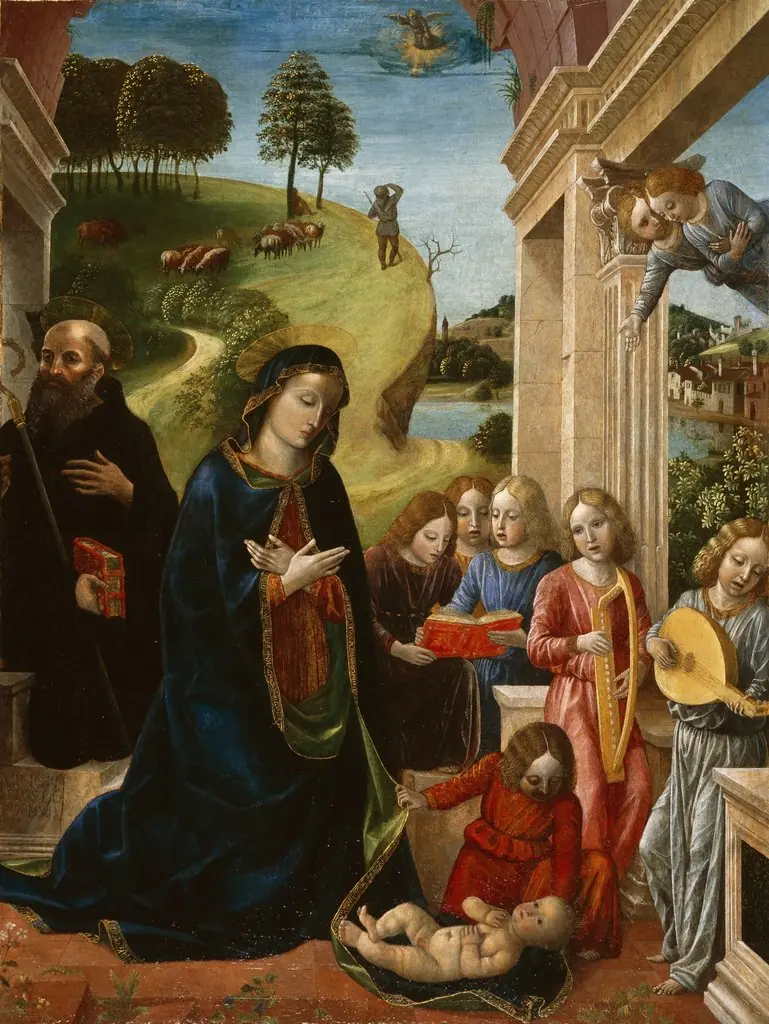 Adoration of the Child with St. Benedict and Angels
 Francis of Assisi, St Herculanus, St Luke and Apostle Jacob the Elder
 Saint Anthony Abbot Shunning the Mass of Gold
 Predella Panel Representing the Legend of St. Stephen: St. Stephen Preaching
![The Papacy Offered to Saint Gregory the Great [?], by Fra Angelico](https://artifactworldgallery.com/img/fra-angelico--the-papacy-offered-to-saint-gregory-the-great--6c28505dc47c9093-w320.webp) The Papacy Offered to Saint Gregory the Great [?]
The Papacy Offered to Saint Gregory the Great [?] The Meeting of Saint Anthony and Saint Paul
 Vision of St. Anthony the Hermit, detail of an altar wing from the Church of Saint Anthony in Szepesbéla (today Spišská Belá, Slovakia)
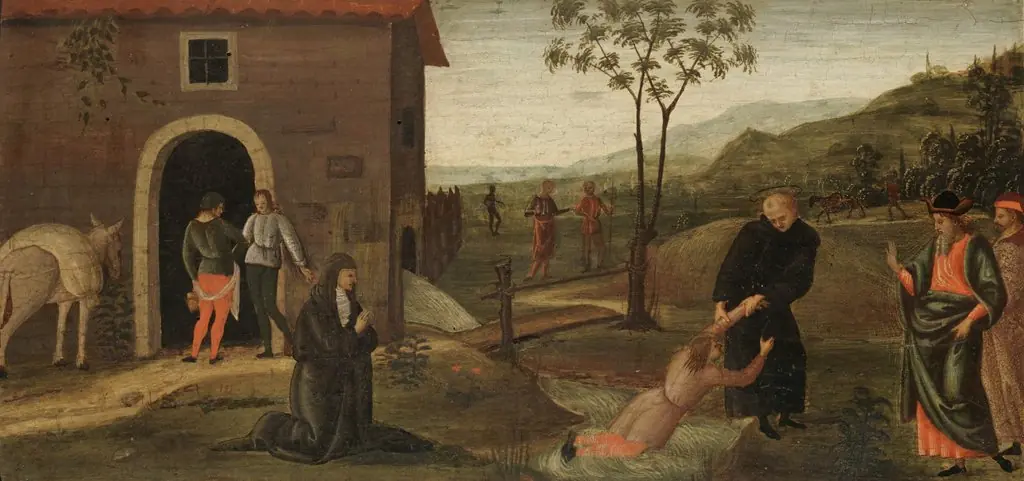 Saint Nicholas of Tolentino Rescuing a Boy from Drowning
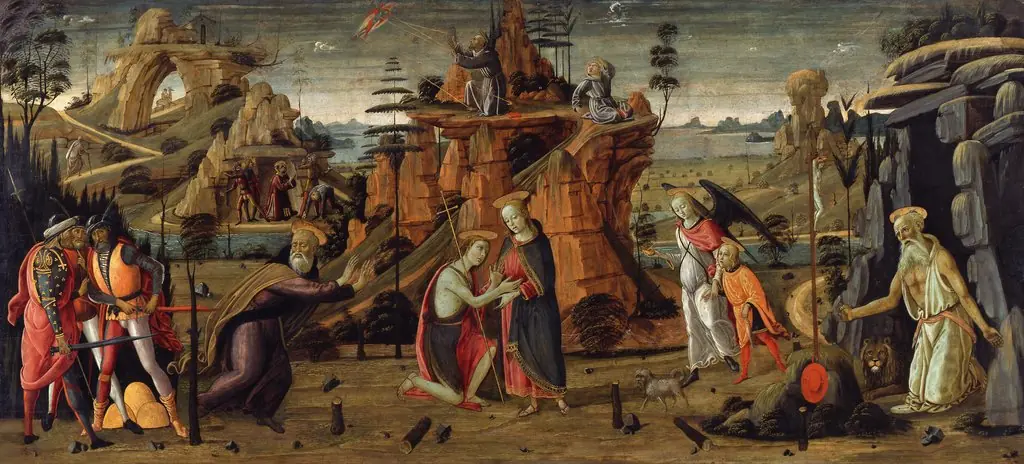 Landscape with biblical scenes and scenes from the legends of saints
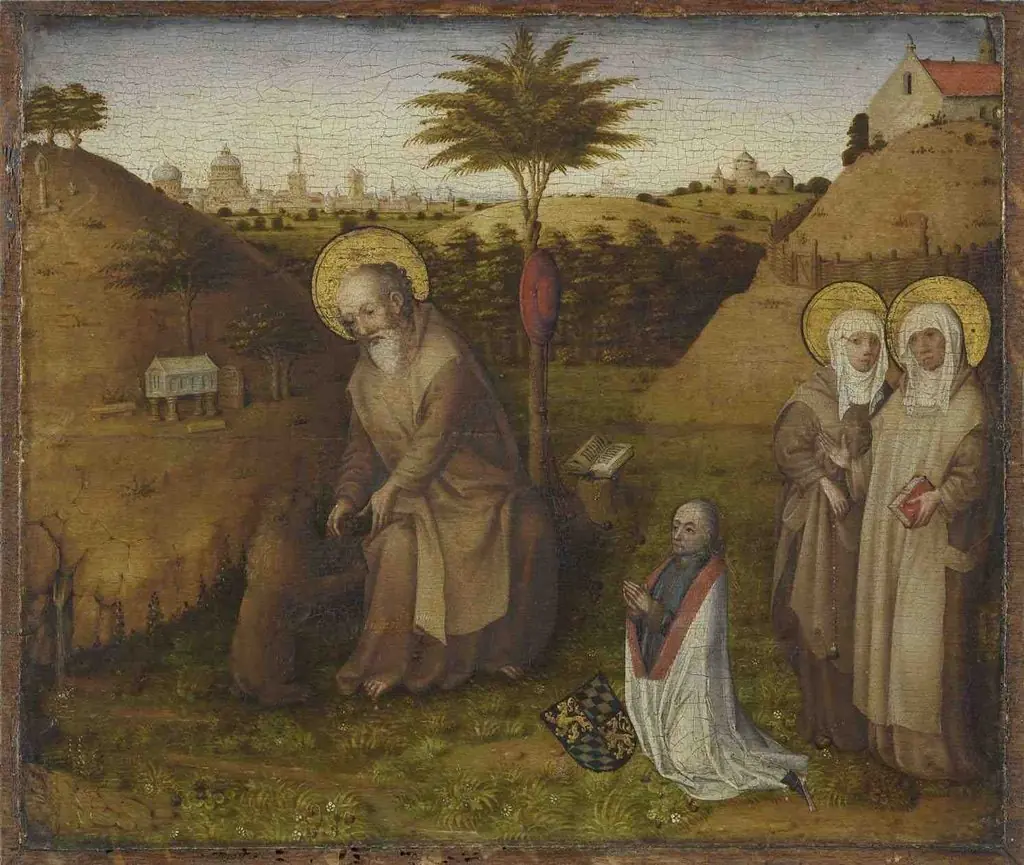 De H. Hiëronymus met de heilige nonnen Paola Romana en Eustochium
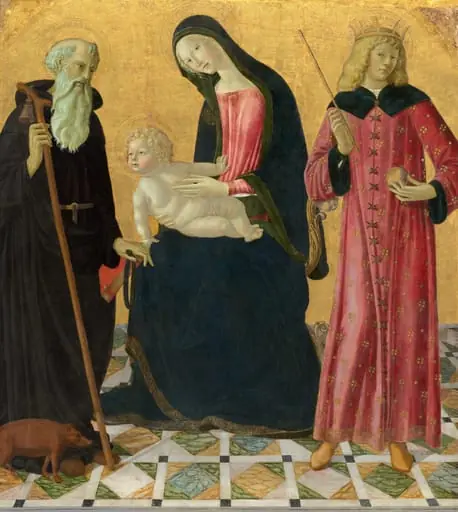 Madonna and Child with Saint Anthony Abbot and Saint Sigismund