Artwork
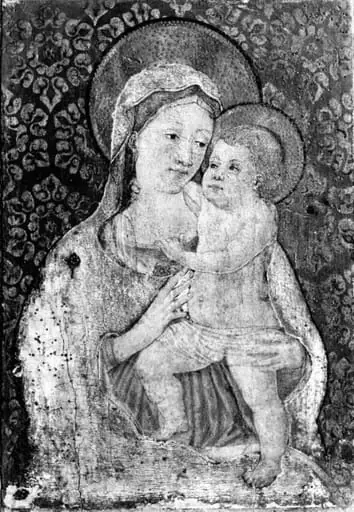
The Virgin and Child Enthroned
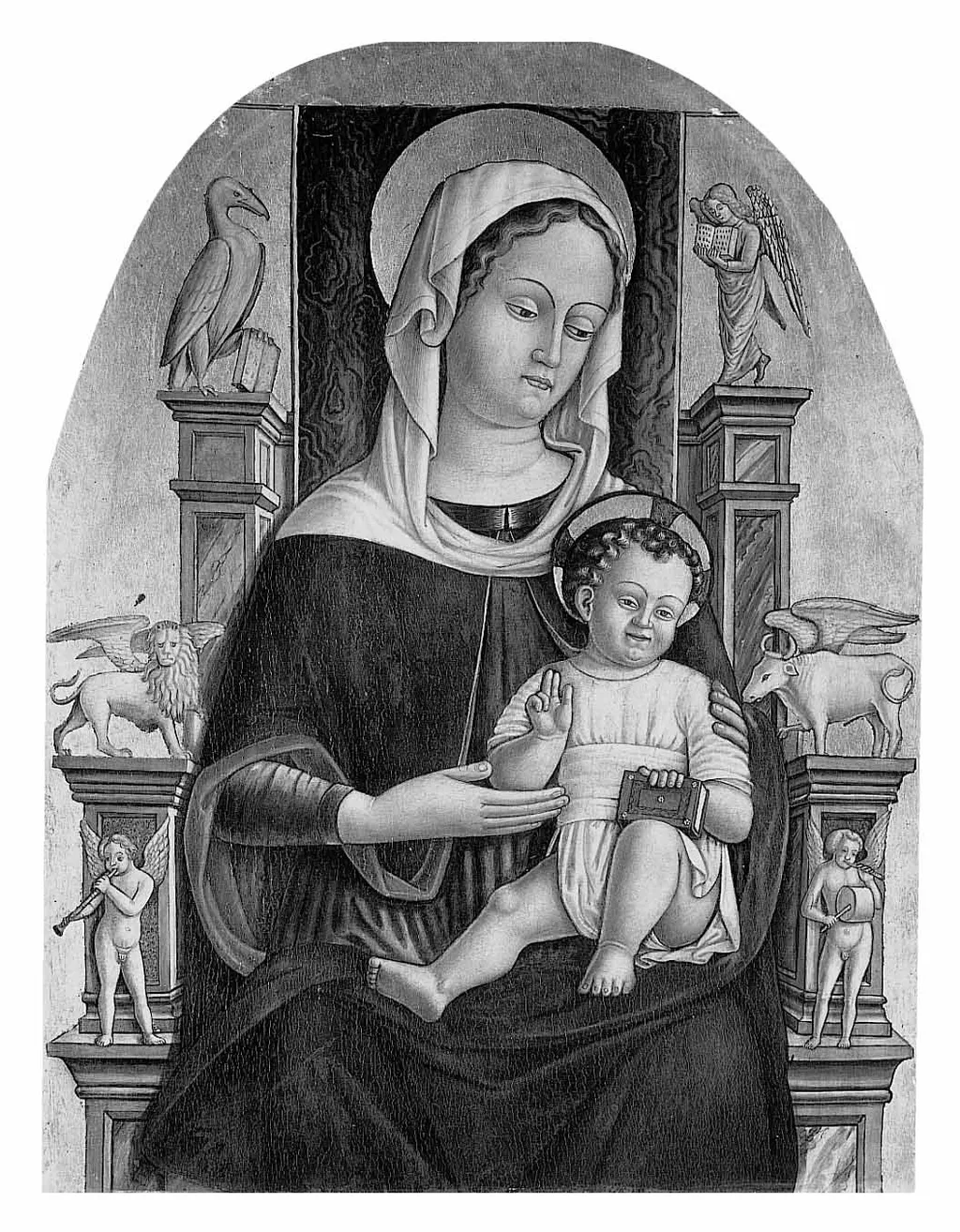
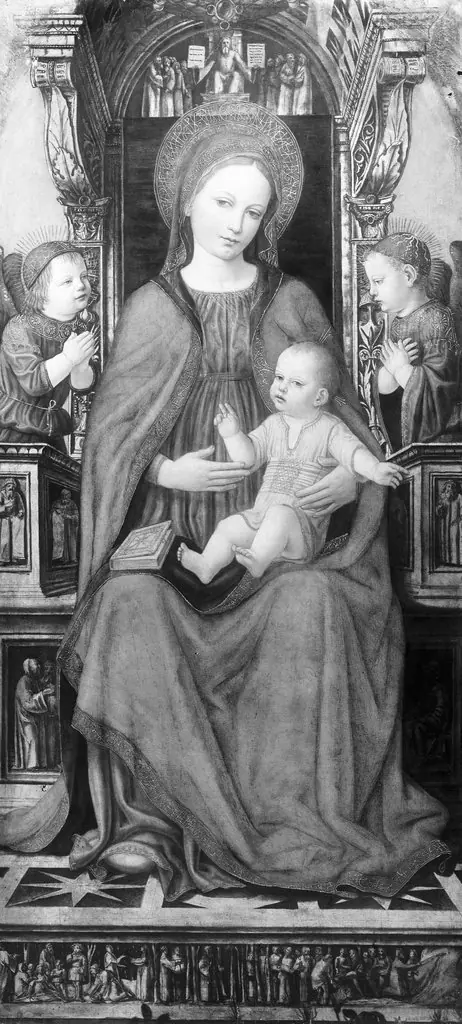
The Virgin and Child Enthroned is a paint painting by the Early Renaissance artist Matteo Cesa. It dates from 1475 and is held in the collection of the Gemäldegalerie Berlin.
About this work
Overview
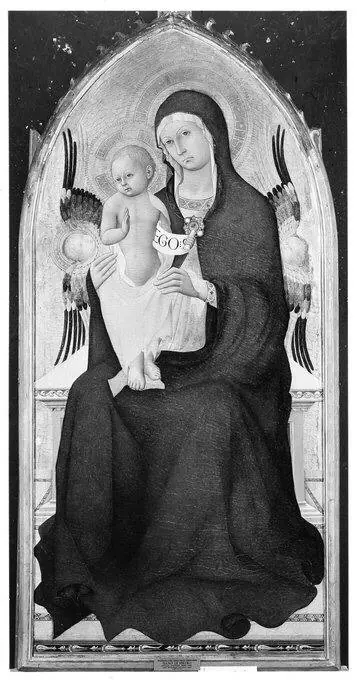
Created in 1475, The Virgin and Child Enthroned is a tempera painting by Matteo Cesa, a late‑Gothic artist working in Belluno during the mid‑15th century. The work presents the Virgin seated on an ornate throne, cradling the infant Christ, set against a dark, textured backdrop that includes modest decorative elements such as angelic figures and animal motifs.
Subject & Meaning
The composition follows a traditional devotional format, emphasizing the intimate bond between mother and child. Mary’s serene expression and the child’s direct gaze invite contemplation, reinforcing theological ideas of divine tenderness and the humanity of Christ within a sacred, contemplative space.
Technique & Style
Cesa’s handling of color and line reflects the influence of the Vivarini workshop, combining Gothic linearity with emerging Renaissance spatial awareness. The figures are rendered in delicate tempera, with careful modeling of drapery and a restrained palette that highlights the contrast between the luminous garments and the somber background.
History & Provenance
After its creation in Belluno, the painting entered various private collections before being acquired by the Gemäldegalerie in Berlin, where it remains on display. Documentation traces its attribution to Cesa based on stylistic parallels with other regional works of the same period.
Context
The work belongs to a wave of devotional images produced for personal or small‑church settings in the Veneto region. Its iconography aligns with contemporary liturgical practices, while its stylistic synthesis of Gothic and early Renaissance elements marks a transitional moment in northern Italian art.
Artist & collection
Artist
Matteo Cesa or de Cesa (c. 1425 – c. 1495) was a late-gothic style artist living in Belluno, Italy. He shows the influence of painters of the Vivarini clan. His son, Antonio, was also a painter. Among his works: Virgin…