Artwork
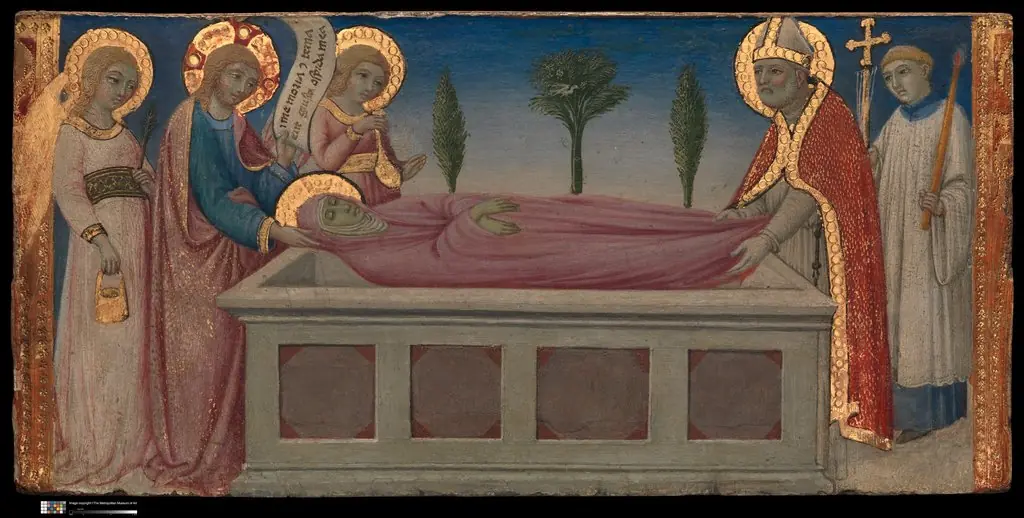
The Burial of Saint Zenobius
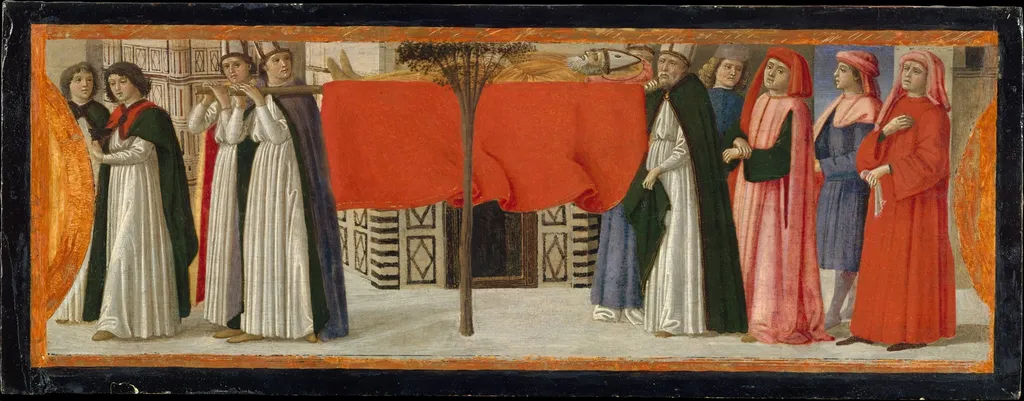
The Burial of Saint Zenobius is a tempera painting by the Early Renaissance artist Davide Ghirlandaio. It dates from 1490 and is held in the collection of the Metropolitan Museum of Art.
About this work
Subject & Meaning
The composition centers on the interment of the saint, with the figure of Zenobius shown as the focal subject of veneration.
The painting depicts the burial of Zenobius of Florence, an early bishop of the city whose remains are traditionally associated with miracles and the sanctity of Florentine religious life. The composition centers on the interment of the saint, with the figure of Zenobius shown as the focal subject of veneration. As a work of religious art executed in tempera and gold on panel, the piece belongs to the devotional tradition of late fifteenth-century Florence, where depictions of local saints served both as acts of piety and as civic commemoration.
The narrow horizontal format, measuring 15.9 by 41.3 centimeters, suggests the panel functioned as a predella element, accompanying a larger altarpiece dedicated to the saint. Through its subject matter, the work represents the enduring cult of Zenobius in Florence and the Ghirlandaio workshop's engagement with the city's sacred history.
Technique & Style
Executed in 1490 by Davide Ghirlandaio, this religious panel painting utilizes tempera and gold leaf as its primary materials. The work measures 15.9 centimeters in height and 41.3 centimeters in width. As a tempera painting on a wooden panel, the piece reflects the standard technical approach for small-scale devotional works of the late fifteenth century.
The inclusion of gold suggests a decorative handling intended to highlight the sacred nature of the depicted burial scene involving Saint Zenobius. The composition focuses on the narrative of the saint's interment, rendered within the constraints of a narrow, horizontal format typical for predella panels or similar liturgical furnishings of the period.
History & Provenance
The Burial of Saint Zenobius is a tempera painting on panel created in 1490 by Davide Ghirlandaio. The work portrays the interment of Saint Zenobius and is classified as religious art. Its dimensions measure 15.9 cm in height by 41.3 cm in width.
The painting is held in the collection of the Metropolitan Museum of Art, where it remains part of the museum's European paintings holdings.
Overview
Davide Ghirlandaio, an early Renaissance artist from Florence, completed The Burial of Saint Zenobius in 1490. This tempera painting depicts the funeral of Saint Zenobius, a significant figure in Florentine history. It is currently housed in The Metropolitan Museum of Art, offering insight into late 15th-century Italian religious art.
Artist & collection
Artist
Davide Ghirlandaio (1452–1525), also known as David Ghirlandaio and as Davide Bigordi, was an Italian painter and mosaicist, active in his native Florence.

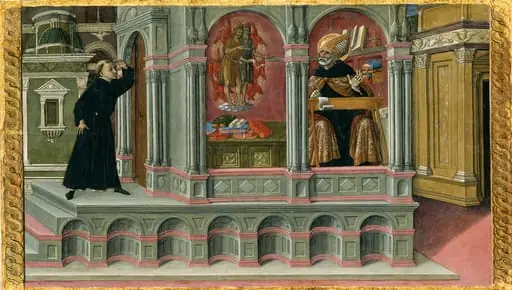 Saint Augustine's Vision of Saints Jerome and John the Baptist
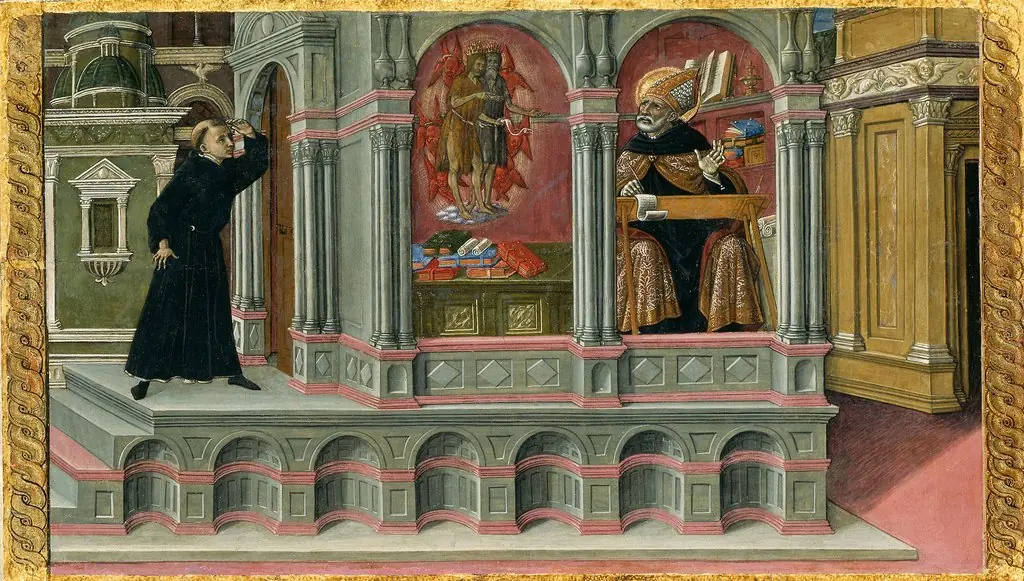 Saint Augustine's Vision of Saints Jerome and John the Baptist
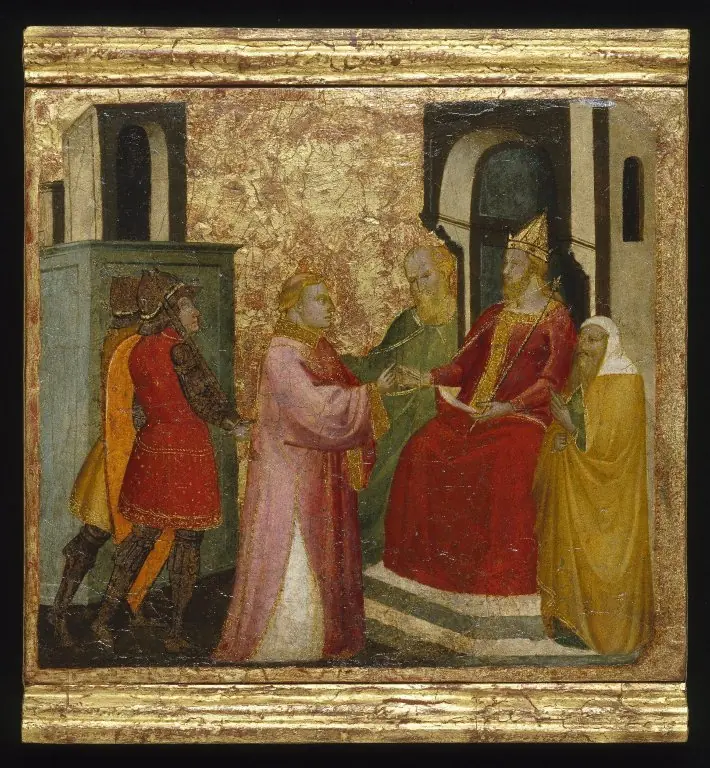 Saint Lawrence Arraigned Before the Prefect Valerianus
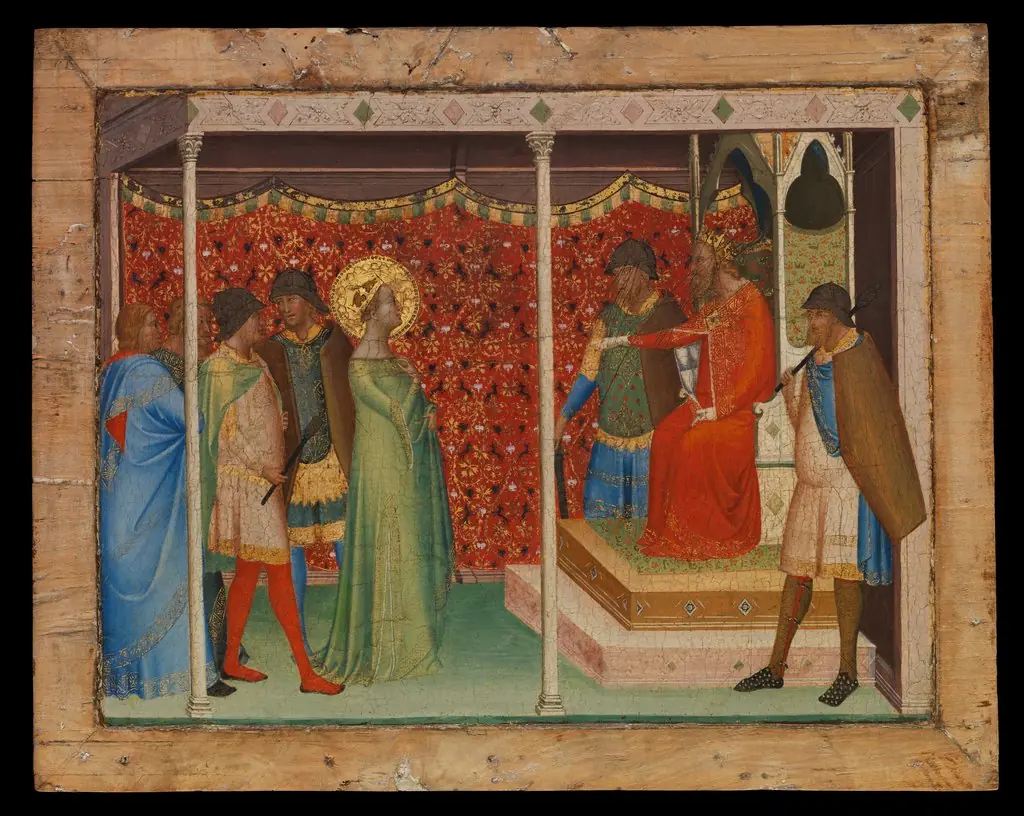 Saint Reparata before the Emperor Decius
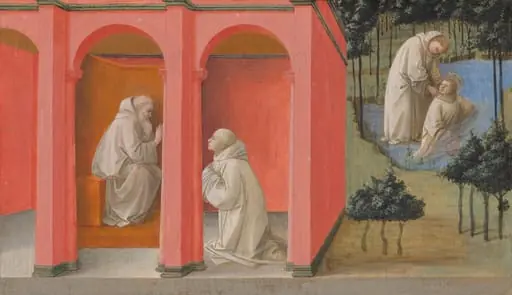 Saint Benedict Orders Saint Maurus to the Rescue of Saint Placidus
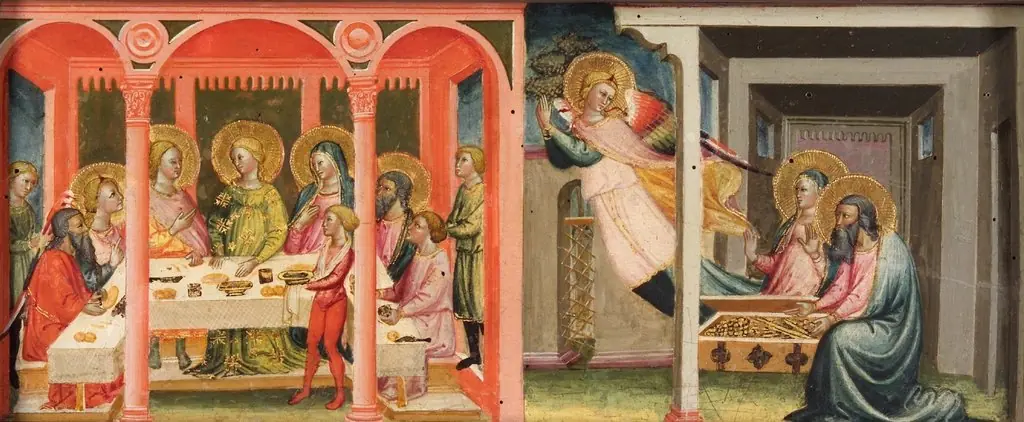 Scenes from the story of Tobias (marriage of Tobias and Sara; the archangel leaves Tobit and Anna)
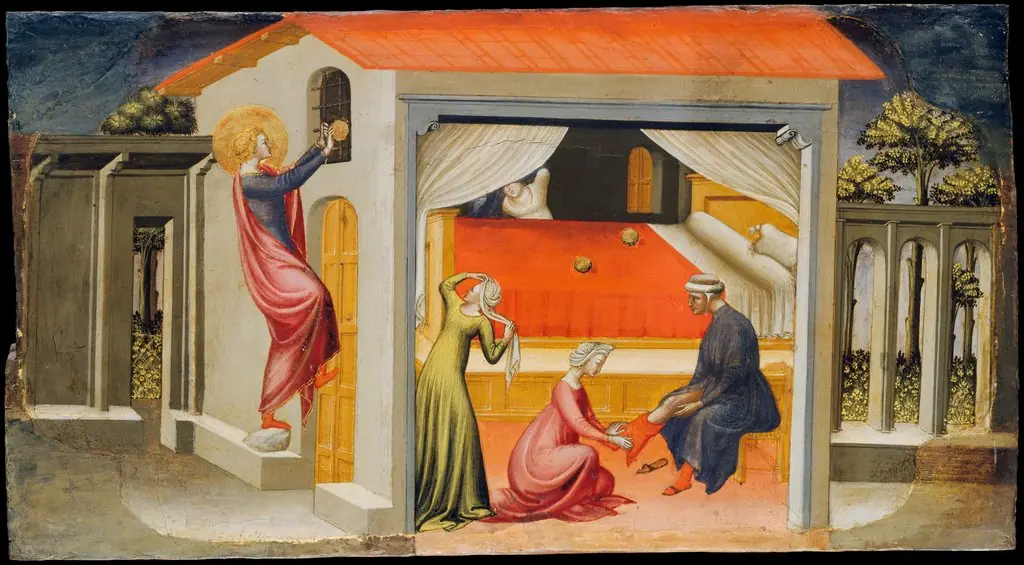 Saint Nicholas Providing Dowries
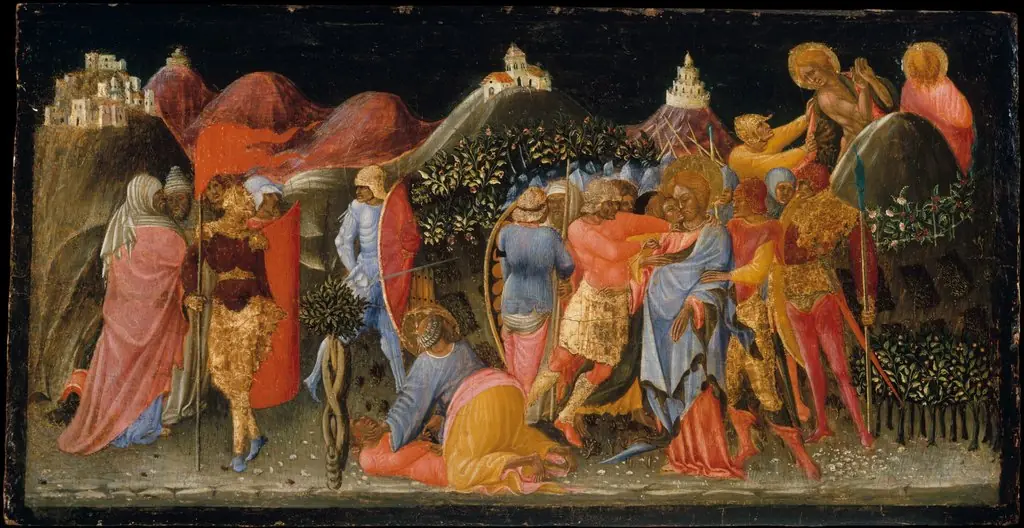 The Betrayal of Christ
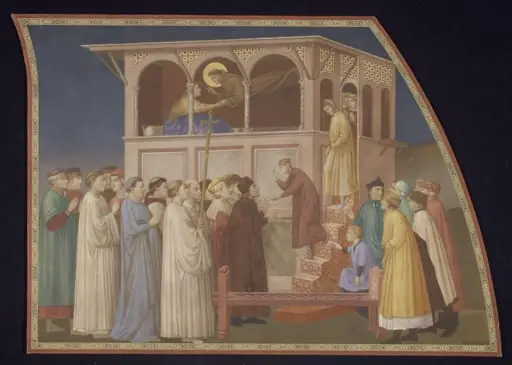 Copy after the painting Posthumous Miracle of St Francis by a follower of Giotto in the Lower Church, San Francesco, Assisi
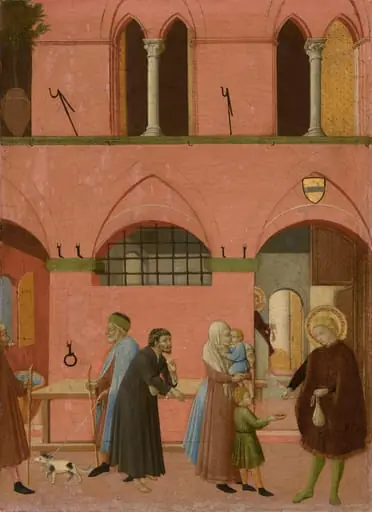 Saint Anthony Distributing His Wealth to the Poor
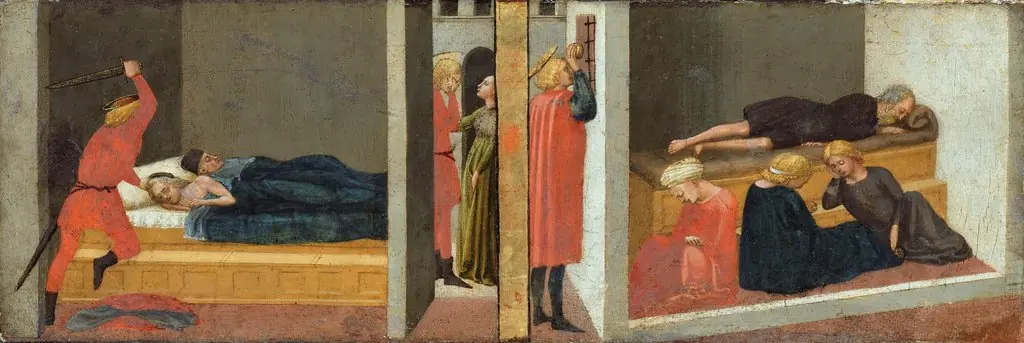 Altar predella; Right panel: The parricide of St. Julian - The miracle of St. Nicholas of Bari
- The Burial of Saint Martha