Artwork
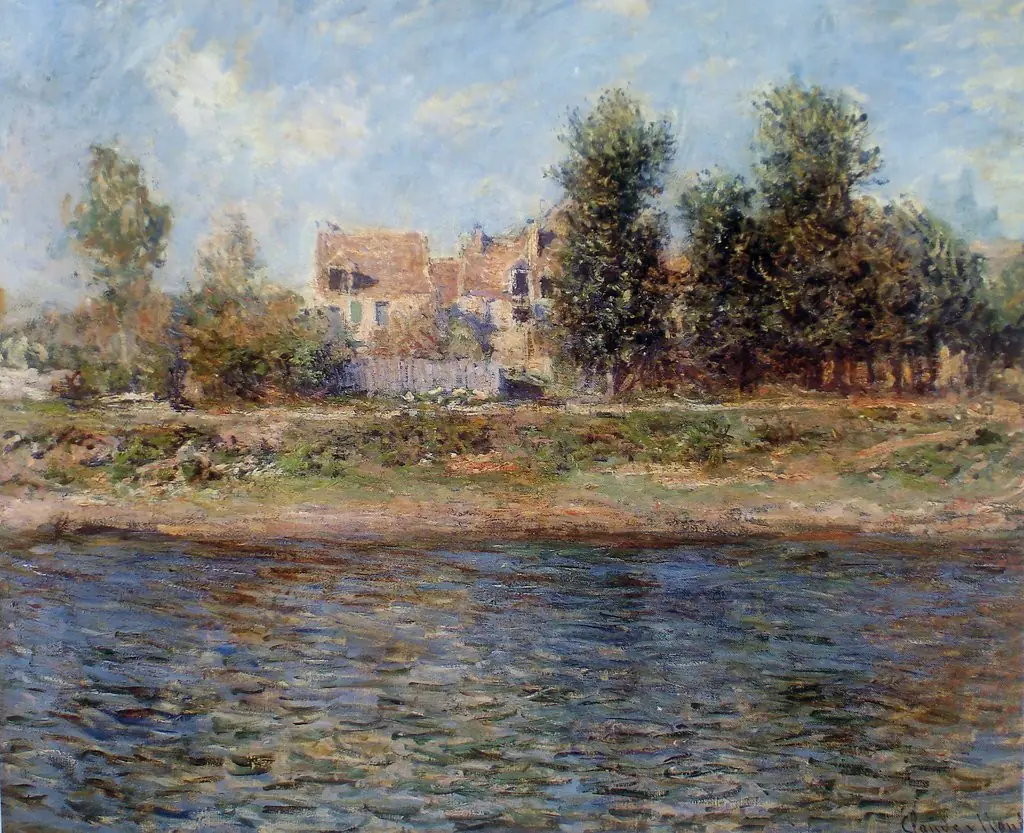
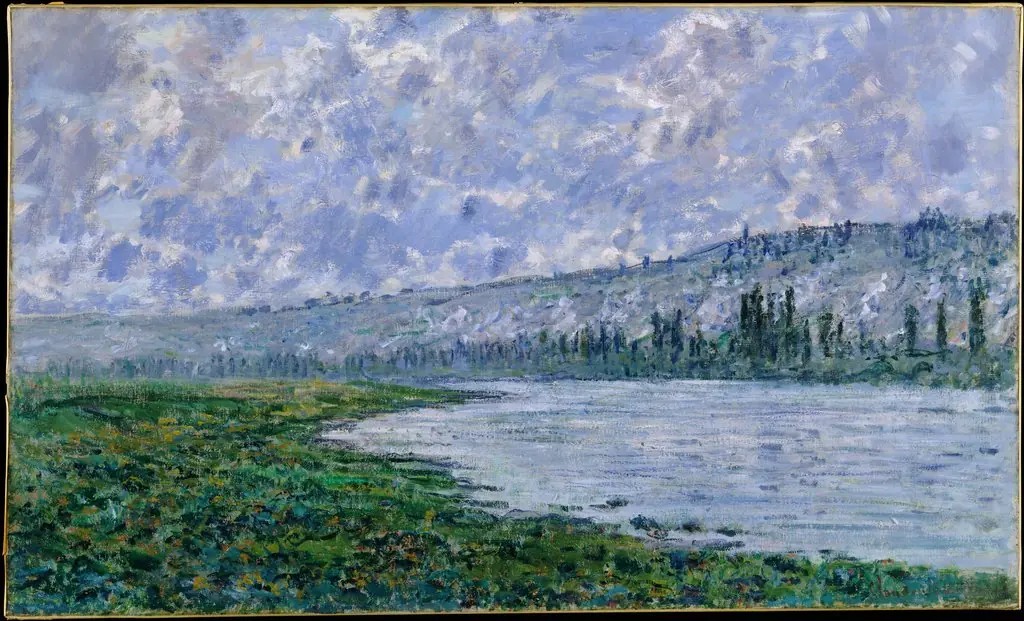
Banks of the Seine, Vétheuil
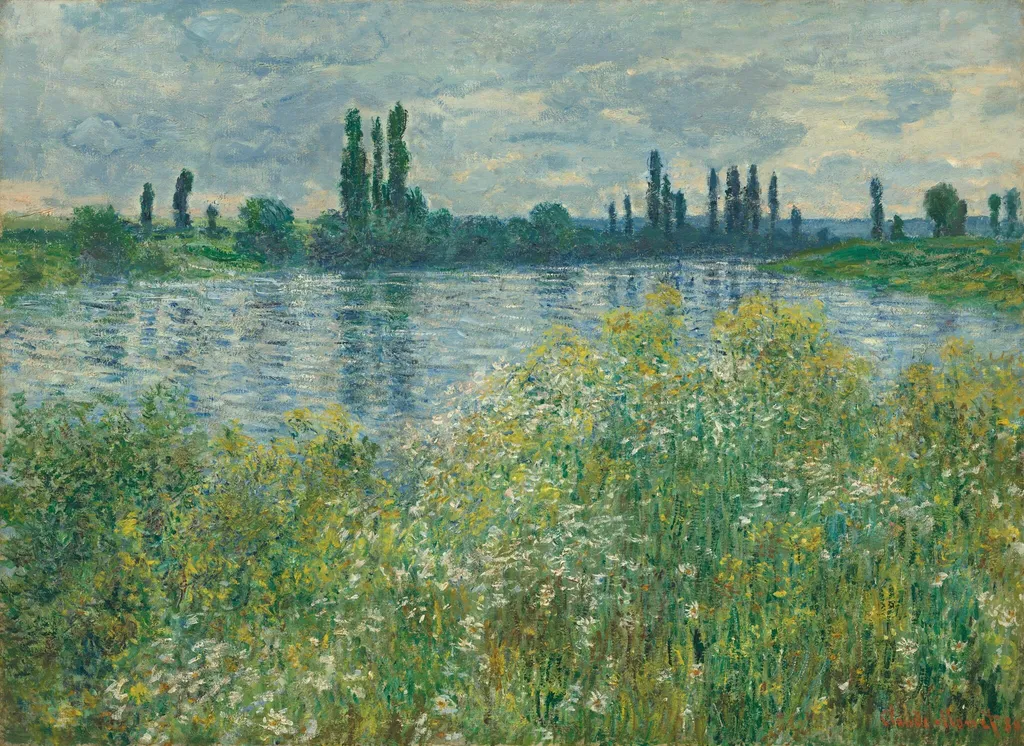
Banks of the Seine, Vétheuil is an oil painting by the Impressionist artist Claude Monet. It dates from 1880 and is held in the collection of the National Gallery of Art.
- Inscription
- Inscribed:lower right: Claude Monet 80
About this work
Subject & Meaning
Monet renders the tree in loose brushwork, emphasizing the play of light and atmospheric conditions typical of his riverside scenes.
The painting shows the banks of the Seine at Vétheuil with a solitary tree standing near the water's edge. Monet renders the tree in loose brushwork, emphasizing the play of light and atmospheric conditions typical of his riverside scenes. The composition reflects the Impressionist interest in everyday natural settings, where the tree functions less as a symbolic motif and more as a visual element that anchors the landscape.
By focusing on this modest detail, the work conveys a sense of quiet observation of the environment rather than narrative allegory.
Technique & Style
Executed in 1880, this work is an oil painting on canvas. The composition features a tree as its primary subject, rendered through the artist's characteristic handling of the medium. The support measures 73.4 cm in height and 100.5 cm in width.
As an Impressionist landscape, the piece uses liquid pigments applied to a woven fabric ground to capture the visual effects of the Seine riverbanks at Vétheuil.
History & Provenance
Banks of the Seine, Vétheuil was painted by Claude Monet in 1880. After leaving the artist's studio, the work entered the collection of New York dealer James F. Sutton, who owned it until his death in 1915; it then passed to his widow. The painting was offered at the Sutton sale held by the American Art Association in New York on 26 October 1933 (lot 48) and acquired by collector Chester Dale.
Dale retained the piece until his death, bequeathing it to the National Gallery of Art in Washington, D.C., in 1963, where it remains today.
Banks of the Seine, Vétheuil is part of the National Gallery of Art's collection in Washington, D.C. The work entered the museum by bequest in 1963 from Chester Dale, who had acquired it at the 1933 Sutton sale. Its earlier chain of ownership traces back to Claude Monet, who painted it in 1880, then to James F. Sutton. The painting remains part of the gallery's Impressionist holdings, though specific exhibition listings are not documented in the available records.
Overview
Claude Monet's "Banks of the Seine, Vétheuil," painted in 1880, is an oil on canvas work capturing a tranquil river scene. The composition features a prominent, leafy tree with substantial branches extending over the water. This painting exemplifies Monet's ongoing exploration of natural landscapes and the subtle interplay of light and atmosphere in the French countryside, near his residence at the time.
Context
This landscape was created during Monet's residence in Vétheuil, a period when he frequently painted the surrounding environment. His practice involved working en plein air, directly observing and capturing the fleeting effects of natural light and atmospheric conditions. This dedication to direct observation allowed him to imbue his canvases with a vibrant sense of immediacy and a deep connection to the specific location.
Own this work as a print
Artist & collection
Artist
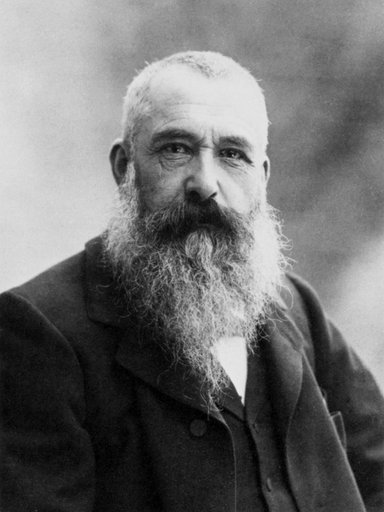
Oscar-Claude Monet was a French painter and founder of Impressionism who is seen as a key precursor to modernism, especially in his attempts to paint nature as he perceived it.