Artwork
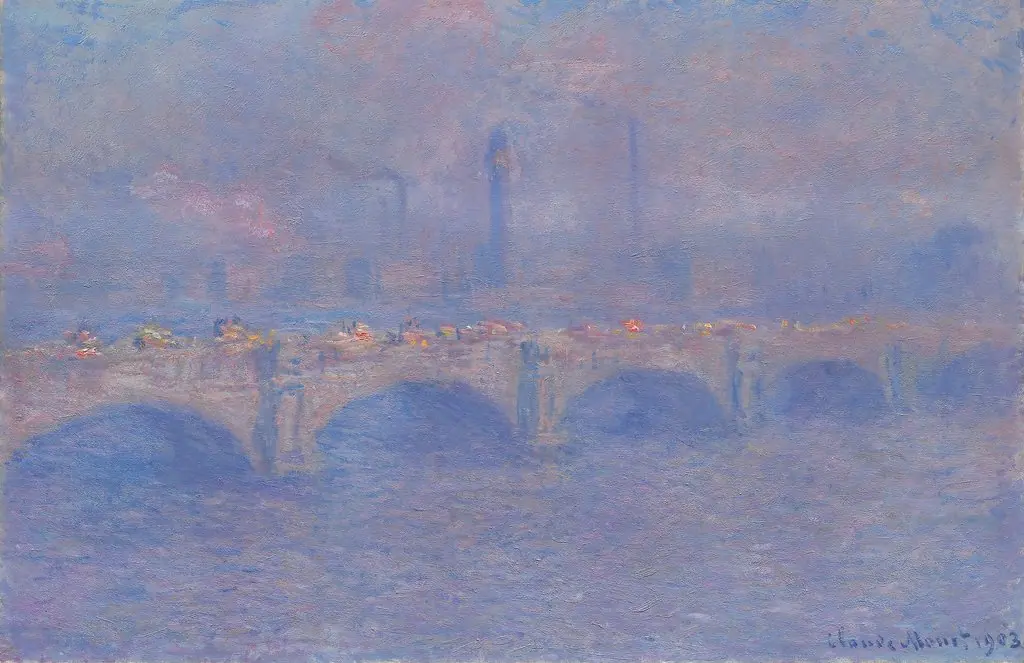
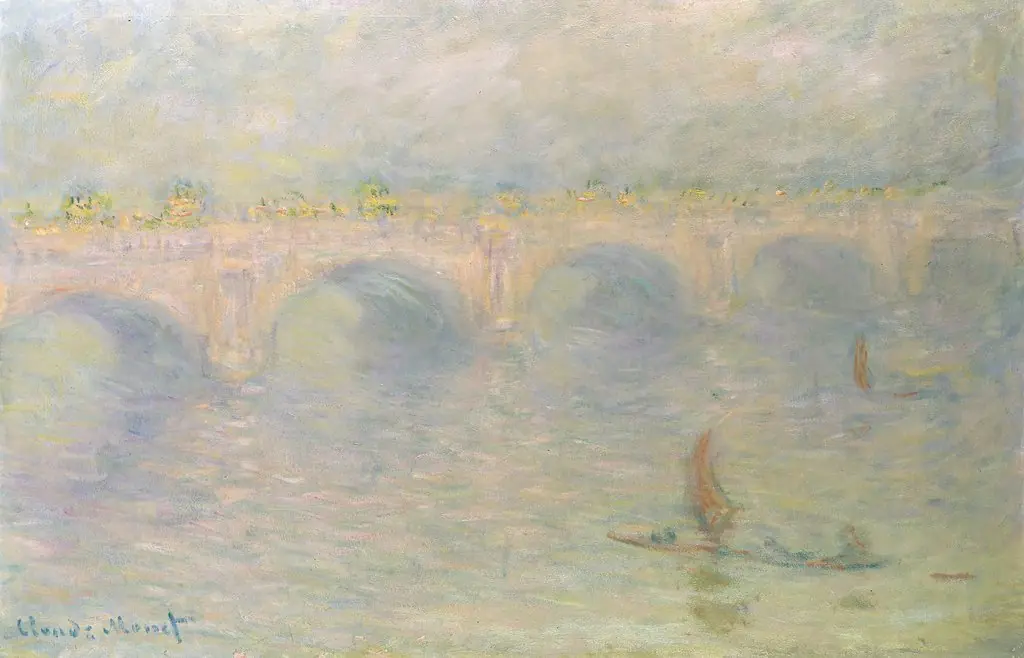
Waterloo Bridge, Gray Day
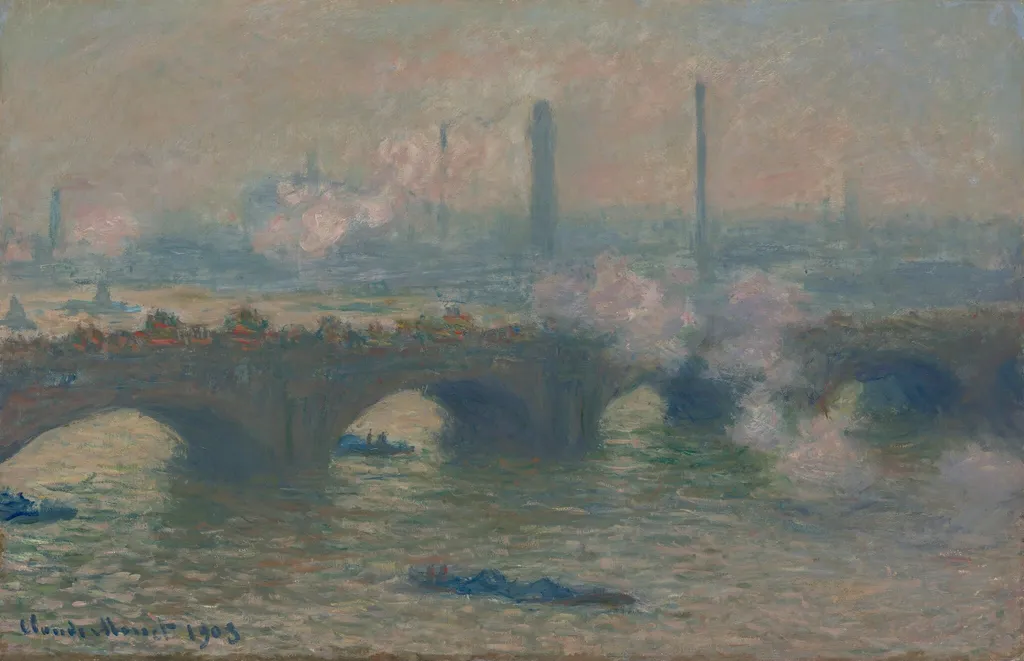
Waterloo Bridge, Gray Day is an oil painting by the Impressionist artist Claude Monet. It dates from 1903 and is held in the collection of the National Gallery of Art.
- Inscription
- Inscribed:lower left: Claude Monet 1903
About this work
Subject & Meaning
The depiction situates the bridge as a focal point within the urban landscape, linking natural water flow with human engineering.
The work portrays Waterloo Bridge under a subdued, gray sky, emphasizing the atmospheric conditions that Claude Monet explored in his series of London river scenes. Executed in oil on canvas in 1903, the painting captures the bridge’s arches and structural lines as they intersect with the Thames, reflecting Monet’s fascination with the fleeting effects of light and weather. The depiction situates the bridge as a focal point within the urban landscape, linking natural water flow with human engineering.
The work is part of the National Gallery of Art’s collection in Washington, D.C., having entered the museum through the bequest of Chester Dale in 1963.
Technique & Style
Executed in 1903, this work is an oil painting on canvas measuring 65.1 by 100 centimeters. The composition depicts London's Waterloo Bridge, rendered in a manner characteristic of the artist's late series focusing on atmospheric effects. While specific details regarding the current physical condition or the precise handling of the brushwork are not explicitly detailed in the available records, the medium and support are firmly established as oil paint applied to a woven canvas ground.
The formal qualities center on the representation of the bridge structure within an urban landscape, utilizing the fluidity of oil to capture the specific lighting conditions implied by the title's reference to a gray day.
History & Provenance
Claude Monet executed Waterloo Bridge, Gray Day in 1903. Upon completion, the painting entered the holdings of the Parisian dealer Paul Durand-Ruel. Durand-Ruel sold the work in 1904 to Franklin F. Nicola of Pittsburgh.
The canvas remained in Nicola's possession until January 7, 1933, when it was purchased by Chester Dale of New York. Dale retained ownership of the piece until his death in 1962, at which point he bequeathed the painting to the National Gallery of Art in Washington, D.C., where it entered the collection in 1963.
Overview
Waterloo Bridge, Gray Day, painted by Claude Monet in 1903, is a key work from his series of London landscapes executed during his visits to the city between 1899 and 1901. The canvas depicts the Waterloo Bridge spanning the River Thames, viewed from the artist's vantage point at the Savoy Hotel. Monet captures the specific atmospheric conditions of a foggy, overcast day, where the bridge's stone arches and the surrounding architecture dissolve into a hazy, gray mist.
The composition relies on the interplay of light and atmosphere rather than sharp definition, with the bridge appearing as a faint silhouette against the sky. Small, indistinct boats float on the water, rendered with quick, broken brushstrokes that convey the damp, shifting quality of the London air. The palette is dominated by cool grays, blues, and subtle violets, creating a unified tonal harmony that emphasizes the ephemeral nature of the scene.
This work exemplifies Monet's mature Impressionist technique, focusing on the transient effects of light and weather. It represents the culmination of his exploration of urban atmospheres and his ability to transform a modern industrial subject into a study of pure visual sensation.
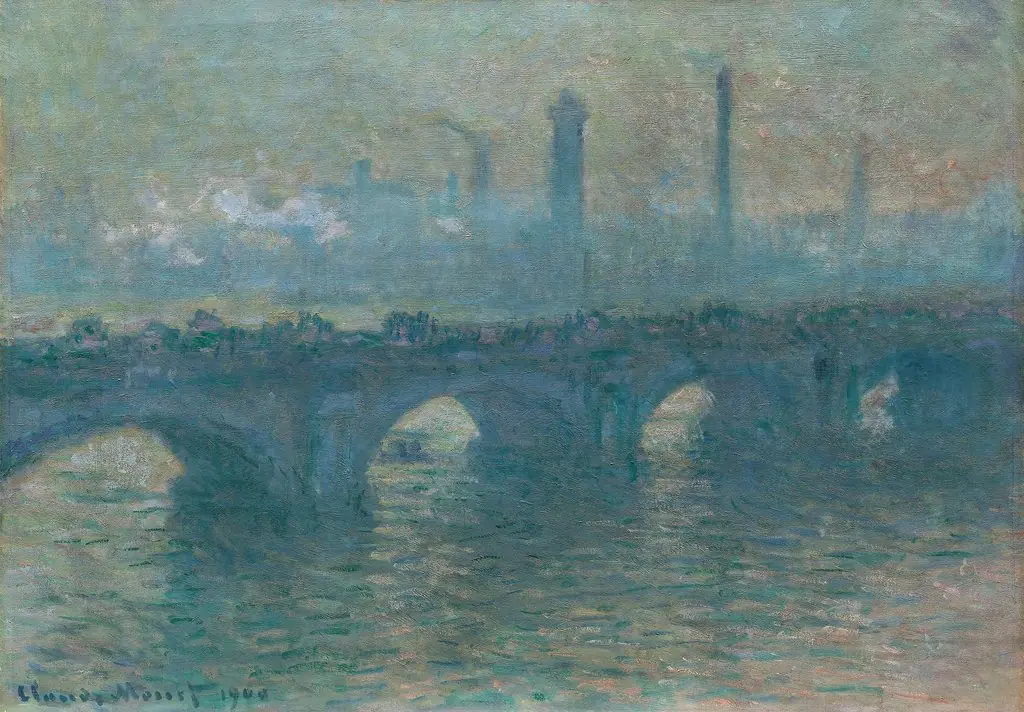
Own this work as a print
Artist & collection
Artist
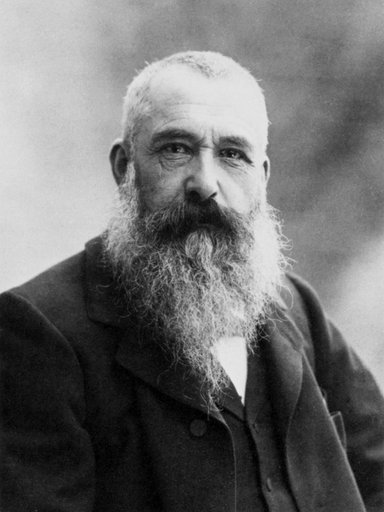
Oscar-Claude Monet was a French painter and founder of Impressionism who is seen as a key precursor to modernism, especially in his attempts to paint nature as he perceived it.

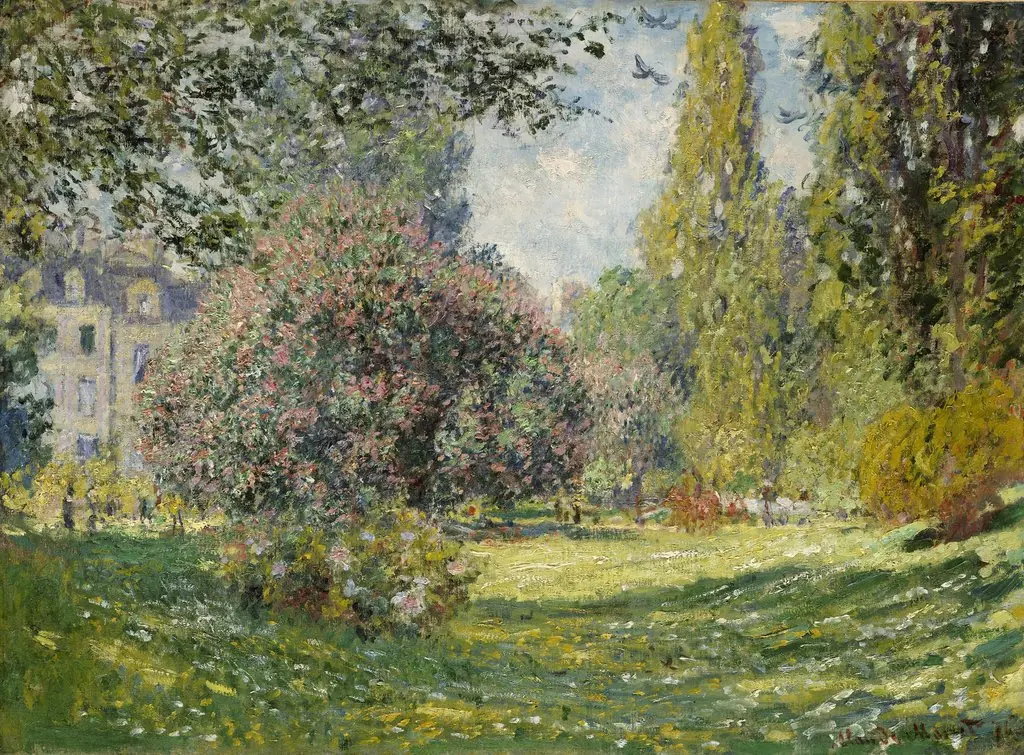
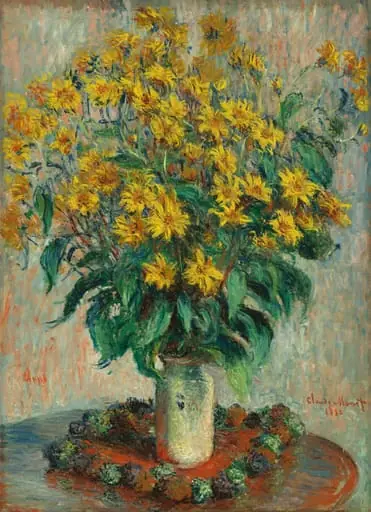
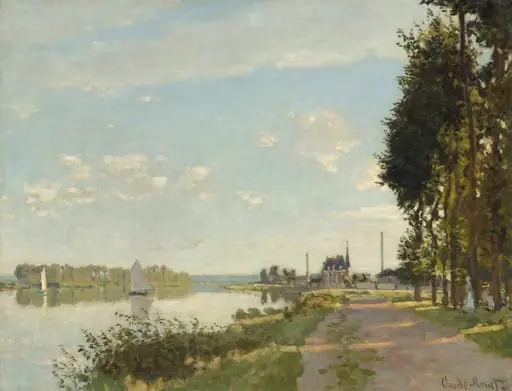
- Waterloo Bridge, Gray Weather
 Waterloo Bridge, Sunlight Effect
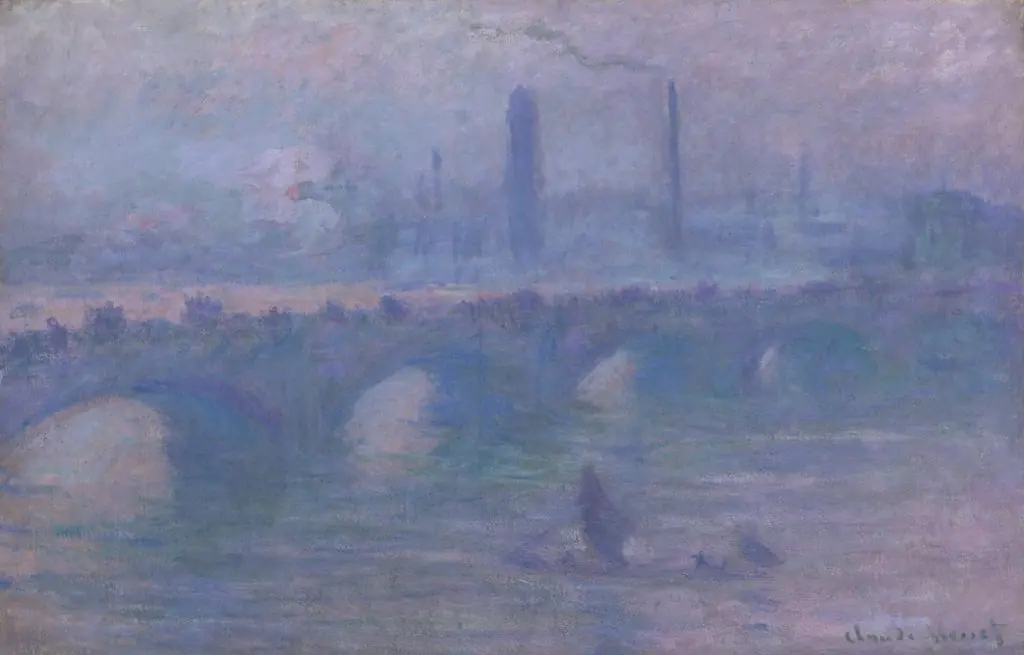 Waterloo Bridge, Morning Fog
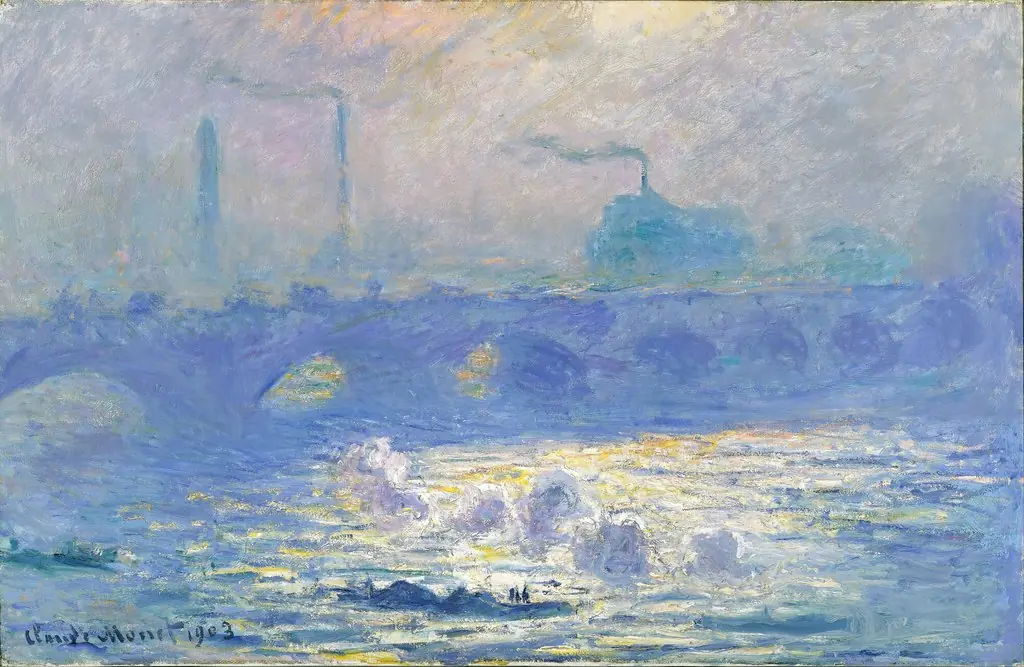 Waterloo Bridge, Sunlight Effect
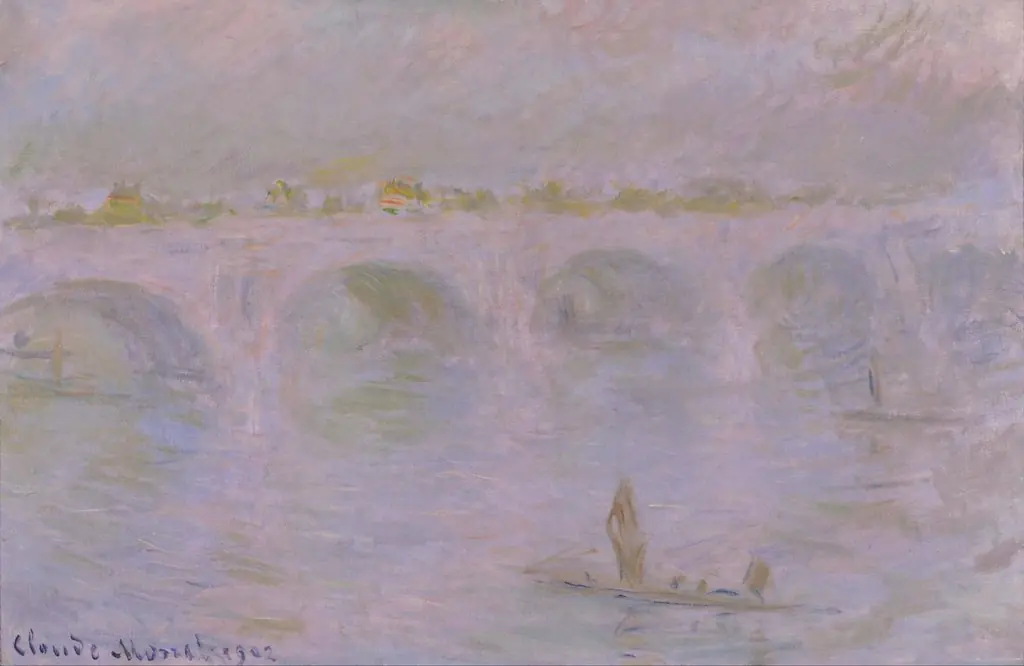 Waterloo Bridge in London
 Waterloo Bridge, London, at Sunset
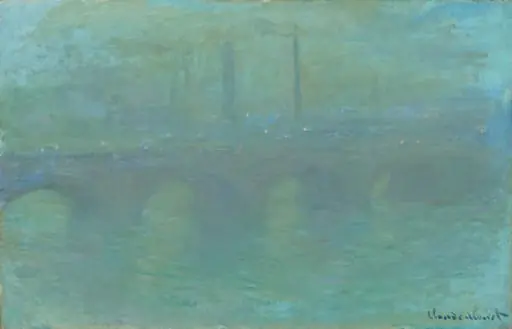 Waterloo Bridge, London, at Dusk
 Waterloo Bridge, London, Sun Effect
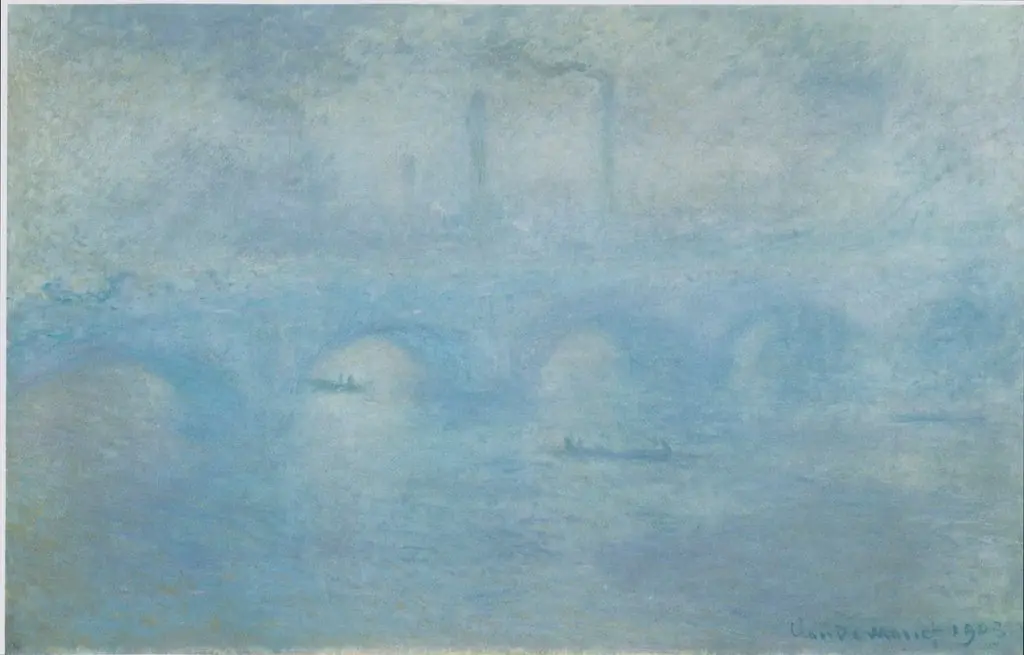 Waterloo Bridge. Effect of Fog
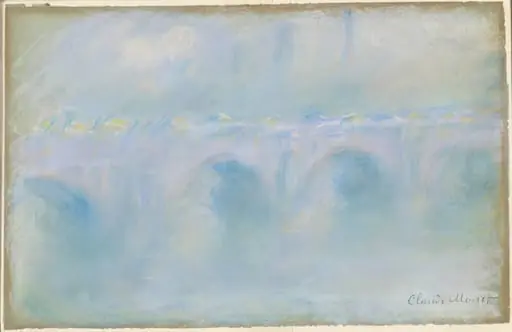 Waterloo Bridge
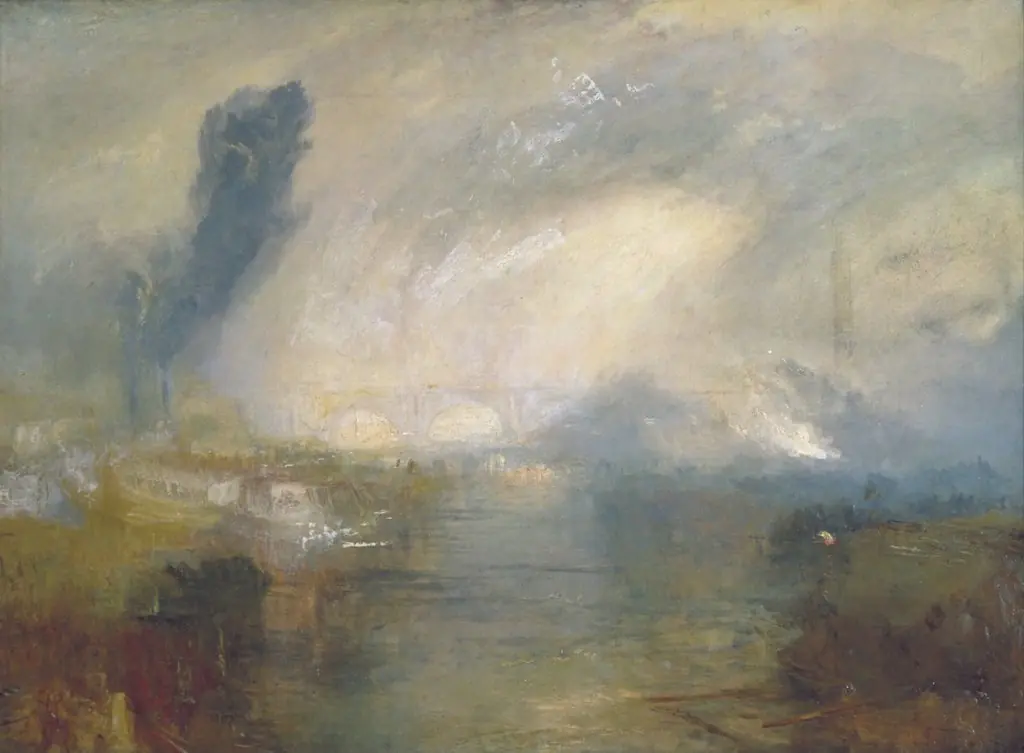 The Thames above Waterloo Bridge