Artwork
A Seaport
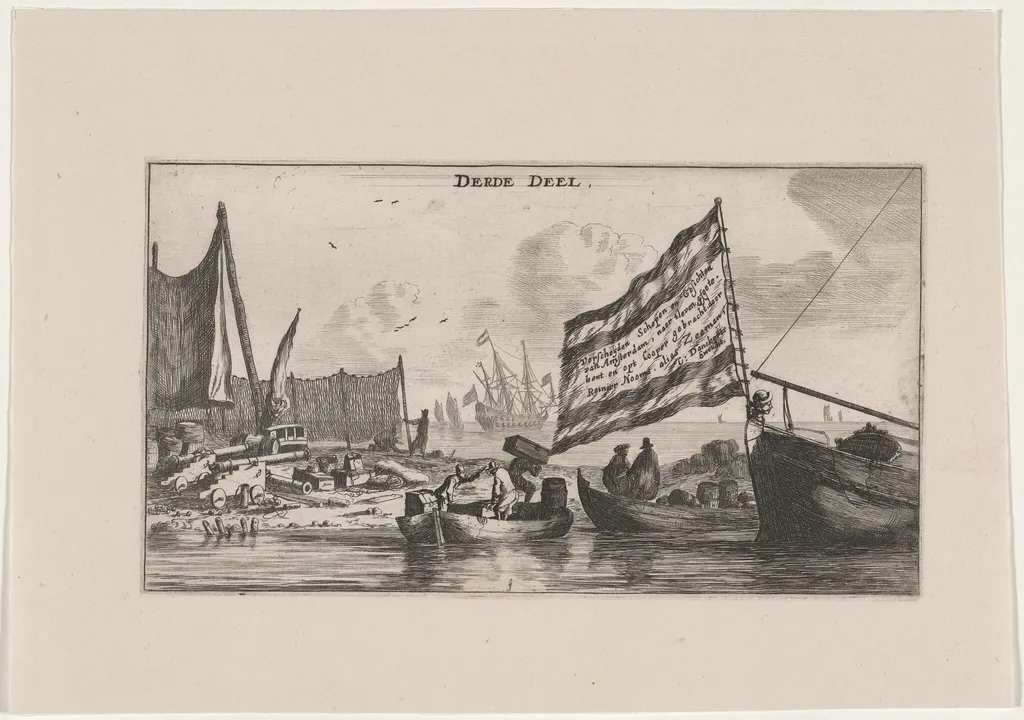
A Seaport is an ink print by the Baroque artist Nooms, called Zeeman, Reinier. It dates from 1653 and is held in the collection of the National Gallery of Art. Created around 1653 by Reinier Nooms, known as Zeeman, this etching with drypoint depicts a bustling Dutch harbor.
- Inscription
- Inscribed:upper center in plate: DERDE DEEL.; in image on flag: Verscheÿden Schepen en Gesichten / van Amsterdam, naer t leven afgete. / kent en opt Cooper gebracht, door / Reinier Nooms, alias Zeeman / C: Danckerts / Excudit; lower center in plate: 1
About this work
Overview
Part of a multi-part series titled 'Derde Deel,' the print belongs to a body of work focused on maritime life during the Dutch Golden Age.
Created around 1653 by Reinier Nooms, known as Zeeman, this etching with drypoint depicts a bustling Dutch harbor. Part of a multi-part series titled 'Derde Deel,' the print belongs to a body of work focused on maritime life during the Dutch Golden Age. Nooms, a dedicated observer of naval activity, rendered this scene with meticulous attention to the arrangement of vessels, structures, and human figures, capturing the rhythm of port life through fine, incised lines.
Subject & Meaning
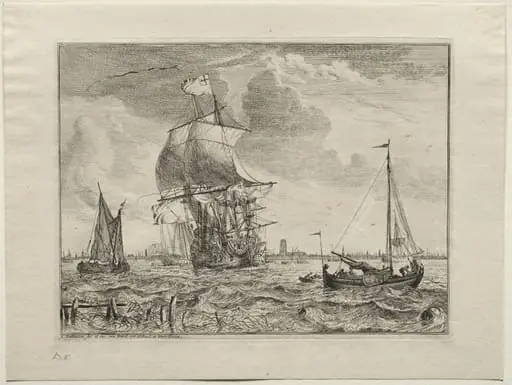
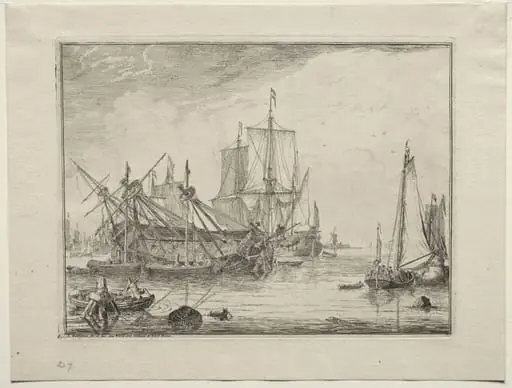
The scene portrays a working seaport teeming with activity: tall-masted ships anchor in the distance, while smaller boats shuttle near the shore. Figures are engaged in labor, rowing, hauling, or standing on decks. A banner bearing text on one vessel suggests commercial or official communication.
The composition emphasizes the functional nature of the harbor, reflecting the economic vitality of 17th-century Dutch trade without idealization or narrative embellishment.
Technique & Style
Nooms combined etching with drypoint to achieve richly textured lines and subtle tonal variation. Drypoint’s burr created soft, velvety shadows along edges, enhancing the depth of ropes, waves, and wooden hulls. The use of fine, controlled incisions allowed for precise rendering of architectural and nautical details.
Unlike broad washes, this method prioritized clarity and structure, aligning with the period’s preference for technical fidelity over atmospheric effect.
History & Provenance
Reinier Nooms produced this print during the height of his career, between the 1650s and his death in 1664. As part of a numbered series, 'Derde Deel' indicates a planned, sequential publication, likely intended for collectors or maritime enthusiasts. The print’s survival in multiple institutional collections suggests early circulation and enduring interest in his precise depictions of Dutch naval infrastructure.
Context
In mid-17th century Holland, maritime commerce drove national prosperity, and visual documentation of ships and ports became a subject of civic pride. Nooms’s work emerged within this context, offering accurate records of vessel types, harbor layouts, and port activity. His prints served both as artistic expressions and as reference materials, resonating with merchants, shipbuilders, and the growing public interested in the mechanics of sea trade.
Legacy
Nooms’s integration of drypoint into maritime printmaking influenced later artists seeking to convey texture and detail without relying on color. His methodical approach to depicting ships and harbors set a standard for topographical accuracy in Dutch print culture. Though not widely celebrated in his lifetime, his body of work remains a valuable record of seafaring life and technical printmaking practice of the era.
Own this work as a print
Artist & collection

Artist
Reinier Nooms (c. 1623 – 1664), also known as Zeeman or Seeman (Dutch for "sailor"), was a Dutch maritime painter known for his highly detailed paintings and etchings of ships. From the 1650s, Nooms started producing…

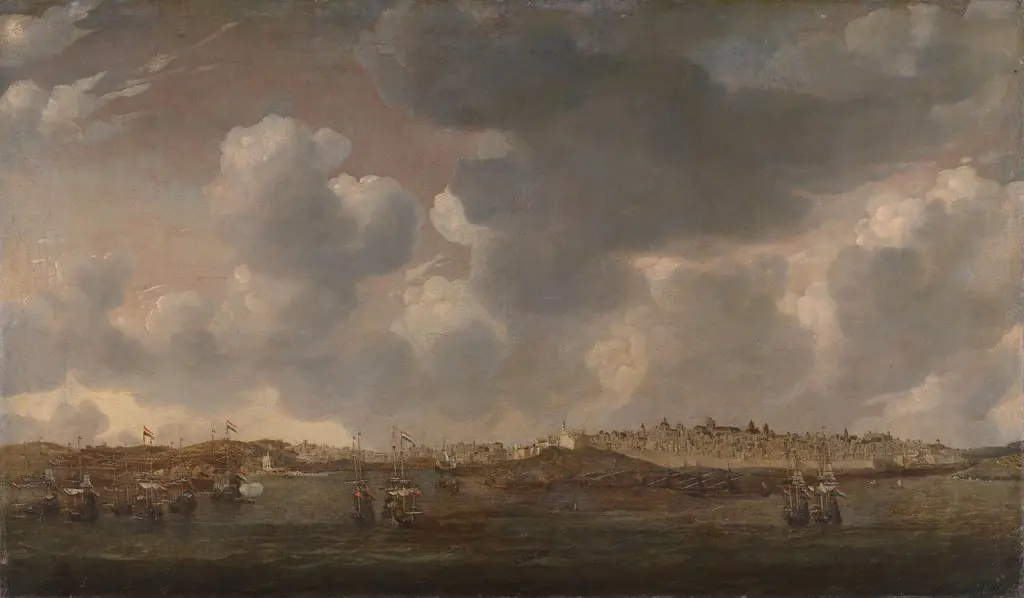
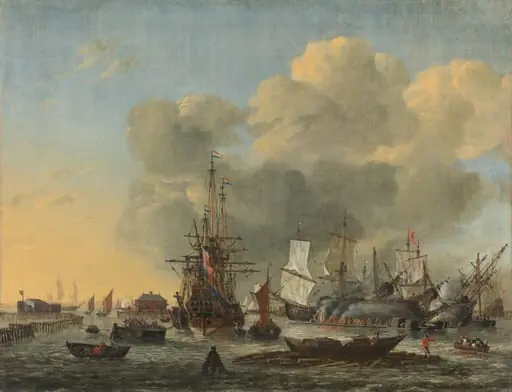
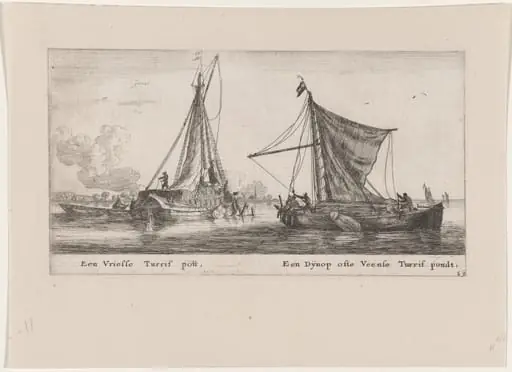 A "Friesland" Peatpot, and a "Dijnopschuit" or "Veense" Peatpot
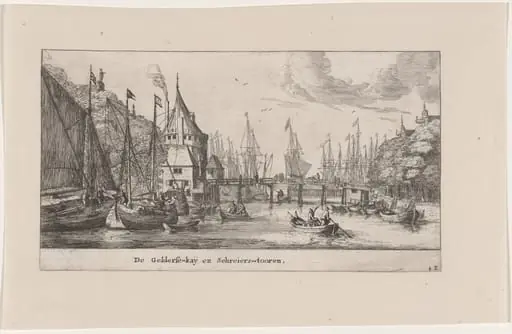 The Gelderse Quay and the Schreiers Tower, Amsterdam
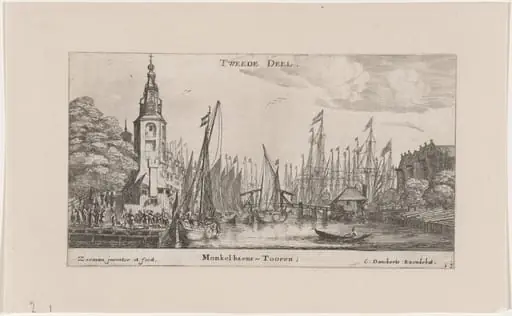 The Montalbans Tower in Amsterdam
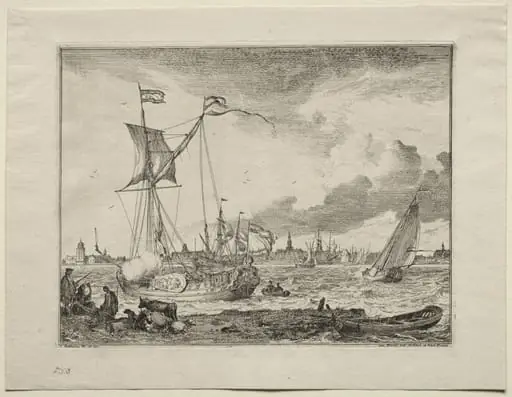 View of Amsterdam with Ships in Foreground
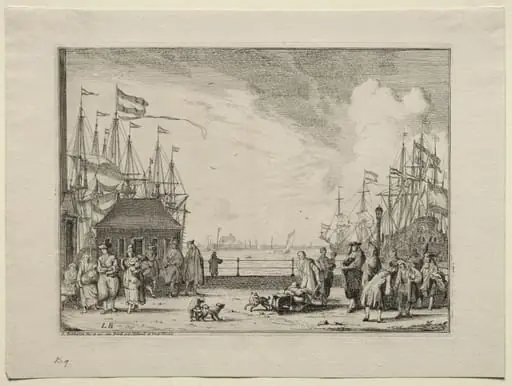 Port at Amsterdam
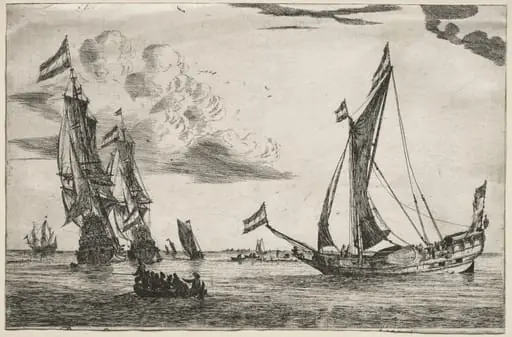 Marine
 Marine Scene with Amsterdam in the Distance
 Ships Under Repair
 Galley with Deck Covered with Sails
 Shore of Inland Waterway with a Ketch, Two Smaller Boats, and Fisherman