Artwork
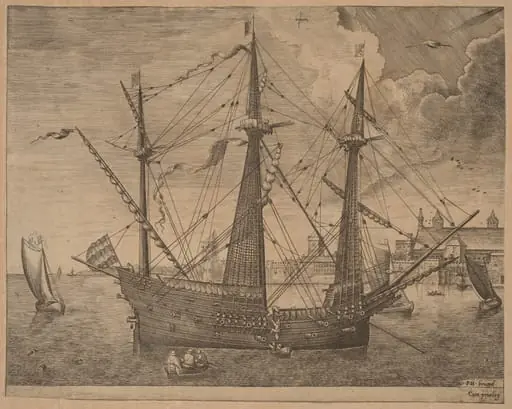
The "Salemander," an East-Indian Merchantman
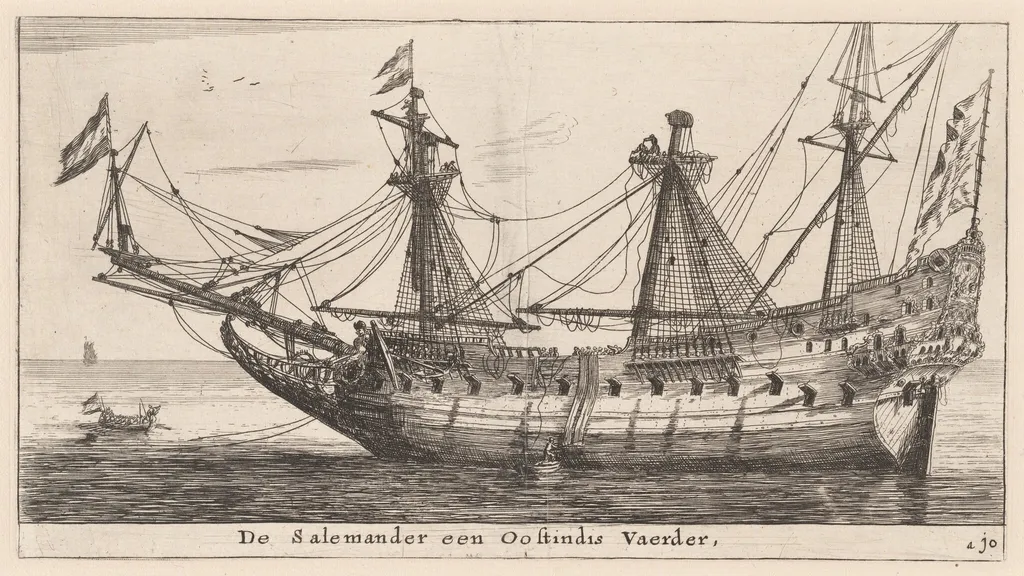
The "Salemander," an East-Indian Merchantman is an ink print by the Baroque artist Nooms, called Zeeman, Reinier. It dates from 1653 and is held in the collection of the National Gallery of Art. The 'Salemander,' an East-Indian Merchantman is a print by Reinier Nooms, a Dutch artist known as Zeeman, created around 1653.
- Inscription
- Inscribed:across bottom of plate: De Salemander een Oostindis Vaerder, / a10
About this work
Overview
The 'Salemander,' an East-Indian Merchantman is a print by Reinier Nooms, a Dutch artist known as Zeeman, created around 1653. It is an etching with drypoint on laid paper, part of a series documenting ships and maritime scenes.
Subject & Meaning
The print depicts a large East-Indian merchant ship, the Salemander, with three masts and loose sails. The vessel is shown with cannons and rows of small windows along its sides, accompanied by a smaller boat in choppy waters.
Technique & Style
Nooms used etching and drypoint techniques to achieve a high level of detail, particularly in the ship's rigging and structure. The drypoint method allowed for fine lines and textures, capturing the complexity of the vessel.
History & Provenance
Nooms was active from the 1650s until his death in 1664, and his works were influential references for other artists. The 'Salemander' etching is characteristic of his precise and detailed style, which earned him recognition.
Artist & collection

Artist
Reinier Nooms (c. 1623 – 1664), also known as Zeeman or Seeman (Dutch for "sailor"), was a Dutch maritime painter known for his highly detailed paintings and etchings of ships. From the 1650s, Nooms started producing…

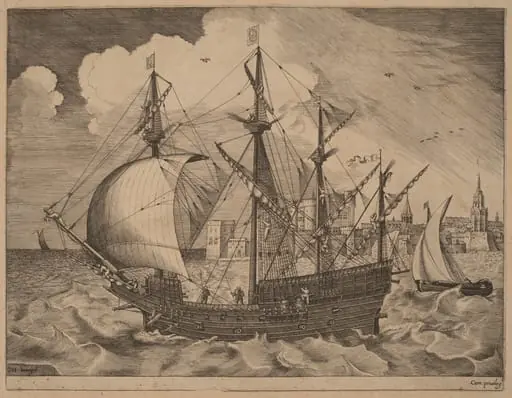 Armed Four-Master Putting Out to Sea
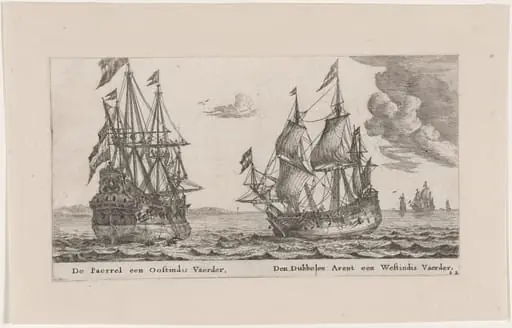 The "Parel" (Pearl), an East Indiaman and the "Dubbele Arent" (Spread Eagle), a West Indiaman
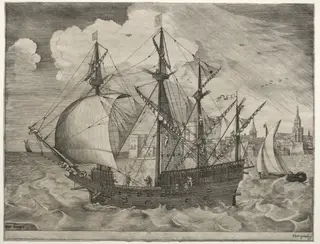 Sailing Vessels: Armed Four-Master Putting Out to Sea
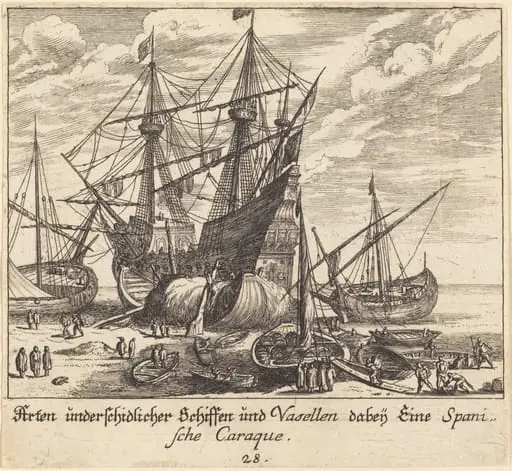 Ships
Ships War Vessel in the Y
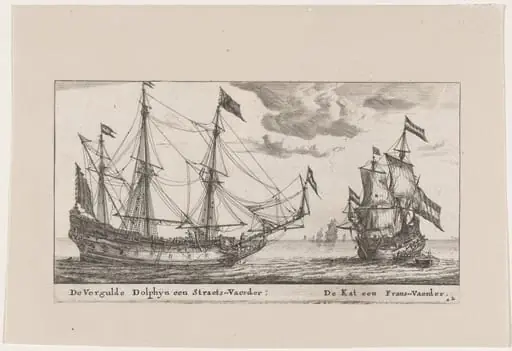 The "Vergulde Dolphyn," a Large Merchant Vessel, and the "Kat," a Flute
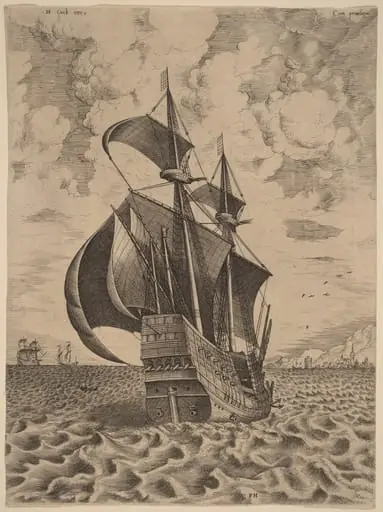 Armed Four-Master Sailing towards a Port
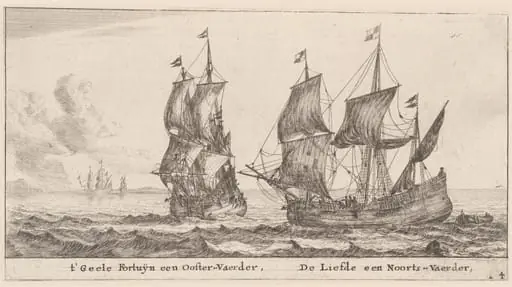 Two Merchant-Men: the "Geele Fortuÿn," Trading in the Baltic, and the "Liefde," Trading in Norway
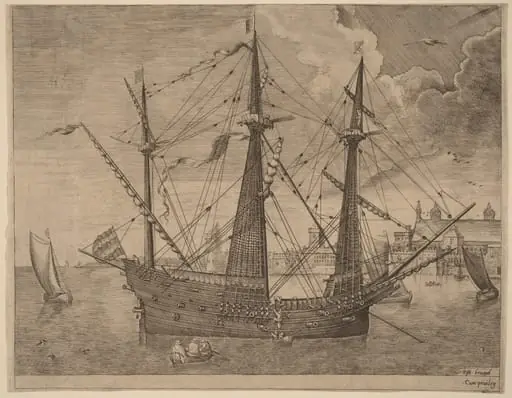 Armed Three-Master Anchored near a City
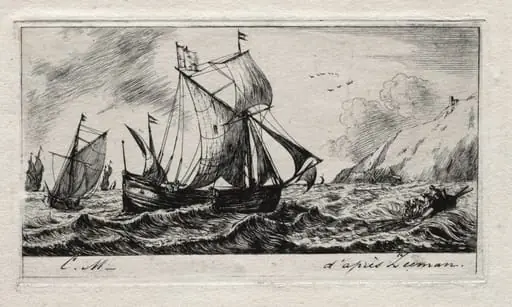 The Galliot of Jean de Vyl of Rotterdam
 Armed Three-Master Anchored Near a City
- An Amsterdam East Indiaman