Artwork
Three Figures at the Balustrade II
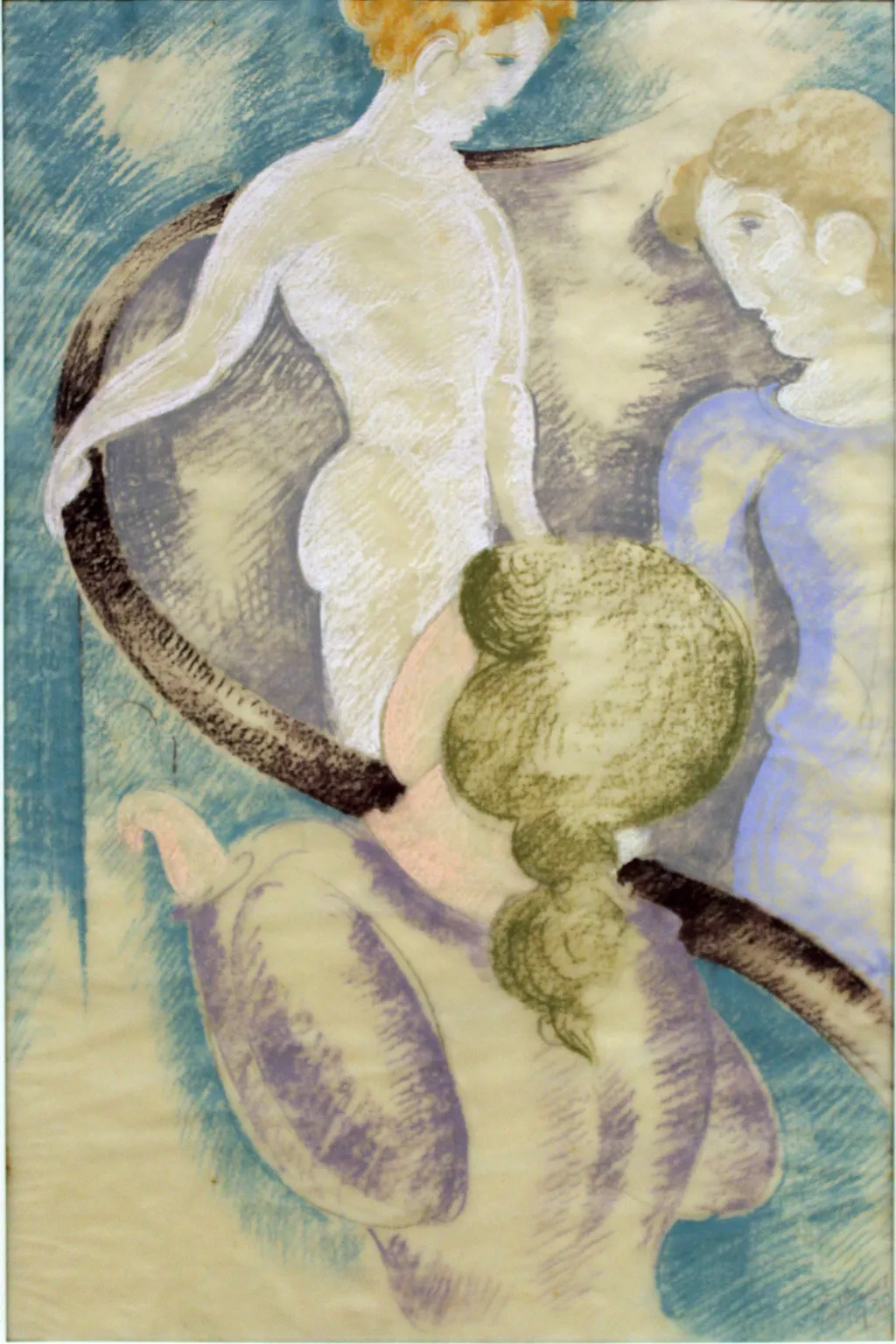
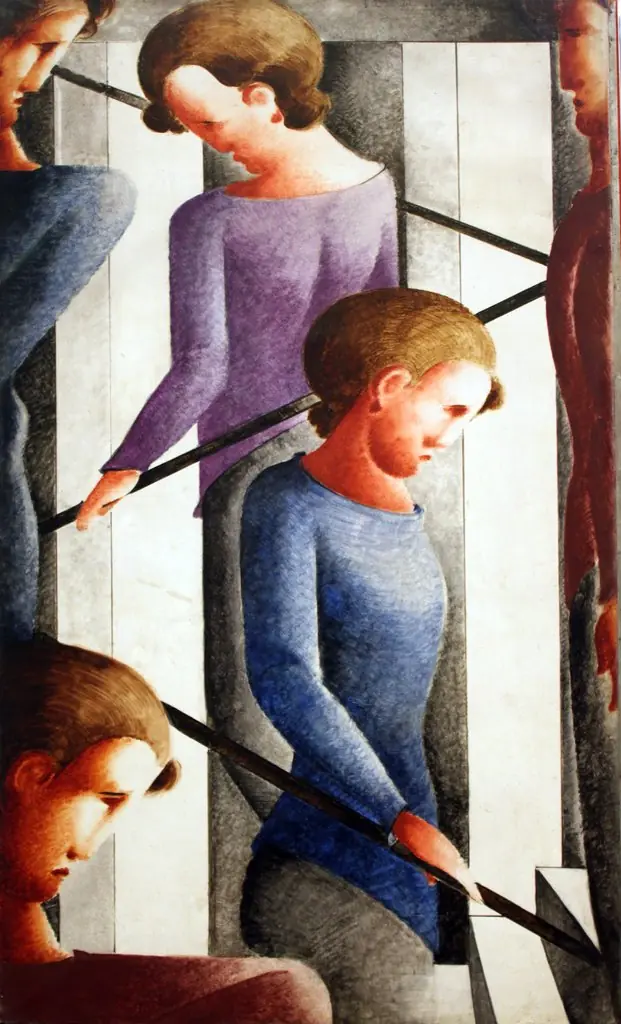
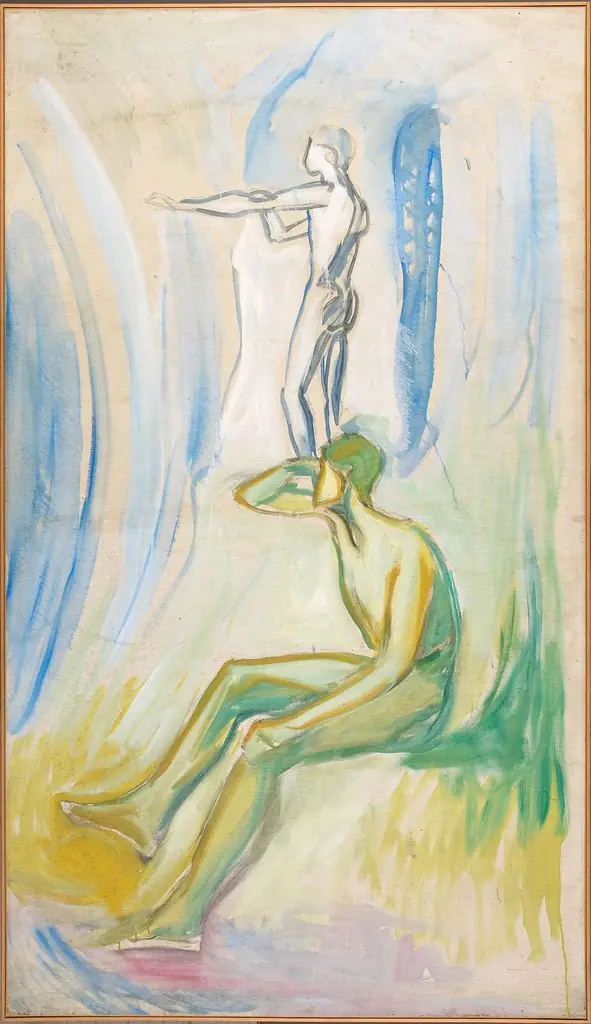
Three Figures at the Balustrade II is an unspecified painting by the Bauhaus artist Oskar Schlemmer. It dates from 1933 and is held in the collection of the Städel Museum.
About this work
Overview
This work is part of a series examining figures in architectural settings, reflecting his broader interest in geometry and movement.
Oskar Schlemmer painted Three Figures at the Balustrade II in 1933, near the end of his tenure at the Bauhaus. As a key figure in the school’s theatre workshop, he explored the human body as a structural element within space. This work is part of a series examining figures in architectural settings, reflecting his broader interest in geometry and movement. It resides in the Städel Museum’s collection, representing his mature synthesis of form and environment.
Subject & Meaning
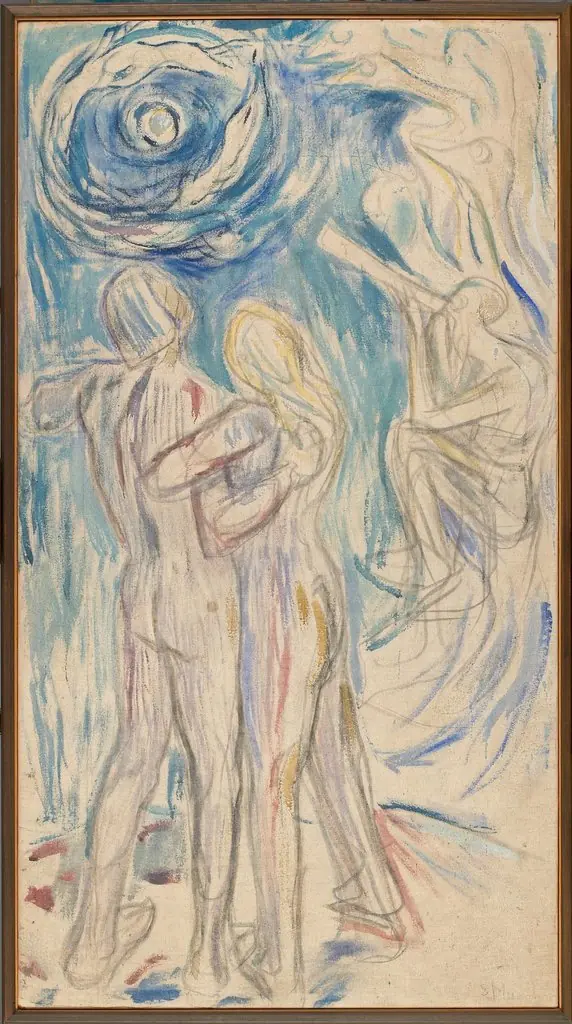
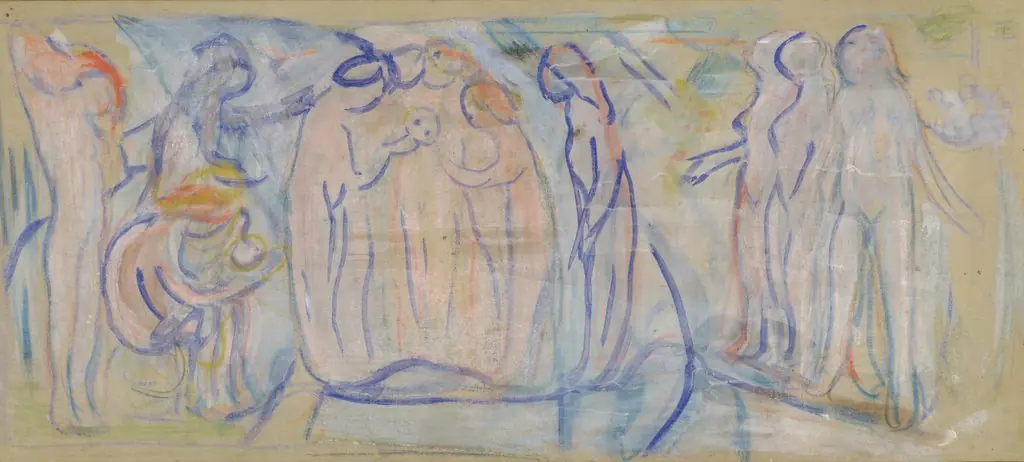
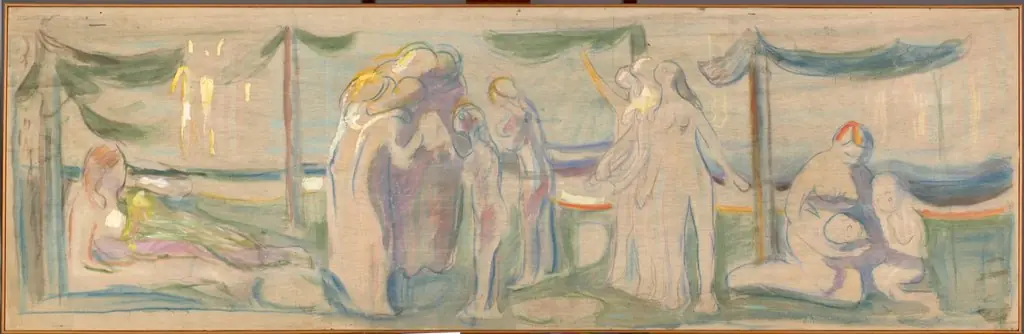
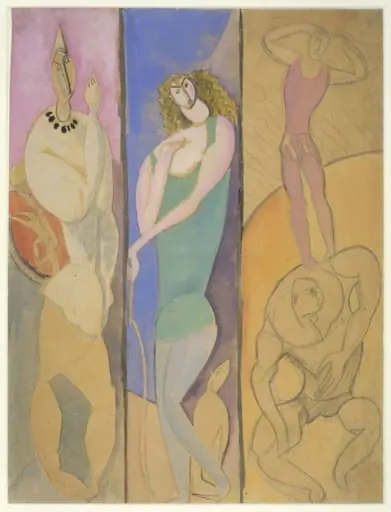
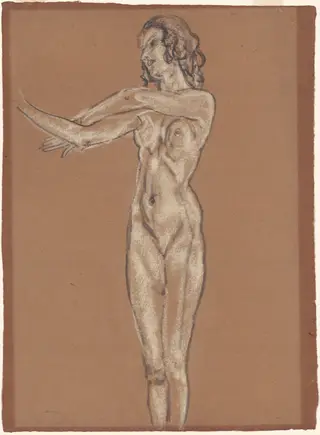
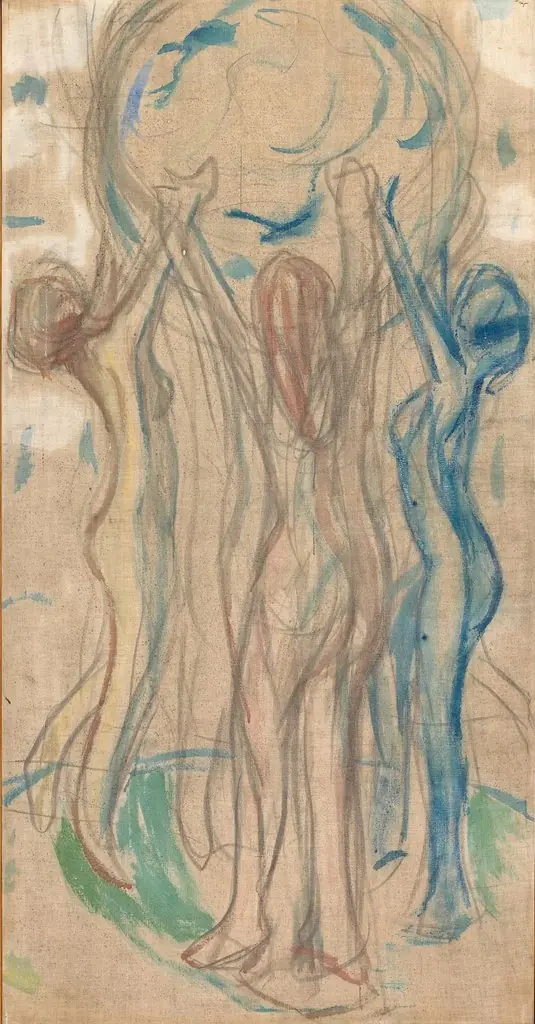
The painting presents three nude female figures standing silently at a balustrade, their backs turned to the viewer. Their stillness and anonymity invite contemplation rather than narrative. Schlemmer avoids individual identity, instead treating the bodies as abstract forms within a defined space.
The lack of facial expression and shared posture suggests a meditative detachment, aligning with his belief in the body as a harmonious component of a larger, ordered world.
Technique & Style
Schlemmer employed flat planes of color, white, greenish, and blue, to define the figures, reducing anatomy to simplified contours. The background features muted blues and whites with sparse black lines, suggesting architectural structure without depth. Forms are clean and deliberate, with no modeling or texture.
This approach reflects Bauhaus principles: clarity, reduction, and the integration of art with design. The palette and composition evoke quiet rhythm rather than drama.
History & Provenance
Created in 1933, the year the Bauhaus was closed by the Nazi regime, the painting emerged during a period of increasing political pressure on modernist institutions. Schlemmer, who had led the theatre workshop since 1923, continued working in relative isolation after the school’s dissolution. The work remained in his possession until it entered the Städel Museum’s collection, where it has been preserved as a testament to his artistic vision amid cultural upheaval.
Context
Schlemmer’s work emerged from the Bauhaus ethos of uniting art, craft, and technology. In the early 1930s, as Germany moved toward authoritarianism, his focus on abstracted form became a quiet resistance to ideological realism. Three Figures at the Balustrade II reflects broader modernist interests in spatial relationships and the body as structure, paralleling contemporaneous developments in sculpture and stage design within European avant-garde circles.
Legacy
The painting endures as a quiet example of Schlemmer’s unique contribution to modern art: the human figure reimagined through geometry and restraint. It influenced later generations interested in abstraction, performance, and the relationship between body and architecture. Though not widely exhibited, its presence in the Städel Museum ensures its role in documenting the Bauhaus’s enduring exploration of form beyond utility.
Own this work as a print
Artist & collection
Artist
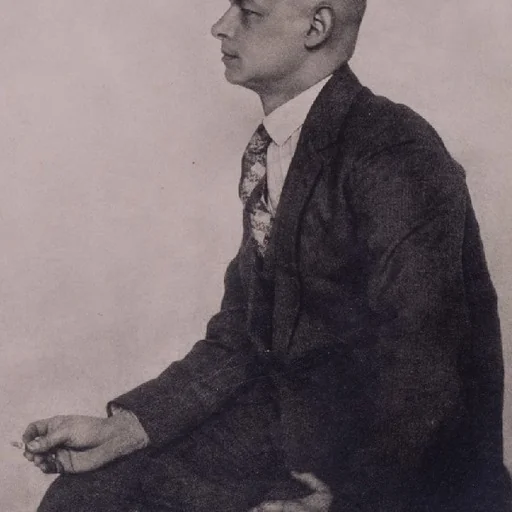
Oskar Schlemmer (German pronunciation:; 4 September 1888 – 13 April 1943) was a German painter, sculptor, designer and choreographer associated with the Bauhaus school.