Artwork
Ecce Homo
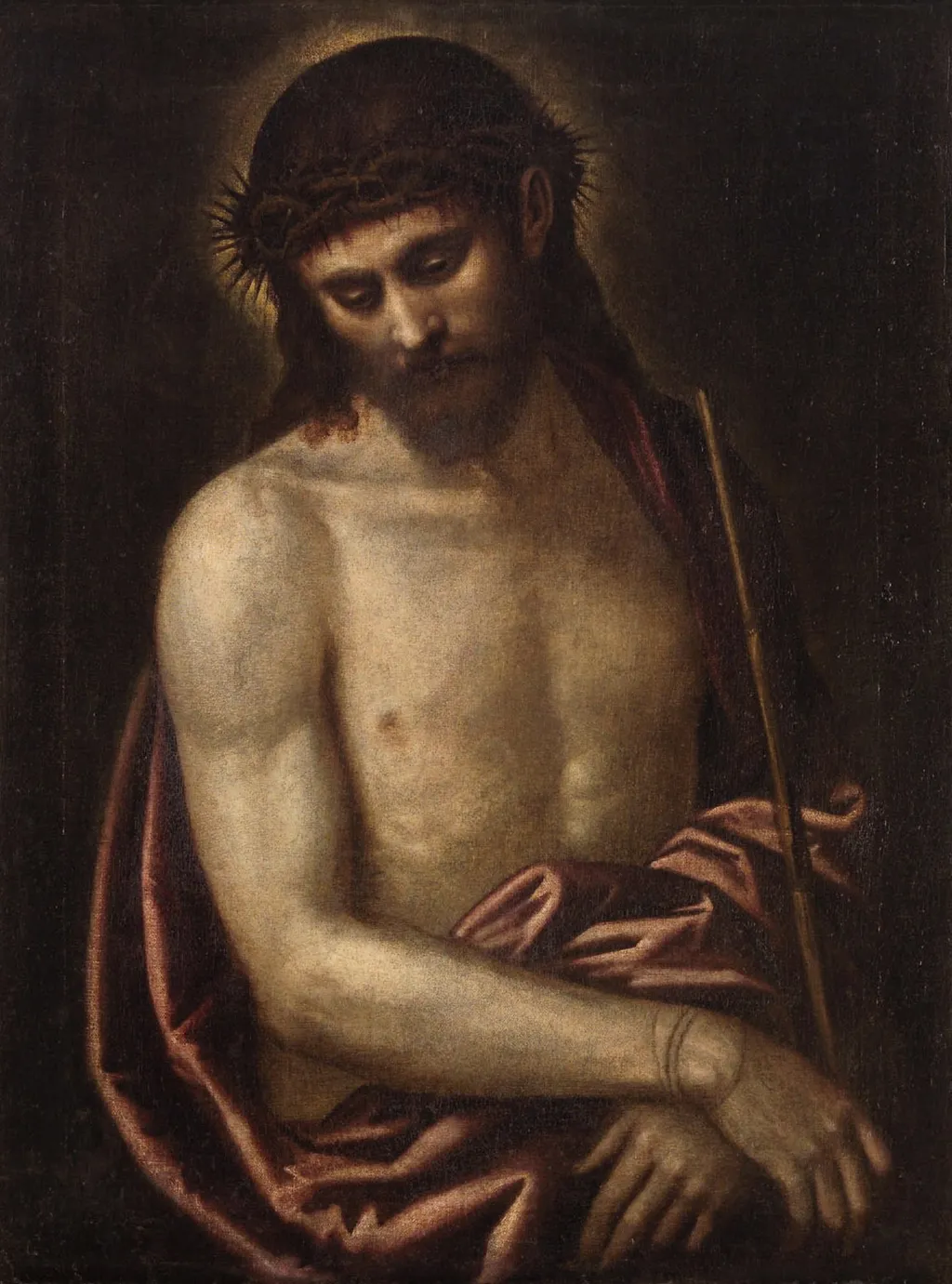
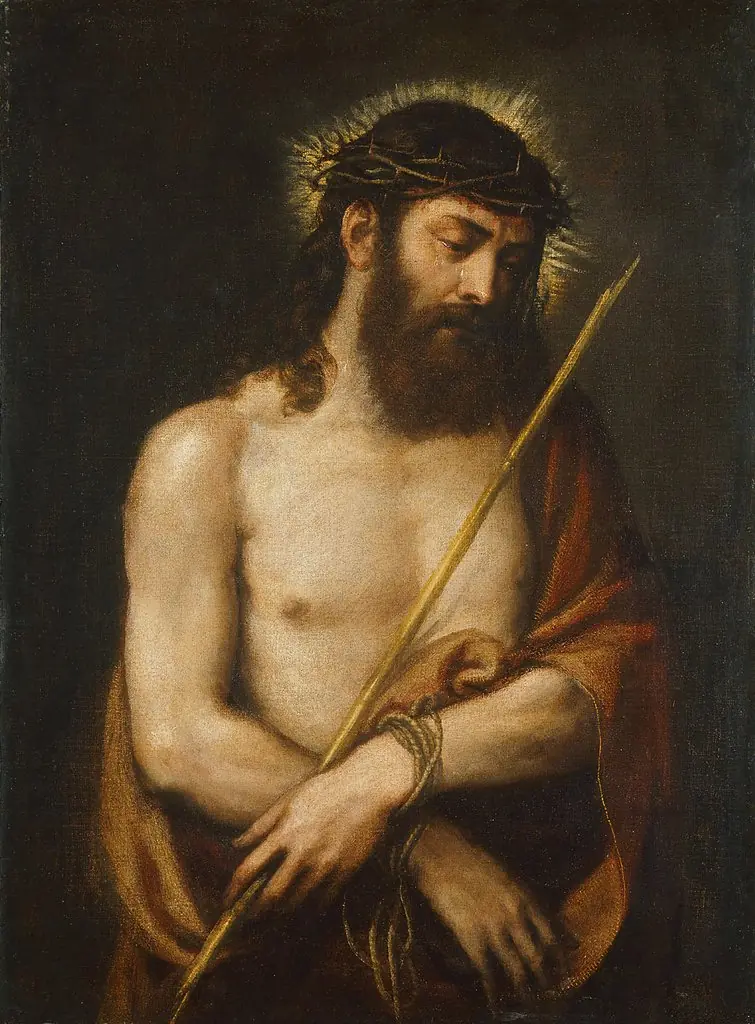
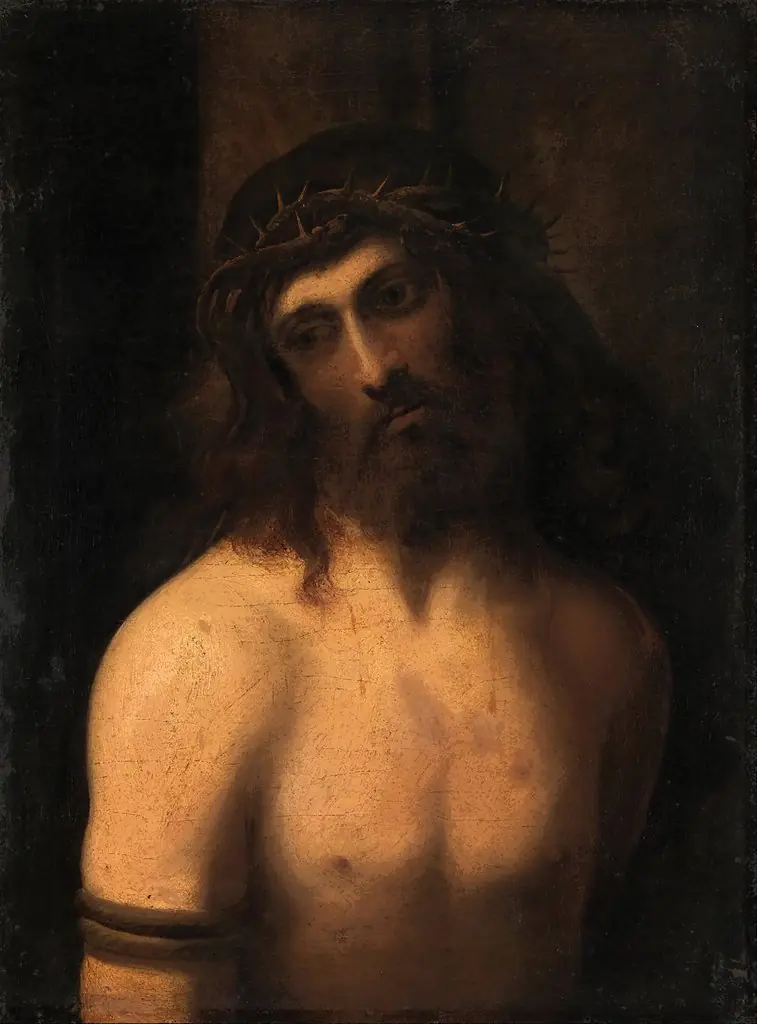
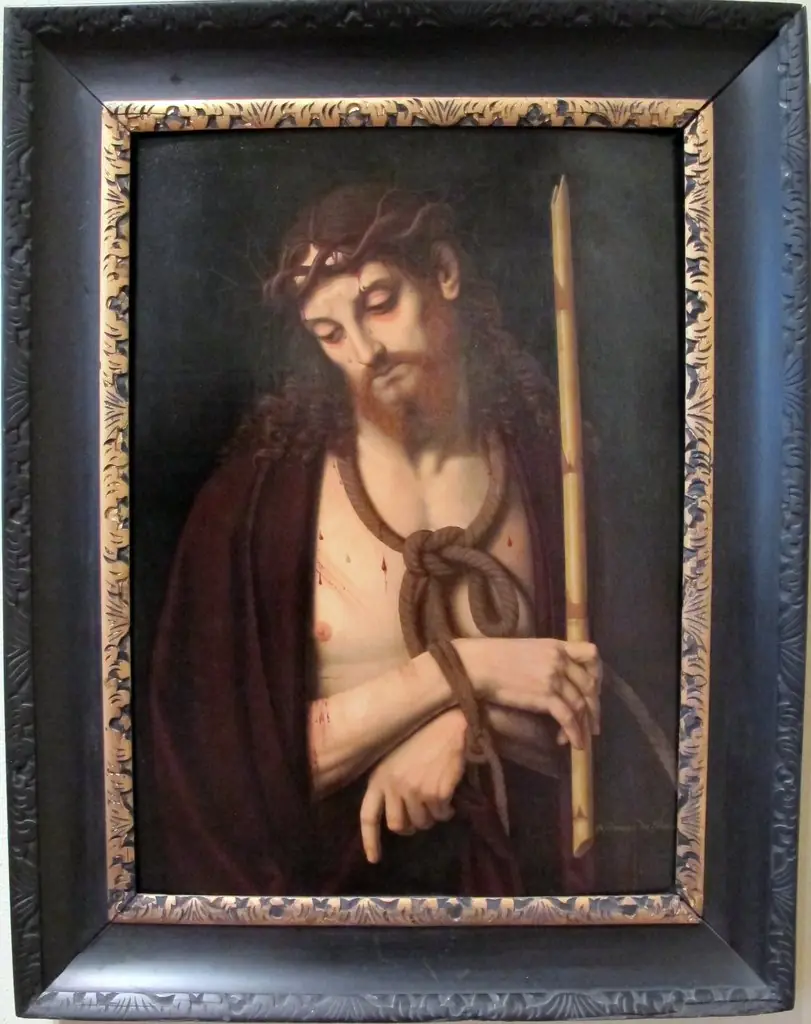
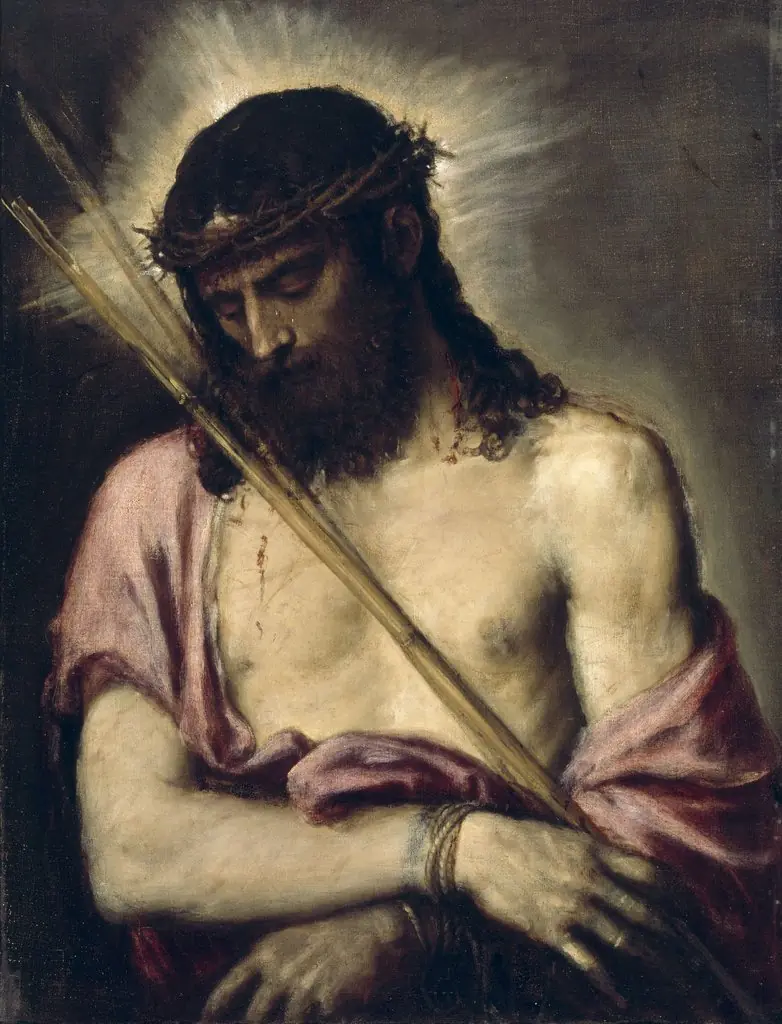
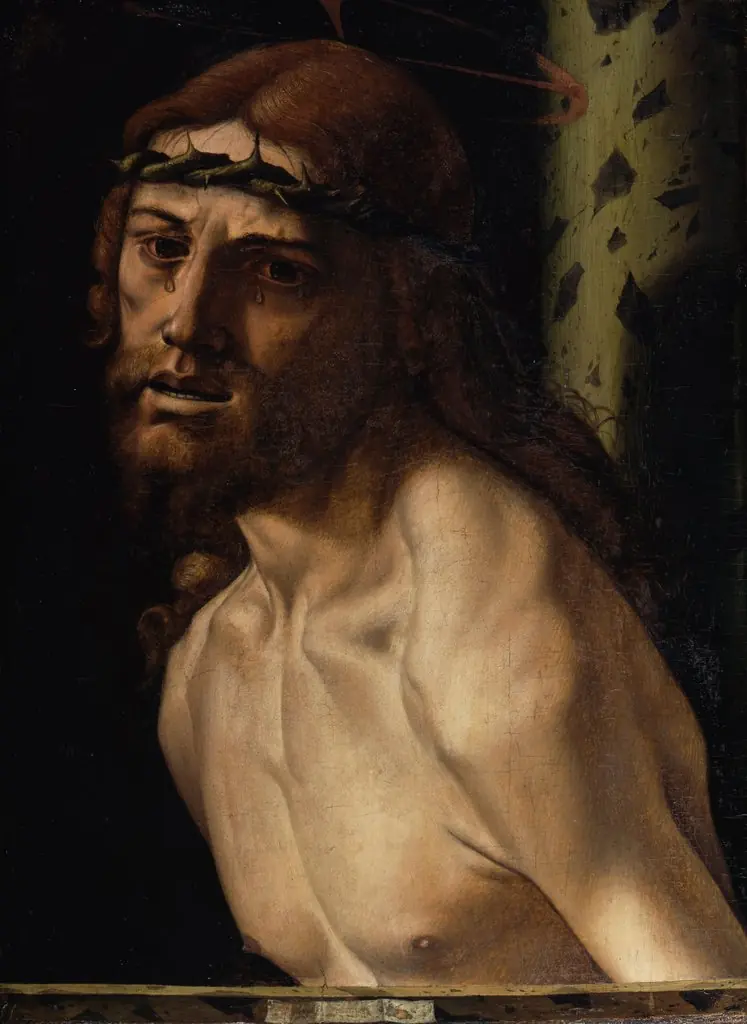
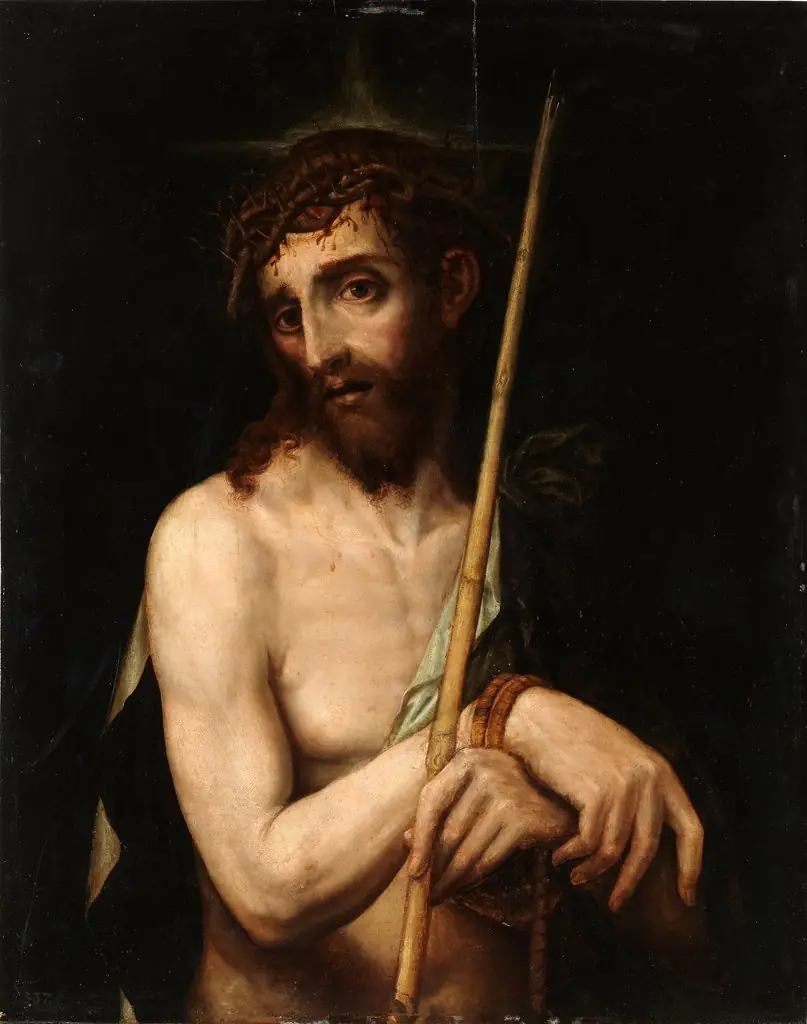
Ecce Homo is an unspecified painting by the Early Baroque Italian artist Unknown. It dates from 1593 and is held in the collection of the Kunsthistorisches Museum. The work depicts a nude male figure wearing a crown of thorns, his arms folded across his chest and his gaze directed downward.
About this work
Subject & Meaning
The composition focuses on the figure of Jesus Christ, utilizing these traditional symbols to convey the narrative of his suffering and presentation.
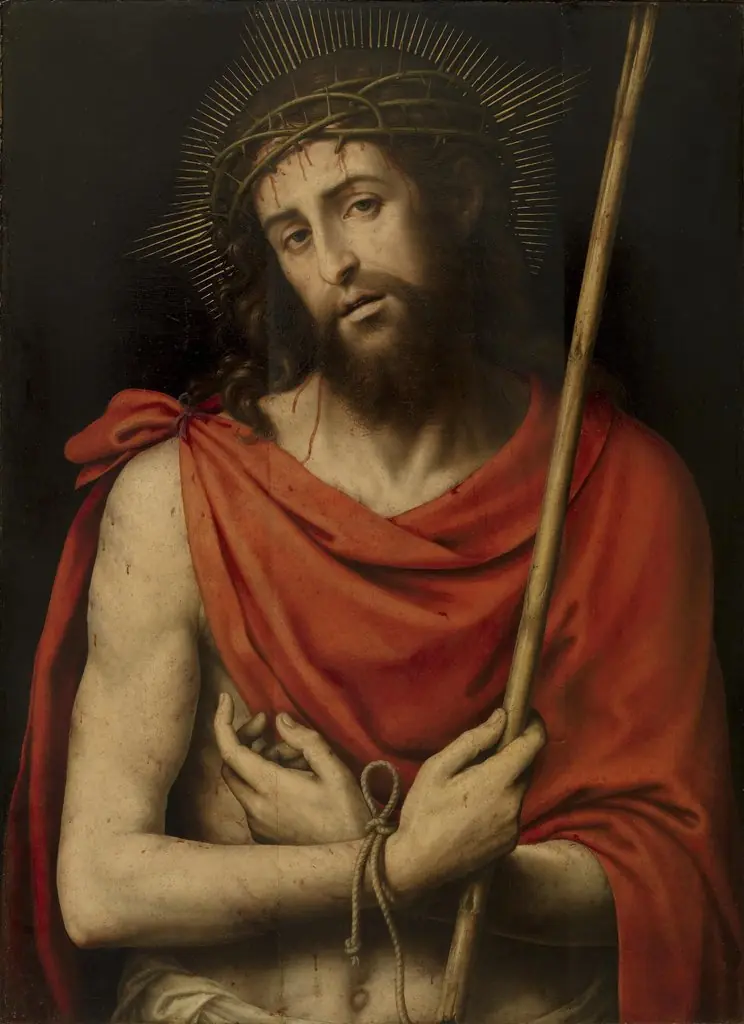
The painting depicts the biblical scene of Ecce Homo, presenting Jesus Christ as the central main subject. The iconography includes specific religious attributes such as a crown of thorns and a halo, alongside drapery. As a work of religious art rooted in the Venetian school and Mannerism, the piece visually represents the moment Christ is presented to the crowd.
The composition focuses on the figure of Jesus Christ, utilizing these traditional symbols to convey the narrative of his suffering and presentation.
Technique & Style
Created in 1585, this religious painting is executed in oil paint on canvas. The work measures 82 cm in height and 62 cm in width. Stylistically, it is associated with the Venetian school and the Mannerist movement.
The composition depicts Jesus Christ wearing a crown of thorns and a halo, surrounded by drapery. While the piece is held in the collection of the Kunsthistorisches Museum, attribution is shared between Simone Peterzano and Paolo Veronese.
History & Provenance
The Ecce Homo is attributed to Simone Peterzano with later intervention by Paolo Veronese and is dated to 1585. The painting entered the collection of the Kunsthistorisches Museum in Vienna, where it remains held. Records indicate the work was created in Venice during the late sixteenth century, aligning with Peterzano’s mature period and Veronese’s documented collaborations with him in the 1580s.
Context
The painting Ecce Homo, attributed to Simone Peterzano and associated with Paolo Veronese, was created in 1585 and is housed in the Kunsthistorisches Museum in Vienna. It exemplifies the Venetian school's Mannerist style through its use of oil on canvas to depict Jesus Christ wearing a crown of thorns, a halo, and draped garments. This religious work reflects the broader context of late Renaissance art in Venice, where dramatic portrayals of Christ’s condemnation were central to devotional practice.
Its composition and treatment of fabric and light align with Mannerist tendencies toward expressive distortion and emotional intensity, situating it within the evolving tradition of Counter-Reformation imagery that emphasized visceral spiritual engagement.
Overview
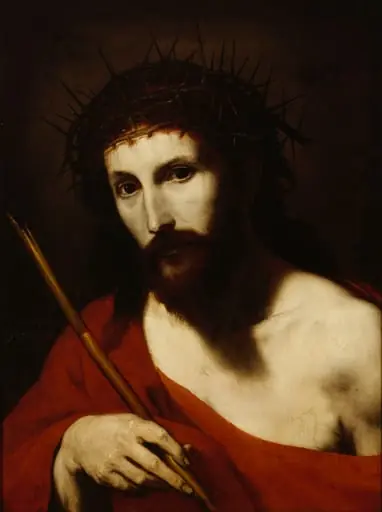
The work depicts a nude male figure wearing a crown of thorns, his arms folded across his chest and his gaze directed downward. He is set against an entirely black background, while a vivid red cloth is draped over his shoulders, creating a stark visual contrast that isolates the figure from any surrounding context.
Artist & collection