Artwork
Diana and Callisto
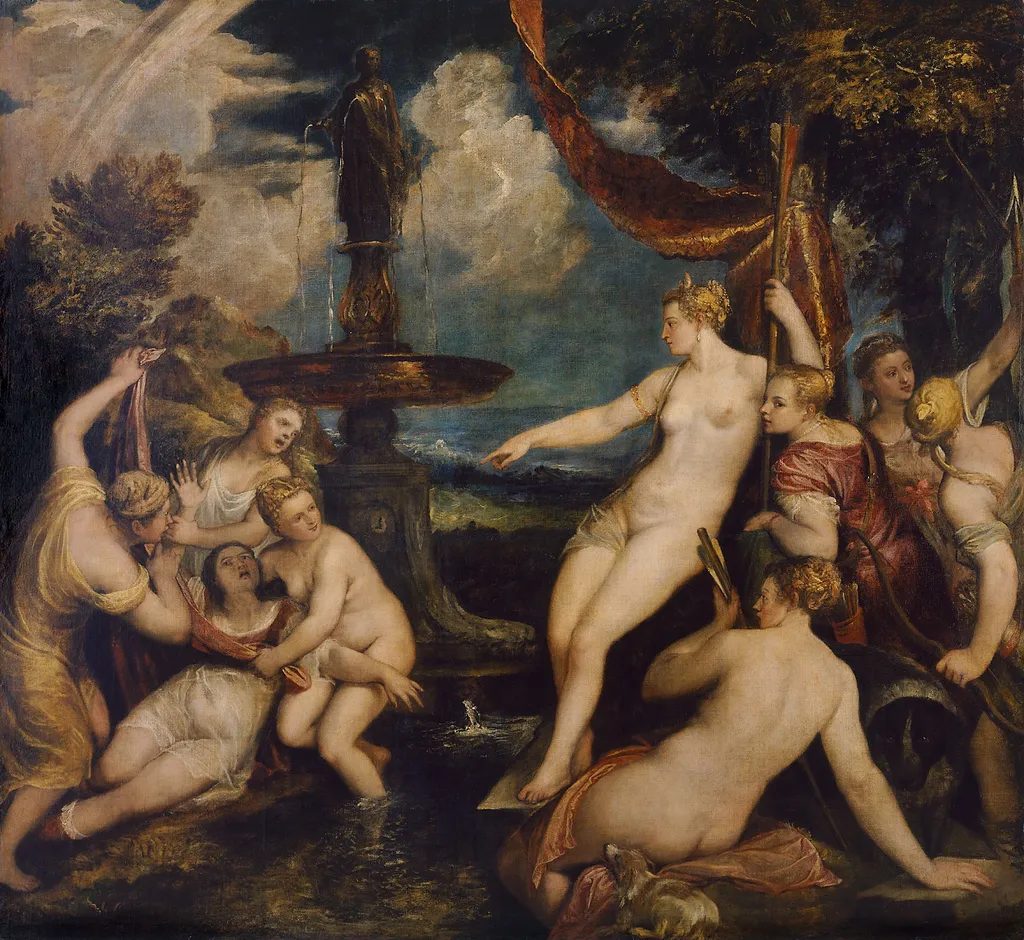
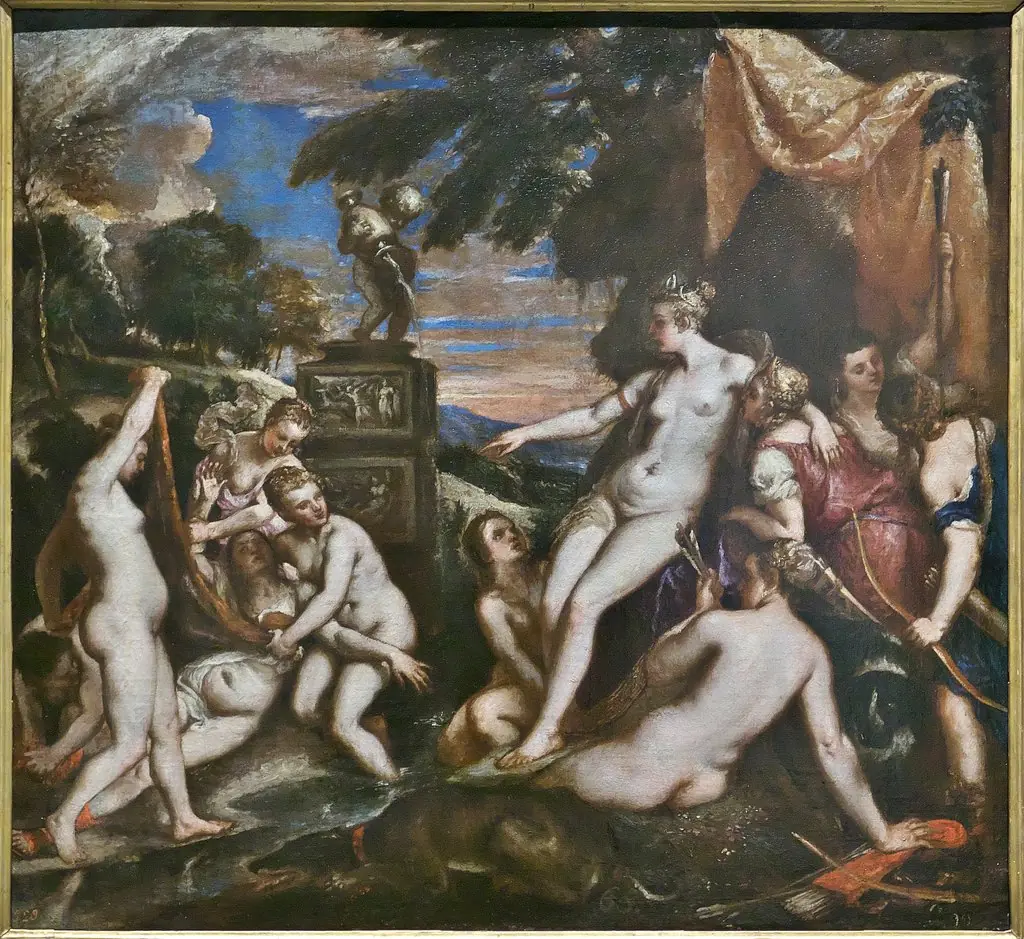
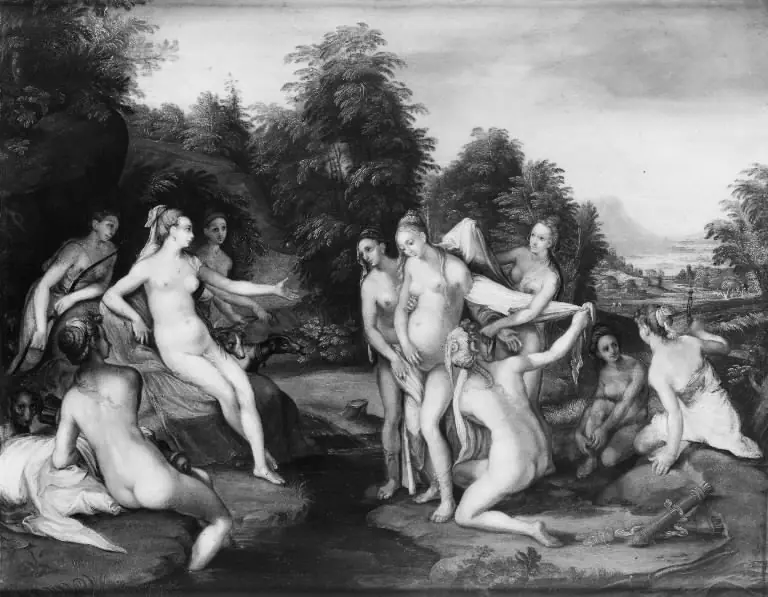
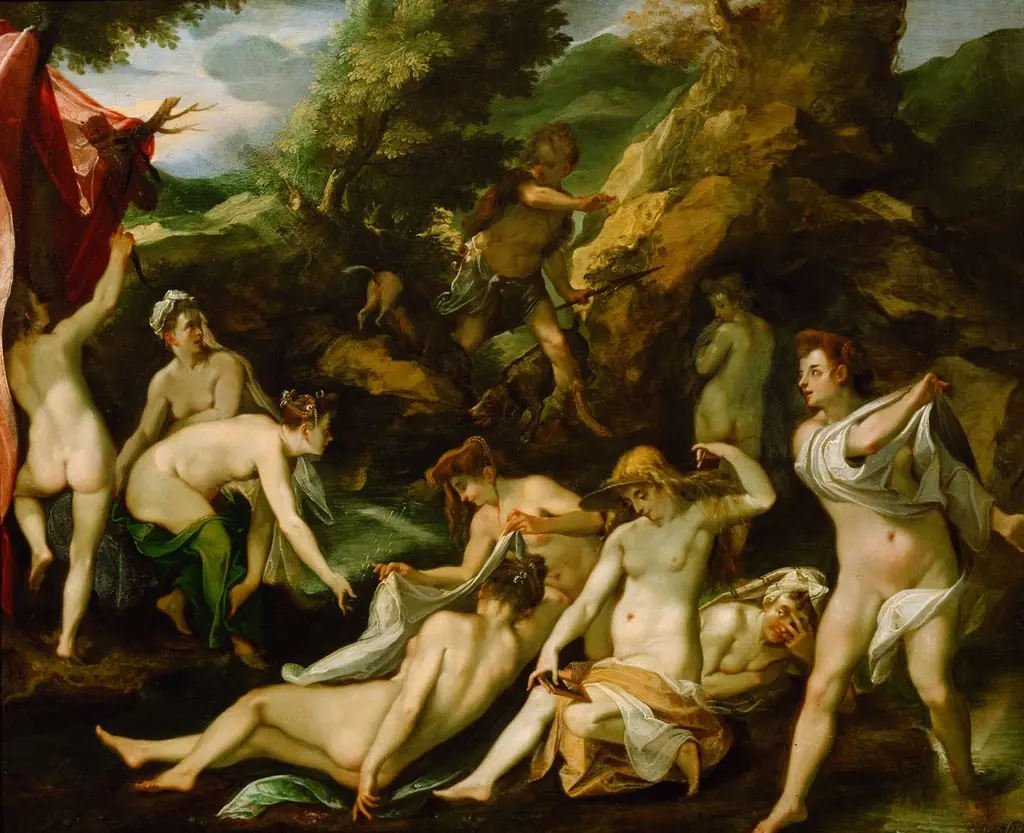
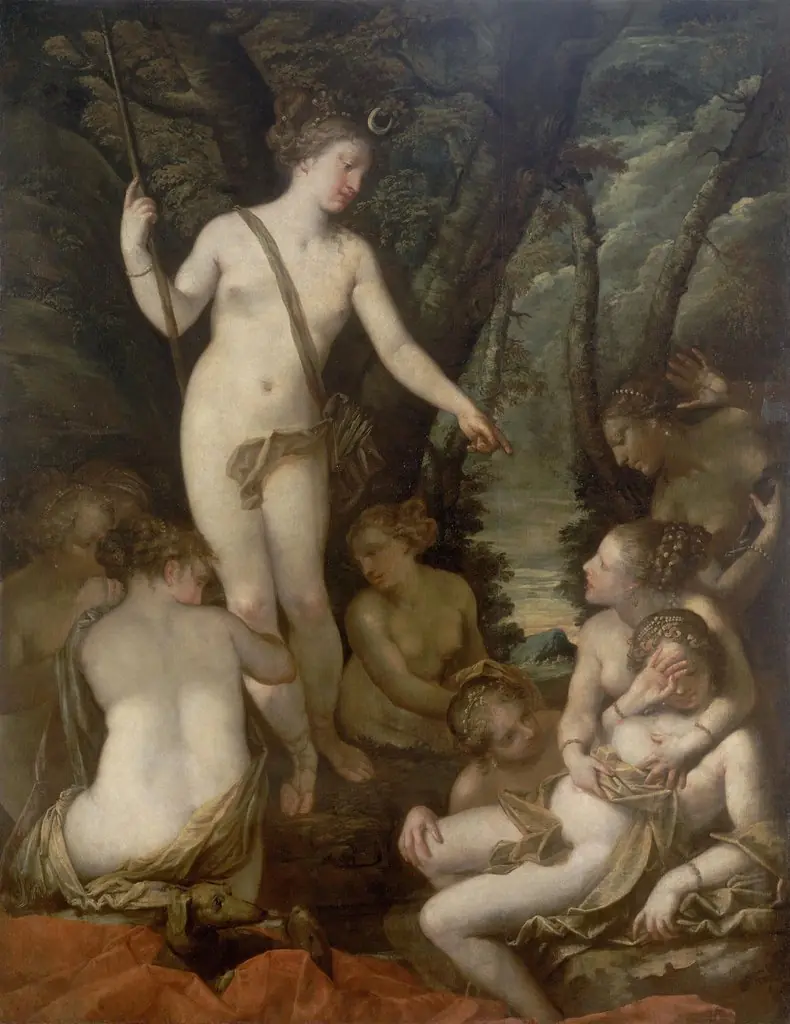
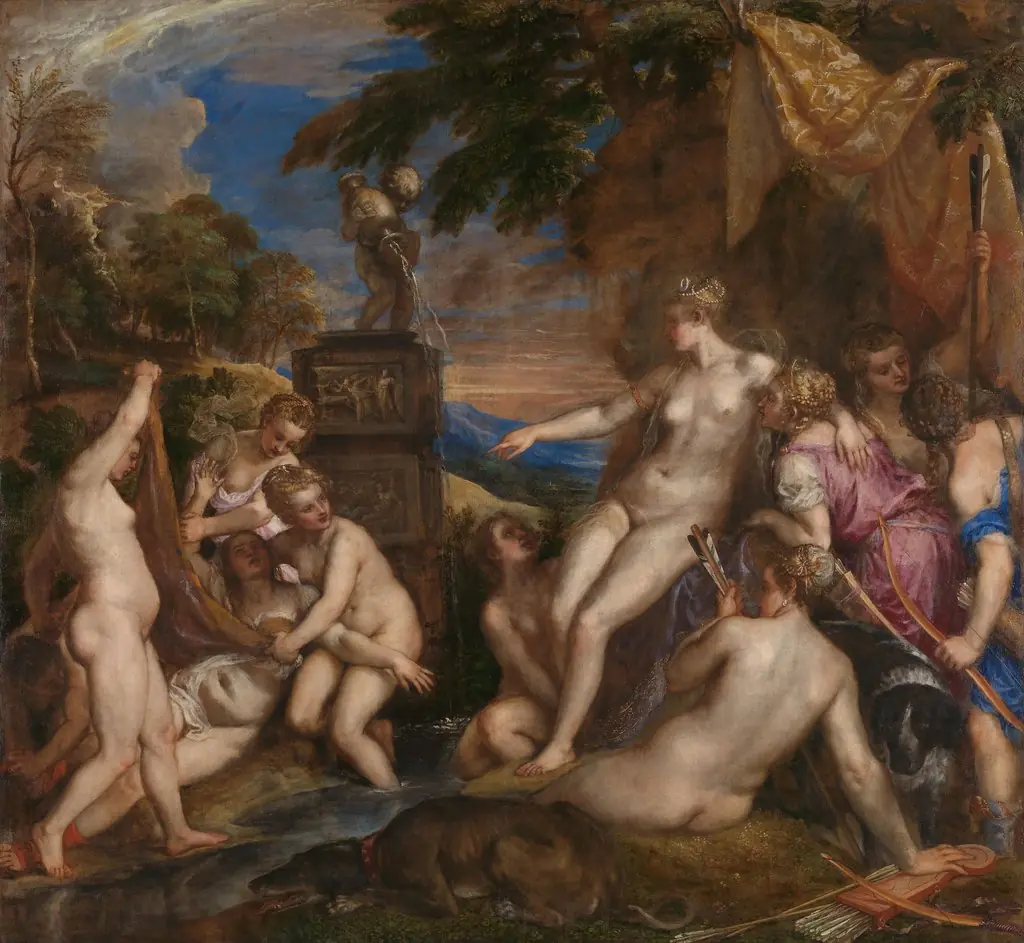
Diana and Callisto is an oil painting by the Venetian School artist Titian. It dates from 1566 and is held in the collection of the Kunsthistorisches Museum. Created in 1566, this oil on canvas portrays a moment from classical mythology featuring the goddess Diana and the nymph Callisto.
About this work
Subject & Meaning
Titian's composition centers on Diana as the focal figure, with Callisto and a surrounding group of women forming the narrative ensemble.
The painting renders the Ovidian myth of Diana and Callisto, in which the nymph Callisto, a follower of the goddess Diana, is exposed as pregnant by Zeus and punished by her divine mistress. Titian's composition centers on Diana as the focal figure, with Callisto and a surrounding group of women forming the narrative ensemble.
The scene belongs to Titian's celebrated cycle of poesie paintings for Philip II of Spain, mythological canvases in which Ovid's Metamorphoses was translated into sensual, painterly form. The work treats themes of divine jealousy, violated chastity, and the vulnerability concealed within a community of female attendants, with Diana's discovery of Callisto's condition serving as the dramatic crux of the image.
Technique & Style
Executed in 1566, this mythological painting is an oil work on canvas created by Titian, potentially with assistance from his workshop. The composition measures 183 cm in height and 200 cm in width, depicting a group of female figures centered on the goddess Diana and her nymph Callisto. Stylistically, the piece is identified with the Venetian school, utilizing the fluid properties of oil paint to render nude forms and narrative detail within a classical setting.
History & Provenance
The painting was created in 1566 as an oil work on canvas, depicting the mythological scene of Diana and Callisto. It was commissioned by Maximilian II, Holy Roman Emperor, and later passed to Archduke Leopold Wilhelm of Austria. The work remained in the collection of the Kunsthistorisches Museum in Vienna, where it is currently housed.
Diana and Callisto is held at the Kunsthistorisches Museum in Vienna. It is catalogued under the inventory number 2462 and has been part of the museum's collection since its acquisition by Archduke Leopold Wilhelm of Austria. The work was originally owned by Maximilian II, Holy Roman Emperor, before entering the imperial collection.
It has been exhibited in the museum's permanent displays and featured in special exhibitions on Titian's oeuvre, including a 2005 retrospective of Venetian Renaissance paintings.
Overview
Created in 1566, this oil on canvas portrays a moment from classical mythology featuring the goddess Diana and the nymph Callisto. The work belongs to the collection of Vienna’s Kunsthistorisches Museum and exemplifies the late‑Renaissance period in which Titian, the pre‑eminent Venetian painter, was active.
Context
During the mid‑16th century, Titian was expanding the expressive potential of mythological subjects, integrating portraiture’s psychological depth with grand narrative scenes. This work reflects his mature period, when his command of color and light influenced contemporaries and set a precedent for Baroque dramatism.
Own this work as a print
Artist & collection

Artist
Tiziano Vecellio (Italian:; c. 1488/1490 – 27 August 1576), Latinized as Titianus, hence known in English as Titian ( TISH-ən), was an Italian Renaissance painter. The most important artist of Renaissance Venetian…