Artwork
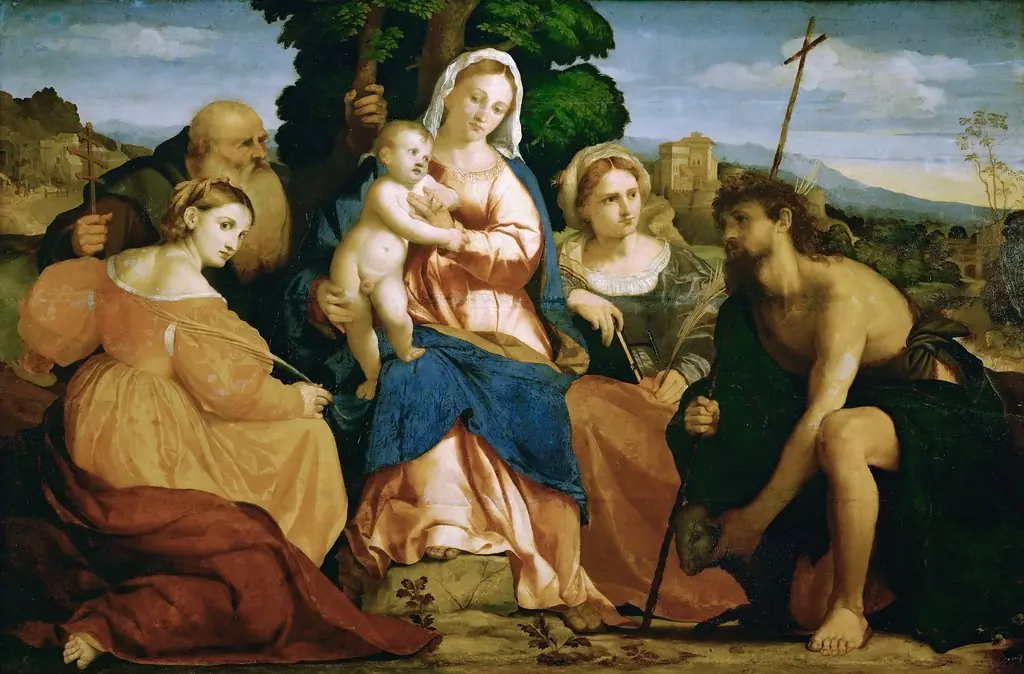
Holy Family with St. John and Mary Magdalene
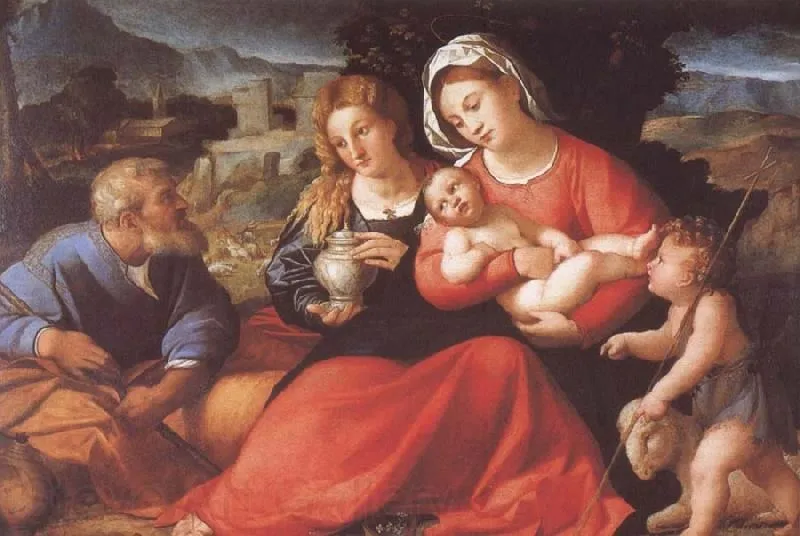
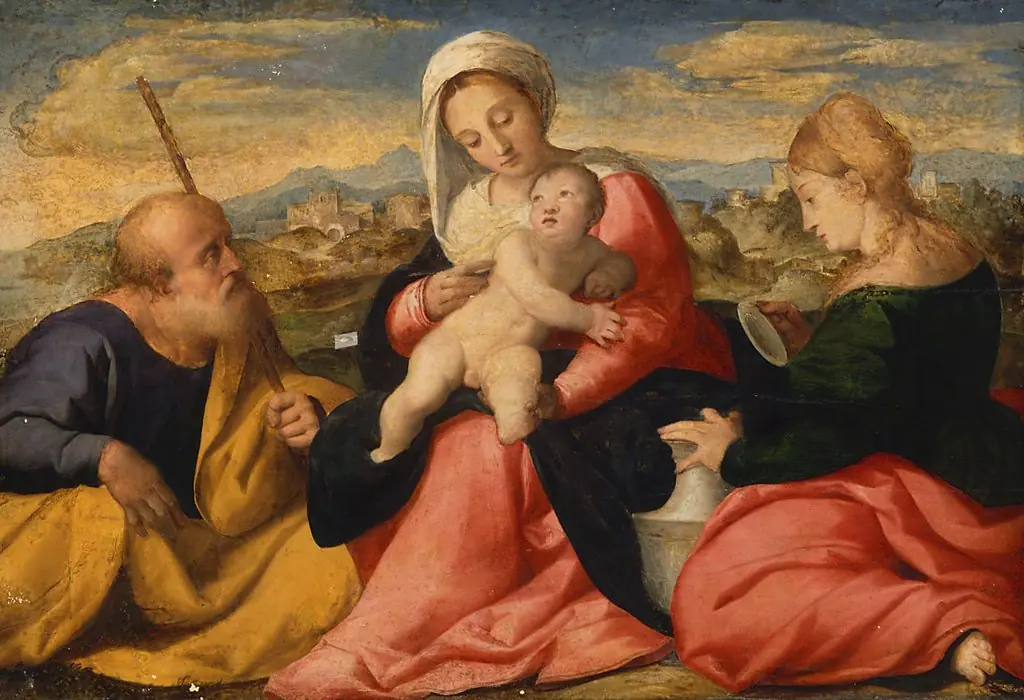
Holy Family with St. John and Mary Magdalene is an oil painting by the High Renaissance artist Palma Vecchio. It dates from 1508 and is held in the collection of the Uffizi Gallery.
About this work
This painting by Palma Vecchio shows the Holy Family with the baby Jesus, St. John the Baptist, and Mary Magdalene. It’s oil on wood, finished around 1512.
It traveled a lot before landing in the Uffizi. First it was in Brussels, then Vienna, before ending up in Florence in 1793.
If you like this, check out more works by Palma Vecchio.
Subject & Meaning
These figures are arranged to form a sacred grouping that emphasizes their spiritual relationship and the theological narrative of redemption.
The painting depicts the Holy Family, comprising the Virgin Mary and the Christ Child, accompanied by the infant Saint John the Baptist and Saint Mary Magdalene. A lamb is also present within the composition, serving as a traditional symbol of Christ's future sacrifice. These figures are arranged to form a sacred grouping that emphasizes their spiritual relationship and the theological narrative of redemption. The inclusion of Mary Magdalene alongside the Holy Family and the Baptist reflects a specific devotional focus common in Venetian religious art of the period, uniting figures associated with the infancy and passion of Christ.
Technique & Style
The painting is executed in oil on panel, with dimensions of 87 cm in height and 117 cm in width. Stylistically, it reflects the Venetian High Renaissance idiom associated with Palma Vecchio, characterized by warm, luminous coloration and softly modeled figures arranged in a balanced composition.
Compositionally, the figures form a pyramidal arrangement, with the Virgin and Child at the apex, flanked by the young Saint John the Baptist and Mary Magdalene. The handling emphasizes sfumato transitions and delicate chiaroscuro, typical of the period’s Venetian technique. Bernard Berenson suggested workshop collaboration, indicating the possibility of studio participation in the execution.
History & Provenance
Created between 1508 and 1512, this oil-on-panel work by Palma Vecchio depicts the Holy Family with saints. While the artist is the primary creator, Bernard Berenson suggested the workshop may have contributed to its execution. The painting entered the collection of Archduke Leopold Wilhelm of Austria in Brussels, where it remained from 1653 to 1662. It subsequently moved to the Imperial Galleries in Vienna before being exchanged for another work and transferred to the Uffizi in Florence in 1793. During World War II, the piece was hidden in the Villa Medicea di Poggio a Caiano and other shelters until 1944, when German forces seized it and transported it to Castel Giovo in Bolzano. It returned to Florence in 1945, initially residing at the Palazzo Pitti before being permanently housed at the Uffizi in 1951. The work has undergone restoration in 1988 and again between 2003 and 2004.
The painting is currently held by the Uffizi Gallery in Florence, where it bears inventory number 950. Its provenance includes a period in Brussels within the collection of Archduke Leopold Wilhelm of Austria from 1653 to 1662, followed by its transfer to the Imperial Galleries in Vienna (now the Kunsthistorisches Museum). In 1793, the work was exchanged for another piece and moved to the Uffizi. During World War II, the artwork was evacuated to the Villa Medicea di Poggio a Caiano in 1940 before being relocated to various bomb shelters. It was seized by German forces in 1944 and taken to Castel Giovo in the Province of Bolzano, returning to Florence in 1945. After a brief stay at the Palazzo Pitti, it was permanently reinstated at the Uffizi in 1951.
Context
The painting was created between 1508 and 1512 by Palma Vecchio, a Venetian artist active during the High Renaissance. It entered the collection of Archduke Leopold Wilhelm of Austria in the mid-17th century, remaining there until 1662 before being transferred to Vienna's Imperial Galleries. In 1793, it was exchanged into the Uffizi Gallery's holdings in Florence, where it remains today (inventory 950). The work suffered wartime displacement during World War II, being hidden in the Villa Medici at Poggio a Caiano from 1940 to 1942 and later seized by German forces, who transported it to Castel Giovo in South Tyrol before its return to Florence in 1945 and reintegration into the Uffizi in 1951. It underwent restorations in 1988 and 2003-2004. Scholars, including Bernard Berenson, have suggested the involvement of Palma Vecchio's workshop in its execution, based on stylistic analysis and historical records. The painting is housed in a richly carved Baroque frame featuring laurel motifs, documented through 17th-century engravings by Jan van Troyen (1660) and Giovanni Paolo Lasinio (1828), which reveal its original dimensions differed from its current size.
Legacy
The painting exerted influence through documented scholarly attention and archival visibility rather than widespread public fame. Bernard Berenson noted its collaborative execution within Palma Vecchio's workshop, a view cited in multiple 20th-century Italian and German art histories
The work's provenance, including its seizure by German forces during World War II and subsequent return to the Uffizi in 1951, contributed to its reputation as a piece with a dramatic wartime trajectory
Its baroque gilded frame, documented through Jan van Troyen's 1660 engraving in Theatrum Pictorium, provided a visual record of its original dimensions and decorative scheme
The painting was featured in exhibitions and catalogues, including the 1926 Galleria degli Uffizi catalogue and the 1988 Rylands monograph, establishing its place in scholarly discourse
The work's presence in major collections such as that of Archduke Leopold Wilhelm of Austria and its exchange with the Uffizi in 1793 underscore its historical significance in art market and institutional movements
The painting's wartime storage at the villa medicea di Poggio a Caiano and its movement between bomb shelters and Castel Giovo reflect its protected status during conflict, influencing conservation narratives
Artist & collection
Artist
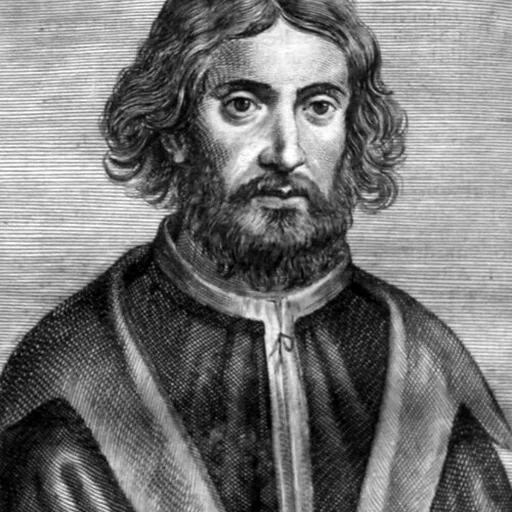
Palma Vecchio (c. 1480 – 30 July 1528), born Jacopo Palma, also known as Jacopo Negretti, was a Venetian painter of the Italian High Renaissance. He is called Palma Vecchio in English and Palma il Vecchio in Italian…

 The Rest on The Flight into Egypt
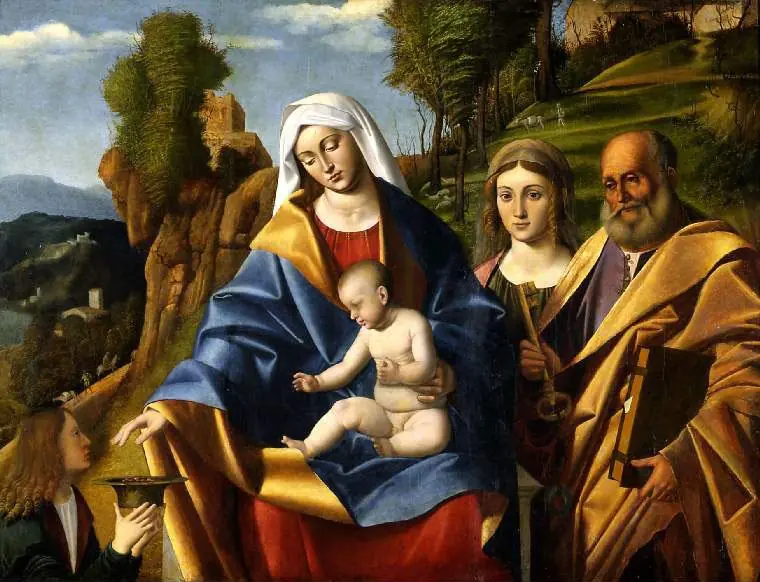 Virgin and Child with Saints,
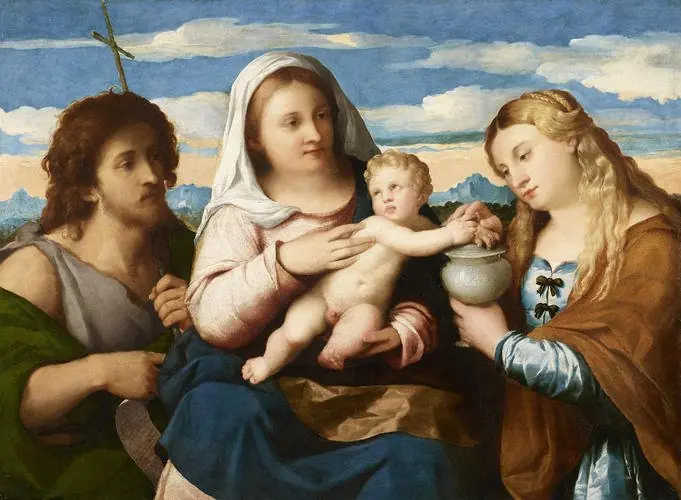 Madonna and Child with Saints
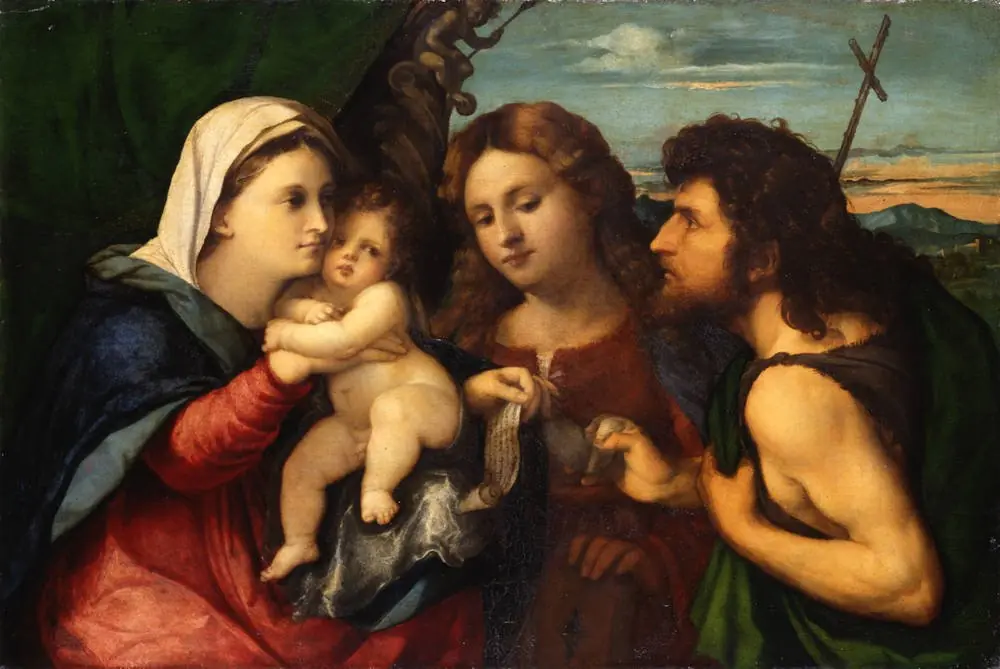 Maria mit dem Kind, Johannes dem Täufer und der heiligen Katharina
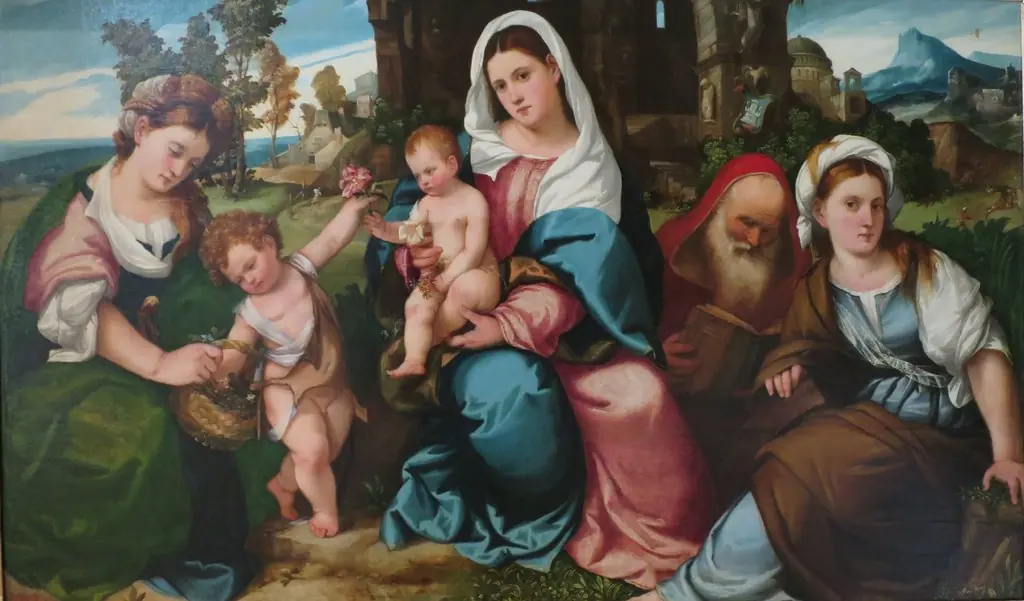 Madonna and Child with St Catherine, St John the Baptist, St Dorotea and St Anthony the Abbot
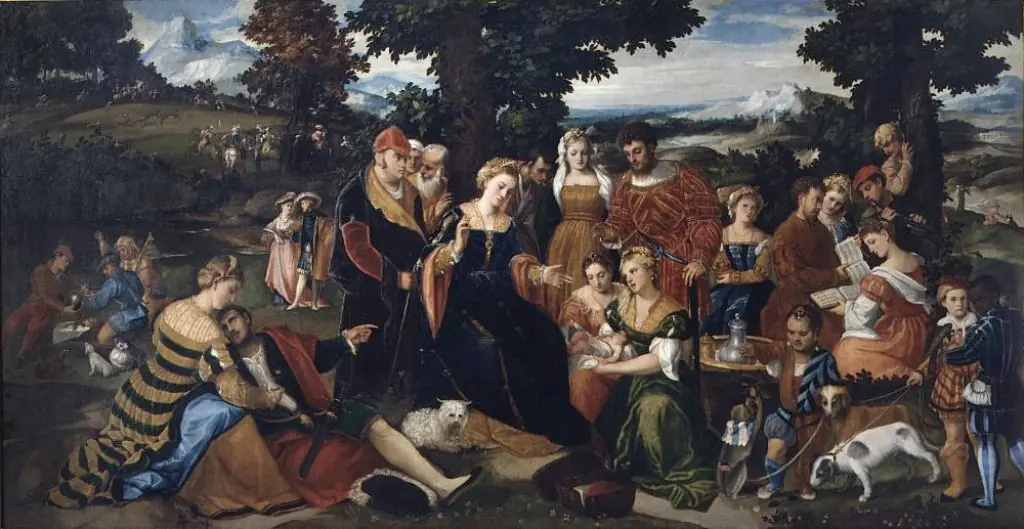 Finding of Moses
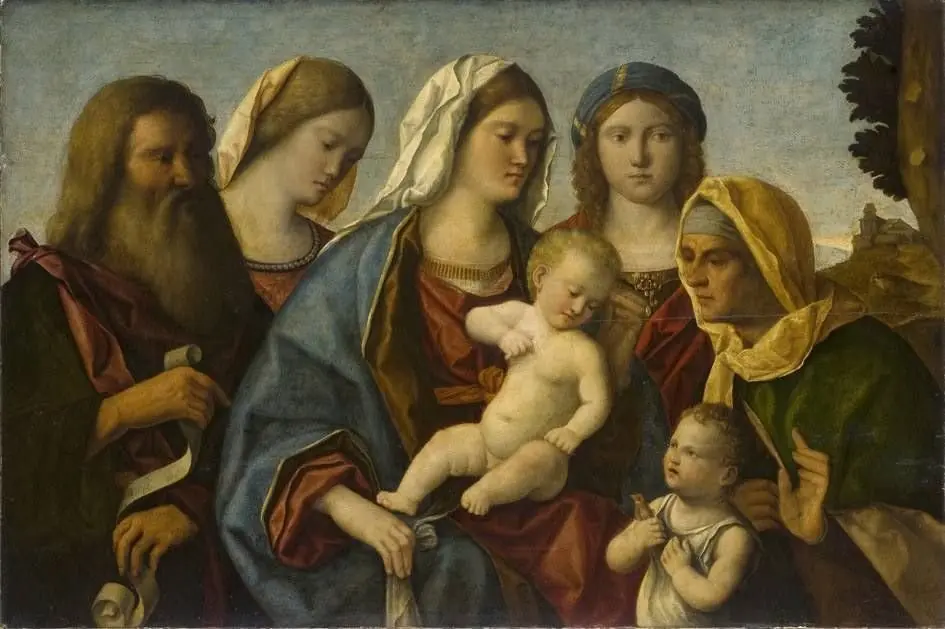 Hl. Sippe
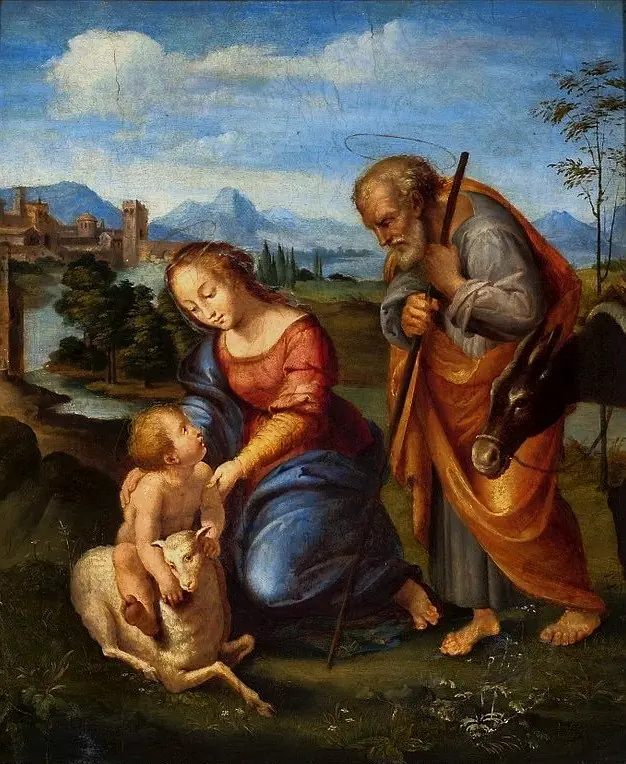 Holy Family with a lamb
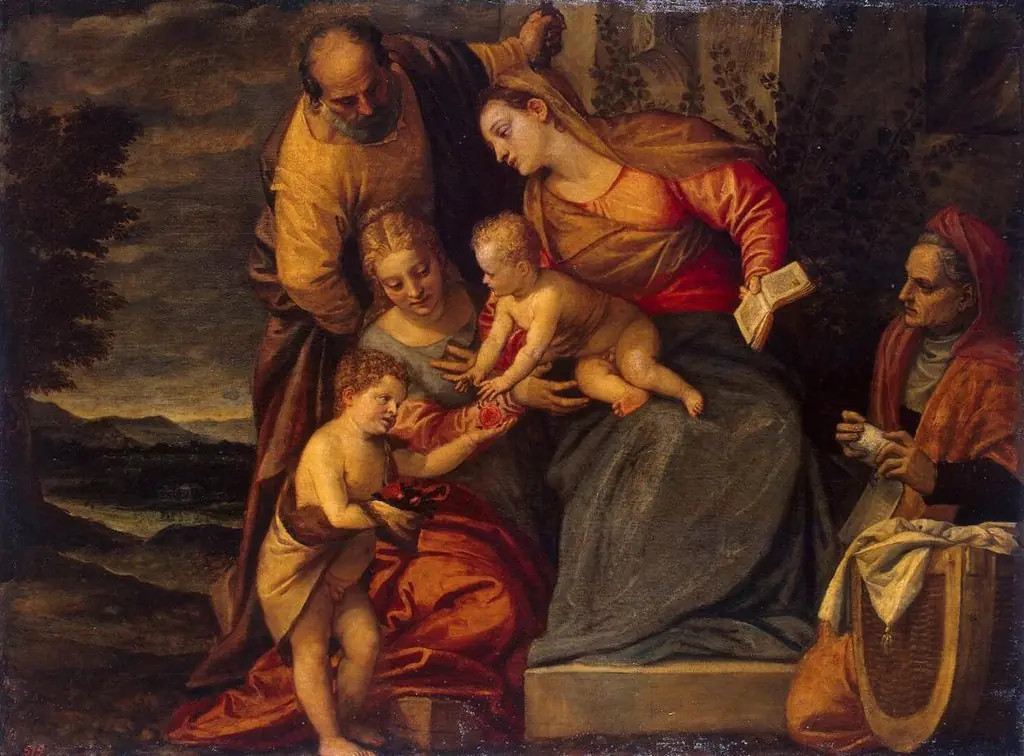 Holy Family with Sts Catherine, Anne and John
 The Virgin and Child with St Jerome