Artwork
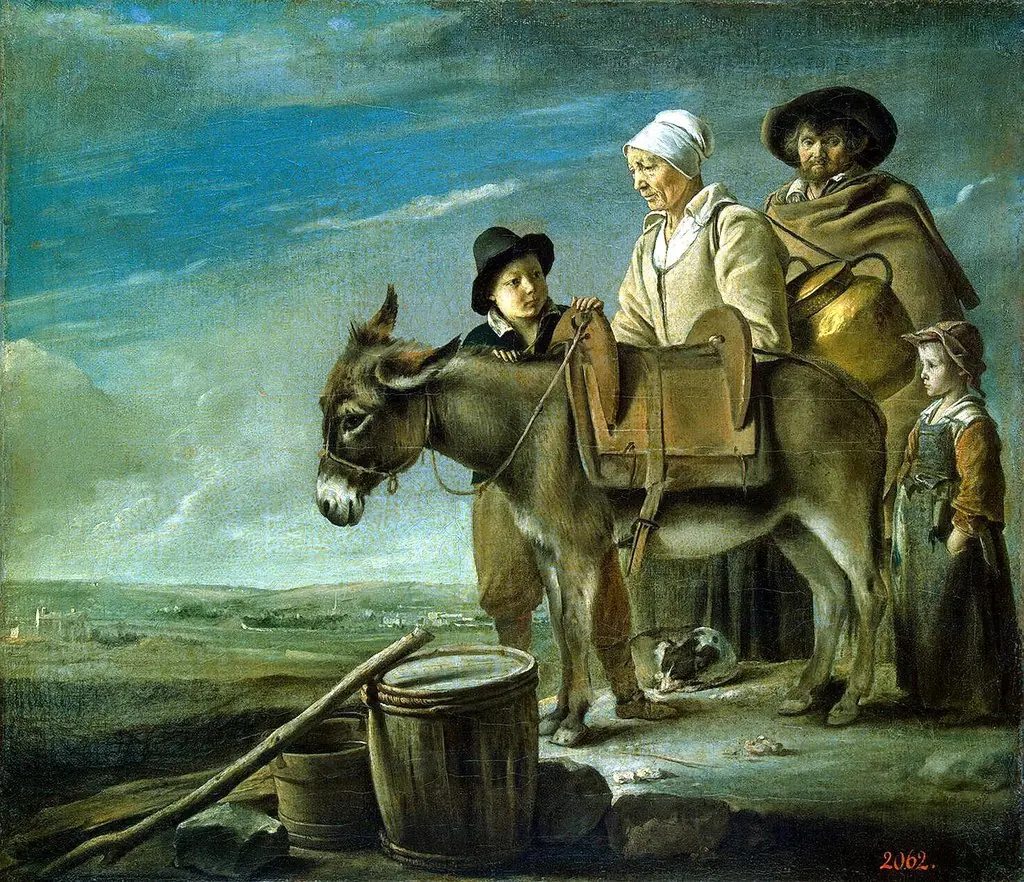
Peasants at a Well
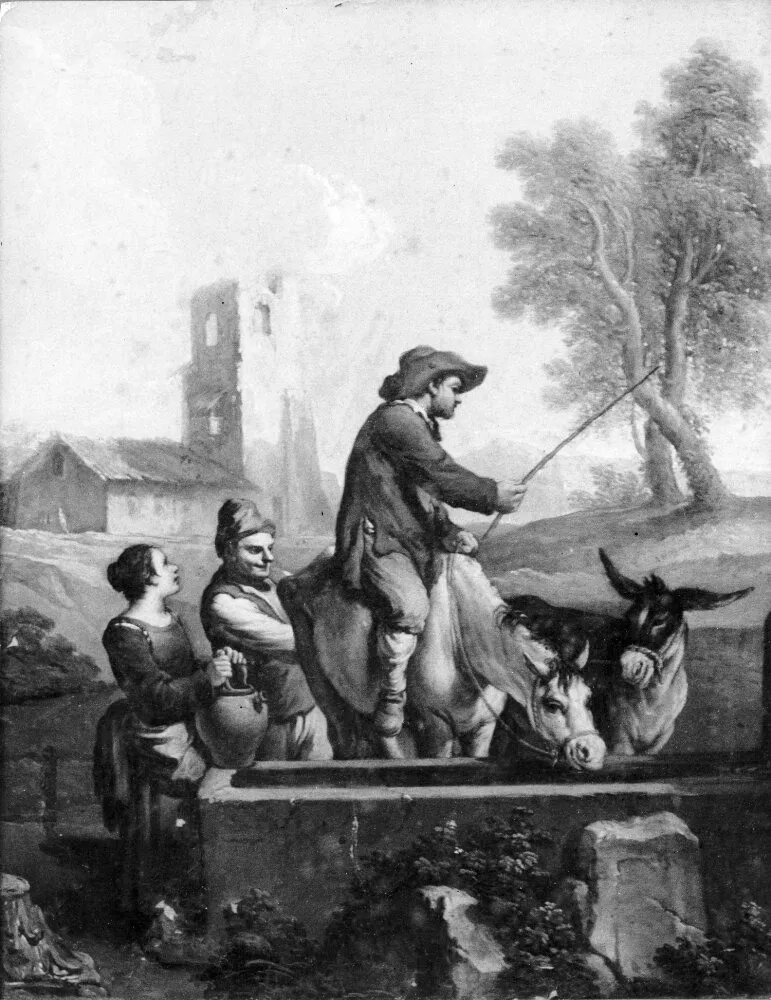
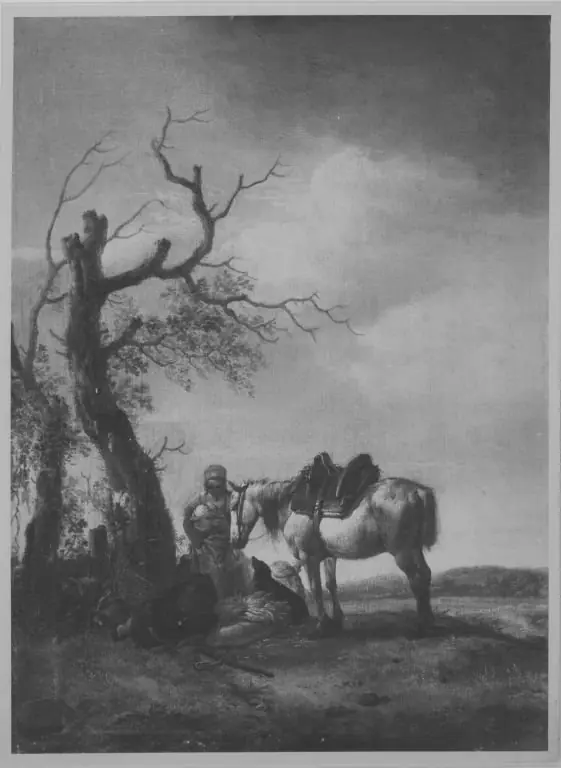
Peasants at a Well is an oil painting by Paolo Monaldi. It dates from 1754 and is held in the collection of the Nationalmuseum.
About this work
Overview
The painting captures a quiet moment of daily labor and social interaction, reflecting Monaldi’s interest in ordinary people and their environments.
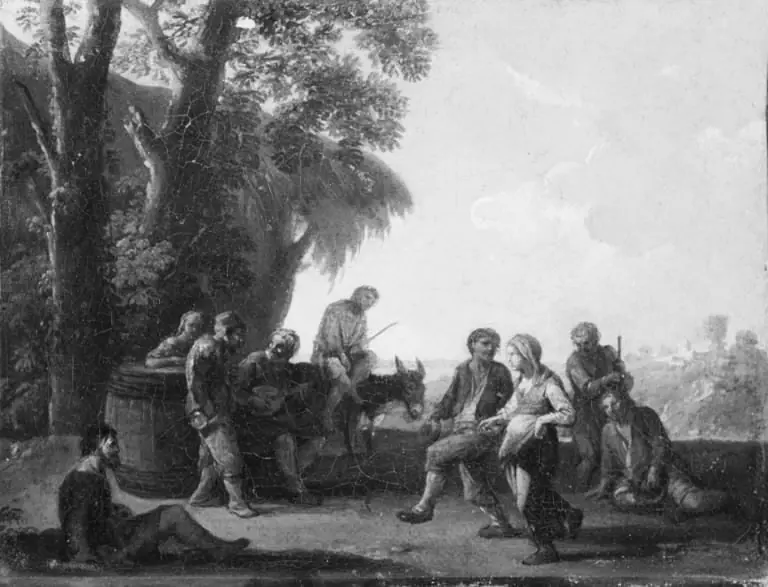
Painted around 1754, Peasants at a Well is an oil-on-canvas work by the Italian artist Paolo Monaldi. It belongs to the Bambocciata tradition, a genre focused on humble rural life rather than grand historical or religious themes. The painting captures a quiet moment of daily labor and social interaction, reflecting Monaldi’s interest in ordinary people and their environments. It is now part of the Nationalmuseum’s collection in Stockholm.
Subject & Meaning
The scene portrays a group of peasants gathered near a well, some drawing water, others engaged in quiet conversation. Their simple attire and unposed gestures emphasize authenticity over idealization. The setting suggests a moment of pause in labor, highlighting community and routine rather than drama or narrative.
The absence of overt symbolism points to a quiet celebration of everyday existence, typical of Bambocciata’s observational approach.
Technique & Style
Monaldi employed oil paint to build subtle atmospheric depth, using warm, earthy tones for the figures and cooler, muted hues for the distant landscape. Brushwork is loose yet deliberate, capturing texture in clothing and foliage without excessive detail. The composition directs attention to the well as a central anchor, with figures arranged naturally around it. Light falls evenly, enhancing the calm, untheatrical mood of the scene.
History & Provenance
Created in the mid-18th century, the painting entered the Nationalmuseum’s collection in Sweden, though its exact path from Italy to Stockholm remains undocumented. Monaldi’s works were relatively obscure outside Italy during his lifetime, and this piece likely arrived through later acquisitions or diplomatic exchanges. Its preservation reflects a 19th-century European interest in genre scenes as records of social life.
Context
Monaldi worked during the late Baroque and early Rococo periods, when Italian art increasingly turned toward secular, everyday subjects. While courtly and religious themes dominated official commissions, artists like him found audiences among collectors drawn to realism and local character. His work aligns with broader trends in Northern European genre painting, though rooted in the Italian countryside’s visual rhythms.
Legacy
Though Monaldi is not widely known today, Peasants at a Well stands as a representative example of Bambocciata painting, a genre that influenced later realist traditions. The work contributes to an understanding of how 18th-century artists documented rural life without romanticizing it. Its presence in a major Nordic museum underscores the transnational appreciation for such intimate, unadorned scenes.
Artist & collection
Artist
Paolo Monaldi (1710 – after 1779) was an Italian painter of the late-Baroque or Rococo style, known for painting Bambocciata, or genre scenes of public activities.