Artwork
Adoration of the Magi
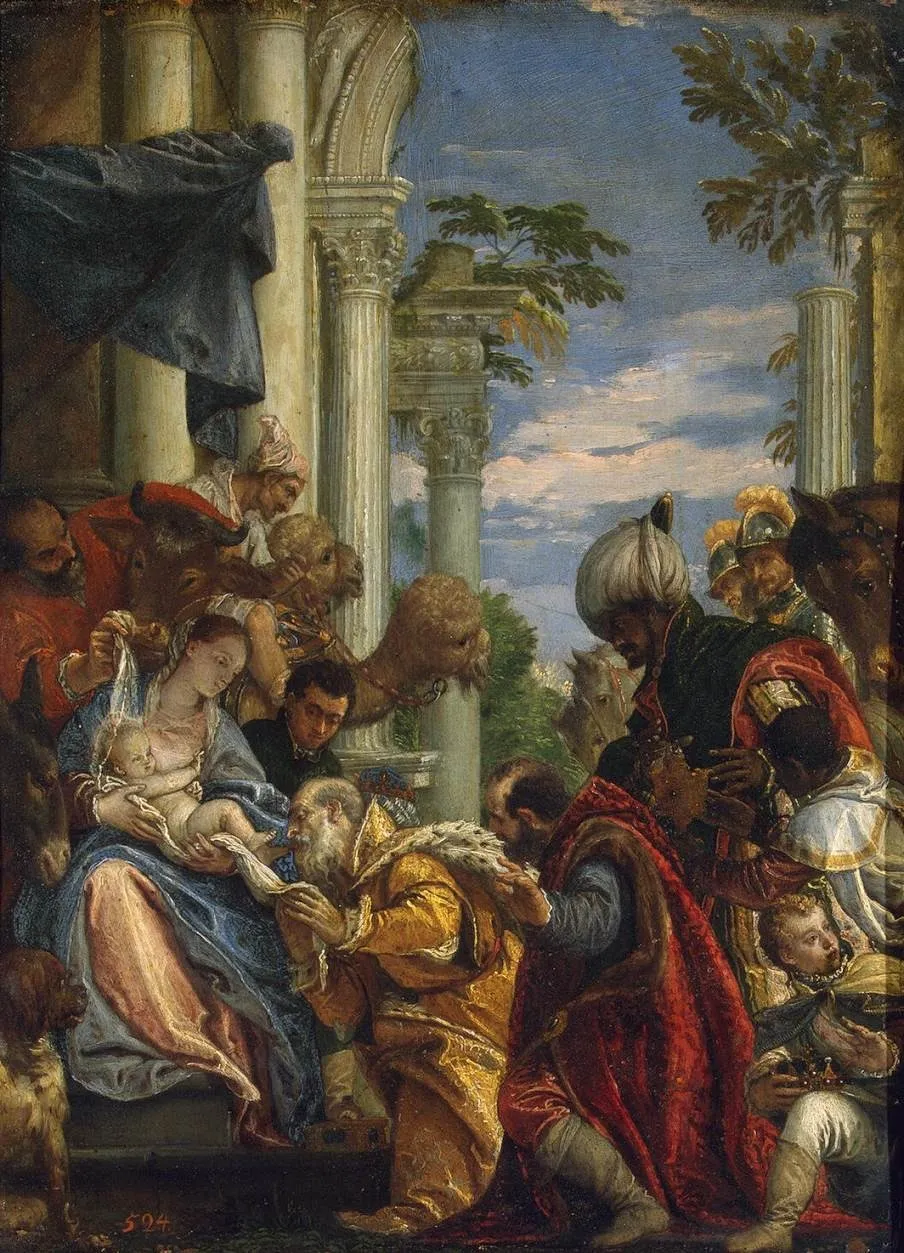
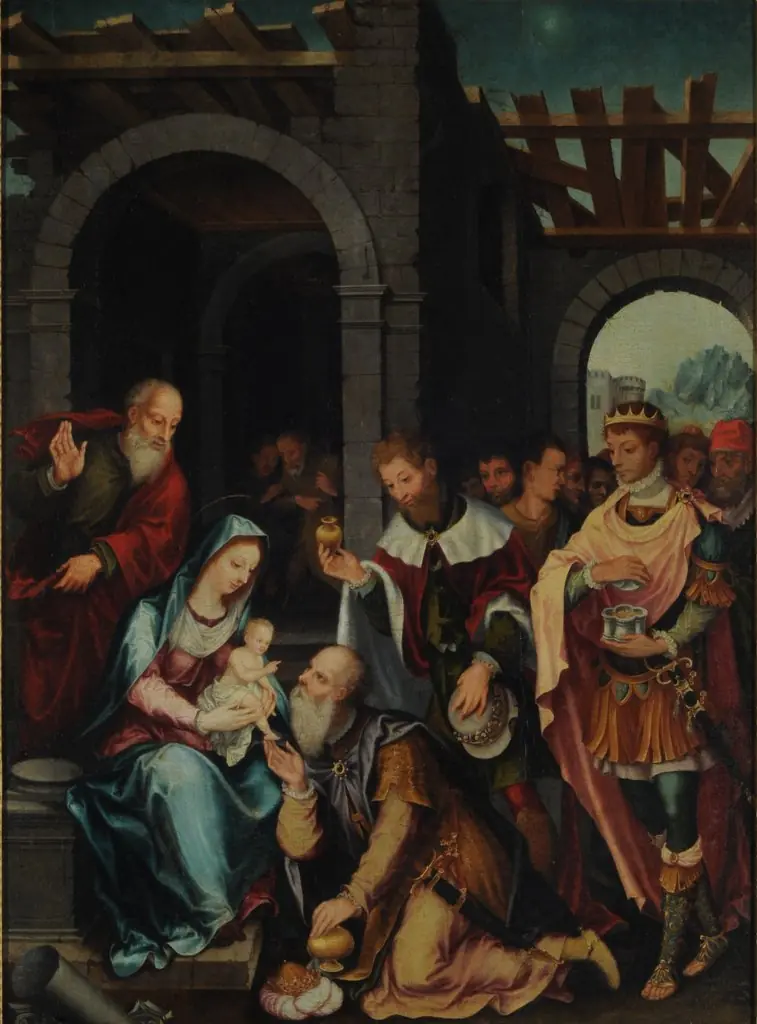
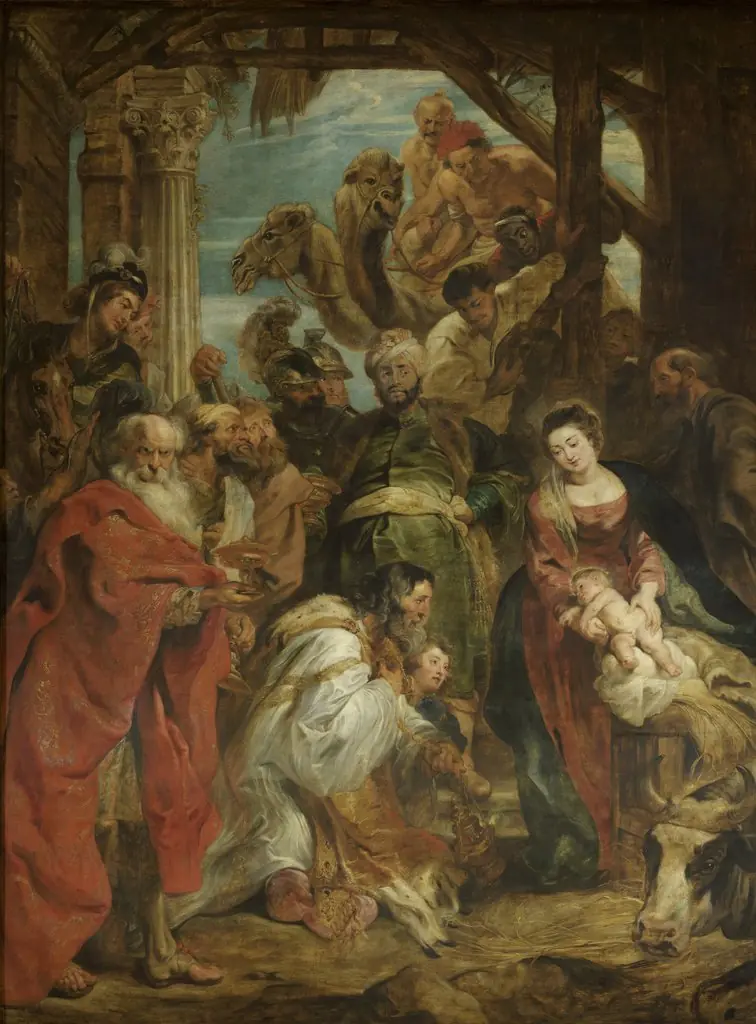
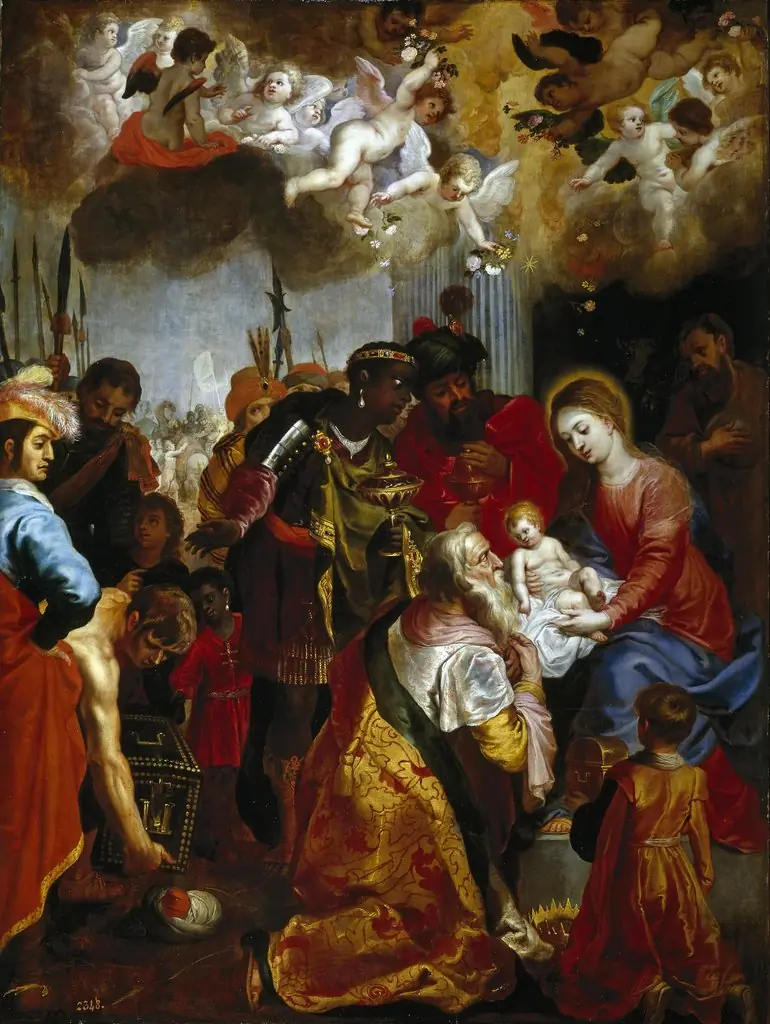
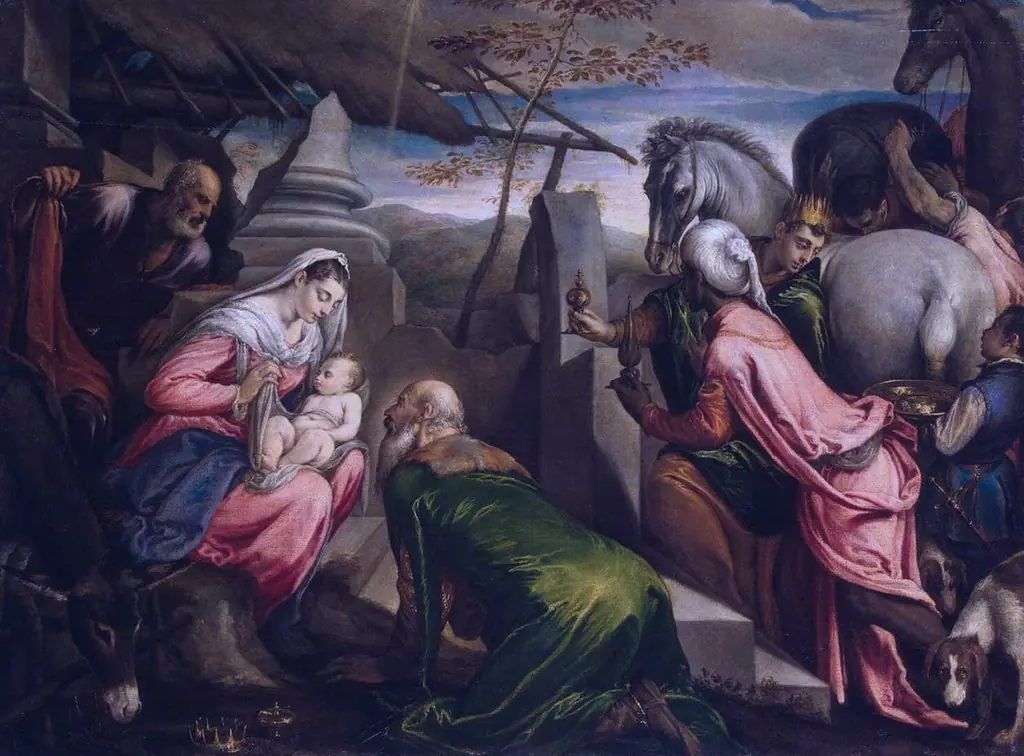
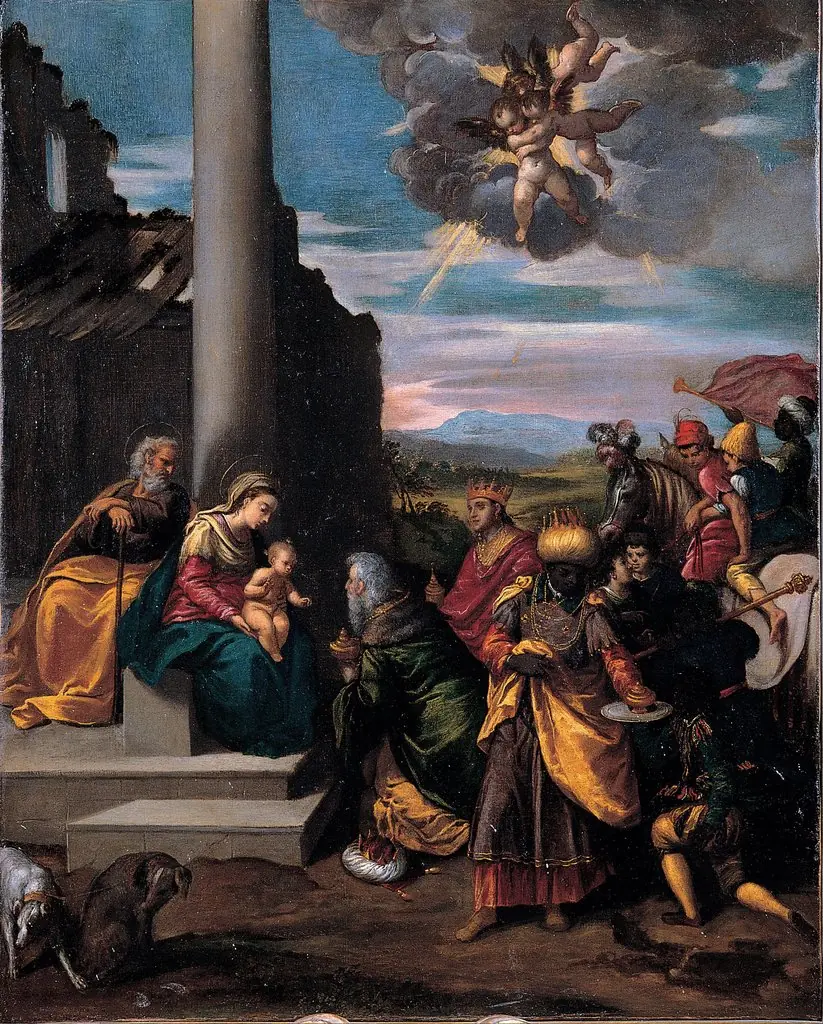
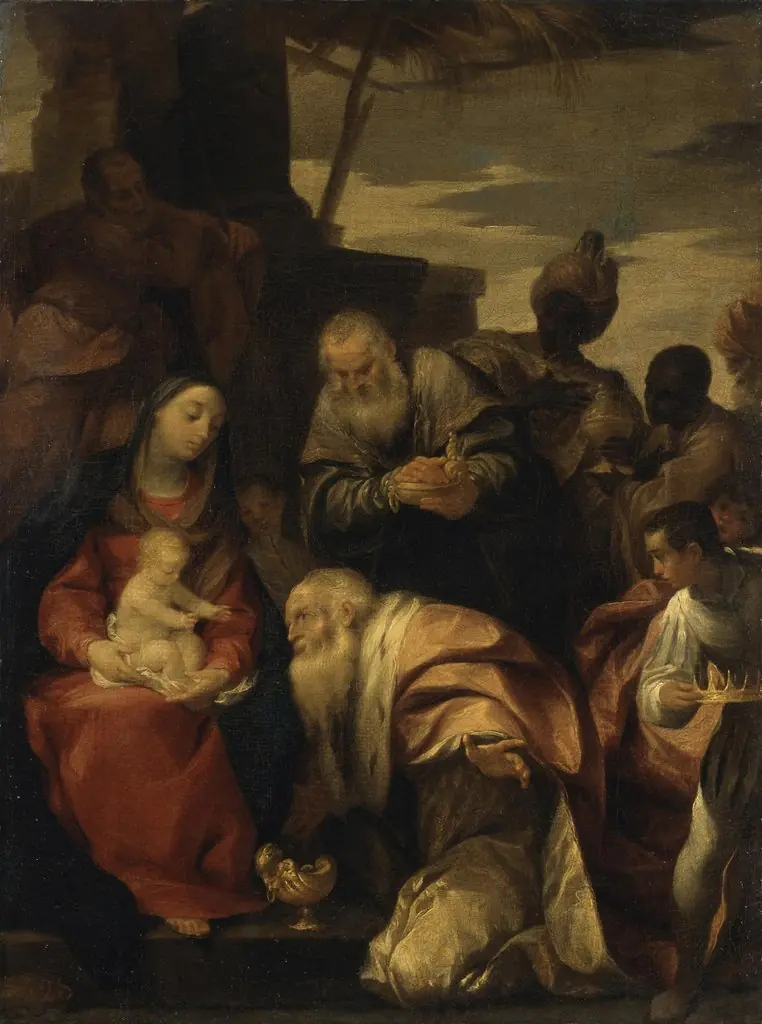
Adoration of the Magi is an oil painting by the Mannerist artist Paolo Veronese. It dates from 1570 and is held in the collection of the Hermitage Museum.
About this work
Subject & Meaning
It entered the Hermitage collection in 1772 via the Crozat collection and Empress Catherine II, and remains on display in Room 222 of the New Hermitage.
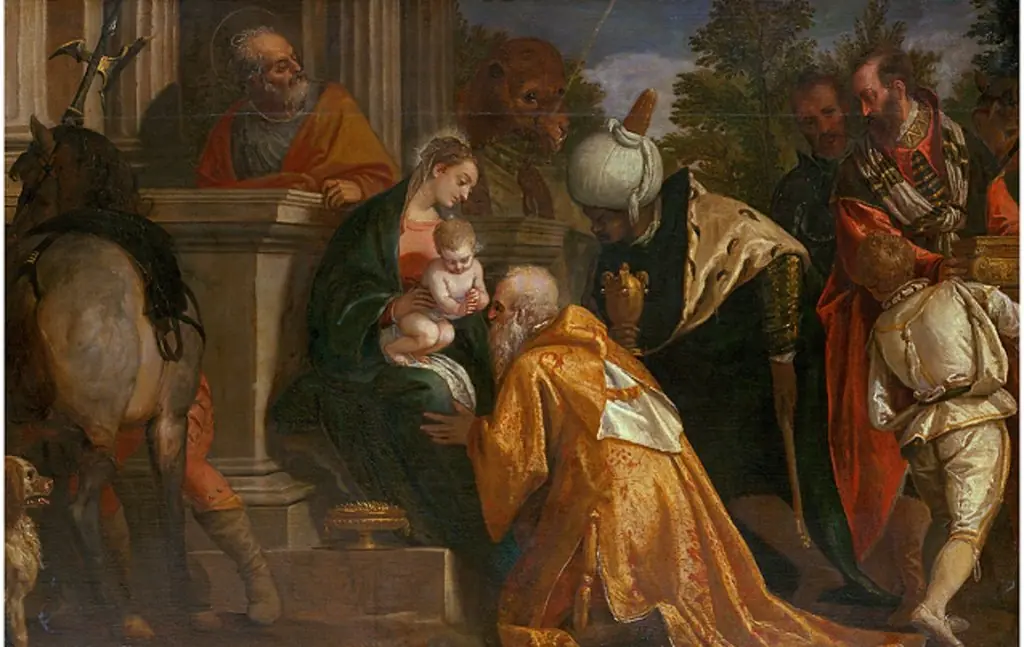
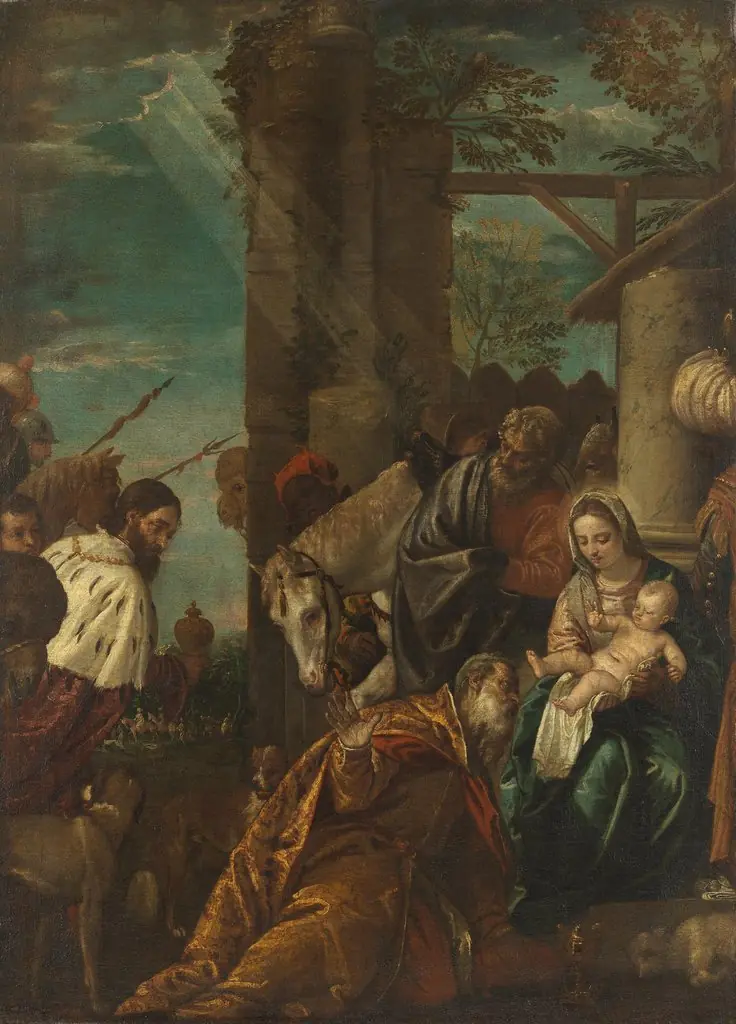
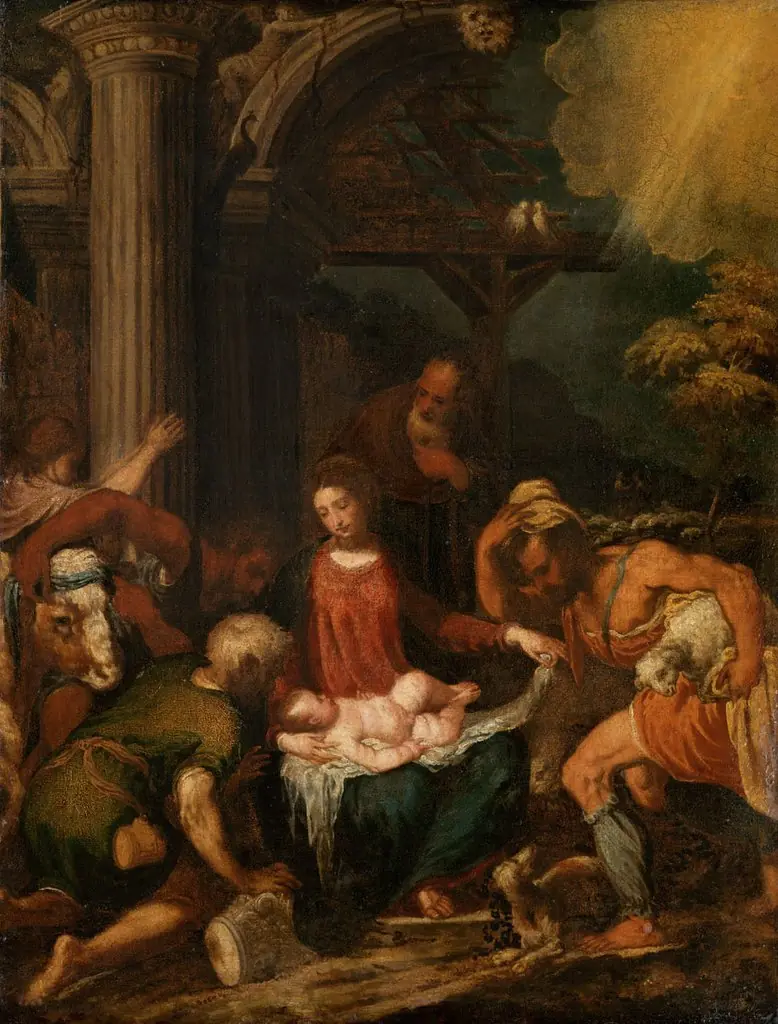
The Adoration of the Magi depicts the biblical scene of the Magi presenting gifts to the infant Christ, symbolizing the recognition of Jesus as the Messiah and the fulfillment of prophecy. The composition emphasizes the moment of reverence, with the Magi kneeling before the Christ Child and the Virgin Mary, set against a backdrop that includes celestial signs like the Star of Bethlehem. This iconography aligns with traditional representations of the Nativity narrative found in the Gospel of Matthew.
The work reflects Counter-Reformation themes of devotion and divine revelation, and scholars suggest the artist may have included a self-portrait as Saint Joseph in the lower left. The painting, created circa 1570 on copper, measures 45 × 34.5 cm and was originally executed on canvas before being transferred to metal. It entered the Hermitage collection in 1772 via the Crozat collection and Empress Catherine II, and remains on display in Room 222 of the New Hermitage.
The depiction draws from Matthew 2:1–12, emphasizing the Magi’s journey guided by a star and their act of homage, which symbolizes the universal acknowledgment of Christ’s significance. The inclusion of gifts, gold, frankincense, and myrrh, carries theological weight, representing kingship, divinity, and sacrifice. The artwork’s provenance and material history, including its transfer to copper support and cataloging in the 1797 Hermitage inventory, underscore its institutional importance and enduring legacy within the museum’s Renaissance holdings.
Technique & Style
The painting is executed in oil on copper, a choice of support associated with small-scale devotional works in 16th-century Venice. Measuring 45 × 34.5 cm, it was initially prepared on cardboard before being transferred to a copper sheet, a technique documented by the red inventory number “524.” inscribed at lower left.
Veronese’s handling emphasizes luminous color and refined detail, consistent with oil on metal’s capacity to yield crisp highlights and deep glazes. The composition aligns with contemporary Venetian practice, where narrative clarity and opulent coloration, seen in the Magi’s brocaded robes and the Christ Child’s drapery, take precedence over linear precision. The overall condition is stable, with no major losses reported in the Hermitage’s holdings.
History & Provenance
The Adoration of the Magi by Paolo Veronese was created around 1570 in Italy. Originally executed on cardboard, the work was subsequently transferred to a copper support. Its early history prior to the 17th century remains undocumented.
By the 1600s, the painting entered the collection of Marshal du Plessis-Pralin, followed by the Chevalier Avis, and later De Vanloo. It subsequently joined the Crozat collection, evidenced by an engraving published in the Recueil Crozat before 1742. In 1772, Empress Catherine II acquired the piece along with the majority of the Crozat holdings for the Hermitage Museum in Saint Petersburg. The work bears the red inventory number "524," which appears in the Hermitage's 1797 handwritten catalog.
The painting is held in the State Hermitage Museum, Saint Petersburg, where it is inventoried as ГЭ-524 (ГЭ denoting Hermitage acquisition).
It entered the museum in 1772 as part of the Crozat collection purchased for Catherine II. The work is displayed in Gallery 222 of the museum’s main building.
Context
Traditionally attributed to Paolo Veronese, this small-scale work has prompted scholarly debate regarding the extent of workshop involvement in its execution. While generally accepted as the master's design, hypotheses suggest that pupils may have contributed to the painting's realization. Art historian T. K. Kustodieva proposed a specific autobiographical element, identifying the figure of Saint Joseph as a self-portrait of the artist.
The painting's provenance is well-documented from the seventeenth century, having passed through the collections of the Maréchal du Plessis-Pralin and Chevalier Avis before entering the Crozat collection. Its presence there was recorded in an engraving published prior to 1742. In 1772, Empress Catherine II acquired the work along with the bulk of the Crozat holdings for the Hermitage Museum, where it remains a noted example of Venetian religious art on copper.
Overview
Paolo Veronese’s Adoration of the Magi (c. 1570) is a small‑scale oil work executed on a copper panel. The composition captures the moment when the infant Christ receives gifts from the three wise men, set within an open courtyard framed by stone columns and a bright sky. The painting now belongs to the collection of the State Hermitage Museum in St. Petersburg.
Artist & collection
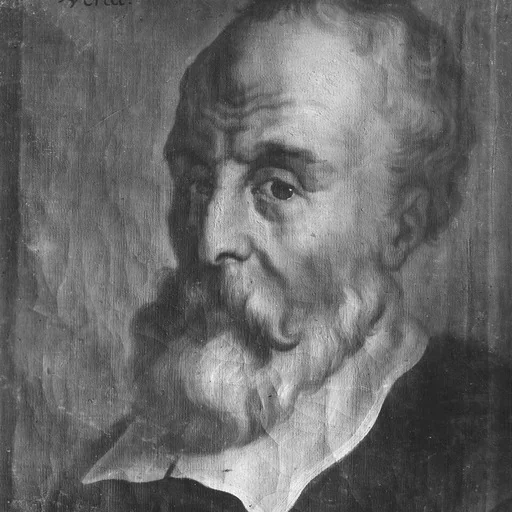
Artist
Paolo Caliari (1528 – 19 April 1588), known as Paolo Veronese ( VERR-ə-NAY-zay, -zee, US also -see; Italian: ), was an Italian Renaissance painter based in Venice, known for extremely large history paintings of…