Artwork
The Exhumation
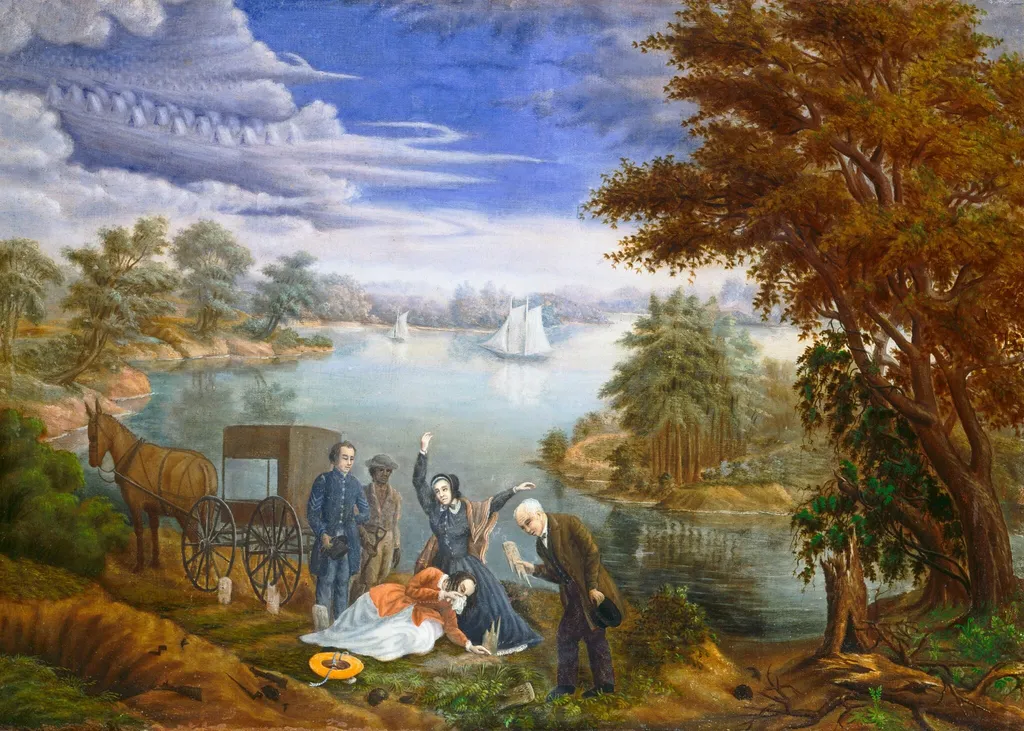
The Exhumation is an oil painting by the Impressionist artist Linton Park. It dates from 1890 and is held in the collection of the National Gallery of Art.
- Inscription
- Inscribed:on grave marker in old man's hand: J NO[B or R]IS / CO H. / 45 Pa / Vols; on marker by his feet: UNKNOWN / US
About this work
Technique & Style
The canvas support is stretched and primed, and the handling suggests a traditional easel presentation typical of late 19th-century American academic practice.
The Exhumation is an oil on canvas painting measuring 61 by 83.8 cm, depicting a biblical scene with a dramatic composition and somber palette. The work shows figures extracting a body from a grave under dim light, rendered with precise brushwork and chiaroscuro that emphasizes emotional tension. The canvas support is stretched and primed, and the handling suggests a traditional easel presentation typical of late 19th-century American academic practice.
The formal qualities include a balanced triangular arrangement of characters, strong linear perspective, and a restrained use of color that directs focus toward the central gesture of lifting the shrouded form.
History & Provenance
Painted in 1890 by Linton Park, the oil on canvas was retained within his family before entering the art market. It descended from the artist’s brother, James Park, to his daughter Jennie Park of Indiana, Pennsylvania. Afterward it remained with Jennie’s half-brother’s wife, Mrs. Norman Park, and then passed to her daughter, Mrs. Enzer (Mary Park) Lewis, also of Indiana, Pennsylvania.
The work was sold through Mollard’s Antique Shop in Westfield, New York, in 1952 to Edgar William and Bernice Chrysler Garbisch, who gifted it to the National Gallery of Art, Washington, D.C., in 1953.
Following its creation in 1890, The Exhumation remained within the Park family in Indiana, Pennsylvania, passing from the artist's brother to his daughter Jennie, then to Mrs. Norman Park, and subsequently to her daughter, Mary Park Lewis. The painting was eventually sold through Mollard's Antique Shop in Westfield, New York, before being acquired by Edgar William and Bernice Chrysler Garbisch in 1952. The Garbisches donated the work to the National Gallery of Art in Washington, D.C., in 1953, where it currently resides in the collection.
Overview
The Exhumation, executed in oil on canvas around 1890 by Linton Park, presents a compact tableau on a mist‑shrouded riverbank. Five figures dominate the composition: a kneeling woman beside a pallid, prone figure; a dark‑coated man leaning forward with a small object in his hand; and two standing onlookers, one with a raised hand, the other observing silently. A horse‑drawn wagon rests nearby, while a sailboat drifts in the hazy background.
Subject & Meaning
The arrangement suggests a sudden, unsettling event, perhaps an emergency or a moment of discovery, captured in the tense posture of the participants. The woman's kneeling gesture and the man's careful handling of a small item convey urgency, while the raised hand of the standing figure hints at a call for assistance or a warning. The overall mood is one of quiet drama, inviting viewers to infer the narrative beyond the immediate scene.
Own this work as a print
Artist & collection


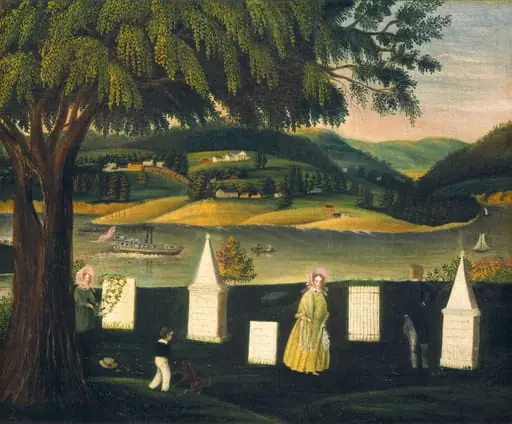
- Family Burying Ground
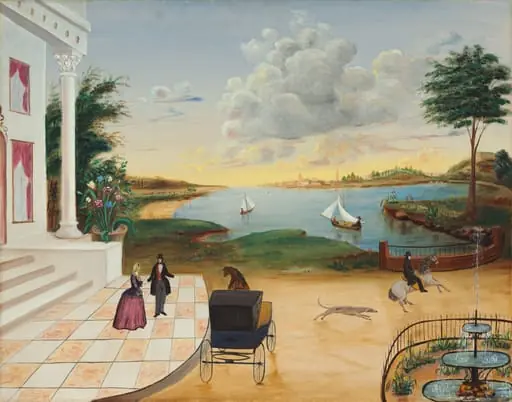 Leaving the Manor House
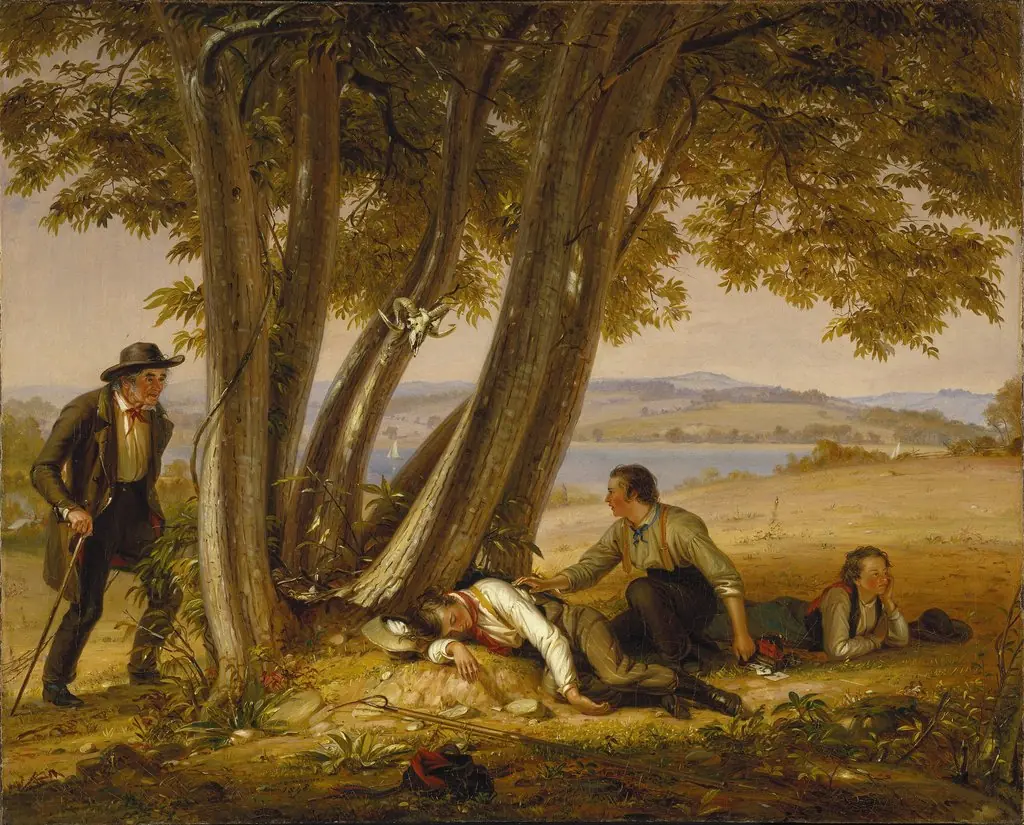 Caught Napping (Boys Caught Napping in a Field)
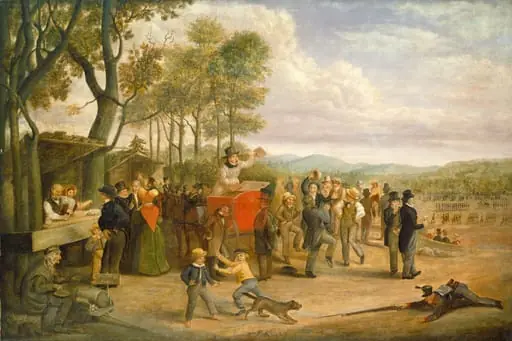 Muster Day
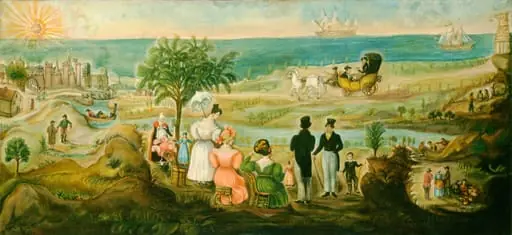 Horizon of the New World
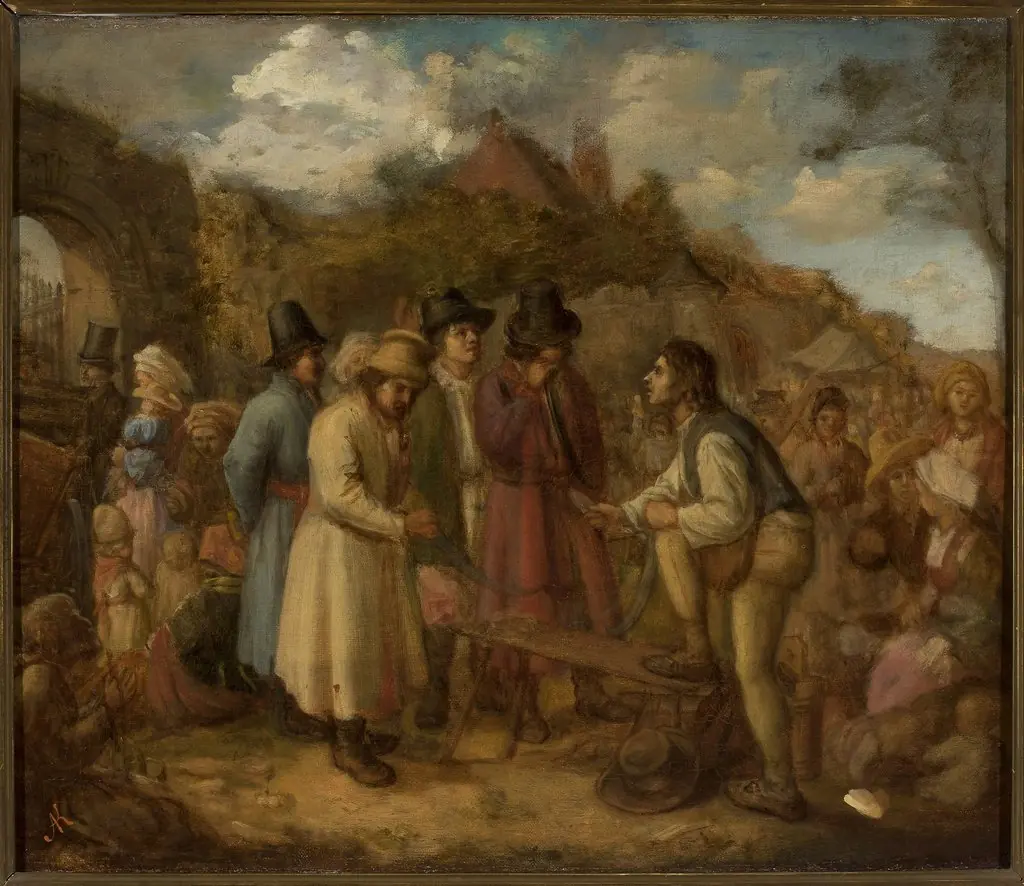 Fair in Tyniec
 Extensive forest landscape with St. Francis Borgia
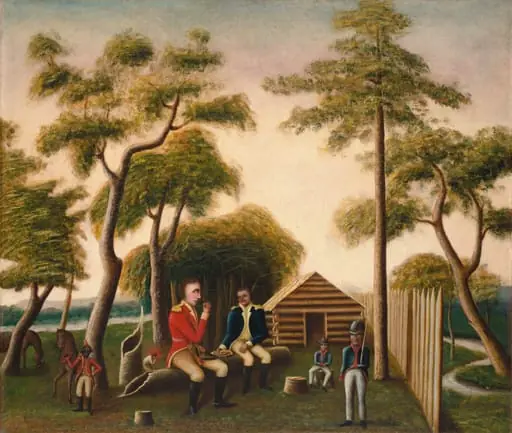 Marion Feasting the British Officer on Sweet Potatoes
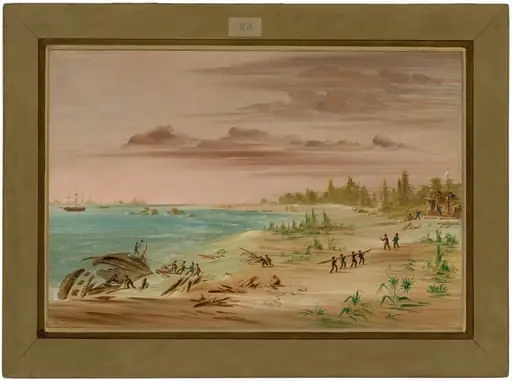 Wreck of the Aimable, on the Coast of Texas. 1685
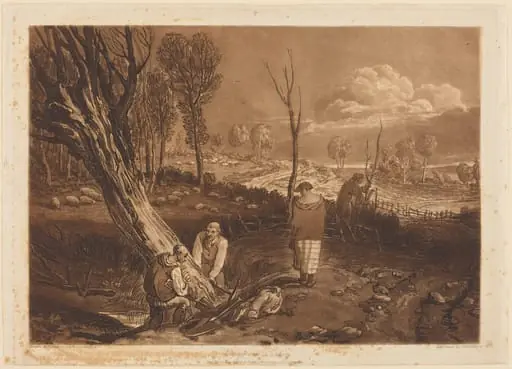 Hedging and Ditching
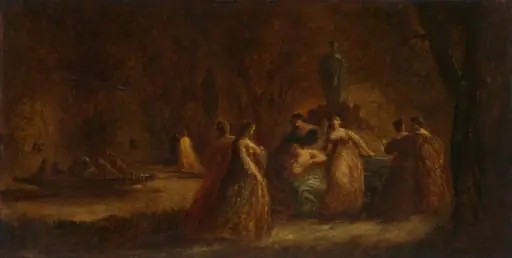 A Woodland Fête
 Travelers Resting by a Fallen Tree