Artwork
Family Burying Ground
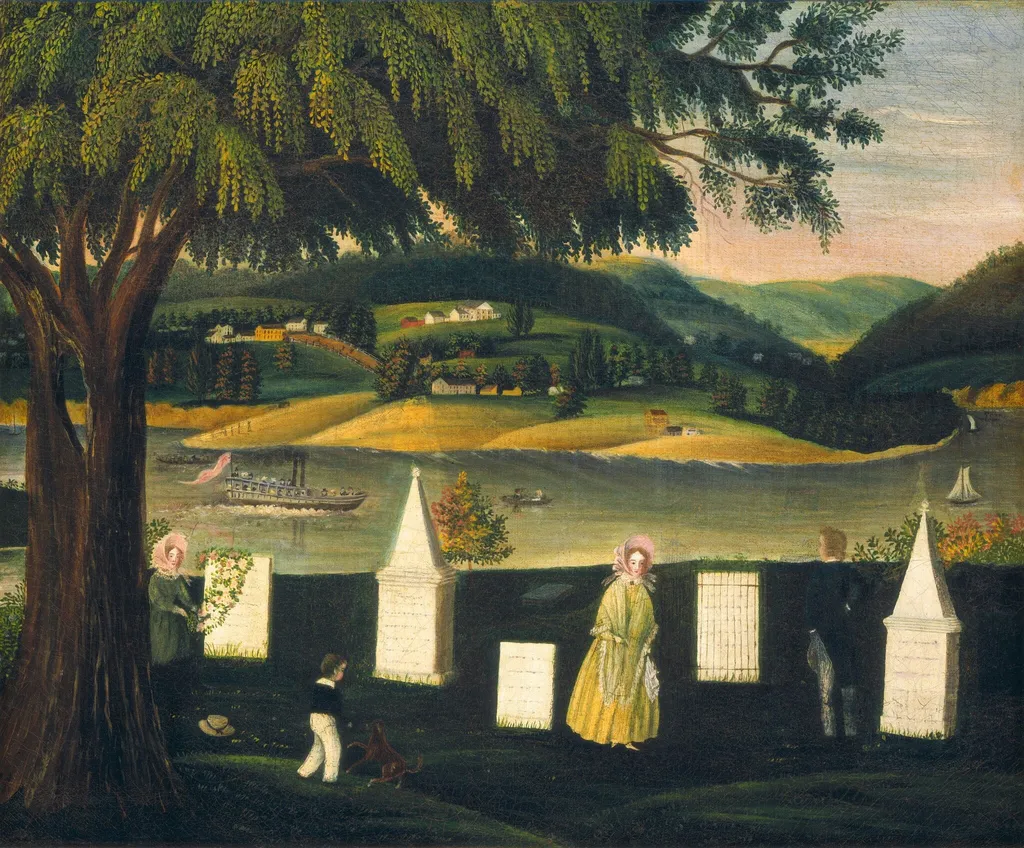
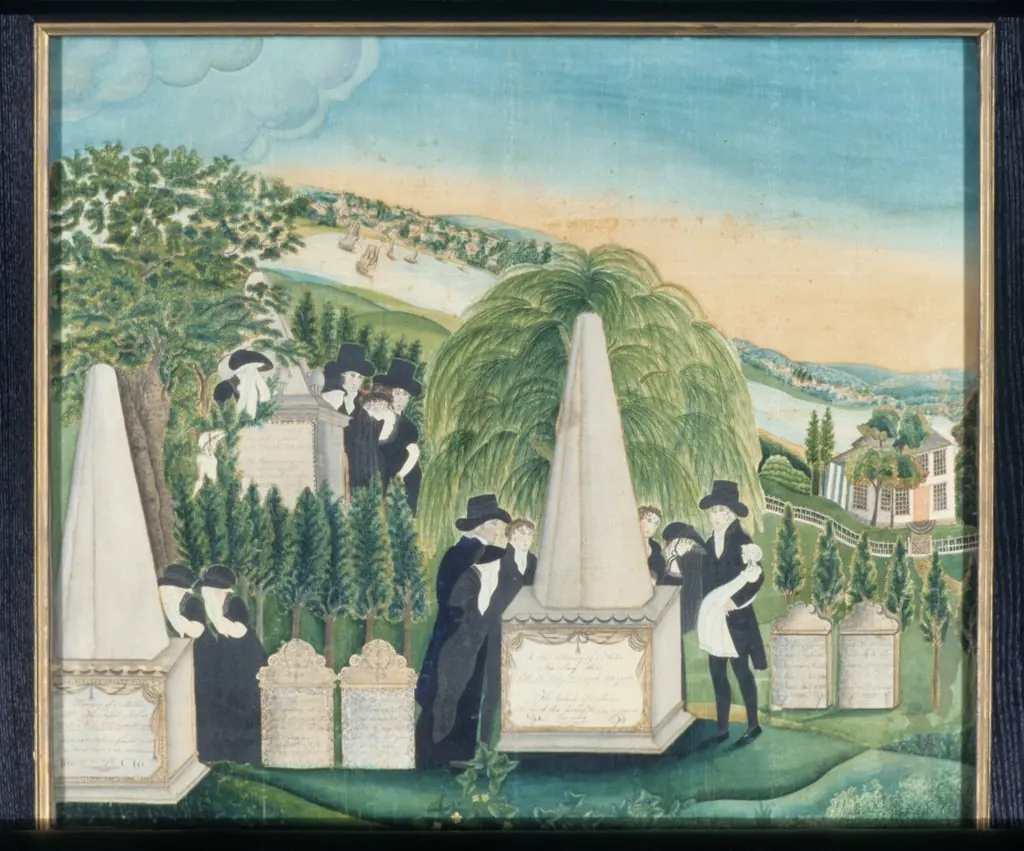
Family Burying Ground is an oil painting. It dates from 1840 and is held in the collection of the National Gallery of Art.
About this work
Subject & Meaning
The scene evokes themes of mortality and legacy, reflecting the period’s cultural preoccupation with commemorating the deceased in natural, pastoral settings.
Family Burying Ground, painted in 1840, depicts a somber rural landscape centered on a family burial plot. The composition prominently features a solitary tree, likely serving as a symbol of life, death, and enduring memory in 19th-century American funerary iconography. The scene evokes themes of mortality and legacy, reflecting the period’s cultural preoccupation with commemorating the deceased in natural, pastoral settings.
The work’s subdued palette and quiet composition reinforce its contemplative tone, suggesting a meditation on transience and the passage of generations. As a landscape, it merges the personal, family remembrance, with the universal, using nature as a metaphor for cycles of life and decay.
History & Provenance
Family Burying Ground is an oil-on-canvas painting dated to 1840, measuring approximately 50 cm in height and 61 cm in width. It is classified as a landscape depicting a tree. The work is recorded as originating from Stratford, Connecticut, before entering the private collection of Edgar William and Bernice Chrysler Garbisch, who purchased it in 1956.
The Garbisch couple subsequently donated the painting to the National Gallery of Art in Washington, D.C., where it has remained since 1958.
Overview
The oil on canvas painting, "Family Burying Ground," presents a tranquil depiction of a private cemetery. At its core, the artwork features a tall tree standing among various grave markers, establishing a focal point within the composition. This piece captures a contemplative moment, inviting viewers to reflect on themes of memory and repose in a familiar, yet solemn, setting.
Technique & Style
The artist employs a deliberate manipulation of light and shadow to cultivate a profound sense of tranquility within the scene. This approach, known as chiaroscuro, is evident in how illumination falls upon the tree and grave markers, creating subtle contrasts that define forms and deepen the emotional resonance. The controlled interplay of brightness and obscurity contributes significantly to the painting's overall serene and contemplative mood.
Artist & collection

- Memorial painting
 Mother and Three Children Making a Floral Wreath
 Mount Vernon
 The Grave of William Penn
 Meetinghouse Hill, Roxbury, Massachusetts
 New England Country Seat
 Lexington Battle Monument
 New England Country Seat
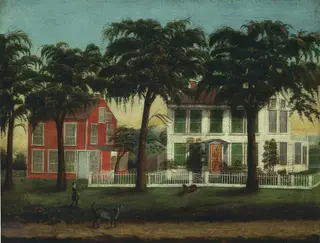 Houses on the Fox River, Illinois
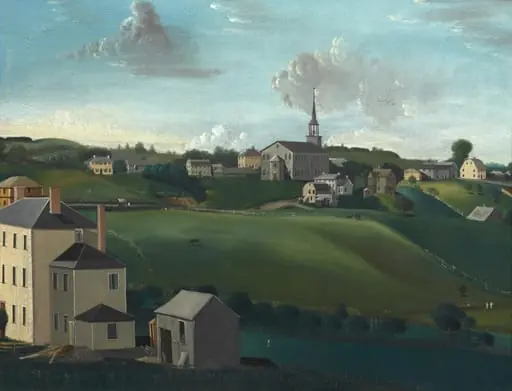 Meetinghouse Hill, Roxbury, Massachusetts
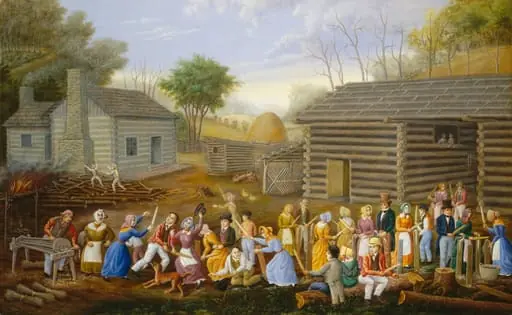 Flax Scutching Bee
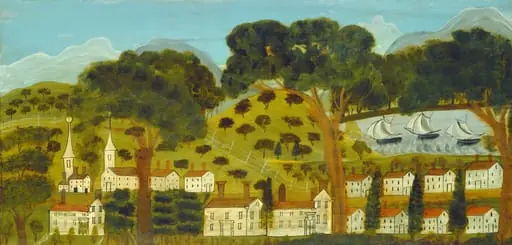 New England Village