Artwork
Rudolphus Bogert
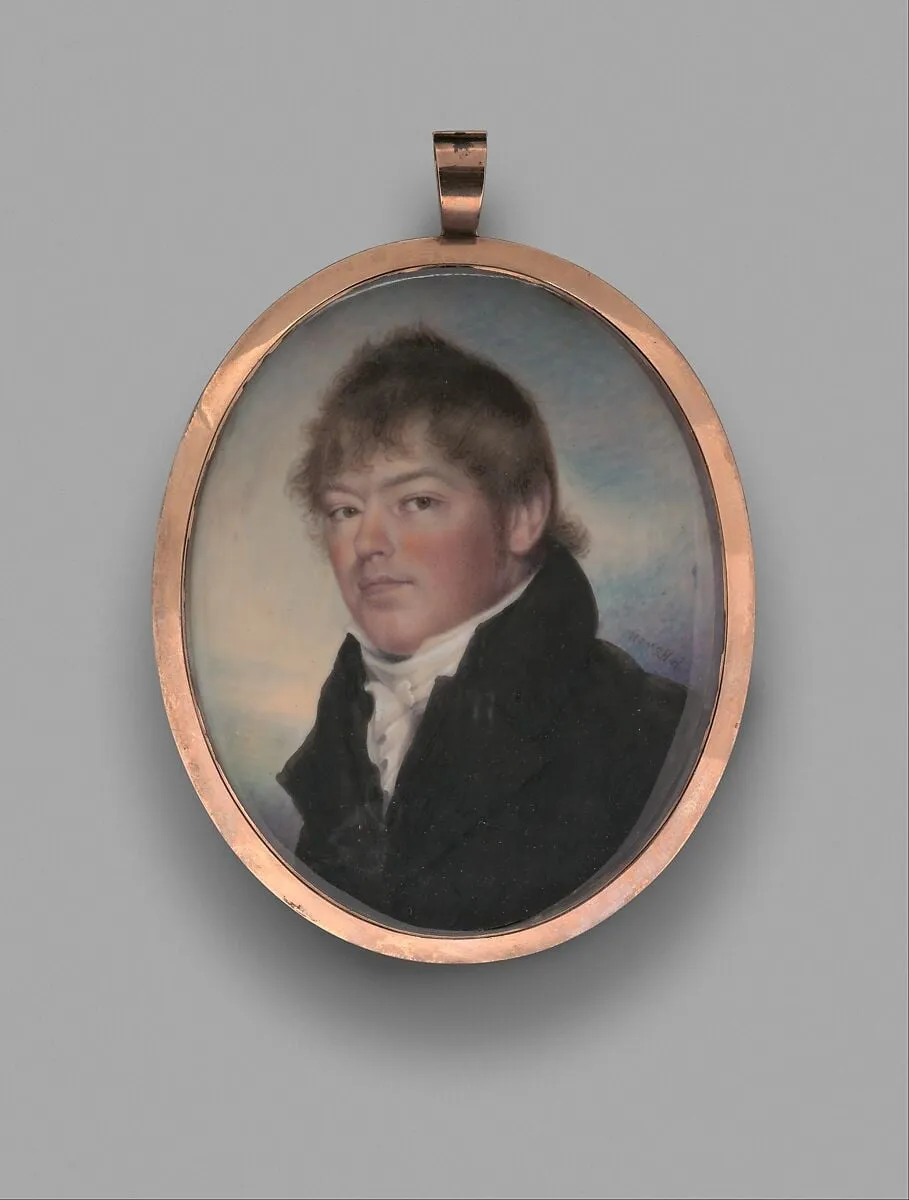
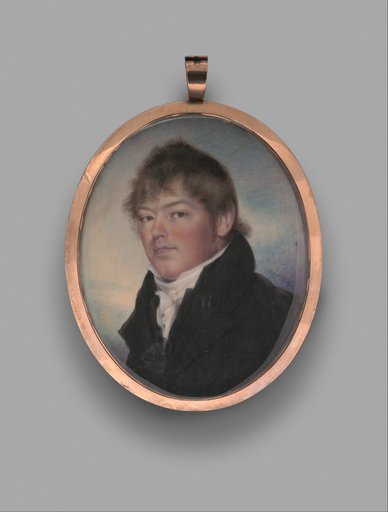
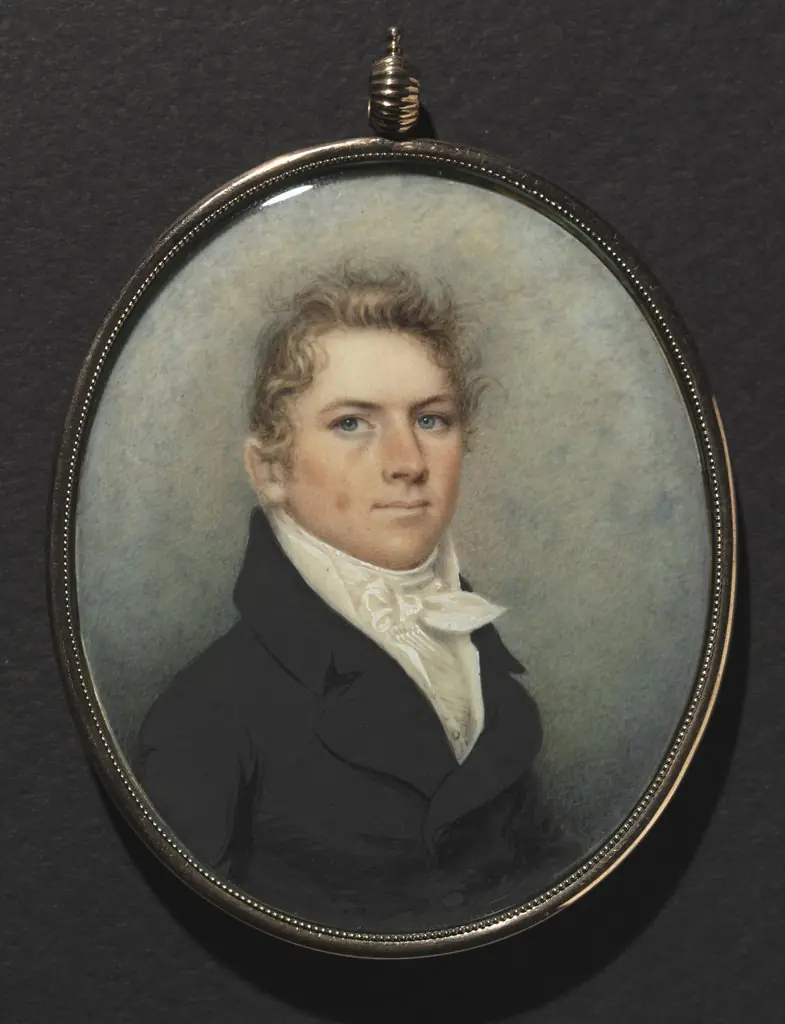
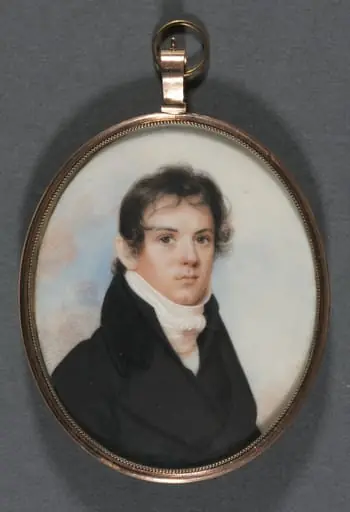
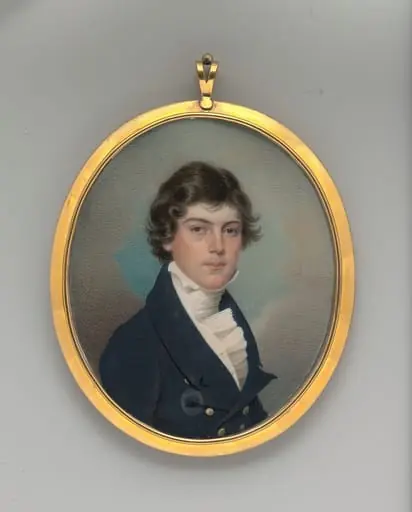
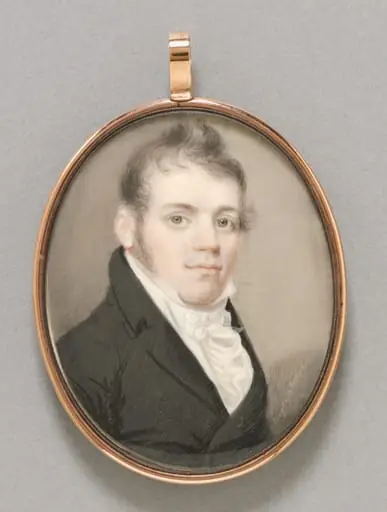
Rudolphus Bogert is a watercolor painting by the American Folk Art artist Parmenas Howell. It dates from 1806 and is held in the collection of the Metropolitan Museum of Art.
- Accession no.
- 69.187
- Credit line
- Gift of Robert Stanley Vail, 1969
About this work
Subject & Meaning
As a genre work, the image functions to record the sitter’s appearance and suggest his social standing, a common purpose of portraiture in the period.
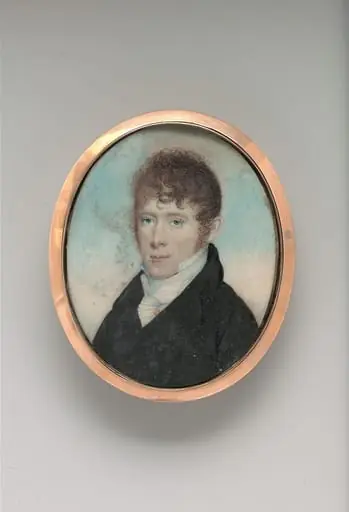
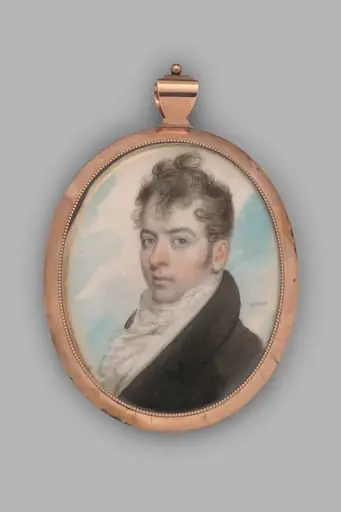
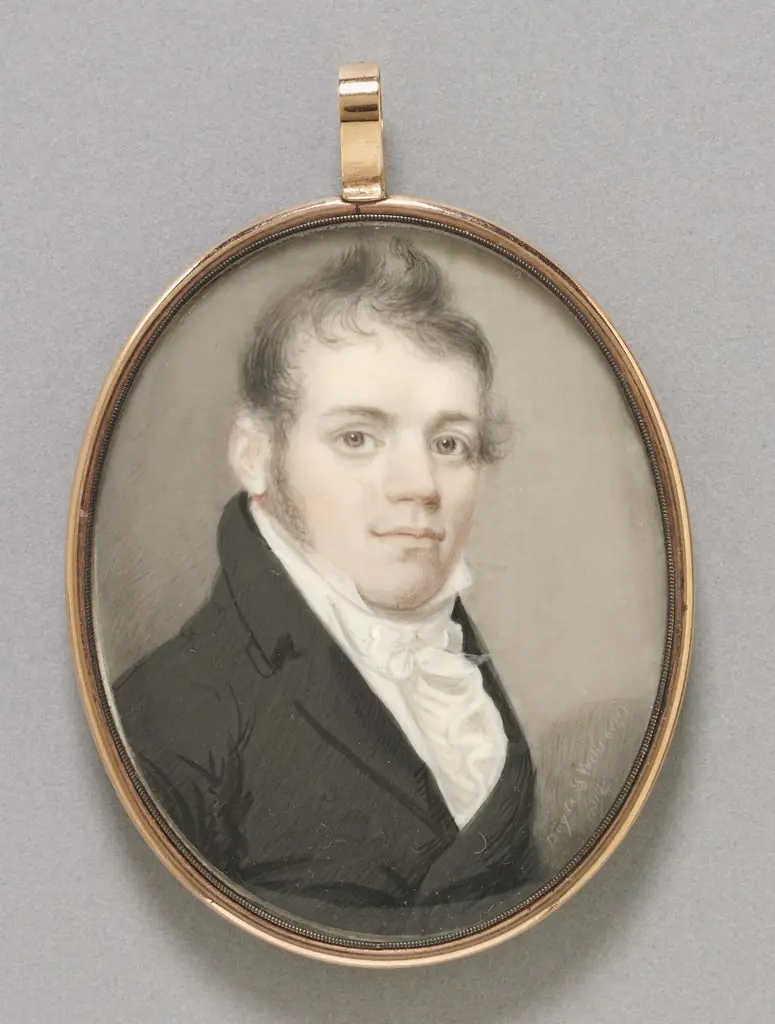
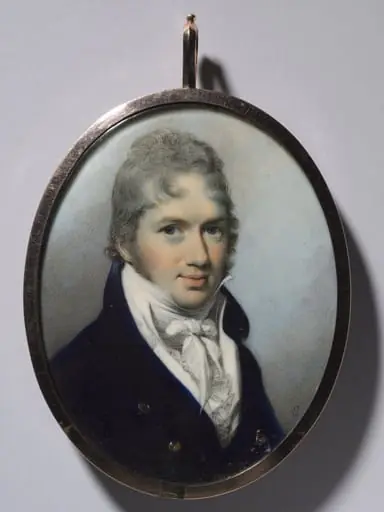
The watercolor portrait of Rudolphus Bogert, executed by Parmenas Howell in 1806, portrays an unidentified adult male in a style characteristic of early American portraiture. As a genre work, the image functions to record the sitter’s appearance and suggest his social standing, a common purpose of portraiture in the period. The depiction emphasizes realistic facial features and clothing details, reflecting the era’s interest in individual identity and status.
The work’s classification within The American Wing underscores its significance as an artifact of early United States artistic practice.
Technique & Style
The portrait was created in 1806 using watercolor applied to a thin ivory panel, a technique that produces a luminous, slightly translucent surface. The work measures approximately 6.4 cm in height by 5.1 cm in width and portrays a man in a conventional three‑quarter pose. It is classified as a portrait within the American Wing collection of the Metropolitan Museum of Art, where it is preserved as part of the museum’s early American painting holdings.
History & Provenance
The portrait of Rudolphus Bogert was created in 1806 by the artist Parmenas Howell. Executed as a watercolor on ivory, the work measures 6.4 by 5.1 inches. While the specific commissioning circumstances and the initial owner of the miniature are not detailed in the available records, the piece has been part of the collection of the Metropolitan Museum of Art for an extended period.
It is currently housed within the museum's American Wing. The dating of the work to 1806 is consistent across records, establishing its creation at the beginning of the nineteenth century. The provenance chain prior to its acquisition by the Met is not explicitly documented in the provided sources, which focus on the artist, date, medium, and current institutional location.
Rudolphus Bogert, a watercolor-on-ivory portrait by Parmenas Howell dated 1806, is held in the collection of the Metropolitan Museum of Art. The work is classified within the museum's American Wing. According to the Wikidata record, the miniature measures 6.4 by 5.1 units in height and width respectively. No specific accession number or exhibition history is documented in the available sources.
Context
The 1806 watercolor portrait of Rudolphus Bogert, attributed to Parmenas Howell, exemplifies early American portraiture through its modest scale, ivory support, and formal composition (1). Its inclusion in The American Wing signals scholarly recognition of Howell’s contribution to the development of United States portrait painting during the Federal period (2). Contemporary accounts of the work are scarce, yet its placement alongside other early national portraiture underscores its role in illustrating the emergence of a distinct American visual identity in the early republic.
Overview
This watercolor portrait, titled Rudolphus Bogert, was created by Parmenas Howell around 1806. It depicts a male sitter, whose gaze meets the viewer directly. The artist rendered the subject's dark coat and the subtle light on his face with meticulous detail.
This miniature, painted on a piece of ivory comparable in size to a playing card, exemplifies a common portrait format of its era.
Artist & collection