Artwork
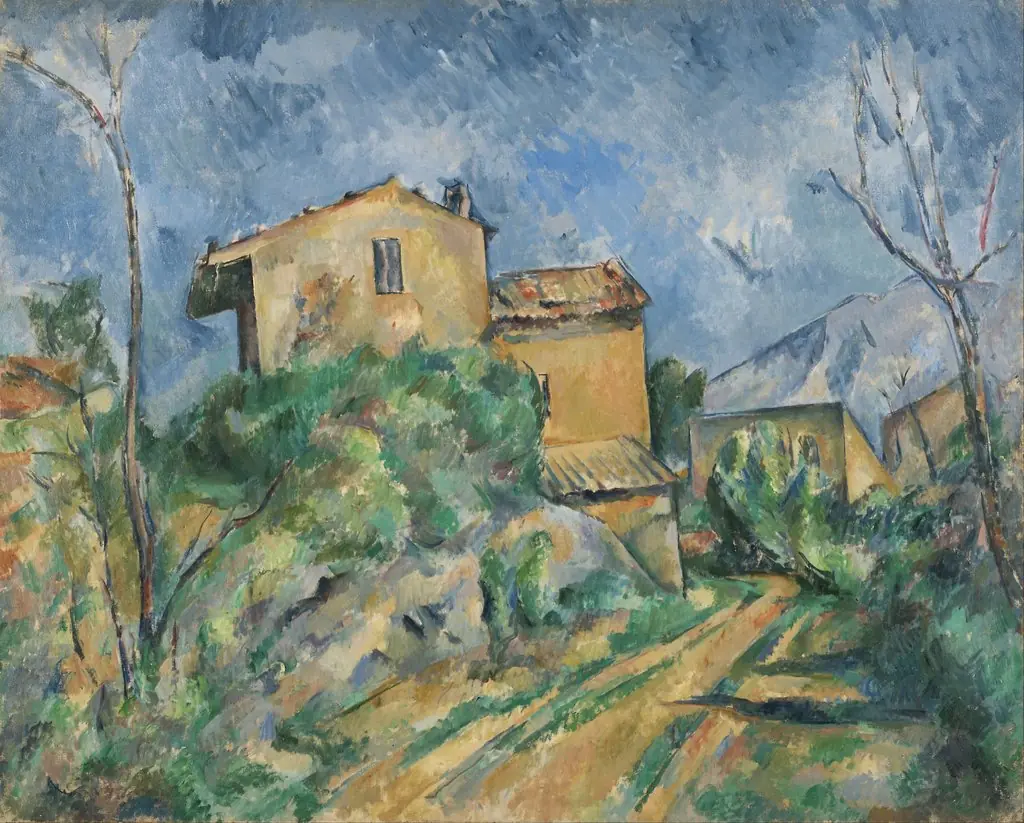
The House with the Cracked Walls
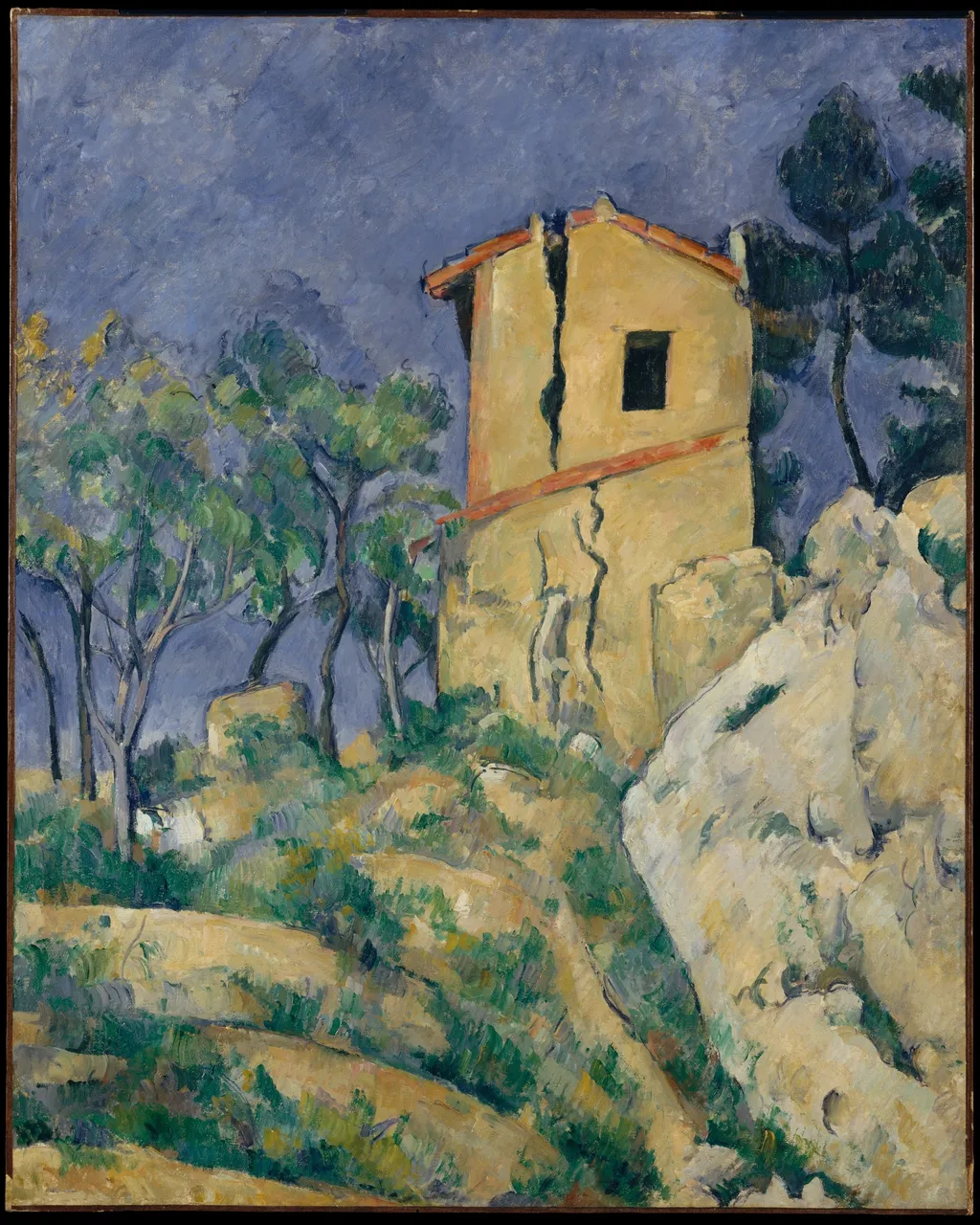
The House with the Cracked Walls is an oil painting by the Post-Impressionist artist Paul Cézanne. It dates from 1896 and is held in the collection of the Metropolitan Museum of Art.
About this work
Technique & Style
The relatively modest dimensions of the canvas support an intimate, concentrated composition focused on the depicted house, trees, and surrounding landscape.
Executed in oil paint on canvas, The House with the Cracked Walls measures 80 by 64.1 centimeters and is classified as a landscape painting. The work belongs to Paul Cézanne's mature period, produced in 1892, when his handling of paint and structural approach to the landscape had become highly developed. The medium of oil on canvas allowed Cézanne to build up the surface through layered, constructive brushwork characteristic of his late style, in which planes of color are juxtaposed to model form and convey depth.
The relatively modest dimensions of the canvas support an intimate, concentrated composition focused on the depicted house, trees, and surrounding landscape.
Context
Created in 1892, Paul Cézanne's The House with the Cracked Walls stands as a significant landscape painting within the artist's mature oeuvre. Executed in oil on canvas, the work measures 80 by 64.1 centimeters and depicts a rustic house and tree, characteristic of Cézanne's exploration of structural form in nature. Currently held by the Metropolitan Museum of Art in New York, the painting is owned by Walter Annenberg.
While specific critical essays are not detailed in the provided records, the work's inclusion in a major public institution underscores its recognized status in art history as a key example of Cézanne's transition toward modernism. The piece contributes to the broader understanding of his landscape genre, where architectural elements and natural settings are rendered with a focus on geometric stability and color modulation.
Overview
Paul Cézanne, a pivotal French Post-Impressionist painter, completed The House with the Cracked Walls in 1896. This oil painting exemplifies his sustained engagement with landscape subjects. The work is recognized for its contribution to the artistic shifts occurring at the turn of the 20th century, bridging earlier movements with emerging modern art forms. It is currently housed in the collection of The Metropolitan Museum of Art.
Subject & Meaning
The painting depicts a small, yellowish building with a distinctive red roof, situated on a rocky incline. Its walls appear rough and uneven, with a visible crack on one side, lending the structure a sense of age or vulnerability. Surrounding the house are verdant trees and bushes, while a winding path leads away below.
A soft blue sky completes the natural setting, rendered with Cézanne’s characteristic focus on the underlying forms of nature.
Own this work as a print
Artist & collection

Artist
Paul Cézanne ( say-ZAN, UK also siz-AN, US also say-ZAHN; French: ; Occitan: Pau Cesana; 19 January 1839 – 22 October 1906) was a French Post-Impressionist painter whose work introduced new modes of representation,…

 Harlequin
 The Card Players
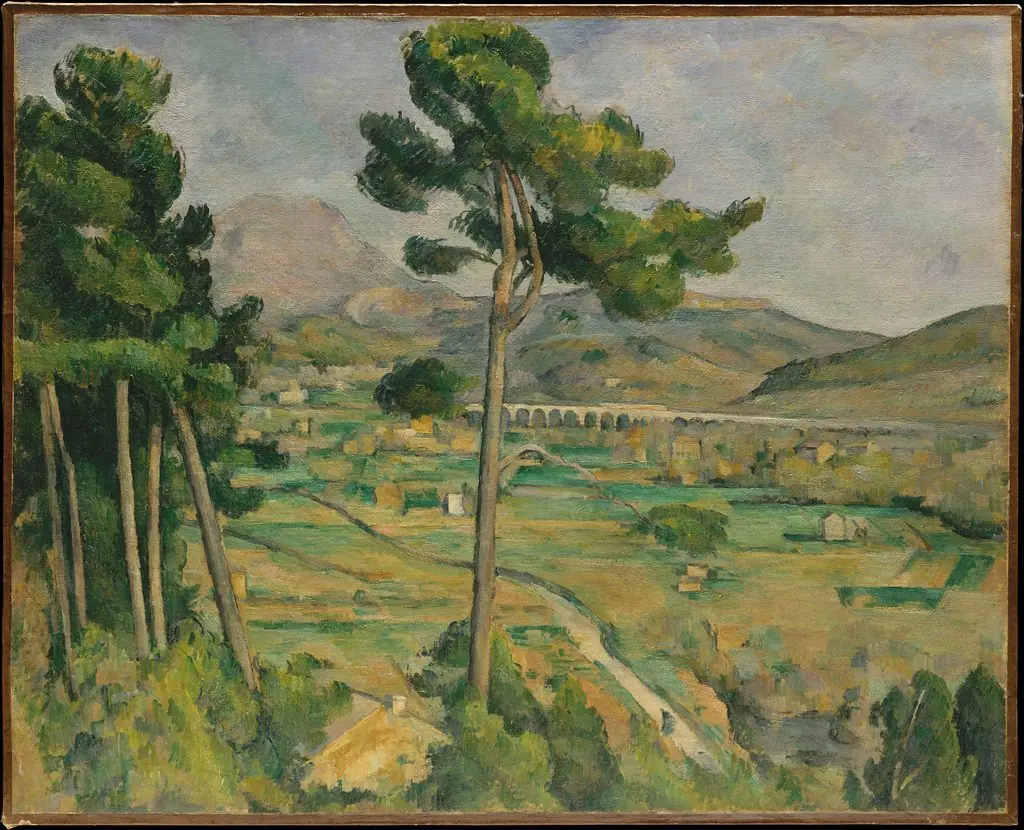 Mont Sainte-Victoire and the Viaduct of the Arc River Valley
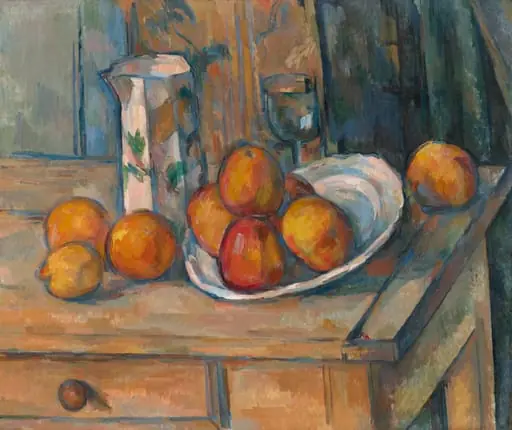 Still Life with Milk Jug and Fruit
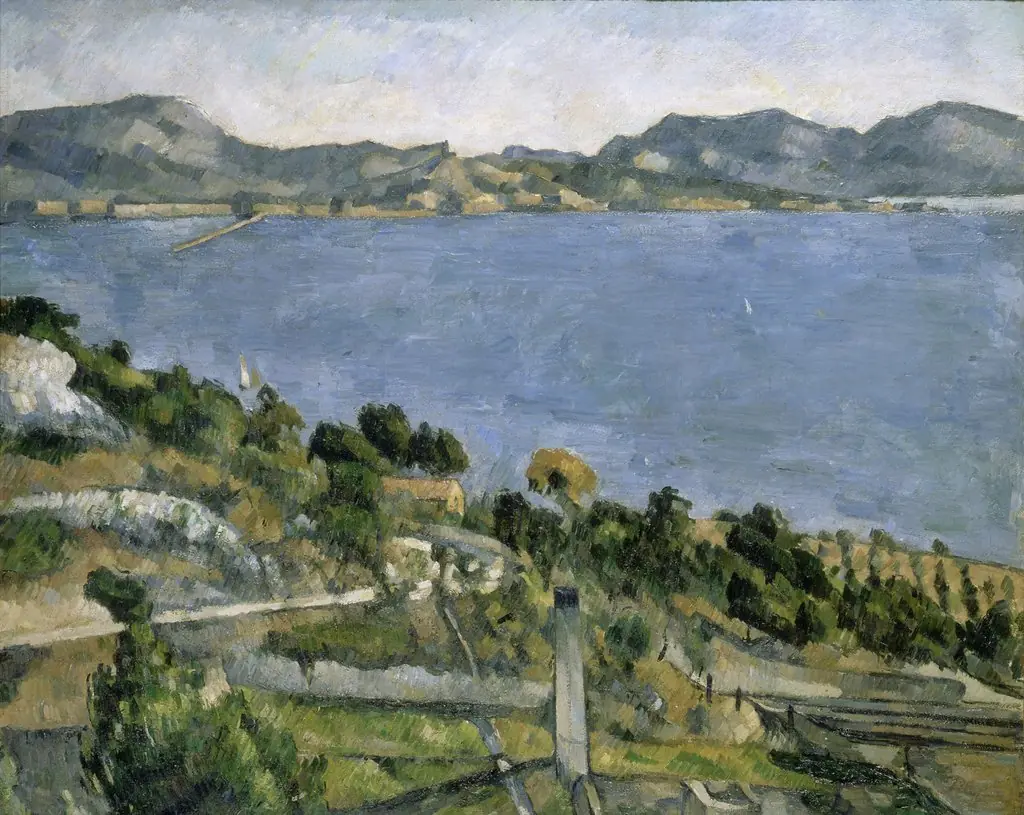 Le Golfe de Marseille vu de l'Estaque (The Gulf of Marseille Seen from L'Estaque)
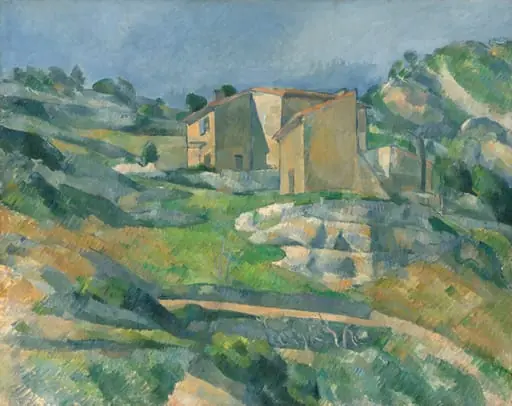 Houses in Provence: The Riaux Valley near L'Estaque
 Louis Guillaume
 Still Life with Jar, Cup, and Apples