Artwork
Mount Sainte-Victoire
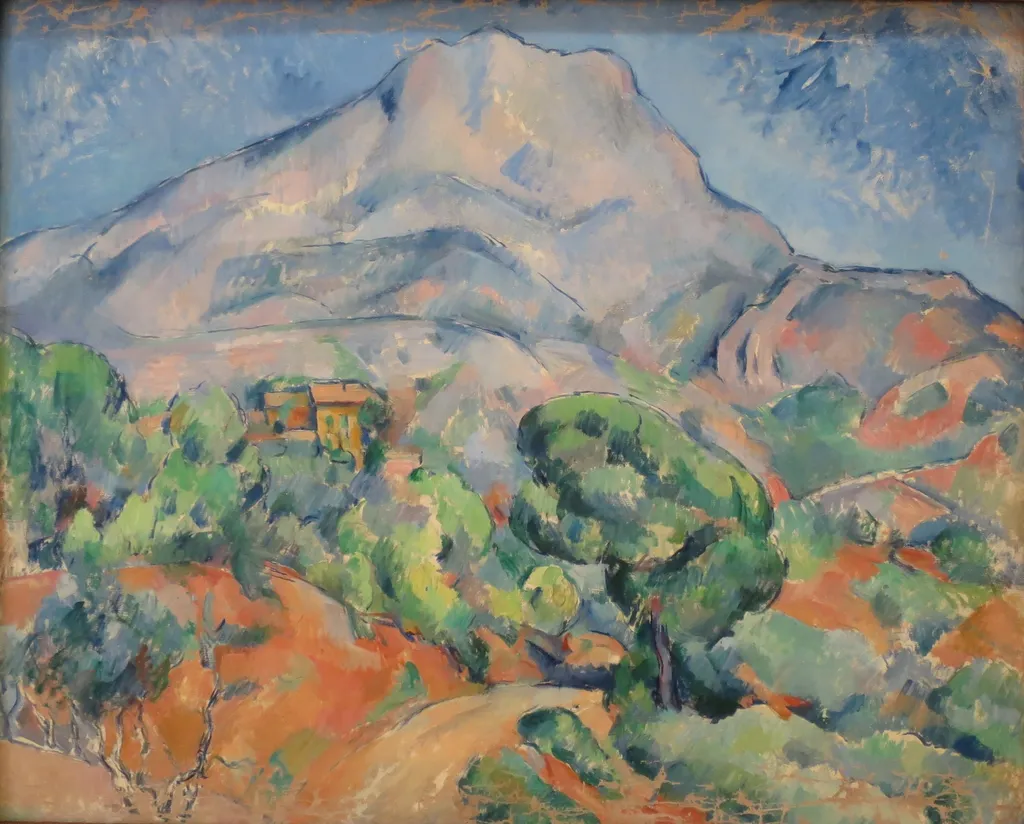
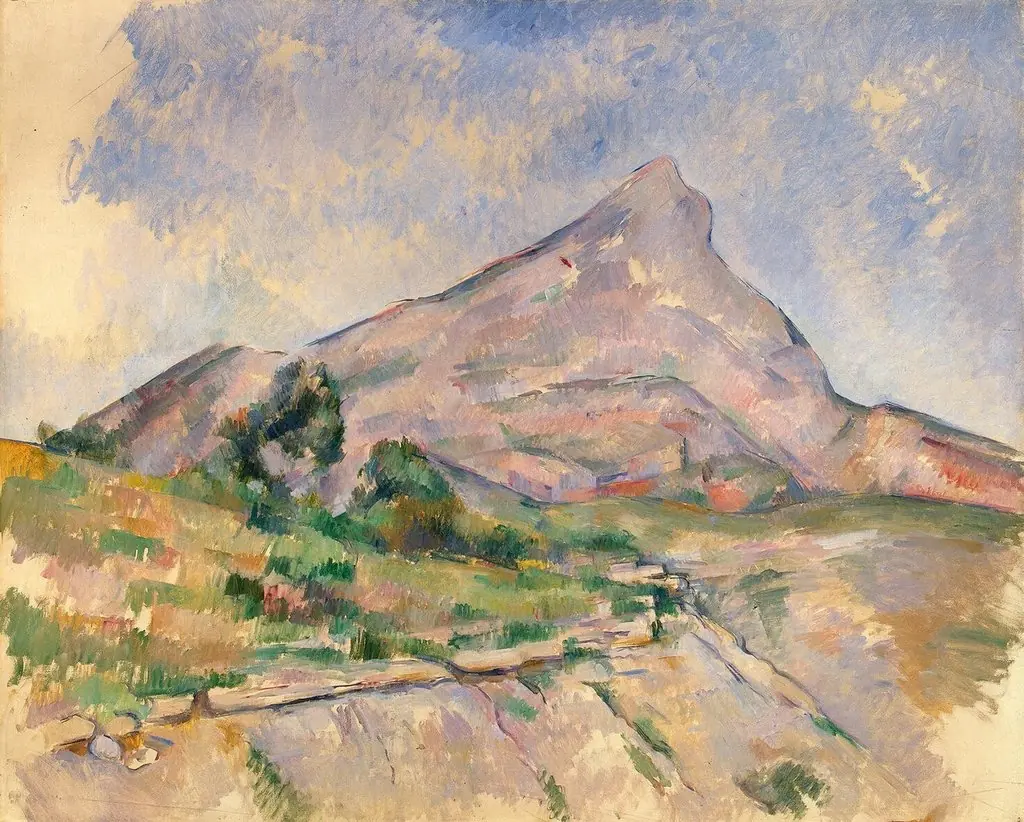
Mount Sainte-Victoire is an oil painting by the Post-Impressionist artist Paul Cézanne. It dates from 1900 and is held in the collection of the Hermitage Museum.
About this work
Overview
Mount Sainte-Victoire is a landscape painting created by the French Post-Impressionist artist Paul Cézanne in 1900.
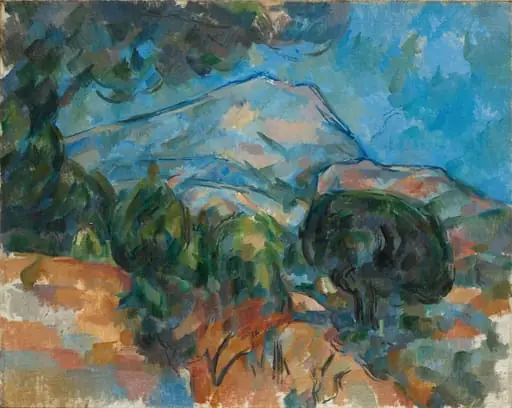
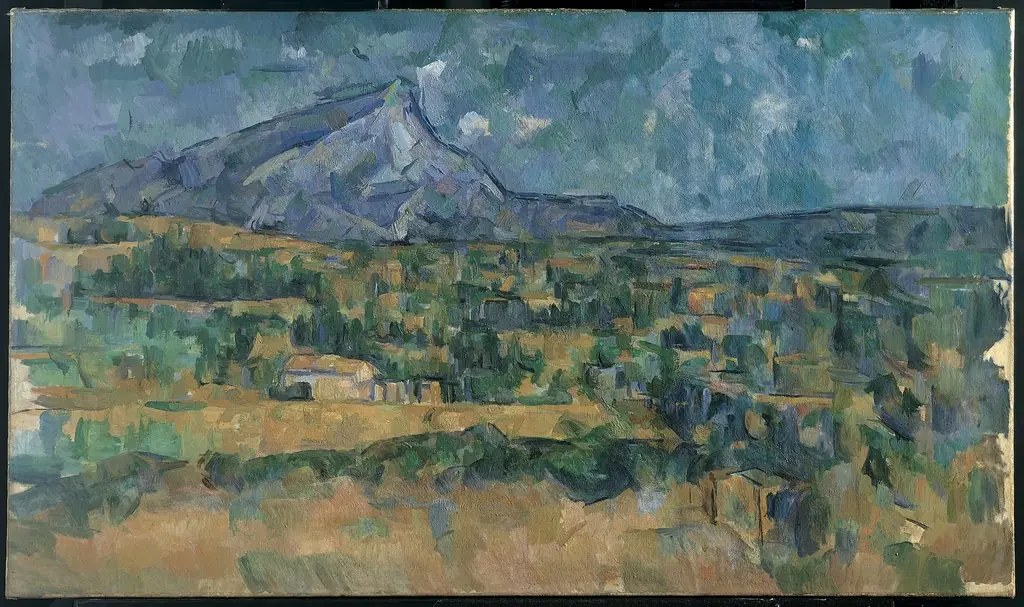
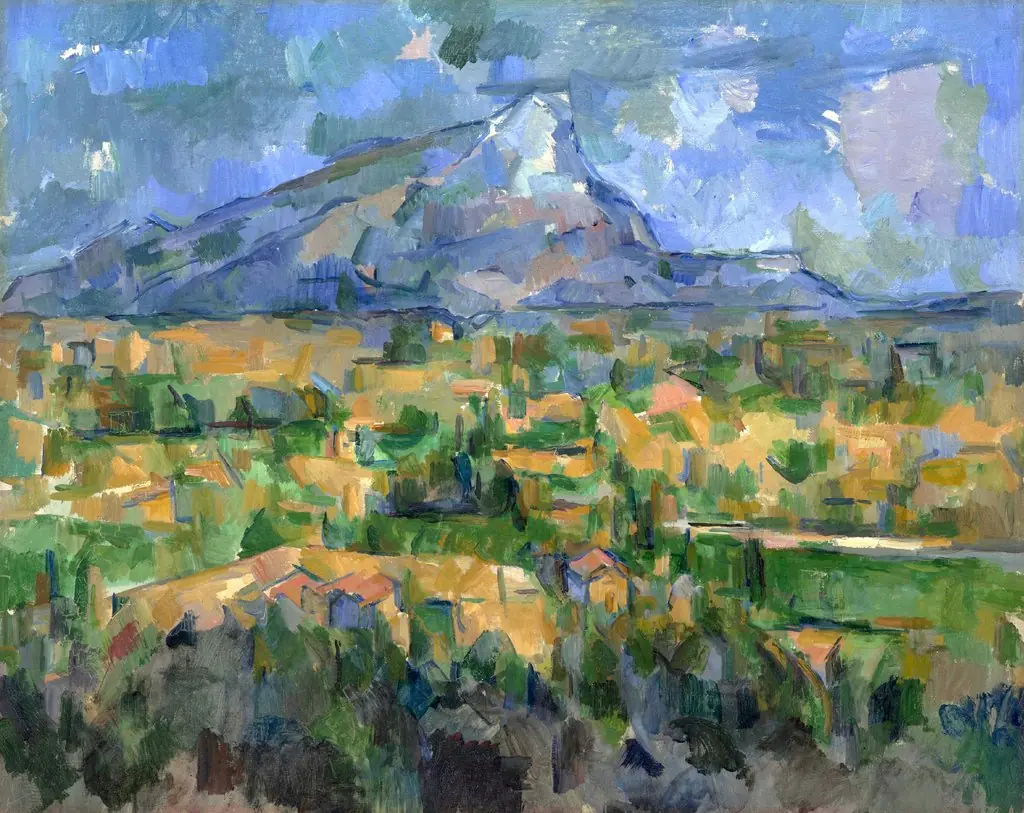
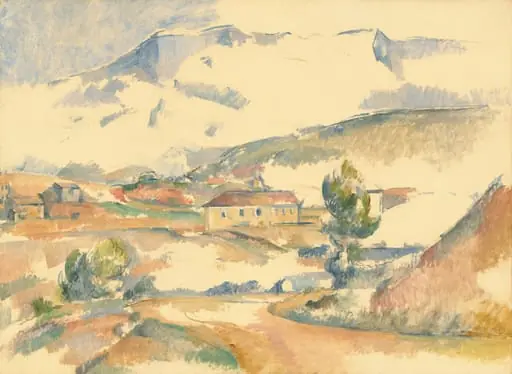
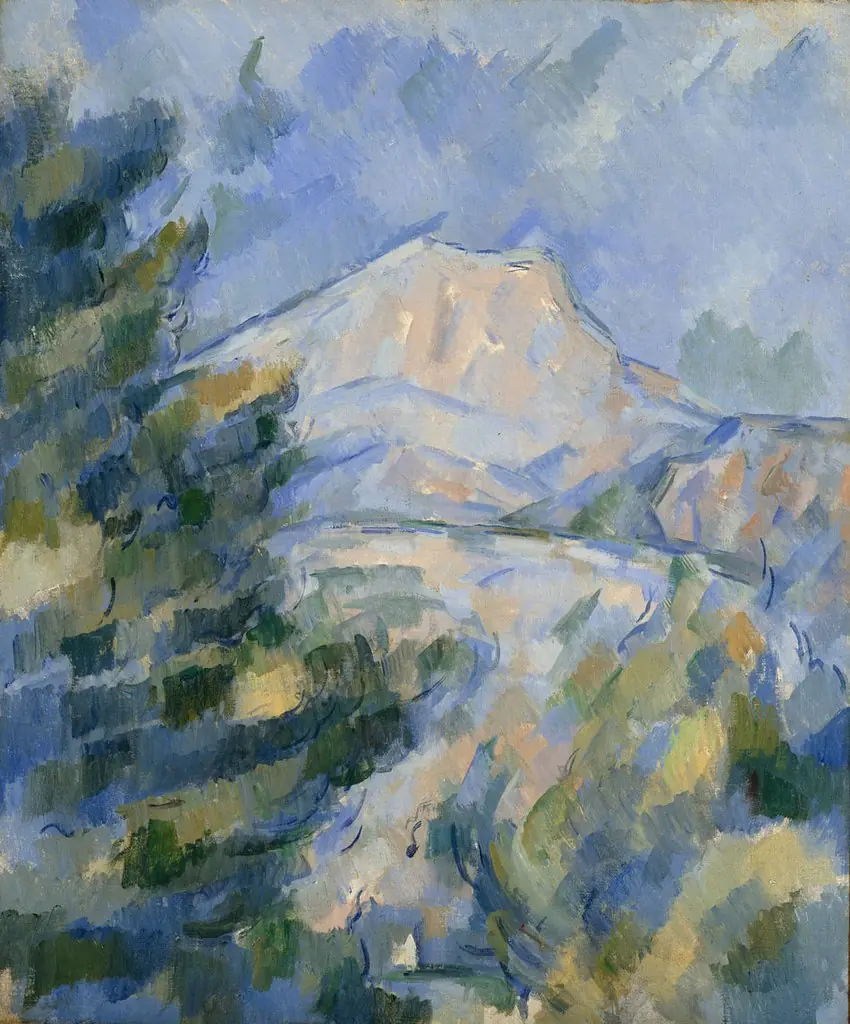
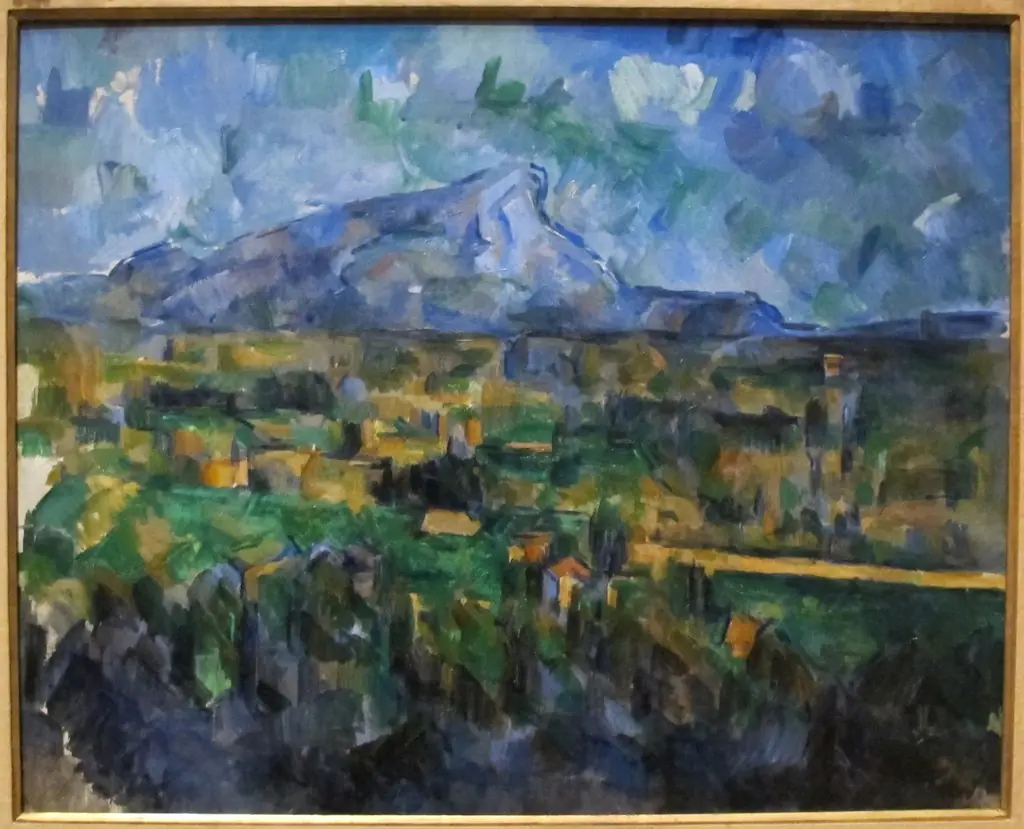
Mount Sainte-Victoire is a landscape painting created by the French Post-Impressionist artist Paul Cézanne in 1900. Executed in oil on canvas, the work measures 78 by 99 centimeters and belongs to a broader series of roughly eighty paintings and watercolors depicting the limestone mountain in Provence. The canvas captures the mountain's pale gray-blue mass rising against a lighter blue sky, with rolling hills rendered in patches of green, orange, and ochre descending toward the foreground. The work is currently held in the Hermitage Museum, having formerly been owned by the collector Ivan Morozov.
Subject & Meaning
The subject of the painting is Montagne Sainte-Victoire, a grey-white limestone mountain overlooking Aix-en-Provence in southern France. The mountain possessed a preexisting symbolic appeal in the region, linked to an ancient Roman victory and early Christian festivals. For Cézanne, the mountain embodied nature's grandeur and enduring character, assuming an abstract, elusive appeal. He was convinced that each new painting of the motif would offer some new insight into another facet of its meaning or character. Unlike the Impressionists, who sought to capture ephemeral surface features and transient light, Cézanne sought to convey the eternal, interior structure of the scene, exploring the tension between order and emotion to find order in his sensations. The landscape thus became a vehicle for a Symbolist aesthetic, prioritizing subjective experience and emotional resonance over naturalistic fidelity.
Technique & Style
Cézanne built the composition using a technique of small, parallel patches of color, sometimes called the constructive stroke, leaving individual marks unblended to create a textured, faceted surface. Rather than relying on conventional chiaroscuro or black for shadows, he modulated warm and cool hues, indicating shadows with darker blues and violets. The mountain, sky, and foreground vegetation are all constructed from the same vocabulary of discrete color planes, which unifies the composition and compresses traditional pictorial depth. Cézanne used geometry to describe nature, subtly distorting the mountain's forms to create clear geometric shapes and pictorial balance. The canvas edges show some exposed ground, and the deliberate, visible paint application replaces atmospheric illusion with a mosaic-like structure that emphasizes the painting as an object. This approach aligned with his famous dictate to treat nature by means of the cylinder, the sphere, and the cone.
History & Provenance
Cézanne began painting Mont Sainte-Victoire around the 1880s, inspired in part by the scenery viewed from the Aix-Marseille railway line, which he praised in an 1878 letter to Émile Zola. Over the following decades, he returned to the motif repeatedly from various vantage points, including Bellevue, Bibemus quarry, and Les Lauves. After his mother died in 1897, Cézanne was forced to sell his family property outside Aix in 1899, a significant emotional blow. He subsequently bought property on the hill Les Lauves just north of Aix, building a studio there in 1902 with a sweeping view of the mountain and the surrounding plains. This specific 1900 canvas was created in France and later entered the collection of the prominent Russian collector Ivan Morozov. It is now housed in the Hermitage Museum.
Context
The Mount Sainte-Victoire series emerged from Cézanne's rejection of Impressionist naturalism and his pursuit of a more concrete, structured art. While he participated in early Impressionist exhibitions and worked alongside artists like Monet and Pissarro, Cézanne gradually lost interest in reproducing momentary observations, seeking instead to make of Impressionism something solid and durable. This aspiration placed him at the forefront of Post-Impressionism, a term later coined by Roger Fry in 1910. A one-man show in Paris in 1895, endorsed by Ambroise Vollard, did not attract widespread public attention but proved influential on younger artists, earning Cézanne a legendary reputation. By his final years, painters like Émile Bernard and Maurice Denis made pilgrimages to Aix to watch him work, recognizing the powerful geometric reductiveness of his late landscapes.
Legacy
Cézanne's Mont Sainte-Victoire paintings proved crucial to the development of modern art, bridging nineteenth-century painting and the radical experiments of the twentieth century. His deconstruction of nature into fundamental geometric units and his constructive brushwork anticipated the experiments with form, perception, and space carried out under Cubism. In 1907, the Salon d'Automne staged a huge retrospective in his honor, cementing his influence on Pablo Picasso and Georges Braque, who would directly draw upon his spatial compression and dissolution of outline. Picasso's 1958 purchase of the Château de Vauvenargues on the northern slope of Mont Sainte-Victoire, where he is now buried, stands as a profound tribute to the artist he called the father of them all. The series remains a cornerstone of early abstract art and a defining achievement in the landscape tradition.
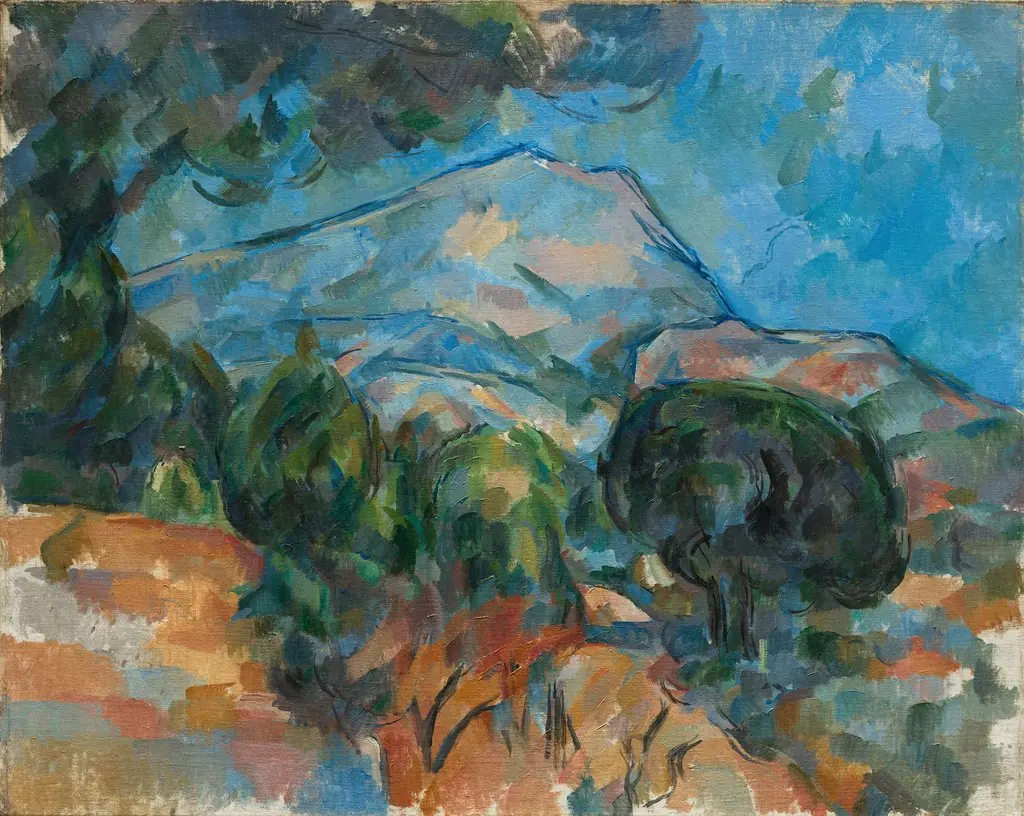
Own this work as a print
Artist & collection

Artist
Paul Cézanne ( say-ZAN, UK also siz-AN, US also say-ZAHN; French: ; Occitan: Pau Cesana; 19 January 1839 – 22 October 1906) was a French Post-Impressionist painter whose work introduced new modes of representation,…

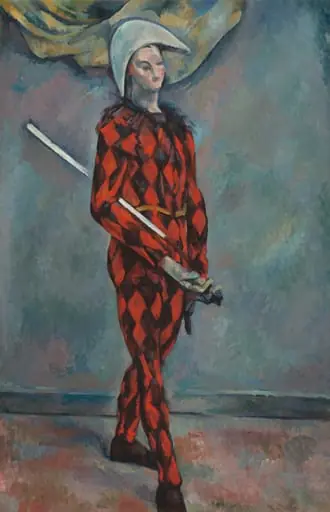 Harlequin
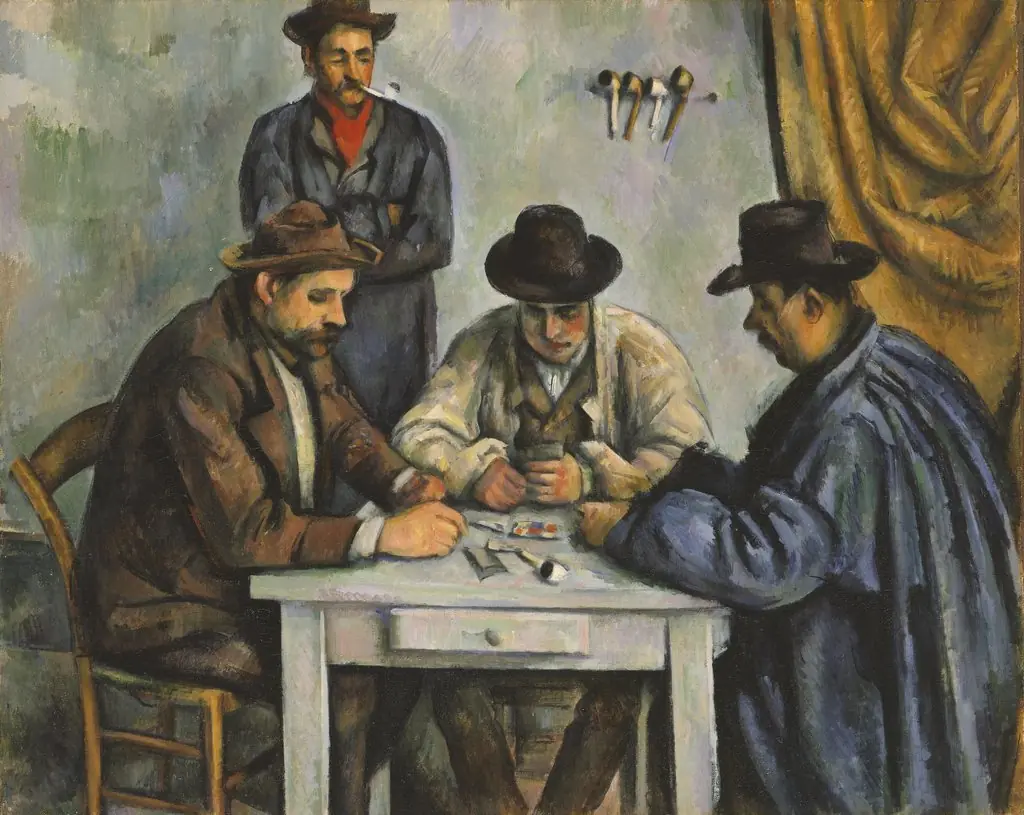 The Card Players
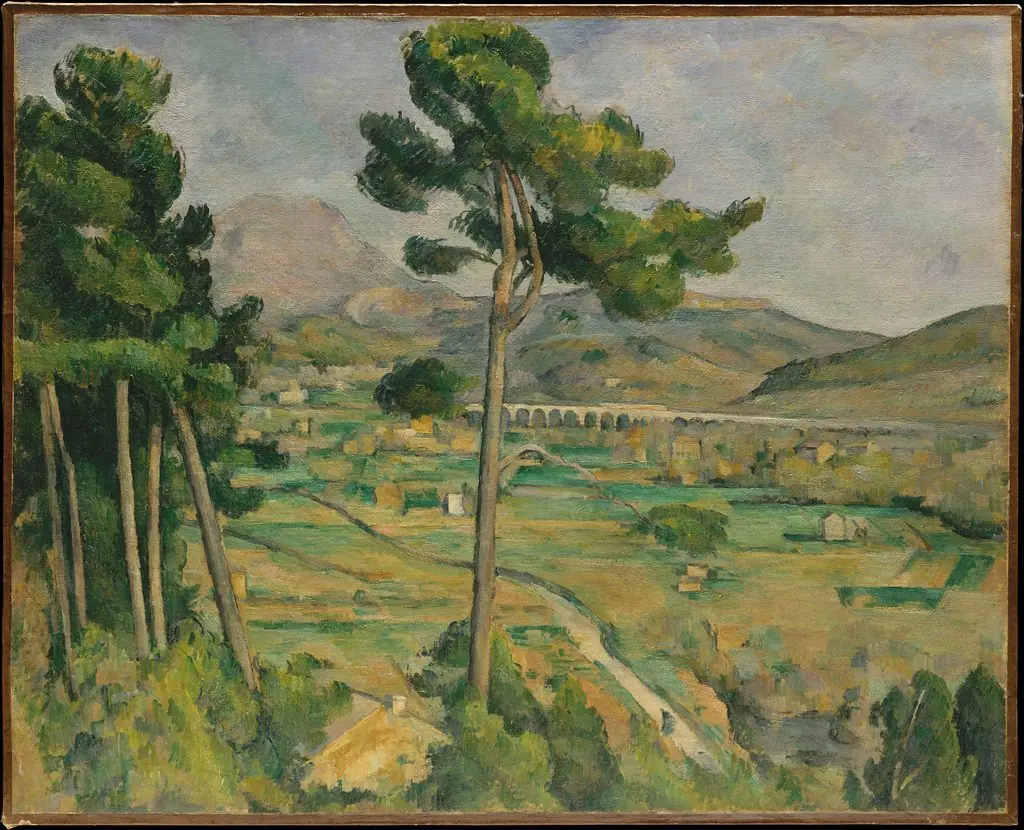 Mont Sainte-Victoire and the Viaduct of the Arc River Valley
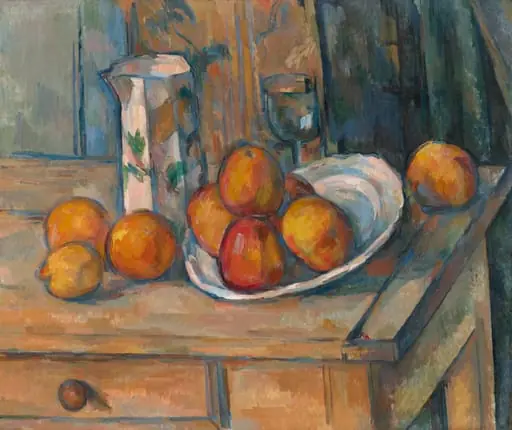 Still Life with Milk Jug and Fruit
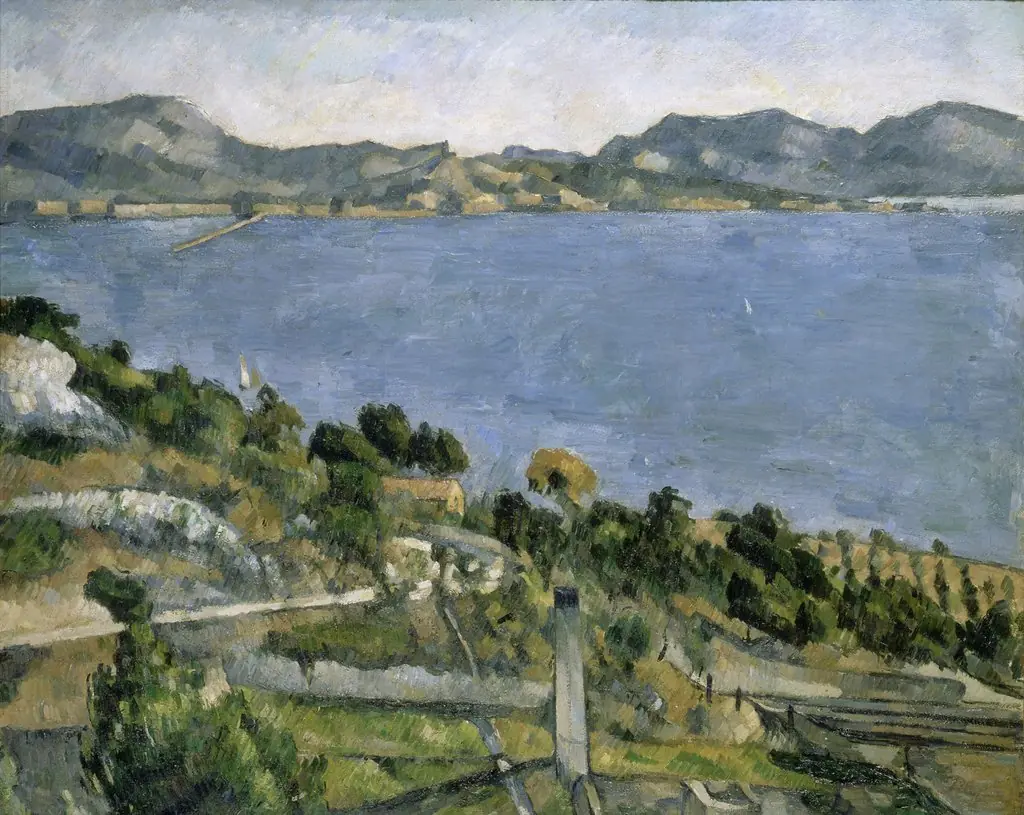 Le Golfe de Marseille vu de l'Estaque (The Gulf of Marseille Seen from L'Estaque)
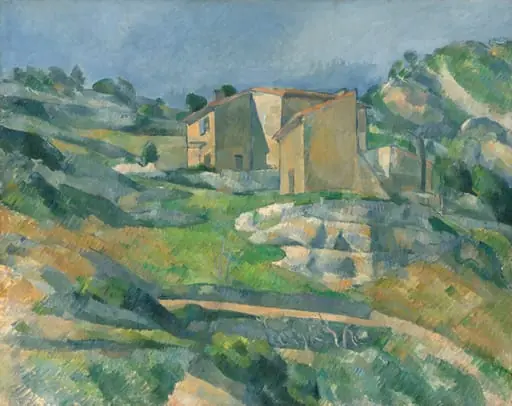 Houses in Provence: The Riaux Valley near L'Estaque
 Louis Guillaume
 Still Life with Jar, Cup, and Apples