Artwork
The Pigeon Tower at Bellevue
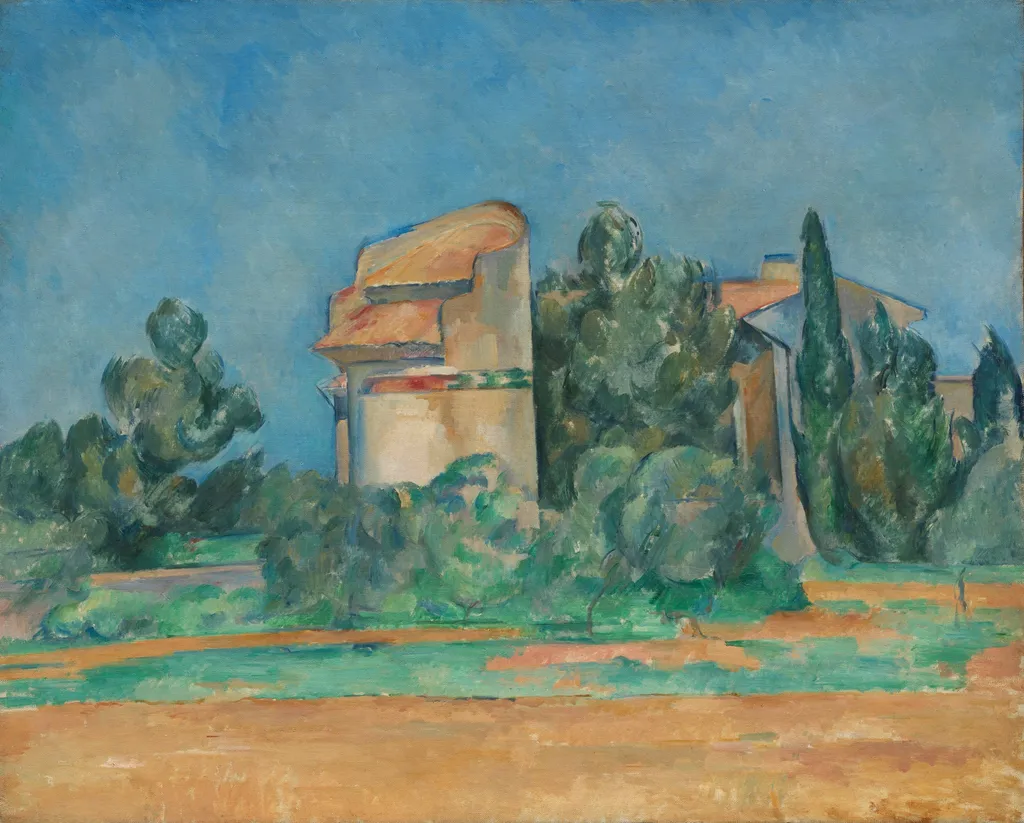
The Pigeon Tower at Bellevue is an oil painting by the Post-Impressionist artist Paul Cézanne. It dates from 1896 and is held in the collection of the Cleveland Museum of Art.
About this work
Subject & Meaning
Created in 1896, this oil painting by Paul Cézanne presents a landscape view of a dovecote, also known as a pigeon tower, situated at Bellevue, France.
Created in 1896, this oil painting by Paul Cézanne presents a landscape view of a dovecote, also known as a pigeon tower, situated at Bellevue, France. The work's primary subject is the architectural structure itself, rendered within its natural surroundings. As a landscape genre piece, the image focuses on the depiction of this specific rural building rather than incorporating complex allegorical figures or overt symbolic narratives.
The composition serves as a direct representation of the site, capturing the physical presence of the tower without documented layers of hidden meaning beyond its literal existence as a functional agricultural structure.
Technique & Style
The Pigeon Tower at Bellevue is executed in oil paint on canvas, measuring 65.6 cm in height by 81.5 cm in width, with a horizontal format suited to its open-air subject. Cézanne's handling reflects his mature post-Impressionist approach, characterized by structured, constructive brushwork that builds form through planes of color rather than traditional linear perspective. The composition centers on the geometric volume of the dovecote set within the surrounding landscape, with the tower's solid mass treated as an integral element of the natural setting.
Painted in 1896, the canvas demonstrates the artist's characteristic technique of layering pigment to articulate both architectural solidity and atmospheric depth.
History & Provenance
The Pigeon Tower at Bellevue is an oil-on-canvas landscape painted by Paul Cézanne in 1896 in France. The work measures 65.6 cm by 81.5 cm. It is part of the Cleveland Museum of Art's collection. The painting's genre is recorded as a landscape, and its medium is oil paint on canvas, as documented in the museum's records.
Overview
Paul Cézanne's "The Pigeon Tower at Bellevue," an oil painting from 1896, exemplifies his Post-Impressionist approach to landscape. The composition centers on a modest dovecote situated amidst natural surroundings. This work reflects Cézanne's ongoing exploration of form and light within everyday scenes, characteristic of his mature period, and showcases his distinctive pictorial language.
Legacy
As a pivotal French Post-Impressionist, Cézanne developed a distinctive pictorial language that significantly diverged from his contemporaries. His methodical approach to rendering form and space laid foundational groundwork, effectively bridging the late 19th-century Impressionist movement with the emerging Cubist aesthetics of the early 20th century, thereby influencing subsequent avant-garde art.
Own this work as a print
Artist & collection

Artist
Paul Cézanne ( say-ZAN, UK also siz-AN, US also say-ZAHN; French: ; Occitan: Pau Cesana; 19 January 1839 – 22 October 1906) was a French Post-Impressionist painter whose work introduced new modes of representation,…

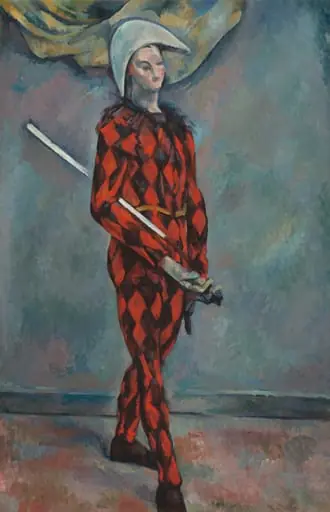 Harlequin
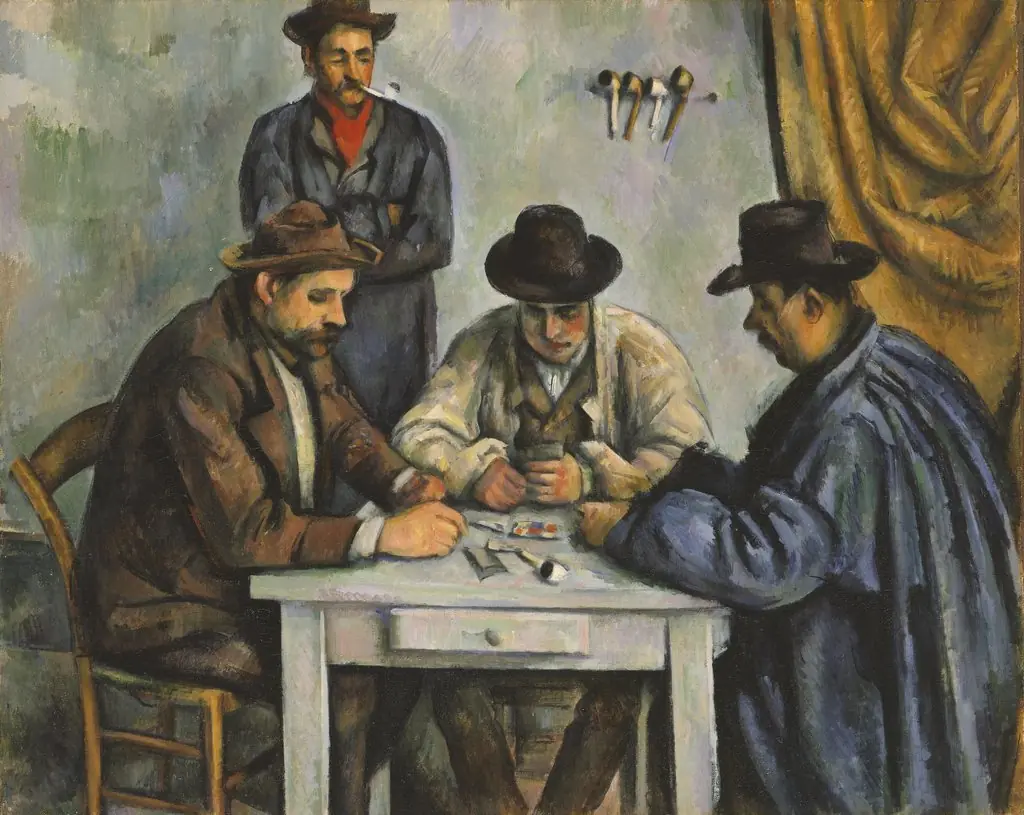 The Card Players
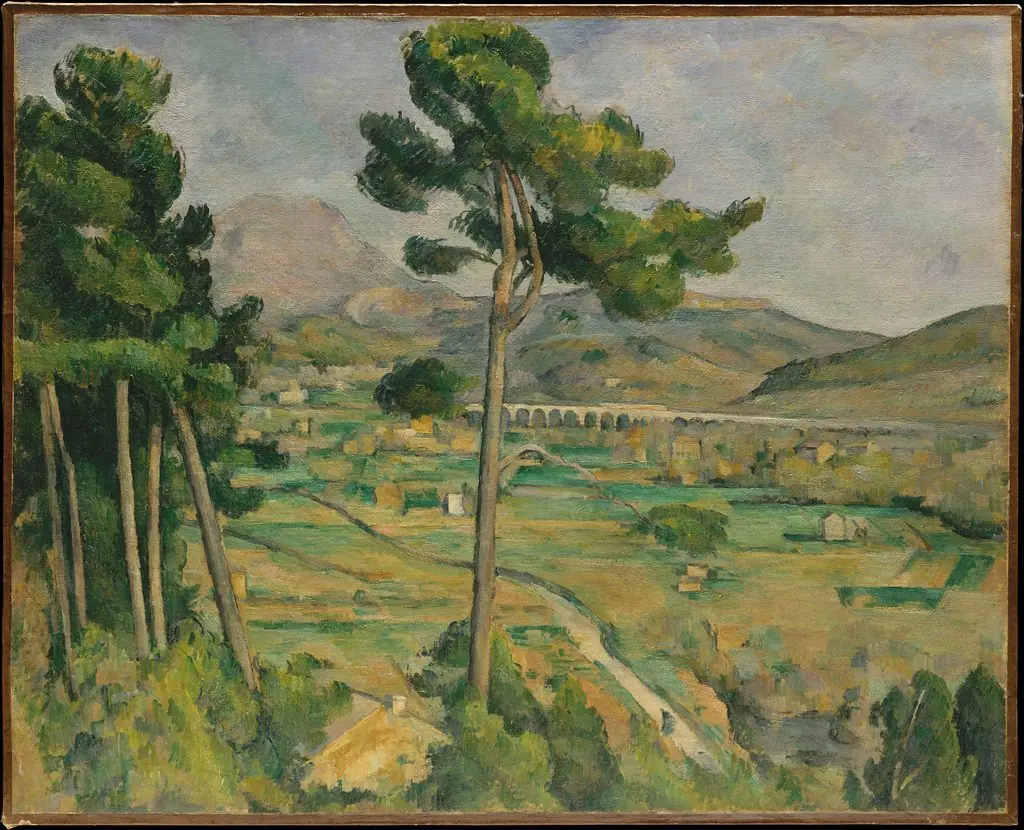 Mont Sainte-Victoire and the Viaduct of the Arc River Valley
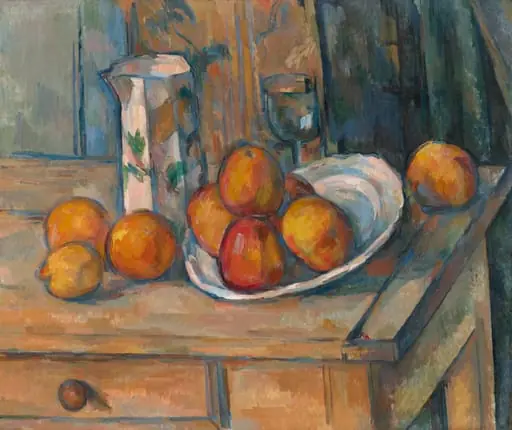 Still Life with Milk Jug and Fruit
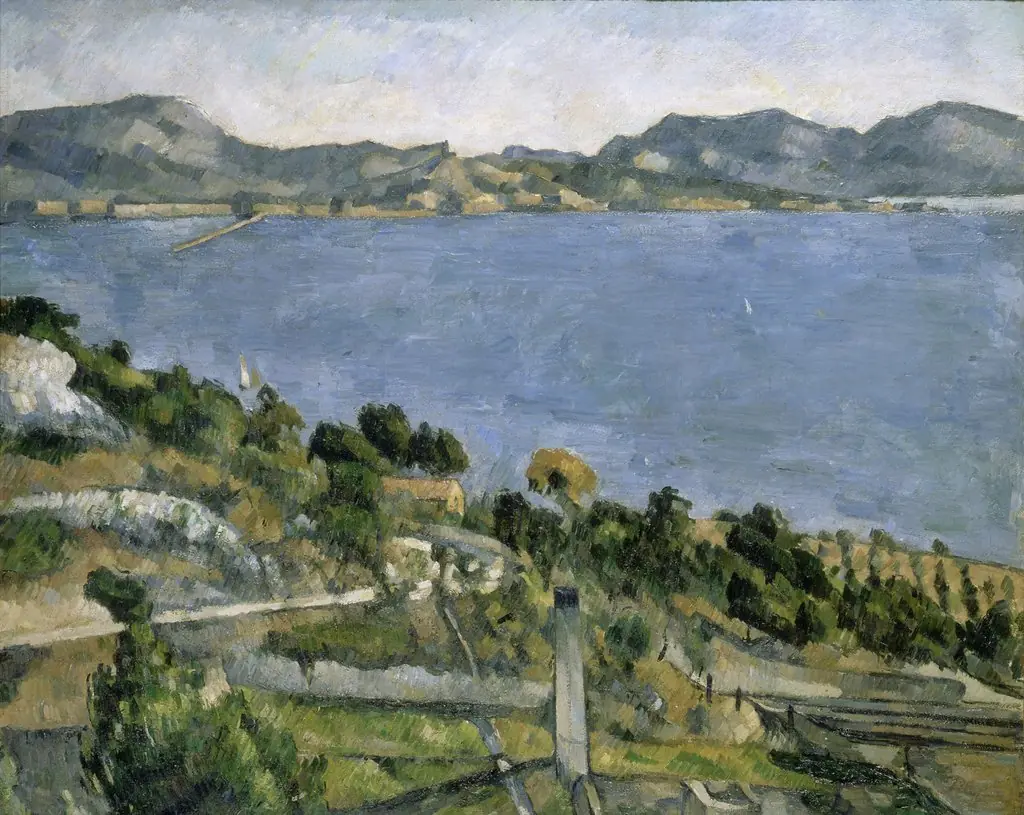 Le Golfe de Marseille vu de l'Estaque (The Gulf of Marseille Seen from L'Estaque)
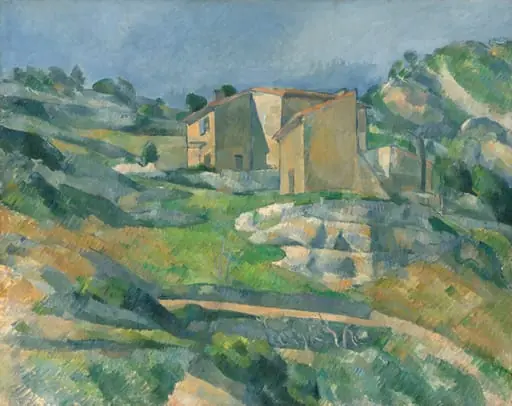 Houses in Provence: The Riaux Valley near L'Estaque
 Louis Guillaume
 Still Life with Jar, Cup, and Apples
 Maison Maria with a View of Château Noir
 The Road Bridge at L'Estaque
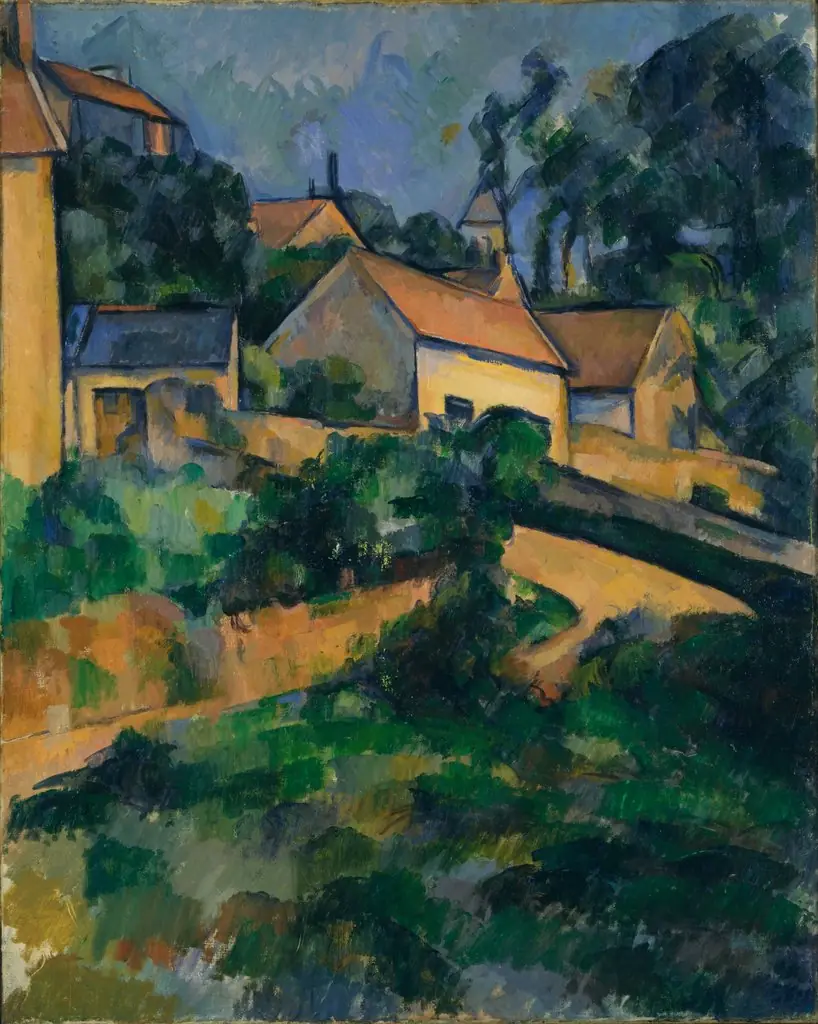 Turning Road at Montgeroult
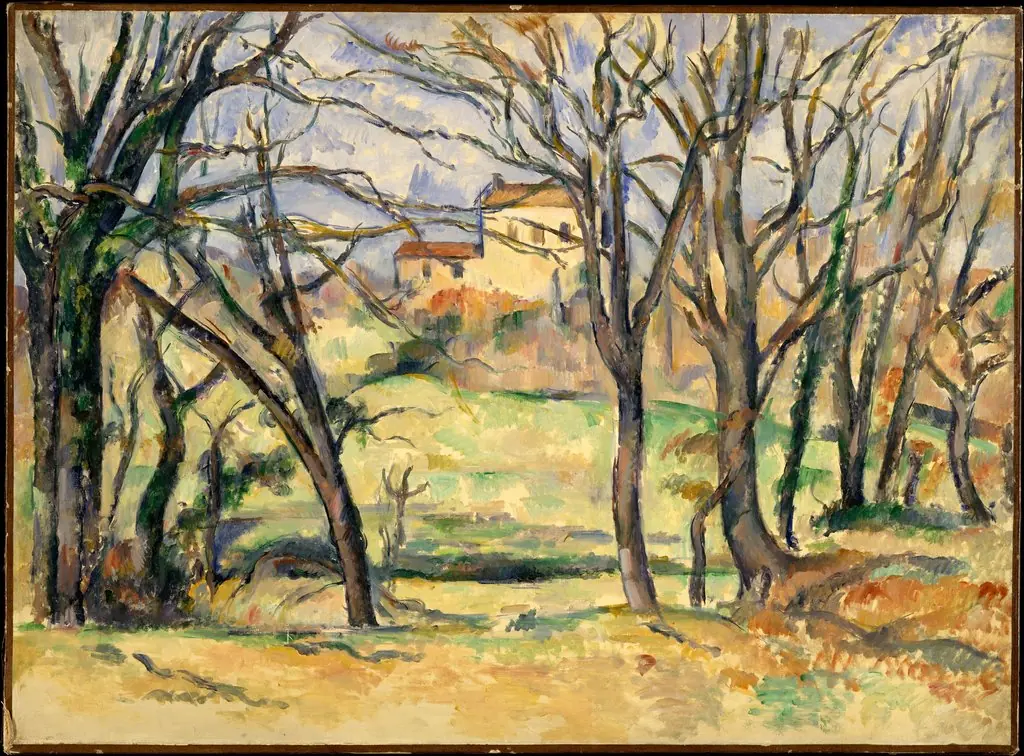 Trees and Houses Near the Jas de Bouffan
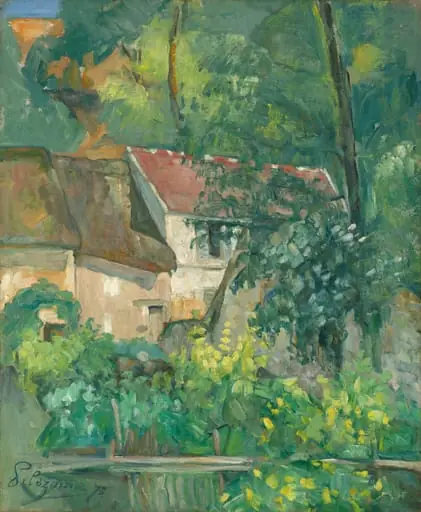 House of Père Lacroix
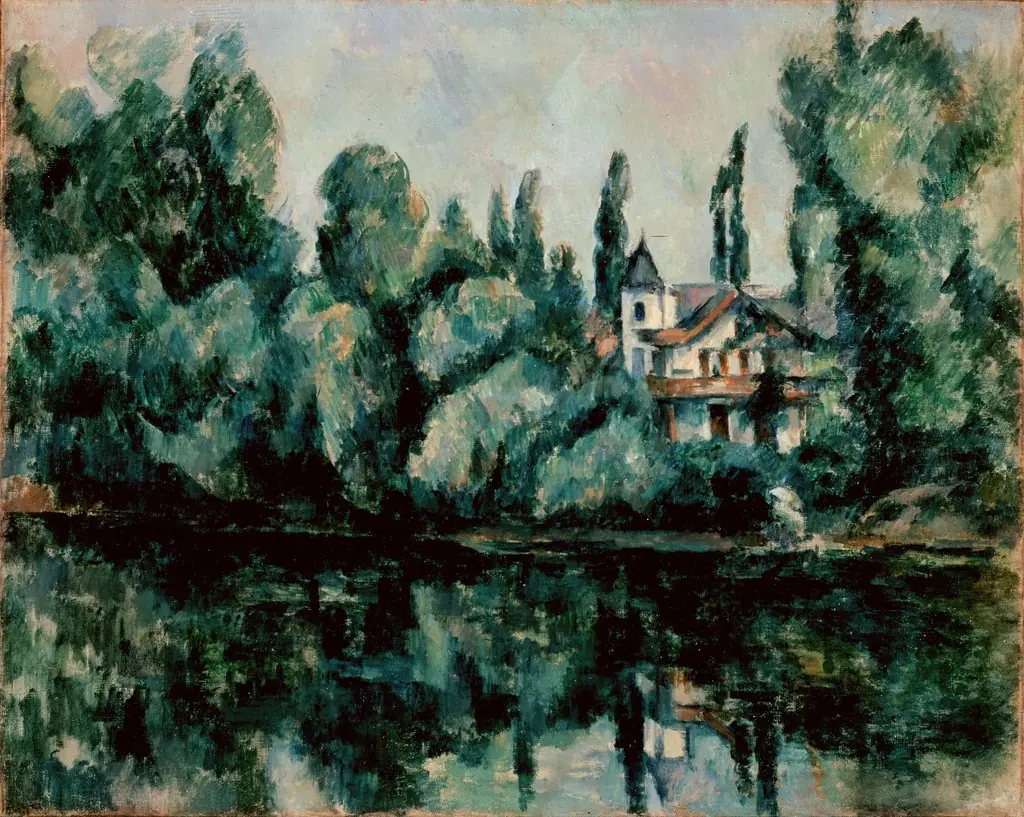 Along the Banks of the Marne
 Château Noir
 Landscape near Paris
 The House with the Cracked Walls
 Banks of the Seine at Médan
- The Pigeon Tower at Bellevue