Artwork
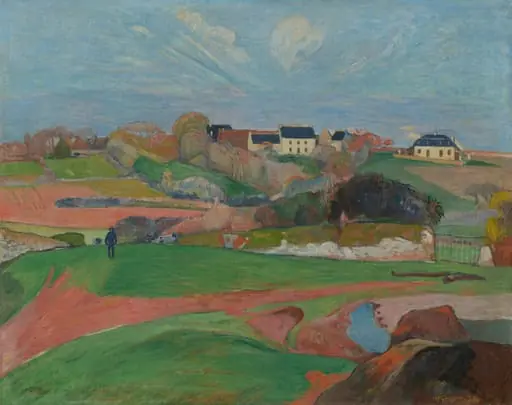
A Farm in Brittany
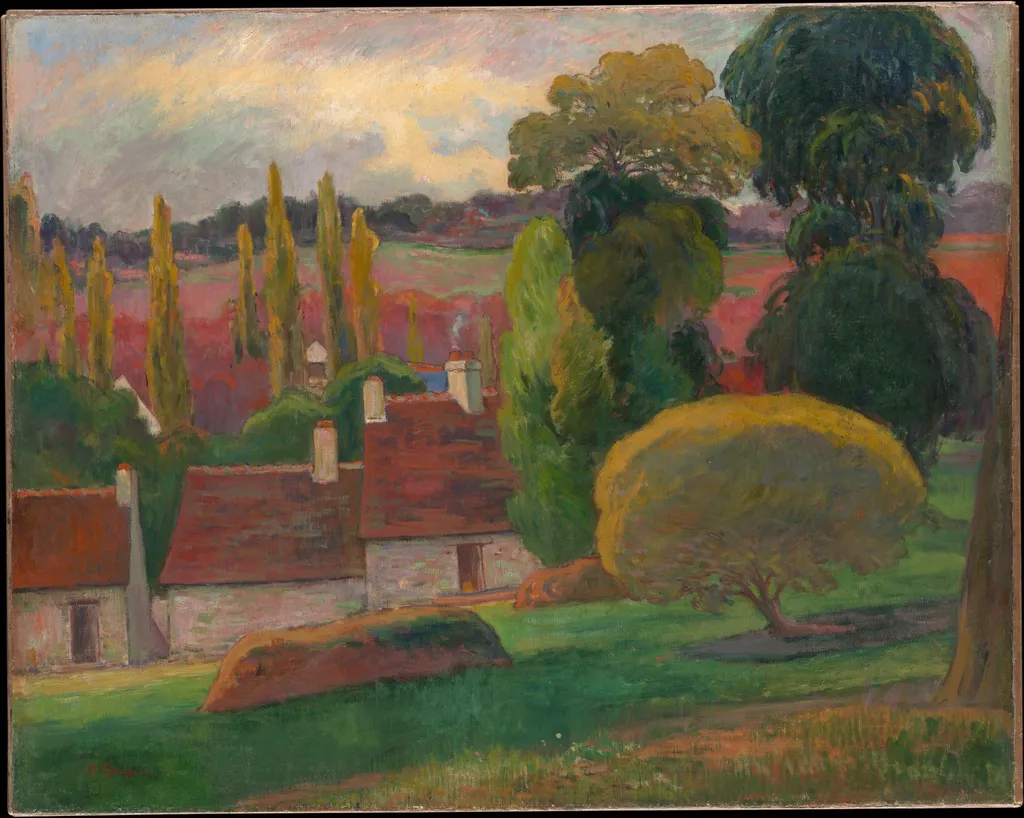
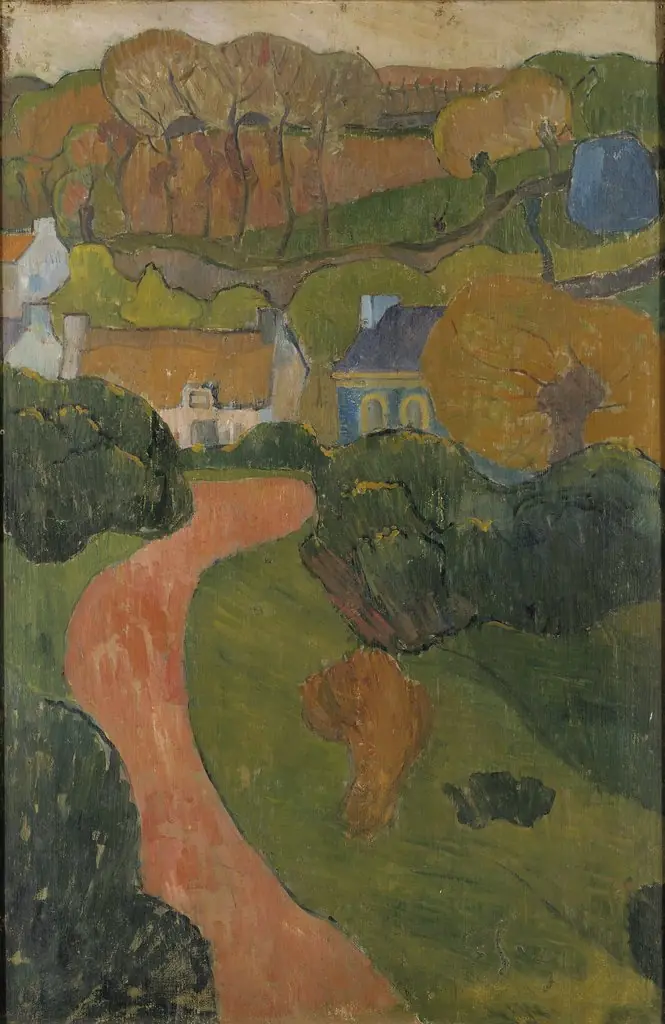
A Farm in Brittany is an oil painting by the Post-Impressionist artist Paul Gauguin. It dates from 1898 and is held in the collection of the Metropolitan Museum of Art.
About this work
Technique & Style
The sources confirm the medium, support, and dimensions but provide no information on the painting's current condition, surface handling, or pigment palette.
A Farm in Brittany is executed in oil paint on canvas. The canvas measures 72.4 by 90.5 centimetres, a horizontal format suited to a landscape composition depicting a farm at Pont-Aven. The work is associated with Gauguin's Pont-Aven manner, characterized by flattened planes of color, simplified contours, and a decorative handling of the rural Breton landscape, in which natural motifs such as trees and farm structures are reduced to rhythmic forms.
The sources confirm the medium, support, and dimensions but provide no information on the painting's current condition, surface handling, or pigment palette.
History & Provenance
A Farm in Brittany was created by Paul Gauguin in 1898 in oil on canvas, depicting a farm at Pont-Aven, the artists' colony in Brittany that was a recurring subject for Gauguin. The painting measures 72.4 cm in height and 90.5 cm in width and is held in the collection of the Metropolitan Museum of Art. The available sources do not record the original commission, prior owners, an accession number, or exhibition history.
Overview
Paul Gauguin's A Farm in Brittany, created in 1898, is an oil painting that exemplifies the Post-Impressionist movement. This work captures a tranquil rural landscape, depicting a farmstead nestled within the countryside of Pont-Aven. The composition features a prominent tree and a red-roofed farmhouse, rendered with a distinctive approach to color and form. It reflects Gauguin's ongoing exploration of symbolic and expressive representation.
Subject & Meaning
The painting presents a vibrant countryside view, centered on a red-roofed farmhouse. A path, flanked by tall, slender trees, leads towards the building, while a large tree with yellow foliage stands prominently nearby. The scene is characterized by its green grass and a luminous sky, conveying a sense of warmth and softness typical of a pastoral setting. This depiction of a specific location in Brittany reflects Gauguin's engagement with the region's landscape.
Context
As a leading figure in Post-Impressionism, Gauguin consistently sought to move beyond the optical realism of Impressionism. His artistic practice spanned various media, including painting, sculpture, printmaking, and ceramics, all marked by a bold and symbolic approach. Through his innovative use of color and form, Gauguin developed a distinctive style that significantly influenced subsequent art movements, establishing him as a pivotal figure in modern art.
Own this work as a print
Artist & collection
Artist
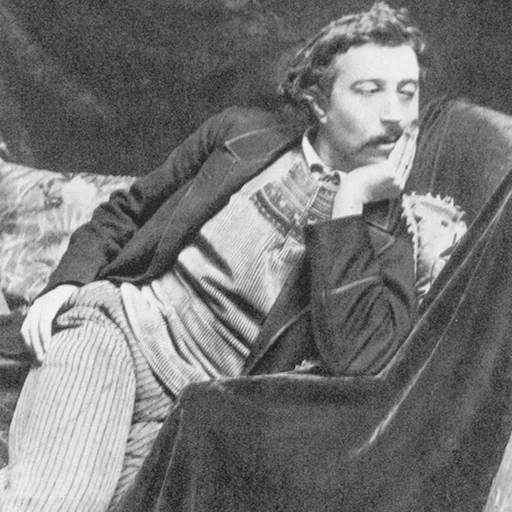
Eugène Henri Paul Gauguin (; French:; 7 June 1848 – 8 May 1903) was a French painter, sculptor, printmaker, ceramist, and writer, whose work has been primarily associated with the Post-Impressionist and Symbolist movements.