Artwork
Vision After the Sermon
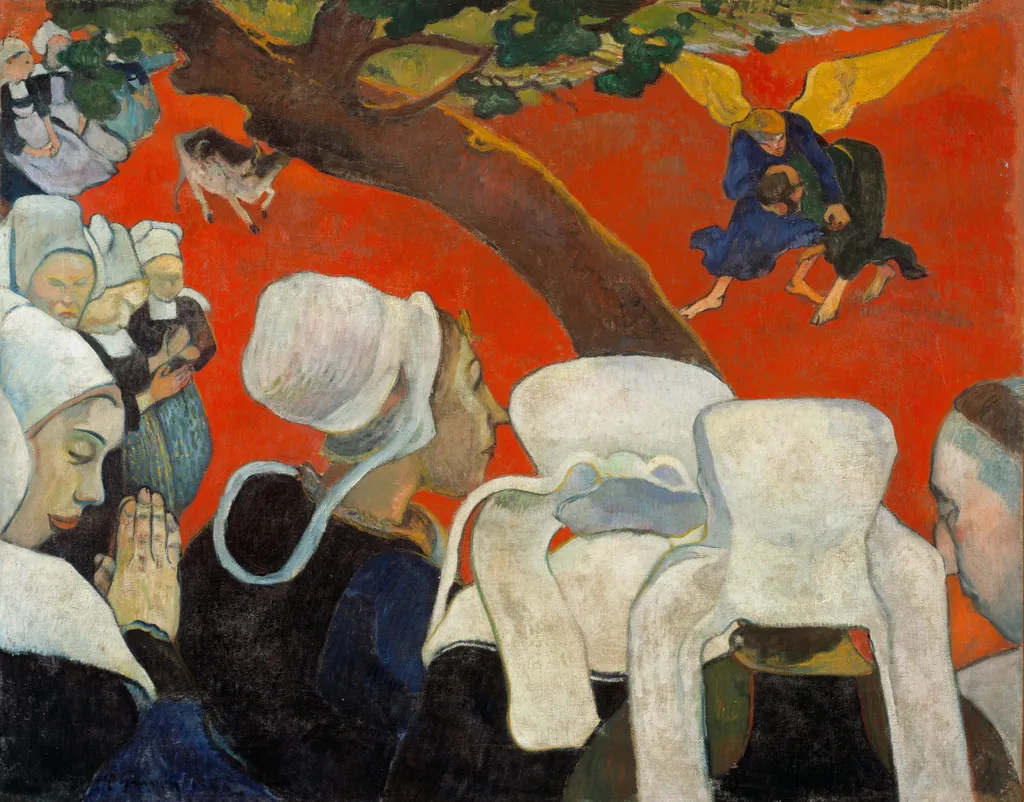
Vision After the Sermon is an oil painting by the Post-Impressionist artist Paul Gauguin. It dates from 1894 and is held in the collection of the National Galleries Scotland.
About this work
Subject & Meaning
Gauguin separates the earthly reality of the praying figures from this supernatural hallucination using a diagonal tree trunk that bisects the composition.
The painting depicts a group of Breton women in traditional folk costumes and white hats leaving church after hearing a sermon. Their collective vision, triggered by the biblical reading from Genesis regarding Jacob wrestling with an angel, manifests as the central scene. Gauguin separates the earthly reality of the praying figures from this supernatural hallucination using a diagonal tree trunk that bisects the composition.
The work functions as an icon of Symbolism, prioritizing spiritual imagination over naturalistic representation. The vivid red ground serves as a non-naturalistic field that intensifies the mystical struggle, while the dark garments of the women symbolize the terrestrial world. Influenced by Japanese woodblock prints and sumo wrestling imagery, the artist employs flat color areas and strong contours to convey the archaic and primitive fervor of the religious experience.
Technique & Style
Painted in 1888, *Vision After the Sermon* is an oil on canvas measuring 72.2 × 91 cm. Gauguin employed a bold, non-naturalistic approach characterized by large, flat areas of color and strong contour lines rather than gradual tonal modeling. The composition is divided by a diagonal tree trunk that separates the earthly realm of the Breton women from their visionary experience of Jacob wrestling with the angel.
The painting exemplifies Synthetism, a style Gauguin developed under the influence of Japanese woodblock prints by Hiroshige and Hokusai. He applied minimal color shading across the red ground, brown trunk, black garments, and white hats, creating stark contrasts. The skewed perspective, distorted proportions, and absence of a clear light source further distance the work from Impressionist naturalism, moving toward symbolic abstraction.
History & Provenance
Paul Gauguin completed *Vision After the Sermon* in 1888 during his second stay in Pont-Aven, Brittany, specifically between August and September of that year. The work was created following his return from Martinique, a period that enriched his palette and catalyzed his shift toward a style characterized by flat color and primitivism. The painting depicts Breton women experiencing a collective vision of Jacob wrestling an angel after hearing a sermon, blending religious mysticism with local folklore. Gauguin finalized the composition while engaging in a stylistic rivalry with Émile Bernard, which eventually led to a personal break between the two artists over claims regarding the invention of their shared visual language. The artwork was acquired by the National Galleries of Scotland in 1925, where it remains part of the collection today.
Vision After the Sermon is held in the collection of the National Galleries Scotland, located at the Scottish National Gallery in Edinburgh. The work entered the institution's holdings in 1925 through purchase and is cataloged under the accession number NG 1643. While specific temporary exhibition records are not detailed in the available sources, the painting is a recognized component of the gallery's permanent display and has been featured in digital educational projects and external art historical resources.
Context
Vision After the Sermon (Jacob Wrestling with the Angel) emerged during Gauguin's pivotal shift from Impressionism toward Symbolist experimentation in Pont-Aven, Brittany, in 1888. The painting reflects his synthesis of Breton cultural motifs, Japanese aesthetic principles, and a radical reimagining of religious narrative, as evidenced by its non-naturalistic composition and symbolic use of color. Gauguin deliberately framed the biblical story of Jacob's struggle with an angel through the collective vision of Breton women following a sermon, separating earthly reality from spiritual revelation via a diagonal tree trunk motif. This approach, detailed in contemporary scholarship, positioned the work as a foundational example of Synthetism, blending Post-Impressionist techniques with influences from Japanese prints (noted by Émile Bernard) and distinct from his contemporaries' naturalism. The painting's reception highlighted its innovative departure from academic conventions, particularly in its abstracted forms and spiritual subjectivity, cementing Gauguin's role in advancing Symbolist approaches to vision and perception.
Legacy
Vision After the Sermon has exerted a lasting influence on modern art through its synthesis of Symbolist spirituality and formal innovation. The painting's radical composition and use of flat color inspired subsequent Symbolists and early 20th-century movements, particularly in its depiction of biblical narratives as psychological visions rather than literal scenes. Critics like Albert Aurier recognized its symbolic power in 1891, framing it as an icon of Symbolist aesthetics. Its legacy persists in discussions of Gauguin's role in bridging Post-Impressionist techniques with emerging modernist approaches to abstraction and subjectivity.
Own this work as a print
Artist & collection
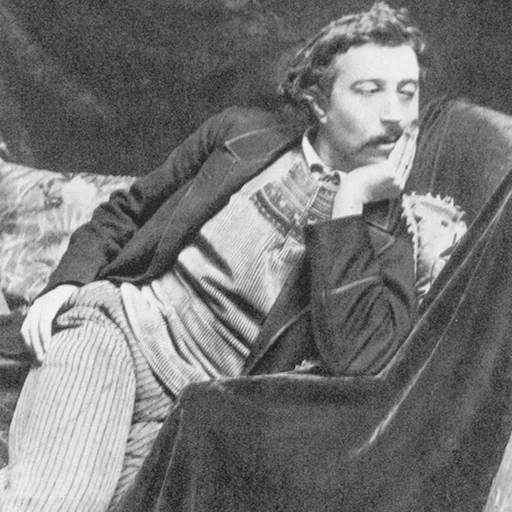
Artist
Eugène Henri Paul Gauguin (; French:; 7 June 1848 – 8 May 1903) was a French painter, sculptor, printmaker, ceramist, and writer, whose work has been primarily associated with the Post-Impressionist and Symbolist movements.