Artwork
Venus and Adonis
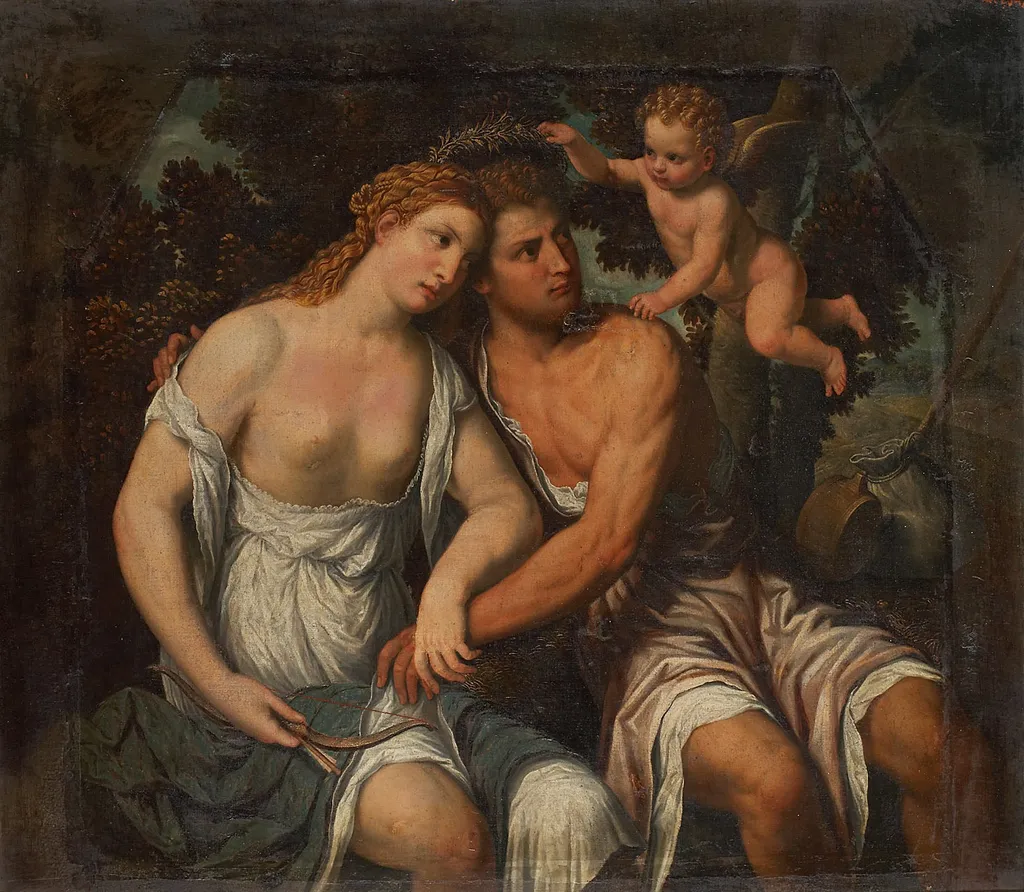
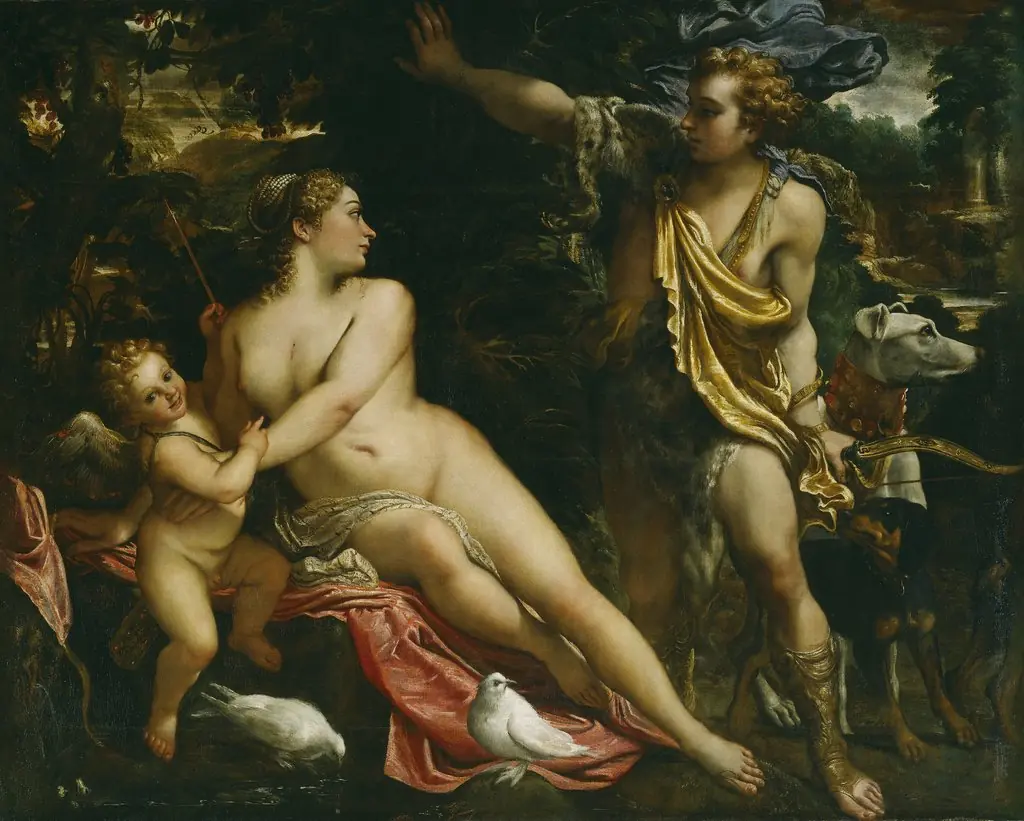
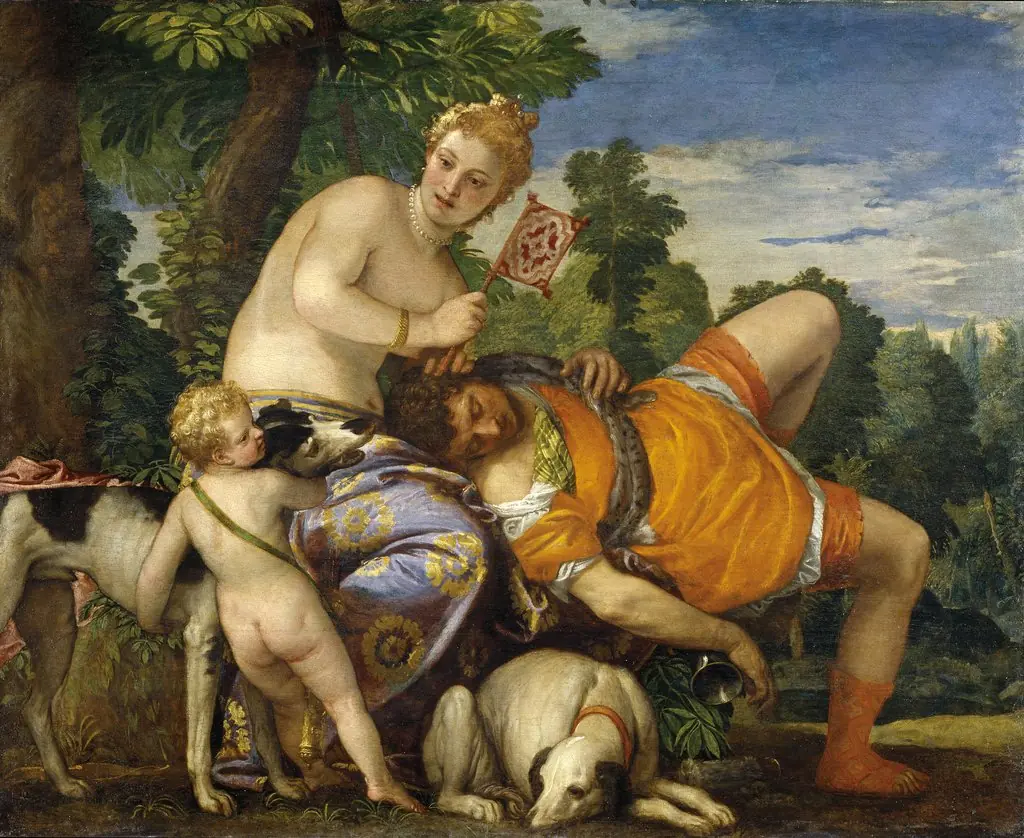
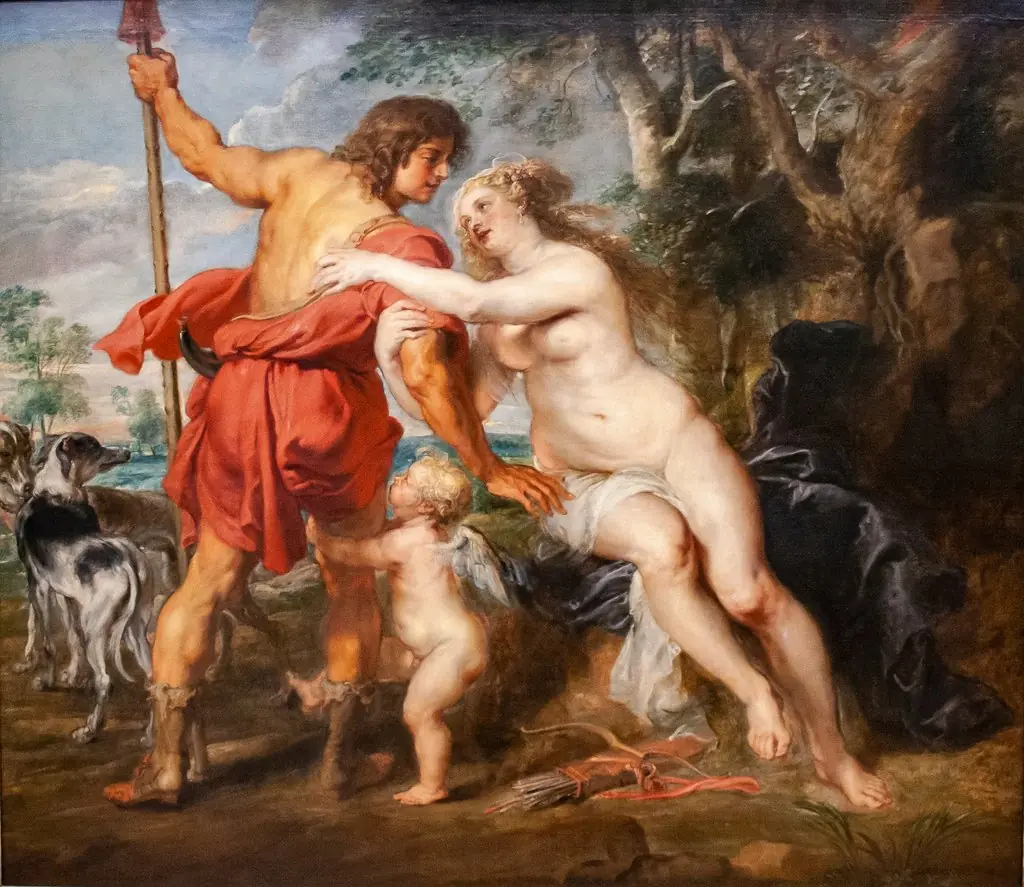
Venus and Adonis is an oil painting by the Early Baroque Italian artist Paris Bordone. It dates from 1560 and is held in the collection of the Kunsthistorisches Museum.
About this work
Subject & Meaning
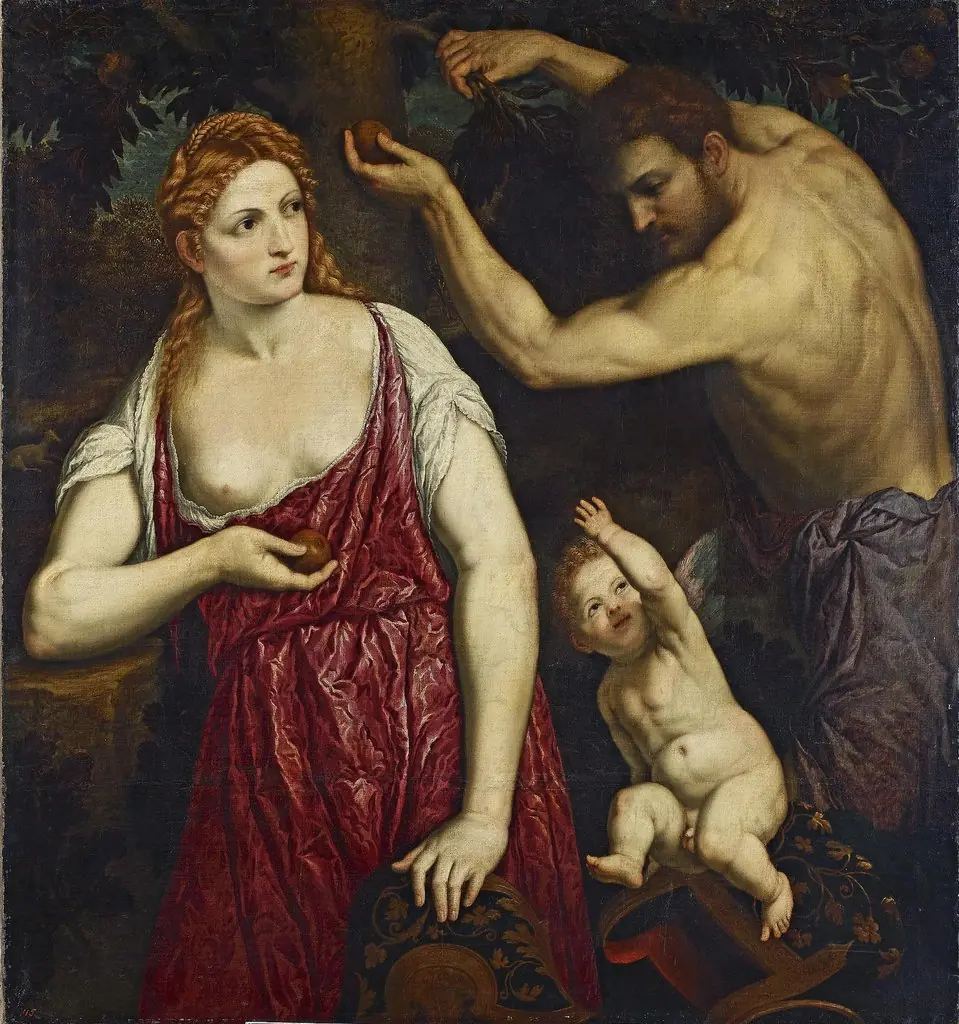
The painting depicts the mythological figures Venus and Adonis, a subject drawn from classical mythology. As a mythological work, it reflects the Renaissance engagement with ancient narratives, portraying the divine goddess and her mortal lover in a scene that belongs to the genre of mythological painting.
Technique & Style
The work measures 115 cm in height and 131 cm in width, presenting a mythological scene depicting Venus and Adonis.
Paris Bordone's Venus and Adonis, dated to 1560, is executed in oil paint on a canvas support. The work measures 115 cm in height and 131 cm in width, presenting a mythological scene depicting Venus and Adonis. As a mythological painting, the piece belongs to the broader genre of narrative art centered on classical themes. The painting is currently held in the collection of the Kunsthistorisches Museum.
History & Provenance
Venus and Adonis was painted by Paris Bordone in 1560, executed in oil on canvas. The work's earliest documented owner was Bartolomeo della Nave, after whose collection it passed to Archduke Leopold Wilhelm of Austria. From that Habsburg holding the painting entered the Kunsthistorisches Museum, where it remains in the collection today. No commission details are recorded in the available sources.
Venus and Adonis, painted by Paris Bordone in 1560, is housed in the Kunsthistorisches Museum under inventory reference KH 1234. The work has been exhibited in the museum’s European Paintings gallery since 1912 and featured in the 1998 exhibition "Mythological Masterpieces of the Renaissance," as well as in the 2005 traveling show "Renaissance Mythologies."
Overview
Venus and Adonis is a 1560 oil painting by Paris Bordone, a Venetian artist trained under Titian, dating to the early Baroque period in Italy. The work is part of the Kunsthistorisches Museum's collection.
Context
Emerging from the early Baroque period in Italy, this work reflects the transitional artistic currents of the time, with Bordone's training under Titian influencing his approach to mythological themes and compositional techniques.
Legacy
While specific lasting impacts or direct influences of Venus and Adonis on subsequent art movements are not highlighted in available information, the work contributes to the broader understanding of 16th-century Venetian painting's evolution, particularly in its blend of Mannerist and emerging Baroque elements.
Artist & collection

Artist
Paris Bordone (Paris Paschalinus Bordone; 5 July 1500 – 19 January 1571) was an Italian painter of the Venetian Renaissance who, despite training with Titian, maintained a strand of Mannerist complexity and provincial vigor.