Artwork
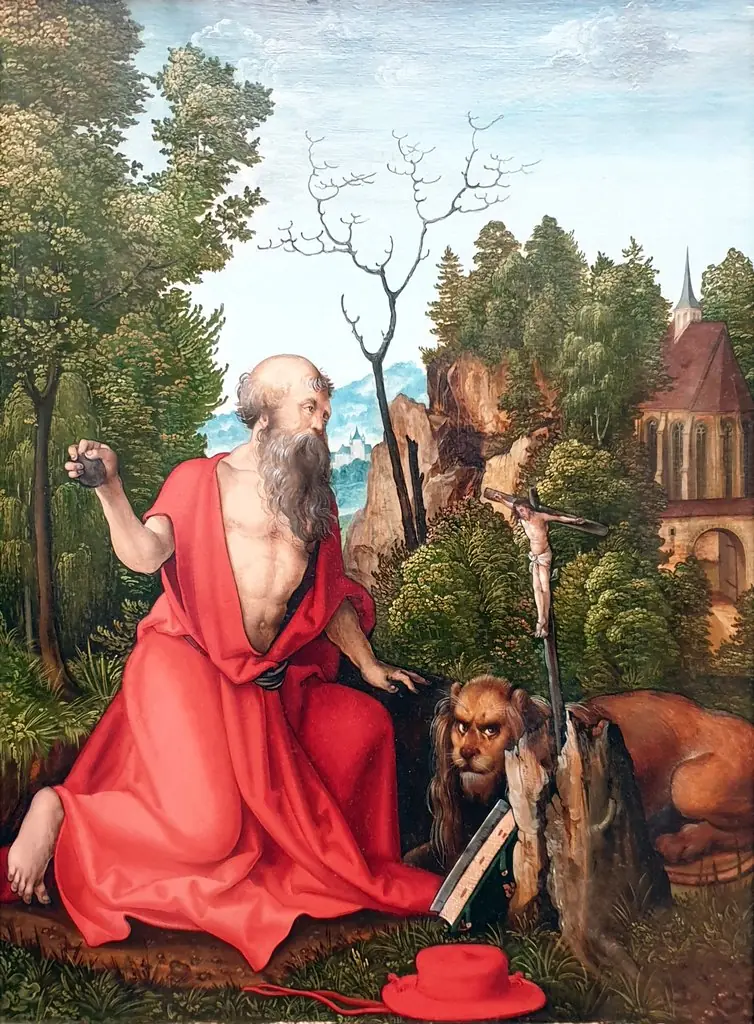
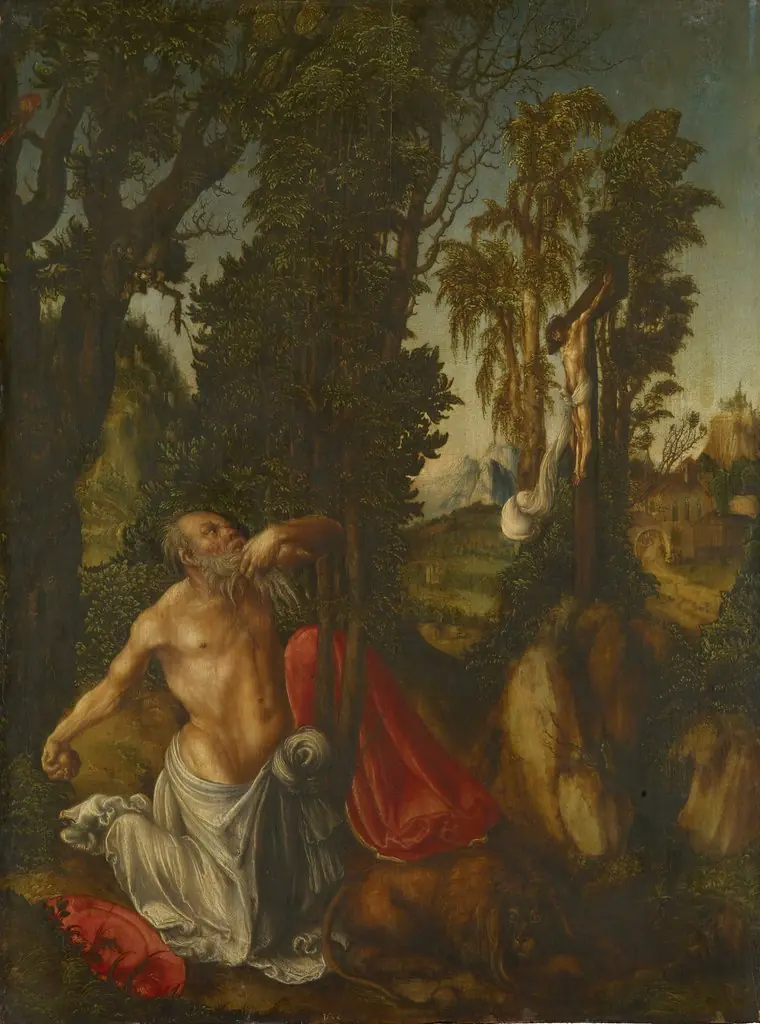
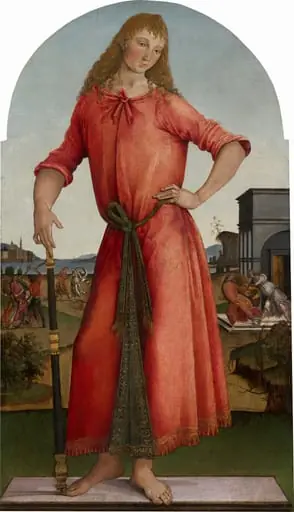
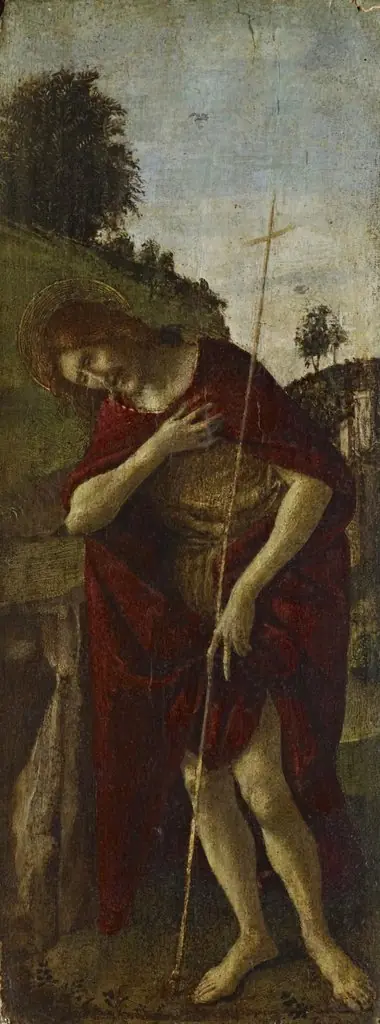
The Crucifixion with the Virgin, Saint John, Saint Jerome, and Saint Mary Magdalene [left panel]
![The Crucifixion with the Virgin, Saint John, Saint Jerome, and Saint Mary Magdalene [left panel], by Pietro Perugino, oil, 1484](https://artifactworldgallery.com/img/pietro-perugino--the-crucifixion-with-the-virgin-saint-john-saint-jerome-and--1017dec17318baa5-w1024.webp)
The Crucifixion with the Virgin, Saint John, Saint Jerome, and Saint Mary Magdalene [left panel] is an oil painting by the Early Renaissance artist Pietro Perugino. It dates from 1484 and is held in the collection of the National Gallery of Art.
About this work
Subject & Meaning
Executed in 1483 by Pietro Perugino, this oil painting functions as the left panel of a religious altarpiece centered on the Crucifixion.
Executed in 1483 by Pietro Perugino, this oil painting functions as the left panel of a religious altarpiece centered on the Crucifixion. The composition depicts the central event of Christ's death, flanked by specific holy figures including the Virgin Mary and Saint John the Evangelist, who are traditional witnesses to the Passion. Distinctively, the work also includes Saint Jerome and Saint Mary Magdalene.
The inclusion of Saint Jerome, a Doctor of the Church not typically present at the historical Golgotha, suggests a devotional or symbolic function tailored to the patron's specific spiritual interests or the dedicatory context of the original commission. Collectively, the arrangement of these figures serves to represent the theological significance of the sacrifice, blending narrative history with hagiographic presence to encourage contemplation on redemption and saintly intercession.
History & Provenance
Probably commissioned by Bartolommeo Bartoli, Bishop of Cagli, the left panel of The Crucifixion with the Virgin, Saint John, Saint Jerome, and Saint Mary Magdalene was painted by Pietro Perugino in 1483 using oil on panel, later transferred to canvas. It entered the church of San Domenico in San Gimignano, was seized by Napoleonic forces in 1796–1797, and passed to Dr. Buzzi, who sold it to Prince Alexander Mikhailovich Galitzin. The work remained in the Galitzin family, was shown at the family’s Moscow museum from 1865, entered the Imperial Hermitage in 1886, and was acquired in 1931 by Andrew W. Mellon through a series of dealers, later gifted to the National Gallery of Art in 1937.
The left panel of The Crucifixion with the Virgin, Saint John, Saint Jerome, and Saint Mary Magdalene is held in the collection of the National Gallery of Art in Washington, D.C., specifically within the Andrew W. Mellon Collection. The work entered the museum as a gift in 1937, following its acquisition by Andrew W. Mellon in April 1931 through a consortium of dealers including Matthiesen Gallery and Knoedler & Co. Prior to this, the painting was purchased by the Imperial Hermitage Gallery in Saint Petersburg in 1886 as part of the Galitzin collection.
Regarding its display history, the panel was exhibited from 1865 onwards at the Museum of Western European Painting established by Prince S.M. Galitzin in Moscow.
Context
The Crucifixion with the Virgin, Saint John, Saint Jerome, and Saint Mary Magdalene exemplifies Perugino’s mature religious style, bridging 15th‑century devotional painting and the emerging High Renaissance compositional logic. Art historians note that the work’s iconography, featuring Saint Jerome, reflects the painter’s engagement with contemporary hagiographic trends and his influence on Raphael’s early altarpieces. Early scholarship, such as Vasilchikoff’s 1883 account, documented the painting’s convoluted provenance and highlighted its significance within Russian collections, underscoring its recognized artistic value.
Today the panel, housed in the National Gallery of Art, is studied as a key example of Umbrian narrative painting and as a testament to Perugino’s role in shaping late‑15th‑century Italian sacred art.
Legacy
The painting’s journey from a 15th‑century commission in Tuscany to inclusion in the Hermitage and later the National Gallery of Art cemented its status as a key example of Perugino’s devotional art. Its documented ownership by the Galitzin family and subsequent acquisition by Andrew Mellon highlighted its significance to European collectors, a fact noted by 19th‑century Russian art historian A.A. Vasilchikoff, who recorded its provenance and display history. The work’s presence in major museum collections and scholarly catalogues has ensured continued study of its composition, particularly the figure of Saint Jerome, reinforcing its reputation as an influential model for later religious paintings.
Overview
Pietro Perugino's painting, The Crucifixion with the Virgin, Saint John, Saint Jerome, and Saint Mary Magdalene [left panel], was created around 1484. This religious work, originally executed in oil on a wooden panel before being transferred to canvas, presents a solemn depiction of the crucifixion. It features Christ on the cross, surrounded by key biblical and saintly figures, including the Virgin Mary, Saint John, Saint Jerome, and Saint Mary Magdalene, establishing a deeply emotional and reverent scene.
Technique & Style
Perugino utilized oil paint on a wooden panel, a common practice of the era, which allowed for rich color and subtle gradations. The composition demonstrates a meticulous attention to detail and well-proportioned figures, contributing to the scene's overall realism and emotional impact. The crucifixion unfolds within a serene landscape featuring rolling hills and sparse trees, providing a naturalistic backdrop that contrasts with the intensity of the human drama.
Artist & collection
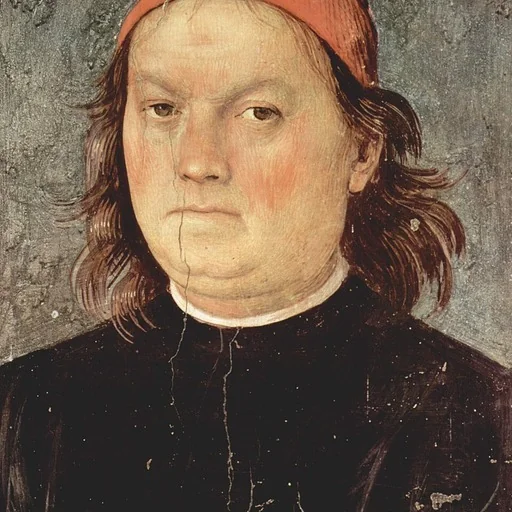
Artist
Pietro Perugino (US: PERR-ə-JEE-noh, -oo-; Italian:; born Pietro Vannucci or Pietro Vanucci; c.

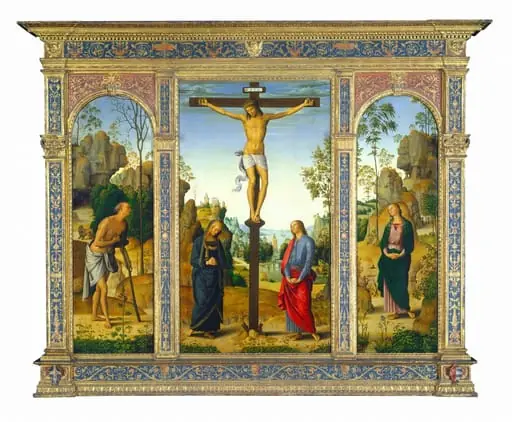 The Crucifixion with the Virgin, Saint John, Saint Jerome, and Saint Mary Magdalene
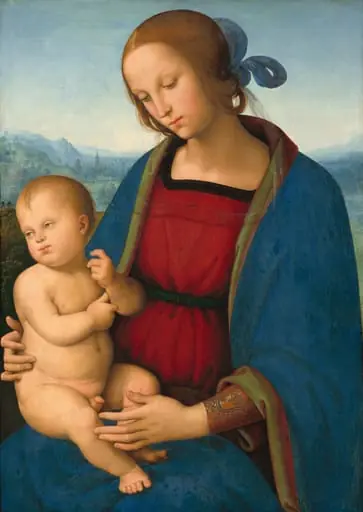 Madonna and Child
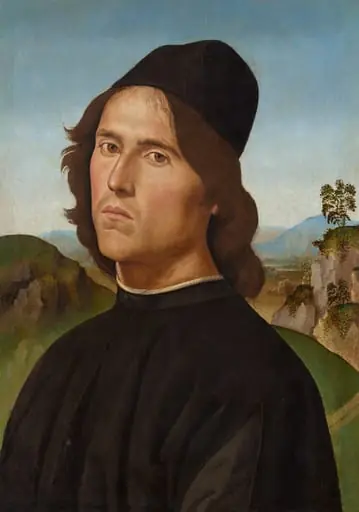 Portrait of Lorenzo di Credi
![The Crucifixion with the Virgin, Saint John, Saint Jerome, and Saint Mary Magdalene [right panel], by Pietro Perugino](https://artifactworldgallery.com/img/pietro-perugino--the-crucifixion-with-the-virgin-saint-john-saint-jerome-and--7d9a2b1f47b9fc9b-w320.webp) The Crucifixion with the Virgin, Saint John, Saint Jerome, and Saint Mary Magdalene [right panel]
The Crucifixion with the Virgin, Saint John, Saint Jerome, and Saint Mary Magdalene [right panel]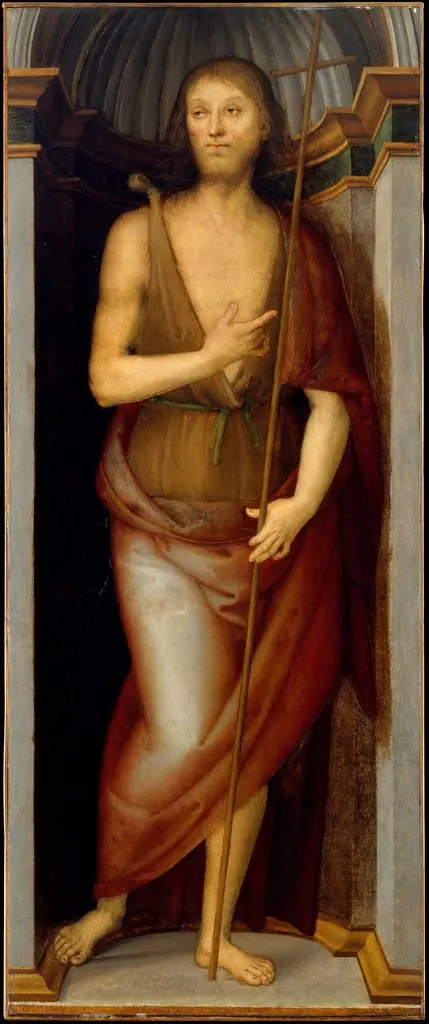 Saint John the Baptist; Saint Lucy
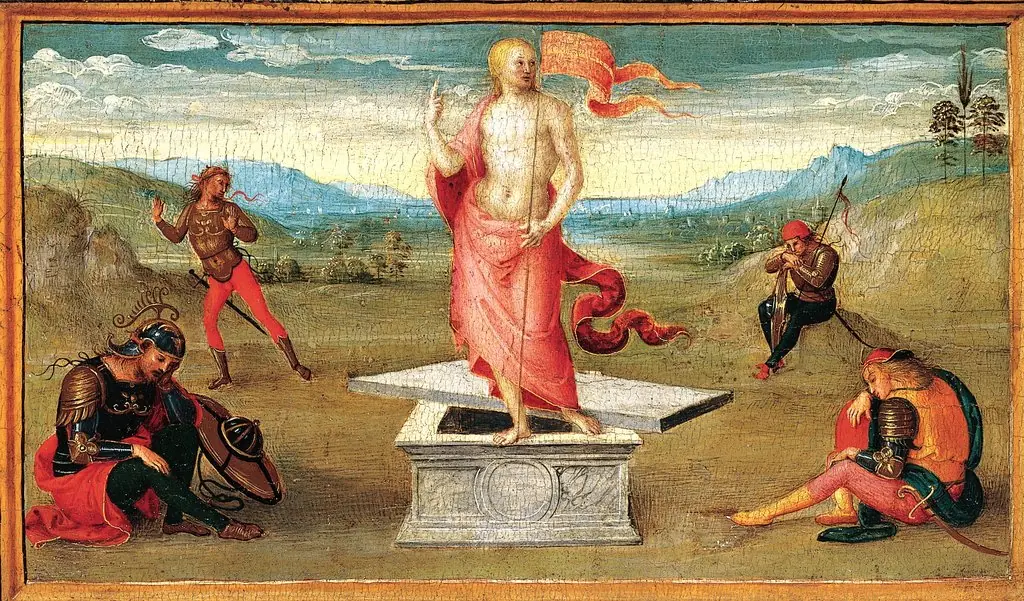 The Resurrection
![The Crucifixion with the Virgin, Saint John, Saint Jerome, and Saint Mary Magdalene [middle panel], by Pietro Perugino](https://artifactworldgallery.com/img/pietro-perugino--the-crucifixion-with-the-virgin-saint-john-saint-jerome-and--a9b4c312771e3f71-w320.webp) The Crucifixion with the Virgin, Saint John, Saint Jerome, and Saint Mary Magdalene [middle panel]
The Crucifixion with the Virgin, Saint John, Saint Jerome, and Saint Mary Magdalene [middle panel]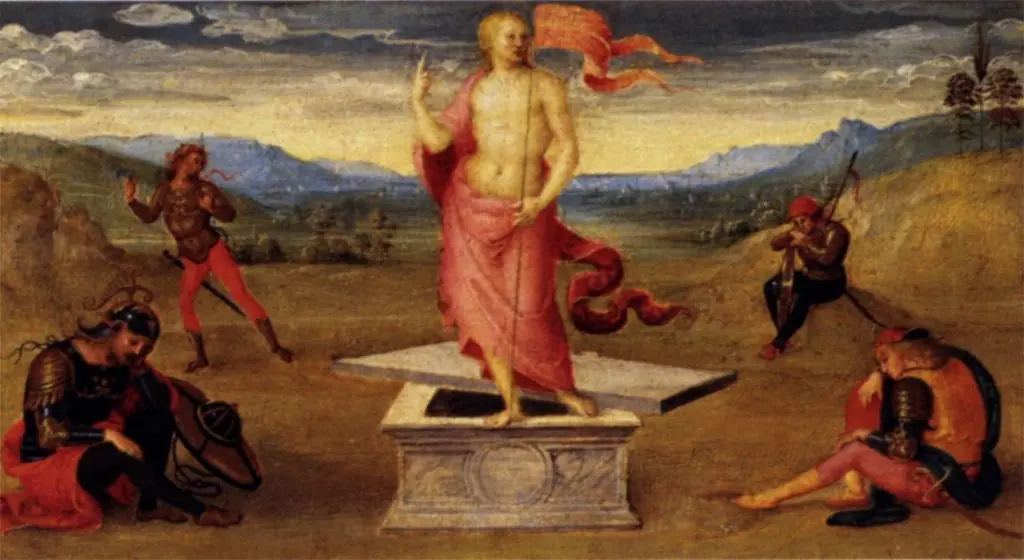 Resurrection of Christ