Artwork
Saint John the Baptist; Saint Lucy
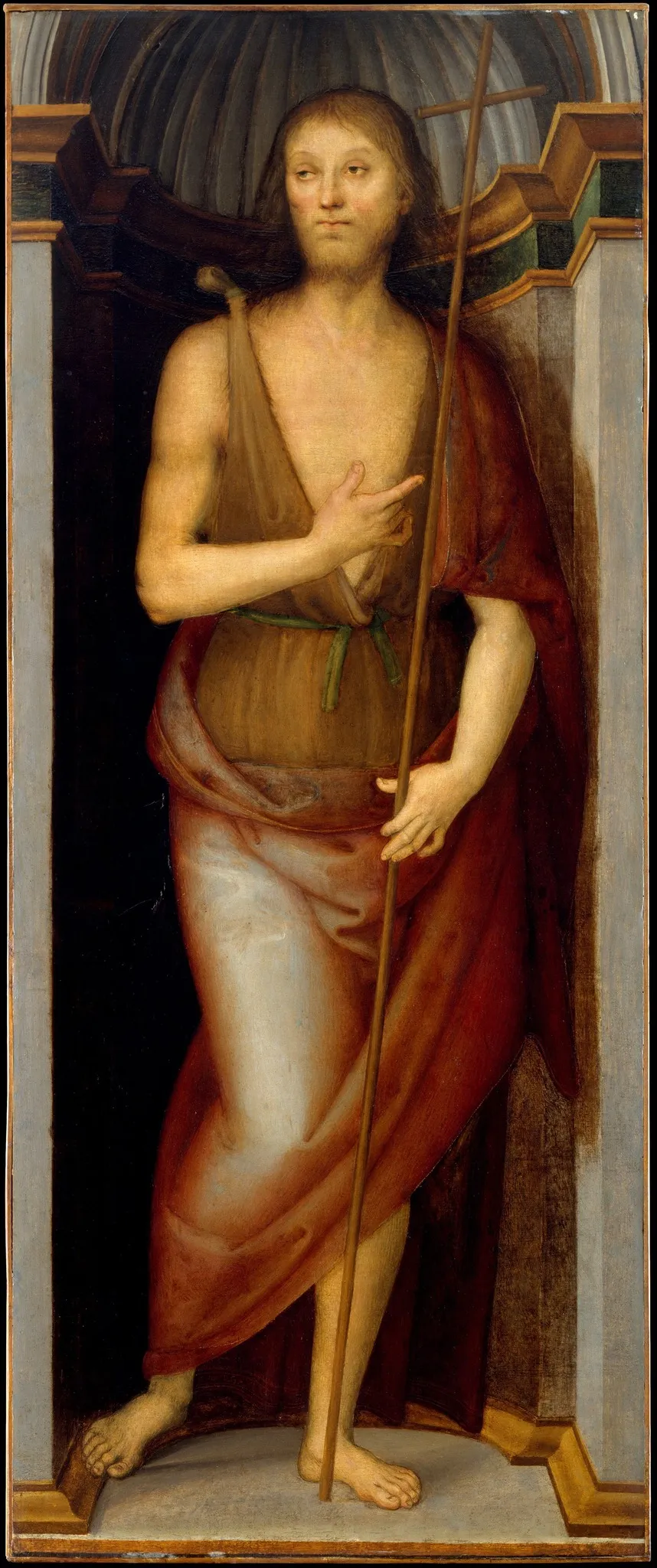
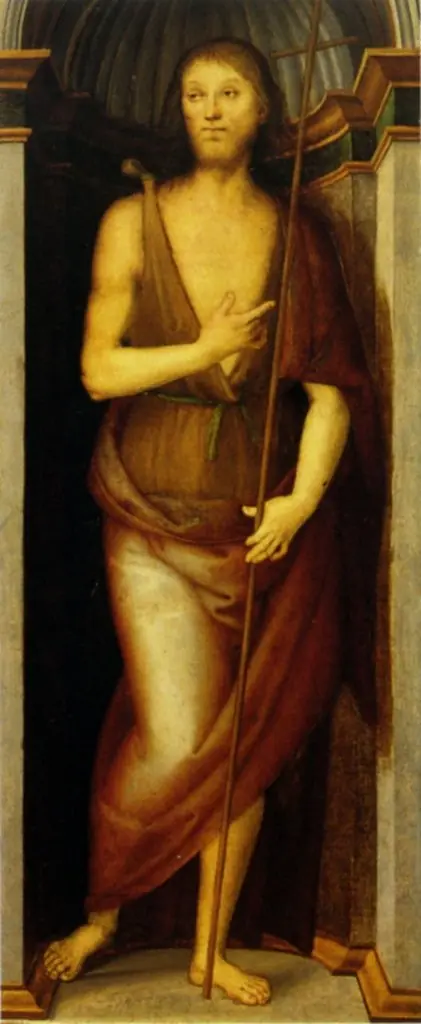
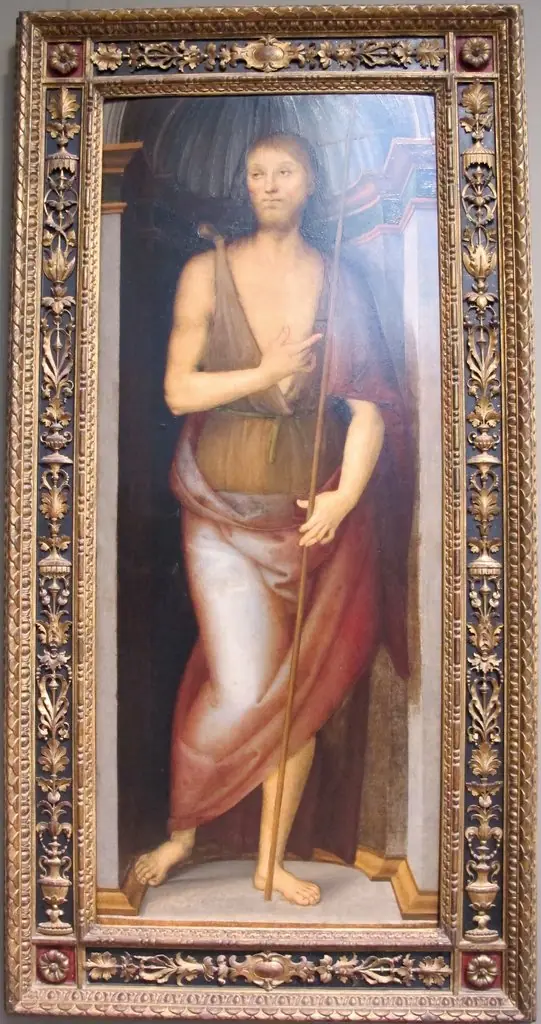
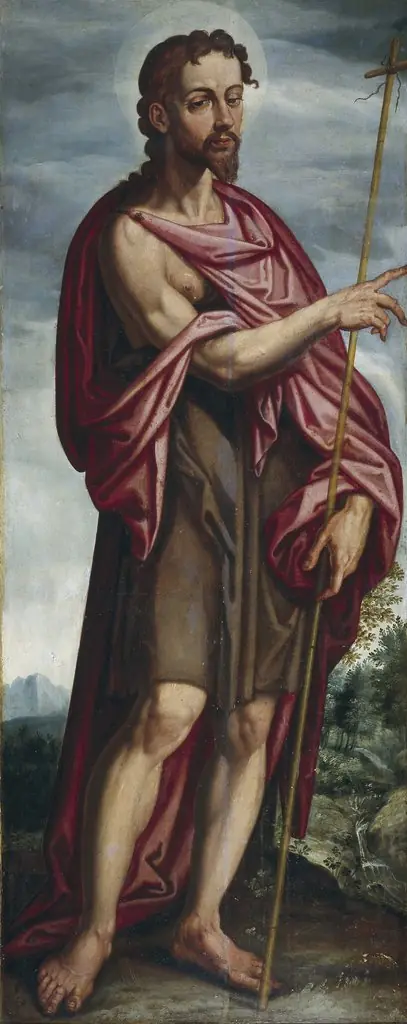
Saint John the Baptist; Saint Lucy is an unspecified painting by the Early Renaissance artist Pietro Perugino. It dates from 1498 and is held in the collection of the Metropolitan Museum of Art.
About this work
Subject & Meaning
The work belongs to the genre of religious art and serves as an object of devotional contemplation, presenting the two figures as intercessors for the viewer.
The painting depicts two Christian saints venerated in late medieval and Renaissance devotion. Saint John the Baptist, shown as a male figure, is traditionally associated with baptism, penance, and prophecy, and is often identified iconographically by attributes such as a camel-hair garment, a reed cross, or a baptismal bowl. Saint Lucy, shown as a female figure, is the patron saint of vision and light and is commonly identified by her eyes, often presented on a platter, or by a dagger referencing her martyrdom.
The pairing of John the Baptist and Saint Lucy in a single devotional panel reflects the Renaissance practice of uniting saints whose intercession addressed complementary spiritual needs, spiritual illumination through John's call to repentance and physical and spiritual sight through Lucy's patronage. The work belongs to the genre of religious art and serves as an object of devotional contemplation, presenting the two figures as intercessors for the viewer.
Technique & Style
The work titled Saint John the Baptist; Saint Lucy is a 1496 painting executed by Pietro Perugino. It is classified as a religious painting and originally belongs to the collection of the Metropolitan Museum of Art in Manhattan, where it remains on display. The composition portrays the two saints, John the Baptist and Saint Lucy, in a traditional iconography typical of late fifteenth‑century Italian devotional art.
The painting measures roughly 160 by 67 (units as recorded in the museum’s catalogue), indicating a relatively narrow format suited to panel execution. Its formal qualities reflect the stylistic conventions of Perugino’s early period, emphasizing clarity of line and balanced spatial arrangement.
History & Provenance
The painting titled "Saint John the Baptist; Saint Lucy" was created by Pietro Perugino in 1496, as recorded in the work’s catalog entry and confirmed by its metadata. Executed as an oil on panel, it measures approximately 160 cm in height by 67 cm in width and depicts the two saints in a religious composition. The artwork has been part of the Metropolitan Museum of Art’s collection in New York since its acquisition, forming the core of its provenance.
Its creation is situated within the late‑15th‑century Italian Renaissance, reflecting Perugino’s mature style and the devotional preferences of the period.
The painting Saint John the Baptist; Saint Lucy by Pietro Perugino is housed in the Metropolitan Museum of Art in New York. It entered the museum's collection at an undocumented date, and no accession number is listed in the available catalog entries. The work is recorded as having been created in 1496, with dimensions of 160 cm by 67 cm. Exhibition records referenced in the sources do not specify any prior public displays, indicating that its exhibition history is not documented in the provided documentation.
Overview
Pietro Perugino's Saint John the Baptist; Saint Lucy, painted in 1498, is an Early Renaissance religious panel. This work exemplifies the period's focus on balanced compositions and refined figural representation. It depicts the two titular saints within an architectural setting.
The painting is part of the collection at The Metropolitan Museum of Art, offering insight into Umbrian artistic traditions at the close of the 15th century.
Context
As a prominent figure of the Umbrian school, Pietro Perugino played a significant role in shaping the artistic landscape of his time. His refined style and compositional innovations contributed to the stylistic foundations that would characterize the High Renaissance. Notably, Perugino's workshop nurtured the talent of Raphael, who would later emerge as one of the most influential artists of the period, carrying forward and transforming many of his master's principles.
Artist & collection
Artist
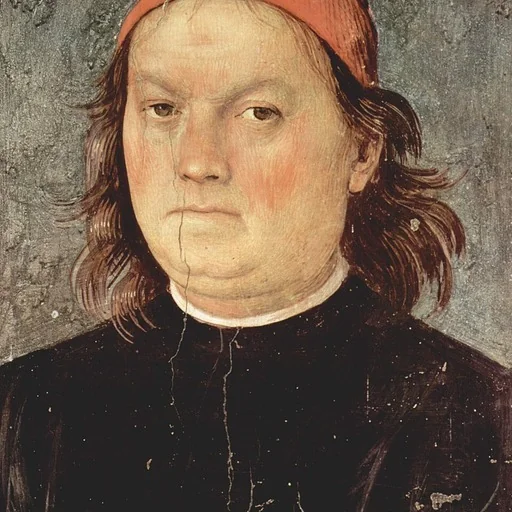
Pietro Perugino (US: PERR-ə-JEE-noh, -oo-; Italian:; born Pietro Vannucci or Pietro Vanucci; c.

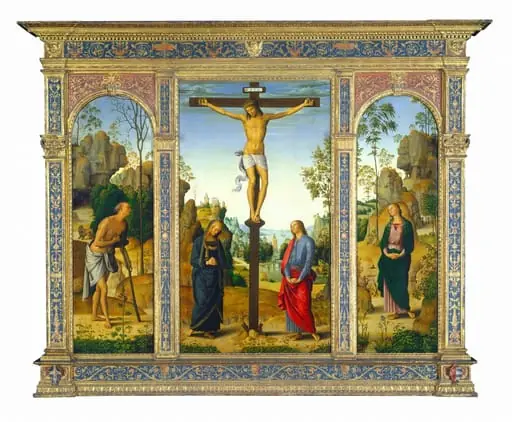 The Crucifixion with the Virgin, Saint John, Saint Jerome, and Saint Mary Magdalene
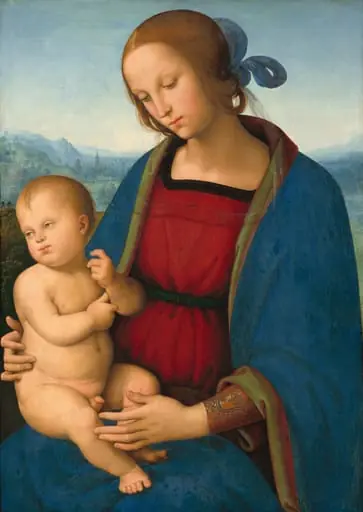 Madonna and Child
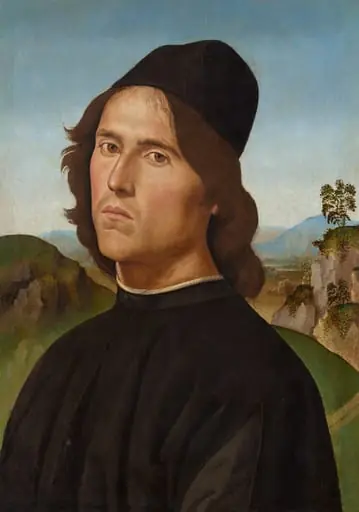 Portrait of Lorenzo di Credi
![The Crucifixion with the Virgin, Saint John, Saint Jerome, and Saint Mary Magdalene [right panel], by Pietro Perugino](https://artifactworldgallery.com/img/pietro-perugino--the-crucifixion-with-the-virgin-saint-john-saint-jerome-and--7d9a2b1f47b9fc9b-w320.webp) The Crucifixion with the Virgin, Saint John, Saint Jerome, and Saint Mary Magdalene [right panel]
The Crucifixion with the Virgin, Saint John, Saint Jerome, and Saint Mary Magdalene [right panel]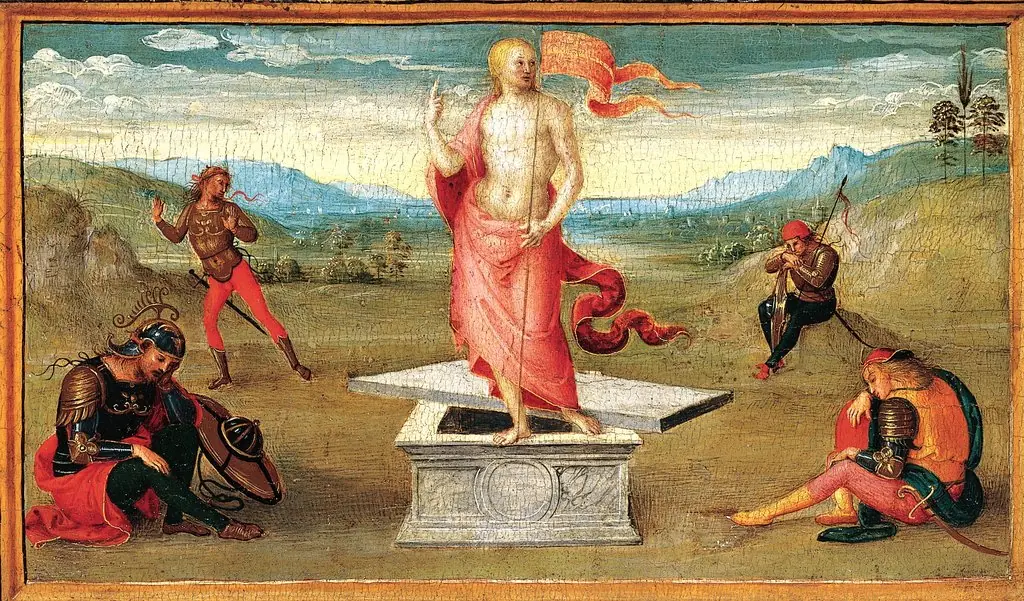 The Resurrection
![The Crucifixion with the Virgin, Saint John, Saint Jerome, and Saint Mary Magdalene [left panel], by Pietro Perugino](https://artifactworldgallery.com/img/pietro-perugino--the-crucifixion-with-the-virgin-saint-john-saint-jerome-and--1017dec17318baa5-w320.webp) The Crucifixion with the Virgin, Saint John, Saint Jerome, and Saint Mary Magdalene [left panel]
The Crucifixion with the Virgin, Saint John, Saint Jerome, and Saint Mary Magdalene [left panel]![The Crucifixion with the Virgin, Saint John, Saint Jerome, and Saint Mary Magdalene [middle panel], by Pietro Perugino](https://artifactworldgallery.com/img/pietro-perugino--the-crucifixion-with-the-virgin-saint-john-saint-jerome-and--a9b4c312771e3f71-w320.webp) The Crucifixion with the Virgin, Saint John, Saint Jerome, and Saint Mary Magdalene [middle panel]
The Crucifixion with the Virgin, Saint John, Saint Jerome, and Saint Mary Magdalene [middle panel]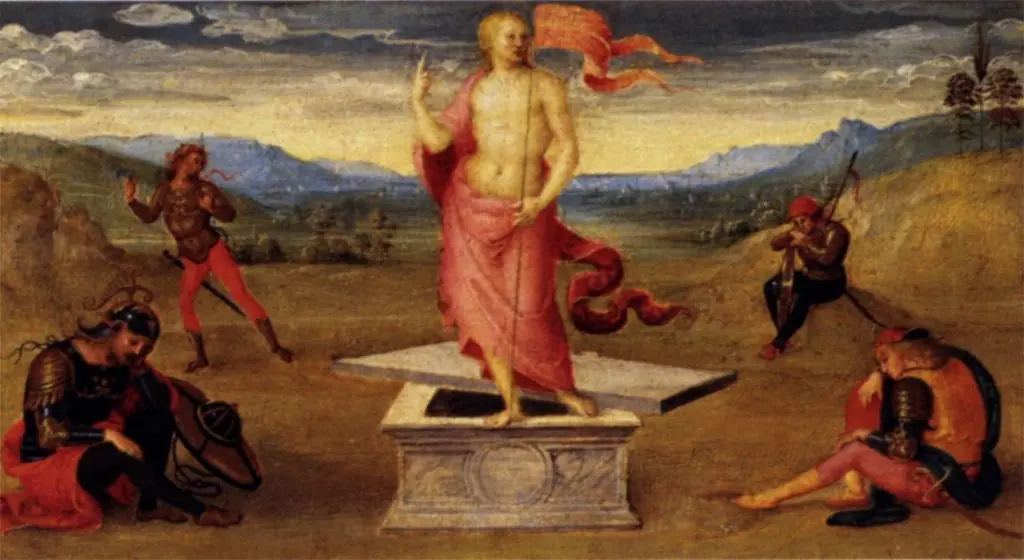 Resurrection of Christ