Artwork
Portrait of Lorenzo di Credi
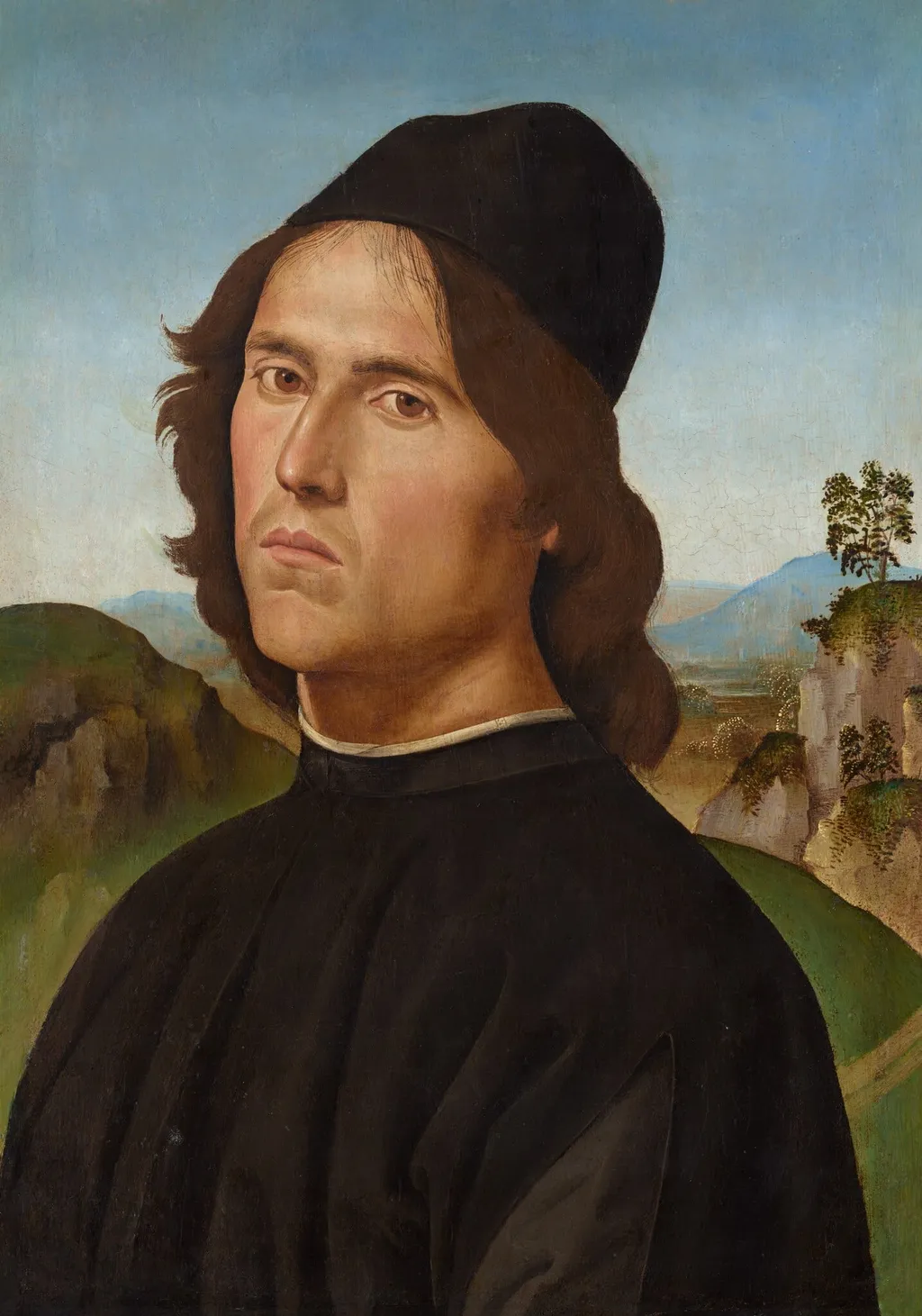
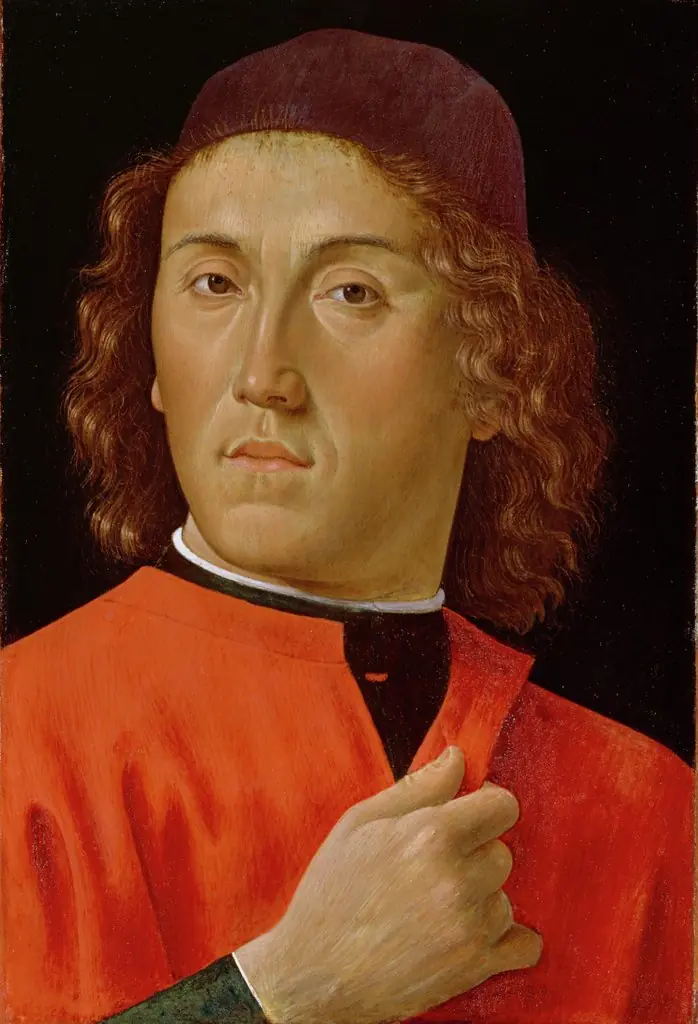
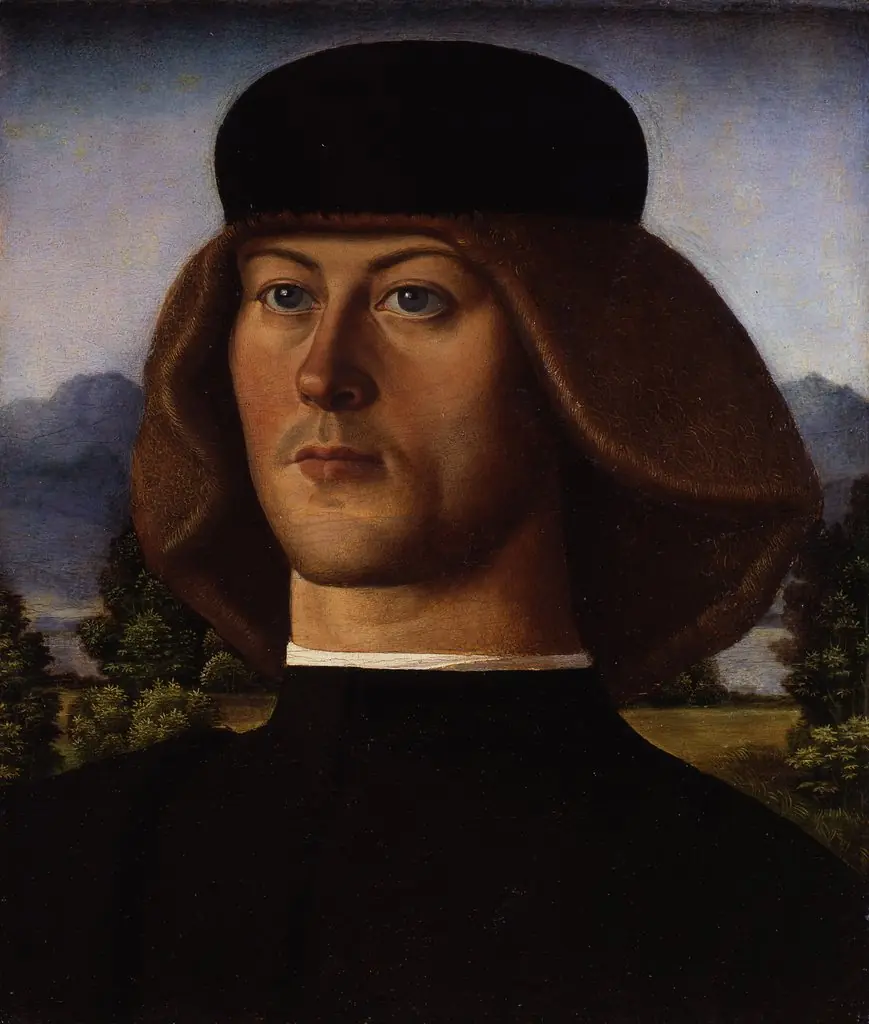
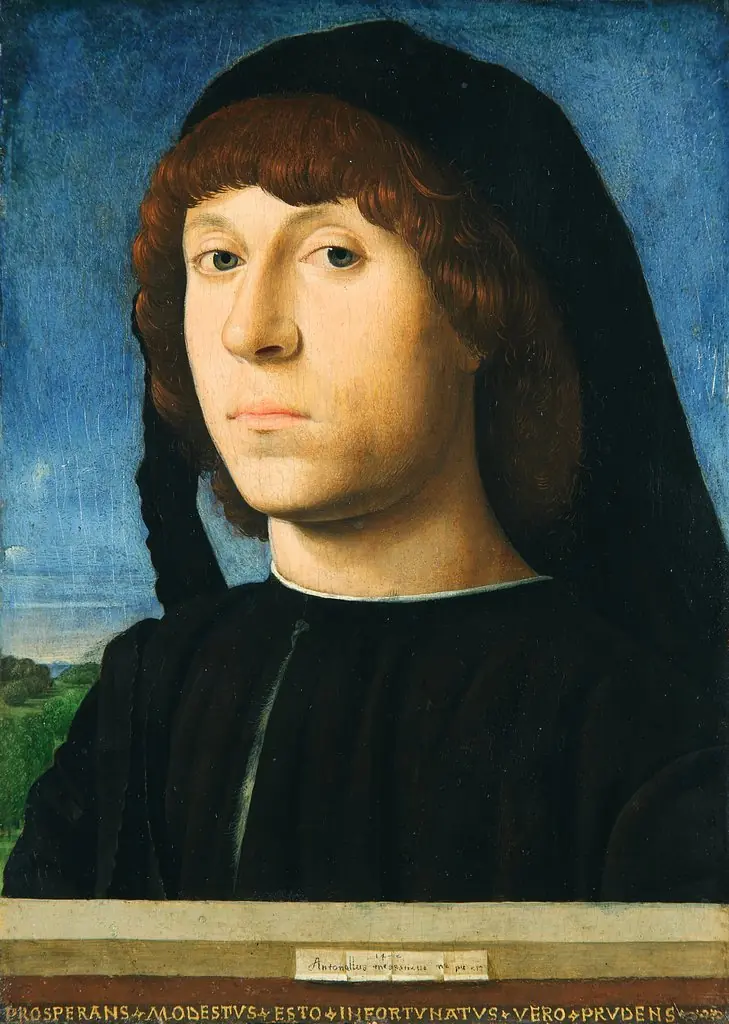
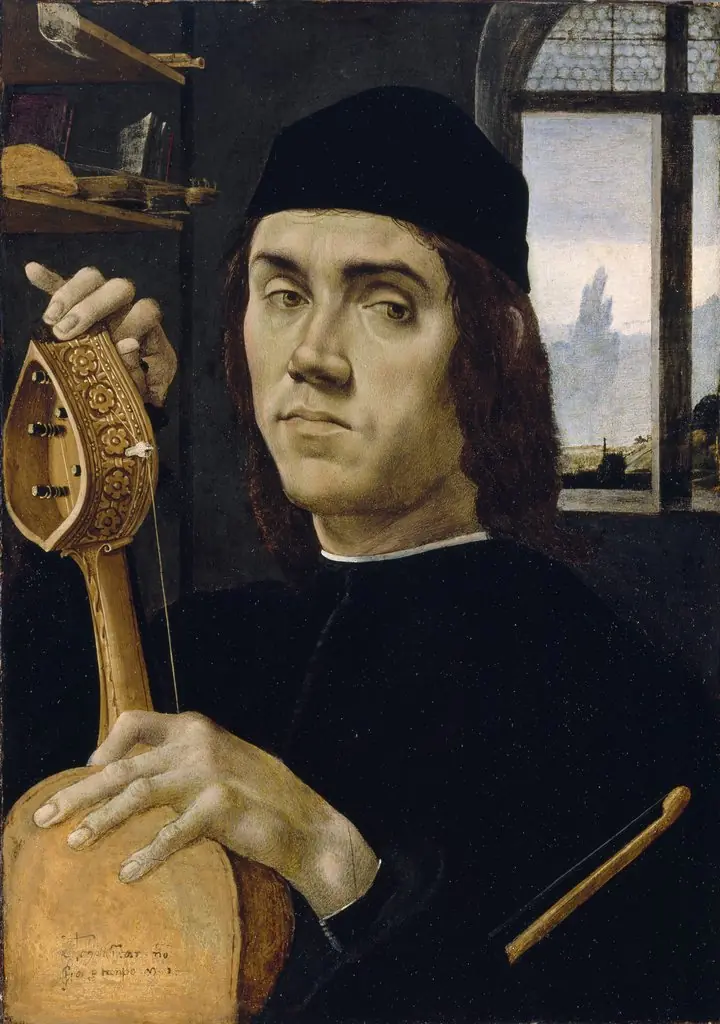
Portrait of Lorenzo di Credi is an oil painting by the Early Renaissance artist Pietro Perugino. It dates from 1488 and is held in the collection of the National Gallery of Art.
- Inscription
- Inscribed:by later hand, on reverse, preserved from original panel, now lost: LORENZO DI Credi Pittore eccmo MCCCCLXXXVIII AETATIS SVE XXXII ME VIII (Lorenzo di Credi, most excellent painter, 1488, age 32 years, 8 months)
About this work
A man sits calmly in a landscape, dressed in simple clothes, his face and clothing rendered in fine detail. He is Lorenzo di Credi, himself a painter and a friend of Perugino, who painted this portrait in 1488. It may have been a gesture of that friendship.
Subject & Meaning
The portrait depicts Lorenzo di Credi, a Florentine painter and former workshop companion of Perugino under Andrea del Verrocchio.
The portrait depicts Lorenzo di Credi, a Florentine painter and former workshop companion of Perugino under Andrea del Verrocchio. He is shown in three-quarter view against a rocky, hilly landscape, wearing a black beret and tunic with a white collar. An inscription, probably added in the 16th century, identifies him and records his age as 32 years and 8 months in 1488.
The sitter's melancholic expression and somber black attire are generally interpreted as references to the death of Verrocchio in that same year, for whom Lorenzo is known to have retrieved the remains from Venice. The work thus functions not only as a formal portrait but also as a commemoration tinged with mourning, reflecting the personal and professional bond between the two artists.
Technique & Style
Executed in oil on panel and later transferred to canvas, the portrait measures 44 × 30.5 cm. The wooden support once bore a 16th-century inscription identifying the sitter, but that inscribed section has since been lost. Stylistically, Perugino’s handling is distinguished by strong contrasts in the color planes and disheveled hair, in deliberate contrast to Lorenzo di Credi’s smoother, more blended approach. The sitter is shown in three-quarter view against a rocky, hilly landscape that recedes through atmospheric perspective.
The backward tilt of the head and the serious, melancholic expression, possibly referencing the recent death of their shared master Verrocchio, heighten the portrait’s psychological intensity. Sharp facial articulation and crisp contours align with Perugino’s early portraiture.
History & Provenance
The portrait was created in 1488, originally on a wooden panel that bore a 16th-century inscription identifying the sitter as Lorenzo di Credi and giving his age as 32 years 8 months. Long thought to be a self-portrait, stylistic analysis has attributed the work to Perugino. The provenance begins in private Florentine collections, likely until the mid-18th century, and possibly passed through a Roman collection before 1895.
It was owned by William Beattie of Glasgow by 1901, then sold through Arthur J. Sulley & Co. to Peter A.B. Widener in 1911. After inheritance by Joseph E. Widener, it was gifted to the National Gallery of Art in 1942. The medium is oil on panel, later transferred to canvas.
The Portrait of Lorenzo di Credi is held in the collection of the National Gallery of Art (NGA) in Washington, D.C. It entered the museum in 1942 as a gift from Joseph E. Widener, transferred through the estate of Peter A.B. Widener. Prior to this, the painting was sold to Peter A.B. Widener in 1911 by Arthur J. Sulley & Co. of London. Earlier still, it belonged to William Beattie of Glasgow, who lent it to an exhibition in London in 1901.
The painting's earlier provenance includes probable private collections in Florence and a possible Roman collection. The accession number is not specified in the available sources, but the accession year is recorded as 1942.
Context
Long considered a self-portrait by Lorenzo di Credi due to a now-lost 16th-century inscription, the work was reattributed to Perugino in the 20th century based on stylistic affinities with his Portrait of Francesco delle Opere (Uffizi). Scholars note the handling of the jaw, pronounced chiaroscuro, and ruffled hair as characteristic of Perugino's early manner, contrasting with the smoother, Leonardo-esque style of Lorenzo di Credi. The melancholic expression and black attire are often linked to the 1488 death of their shared master, Andrea del Verrocchio, whom Lorenzo had accompanied to Venice.
The portrait exemplifies Perugino's gift for physiognomic and psychological intensity within the Early Renaissance Umbrian school, placing it within the broader circle of Verrocchio's pupils that included Leonardo da Vinci.
Overview
Perugino, an Italian Renaissance painter, created the Portrait of Lorenzo di Credi around 1504. This oil painting, originally on panel and later transferred to canvas, is currently held in the collection of the National Gallery of Art in Washington, DC. It captures a specific individual, reflecting the period's interest in portraiture and personal connections within artistic circles.
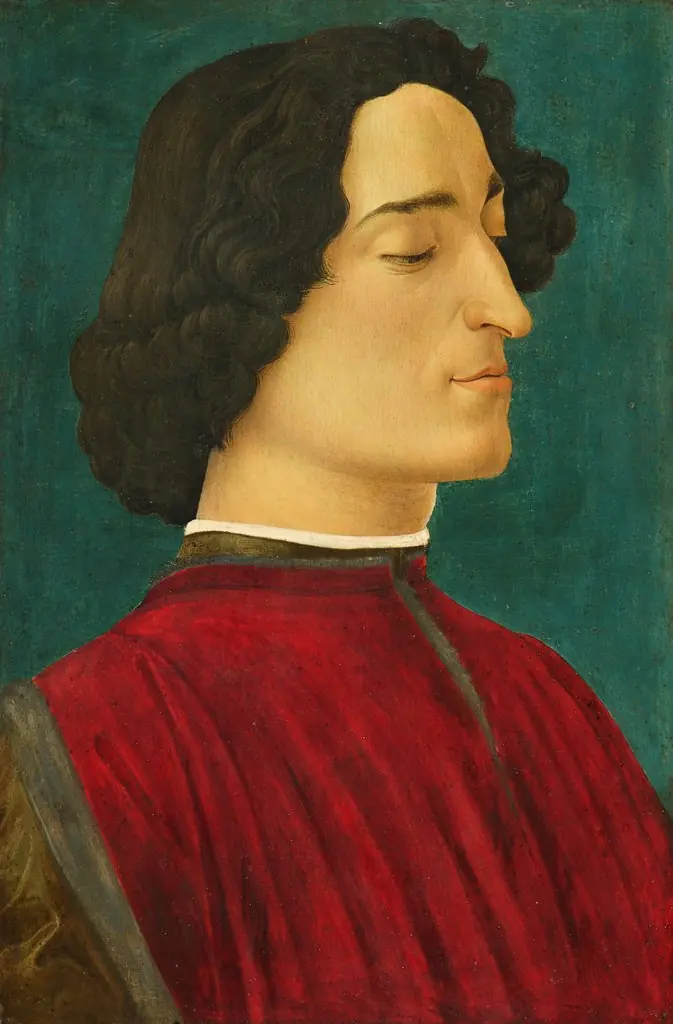
Own this work as a print
Artist & collection
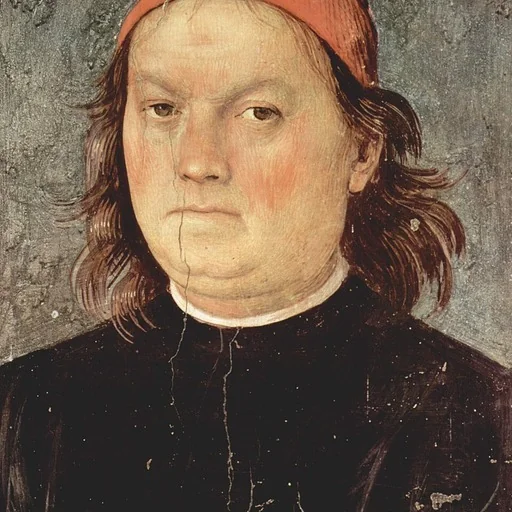
Artist
Pietro Perugino (US: PERR-ə-JEE-noh, -oo-; Italian:; born Pietro Vannucci or Pietro Vanucci; c.

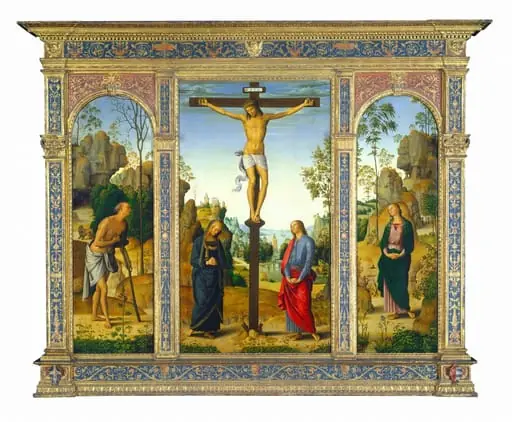 The Crucifixion with the Virgin, Saint John, Saint Jerome, and Saint Mary Magdalene
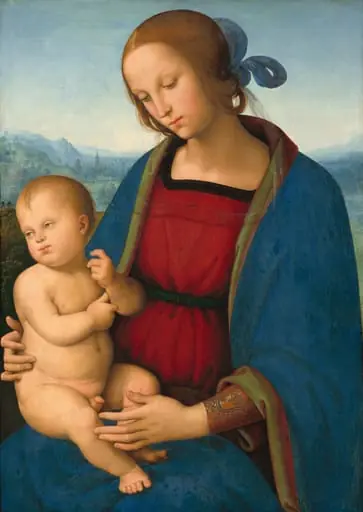 Madonna and Child
![The Crucifixion with the Virgin, Saint John, Saint Jerome, and Saint Mary Magdalene [right panel], by Pietro Perugino](https://artifactworldgallery.com/img/pietro-perugino--the-crucifixion-with-the-virgin-saint-john-saint-jerome-and--7d9a2b1f47b9fc9b-w320.webp) The Crucifixion with the Virgin, Saint John, Saint Jerome, and Saint Mary Magdalene [right panel]
The Crucifixion with the Virgin, Saint John, Saint Jerome, and Saint Mary Magdalene [right panel]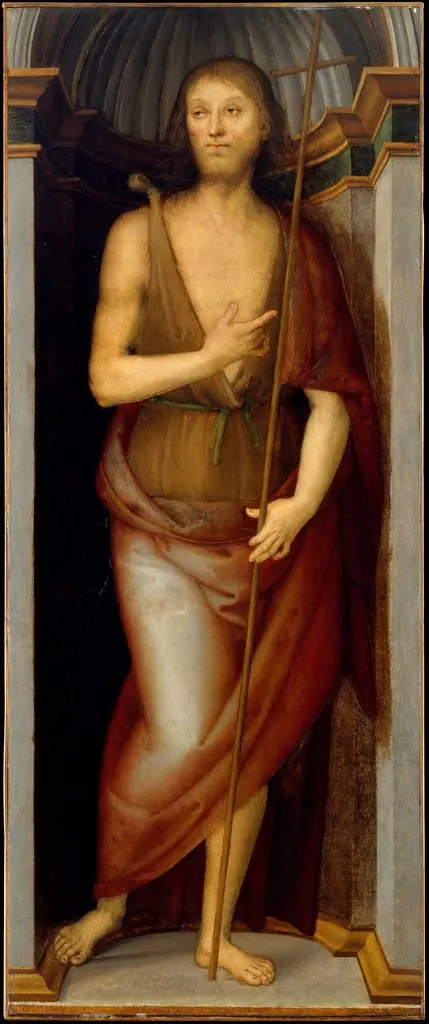 Saint John the Baptist; Saint Lucy
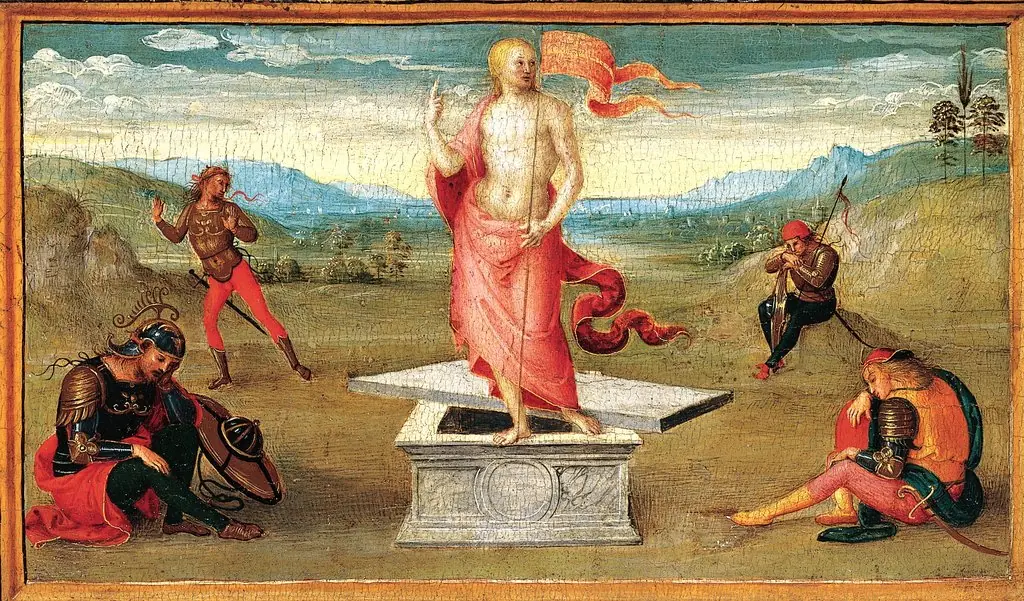 The Resurrection
![The Crucifixion with the Virgin, Saint John, Saint Jerome, and Saint Mary Magdalene [left panel], by Pietro Perugino](https://artifactworldgallery.com/img/pietro-perugino--the-crucifixion-with-the-virgin-saint-john-saint-jerome-and--1017dec17318baa5-w320.webp) The Crucifixion with the Virgin, Saint John, Saint Jerome, and Saint Mary Magdalene [left panel]
The Crucifixion with the Virgin, Saint John, Saint Jerome, and Saint Mary Magdalene [left panel]![The Crucifixion with the Virgin, Saint John, Saint Jerome, and Saint Mary Magdalene [middle panel], by Pietro Perugino](https://artifactworldgallery.com/img/pietro-perugino--the-crucifixion-with-the-virgin-saint-john-saint-jerome-and--a9b4c312771e3f71-w320.webp) The Crucifixion with the Virgin, Saint John, Saint Jerome, and Saint Mary Magdalene [middle panel]
The Crucifixion with the Virgin, Saint John, Saint Jerome, and Saint Mary Magdalene [middle panel]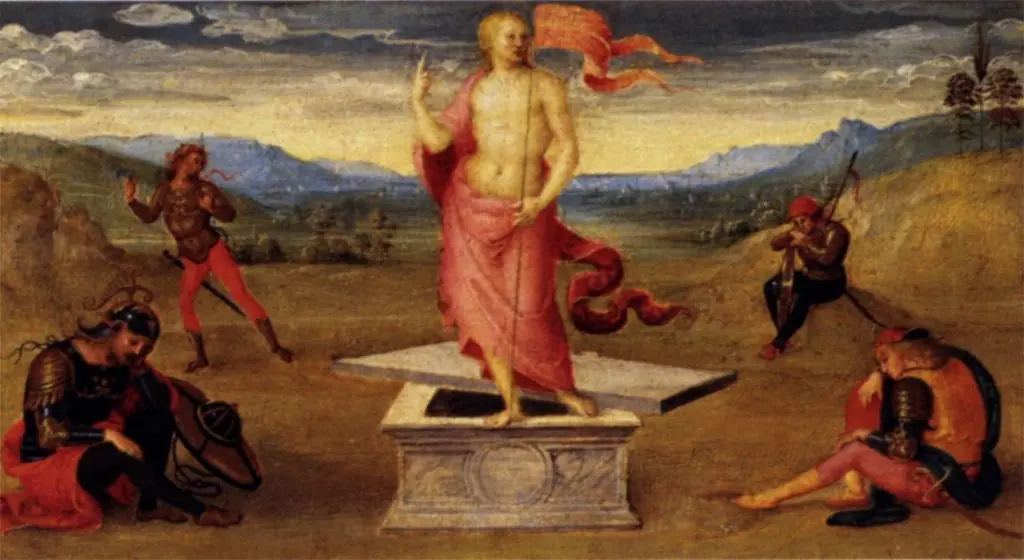 Resurrection of Christ