Artwork
A Faun Grasping a Bunch of Grapes
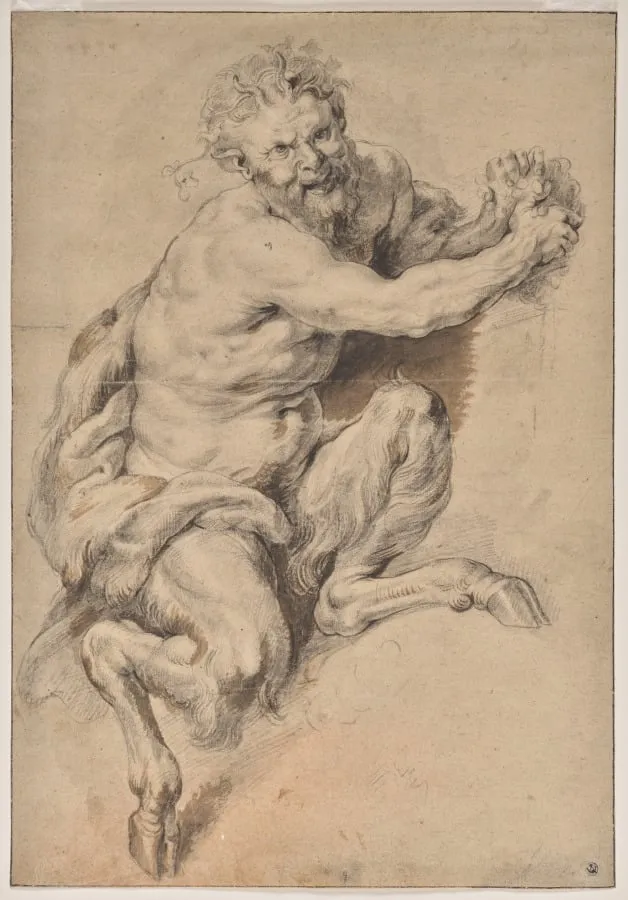
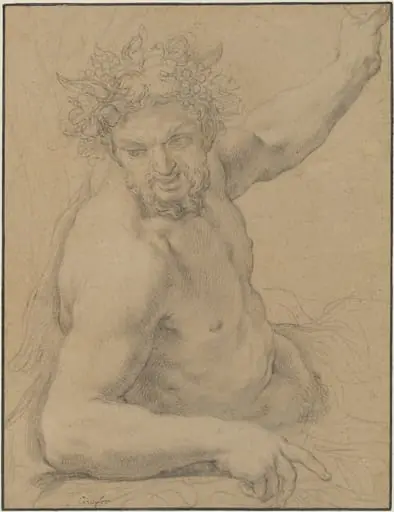
A Faun Grasping a Bunch of Grapes is a drawing by the Baroque artist Peter Paul Rubens. It dates from 1617 and is held in the collection of the Cleveland Museum of Art.
- Accession no.
- 1943.341
- Credit line
- Purchase from the J. H. Wade Fund
About this work
Overview
A Faun Grasping a Bunch of Grapes is a drawing related to a lost painting by Peter Paul Rubens, depicting a mythological scene.
Subject & Meaning
The drawing shows a faun, a woodland creature with goat-like features, squeezing grapes into the mouth of a youthful figure, possibly Silenus or Bacchus, highlighting the theme of wine and revelry.
Technique & Style
The drawing demonstrates the use of ink wash to create shading and depth, with Rubens adding darker tones to enhance the figure's form and the surrounding shadows, exemplifying the chiaroscuro technique.
History & Provenance
The drawing was likely created by one of Rubens' students as a copy of the original lost painting, with Rubens subsequently adding ink wash to instruct the student on rendering light and shadow.
Artist & collection
Artist
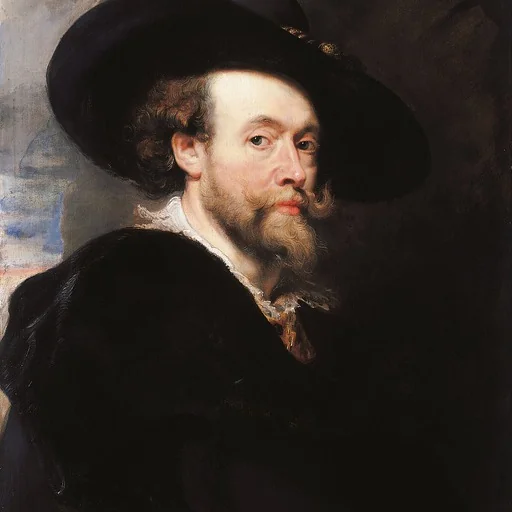
Sir Peter Paul Rubens ( ROO-bənz; Dutch:; 28 June 1577 – 30 May 1640) was a Flemish artist and diplomat.

 Faun Reclining
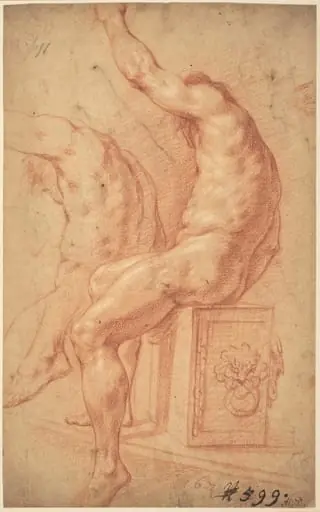 A Seated Nude
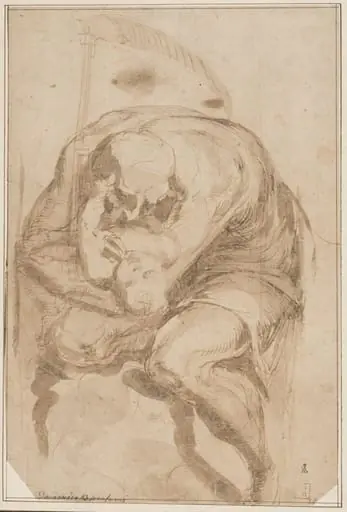 Saturn Devouring his Child
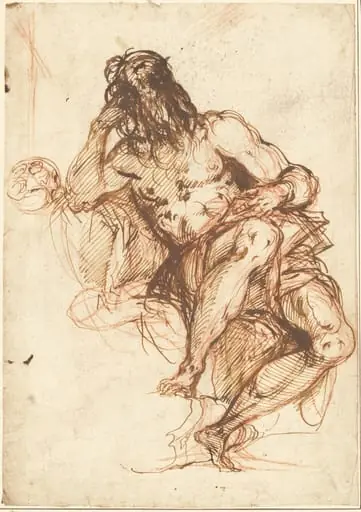 Saint Jerome
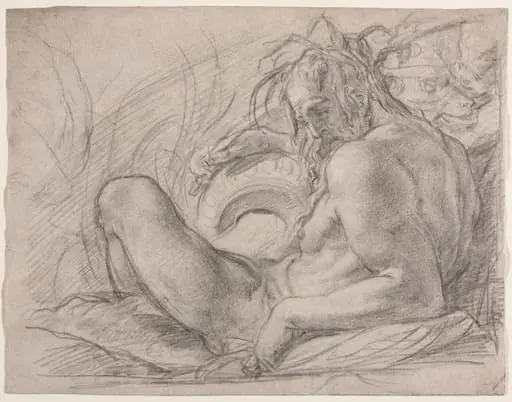 The River God Tiber (Study for a fresco, Miracle of the Snow, or the Foundation of Santa Maria Maggiore, Rome in the Canigiani chapel of S. Felicita, Florence)
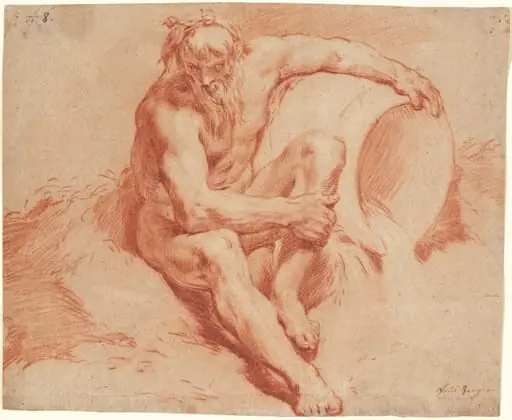 River God
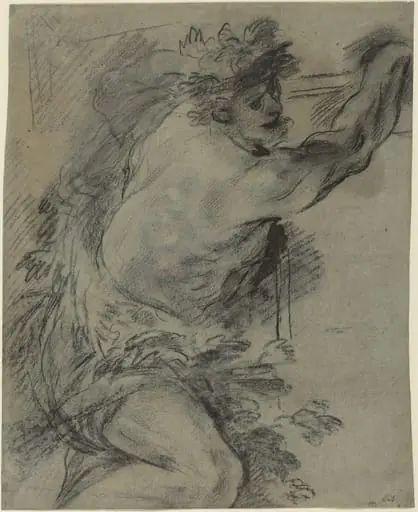 Bacchus
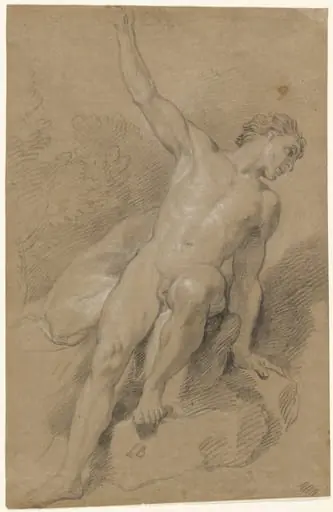 Male Nude Seated on Rocks
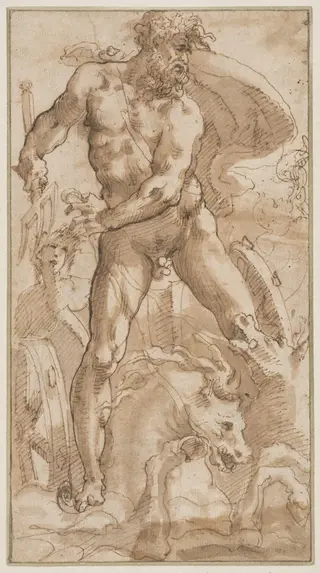 Untitled
![A Man Seen from Behind [recto], by Taddeo Zuccaro](https://artifactworldgallery.com/img/taddeo-zuccaro--a-man-seen-from-behind-recto--aa5baa2752dbdfca-w320.webp) A Man Seen from Behind [recto]
A Man Seen from Behind [recto]![Nude Man Seen from Behind [verso], by Palma il Giovane](https://artifactworldgallery.com/img/palma-il-giovane--nude-man-seen-from-behind-verso--2de266ff199c839b-w320.webp) Nude Man Seen from Behind [verso]
Nude Man Seen from Behind [verso]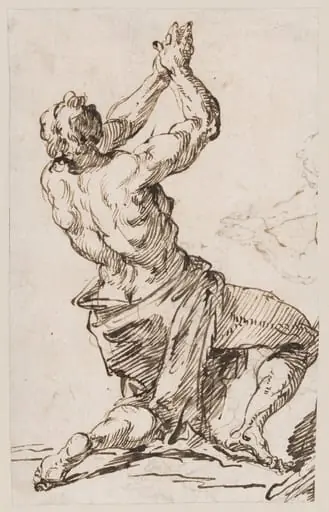 a) Study of a Man Kneeling, Looking Upward (recto); b) Studies of the Same Figure (verso)