Artwork
The Meeting of Abraham and Melchizedek
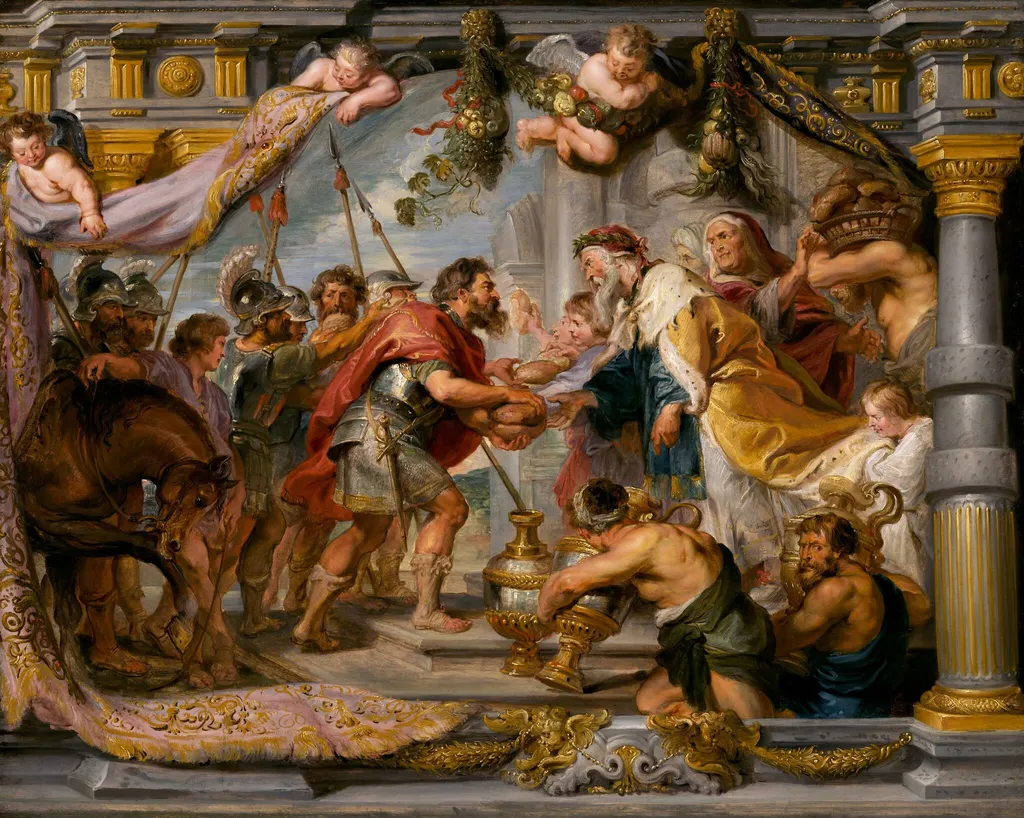
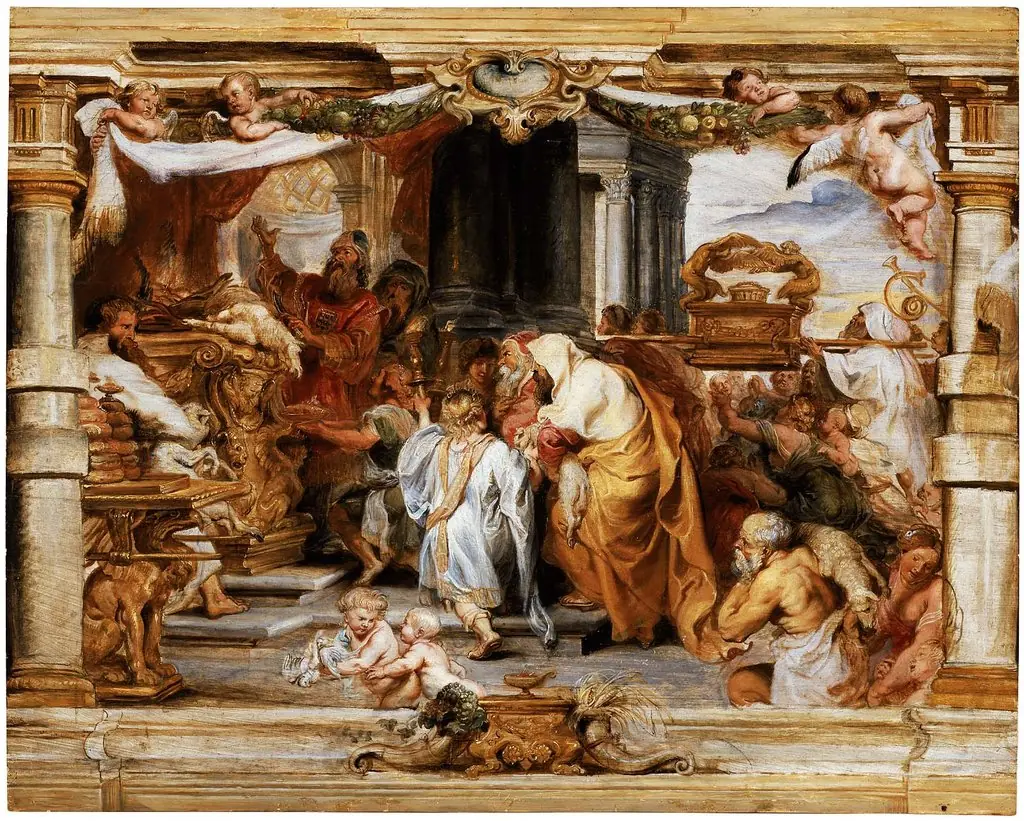
The Meeting of Abraham and Melchizedek is an oil painting by the Baroque artist Peter Paul Rubens. It dates from 1626 and is held in the collection of the National Gallery of Art.
About this work
Technique & Style
Peter Paul Rubens executed The Meeting of Abraham and Melchizedek in 1625 using oil paint on a wooden panel.
Peter Paul Rubens executed The Meeting of Abraham and Melchizedek in 1625 using oil paint on a wooden panel. The artwork measures 65.5 cm in height and 82.4 cm in width. As a religious painting, the work focuses on the biblical encounter between Abraham and Melchizedek, utilizing Rubens's characteristic medium and support to render the narrative. The piece is currently held in the collection of the National Gallery of Art in Washington, D.C.
History & Provenance
The Meeting of Abraham and Melchizedek was painted by Peter Paul Rubens in 1625 as an oil on panel. Its earliest recorded location is the Palacio Nuevo in Madrid, a fact first noted in the 1885 catalogue of Thomas G. Baring and repeated in later exhibition histories. The work then passed through several Parisian and Brussels collections, appearing in the estates of Jean de Jullienne (by 1753) and J.B. Horion, before entering the possession of Lady Stuart by 1830.
After her 1841 Christie’s sale it was acquired by Sir Thomas Baring, 2nd baronet, and remained in the Baring family, descending to Thomas George Baring, 1st Earl of Northbrook, then to his son Francis George Baring, 2nd Earl, who sold it to P. & D. Colnaghi in 1929. Subsequent owners included Walter J. Stoye (1936) and the Carstairs Gallery, which sold it to the National Gallery of Art in 1958 using funds from Syma Busiel.
The painting is currently held in the collection of the National Gallery of Art in Washington, D.C. It was acquired by the museum in 1958, purchased from the Carstairs Gallery of New York using funds provided by Syma Busiel following its sale at Sotheby's in London earlier that year. Prior to entering the national collection, the work passed through the estates of the Baring family, specifically Thomas Baring, 1st Earl of Northbrook, and his successors, before being sold to dealers P. & D. Colnaghi in 1929 and later to private owners Walter J. Stoye and his wife in 1936. Historical records indicate the painting was featured in exhibition catalogues in 1899, 1938, and 1953, during which time its earlier provenance linking it to the Palacio Nuevo in Madrid was noted.
Overview
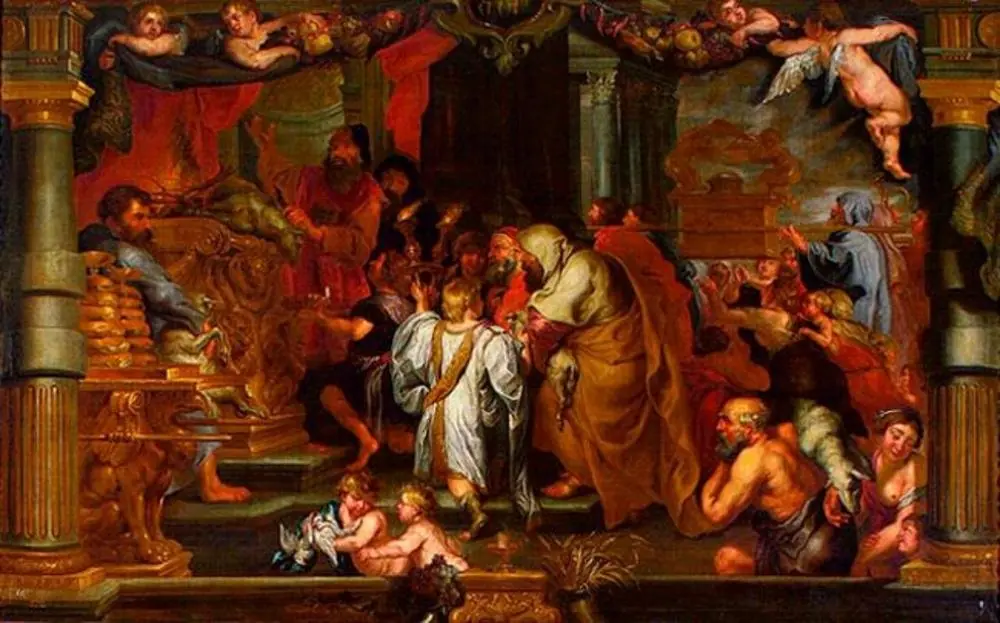
Peter Paul Rubens's painting, "The Meeting of Abraham and Melchizedek," is an oil on panel work depicting a dramatic biblical encounter. It shows two figures in ancient attire on stone steps, with one kneeling and the other standing. The composition is characterized by vibrant reds and golds, creating a dynamic visual effect that suggests a theatrical presentation of this significant event.
Subject & Meaning
The painting illustrates a pivotal moment from the Old Testament, where Abraham encounters Melchizedek, a priest-king. This meeting is often interpreted as a prefiguration of the Eucharist in Christian theology. Rubens emphasizes the gravitas of the event through the figures' poses and the overall solemn yet grand atmosphere, highlighting the spiritual importance of the exchange between the two men.
Own this work as a print
Artist & collection
Artist
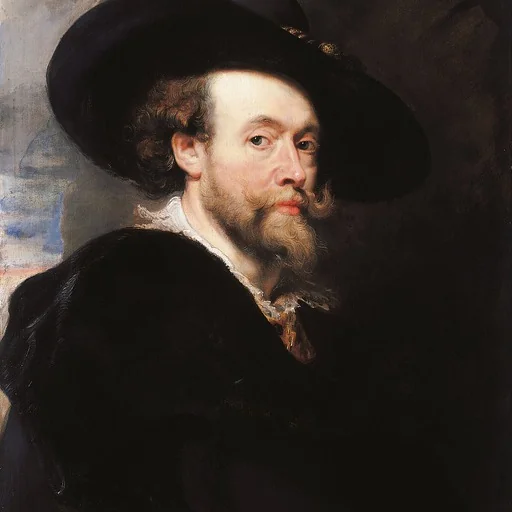
Sir Peter Paul Rubens ( ROO-bənz; Dutch:; 28 June 1577 – 30 May 1640) was a Flemish artist and diplomat.