Artwork
La Promenade
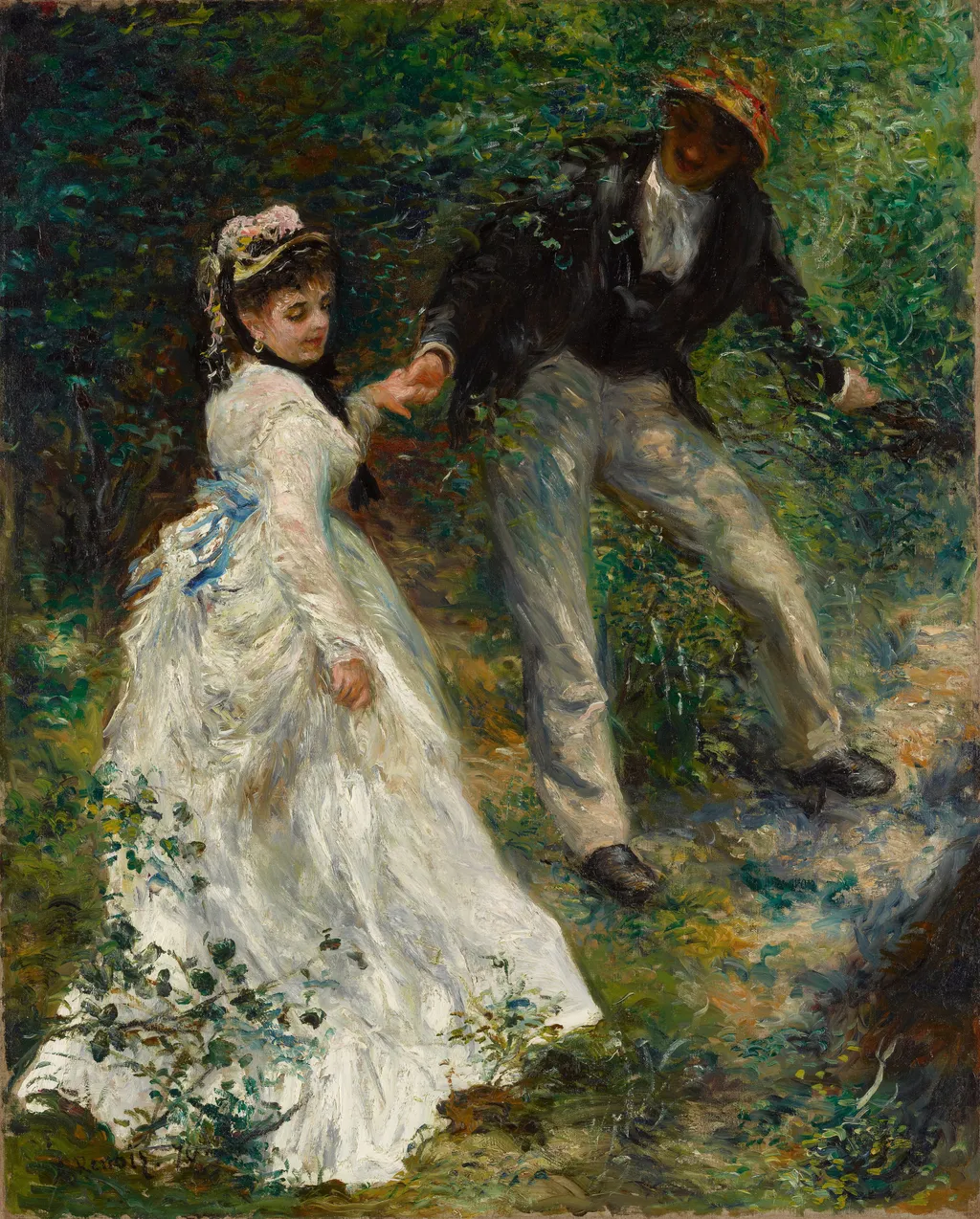
La Promenade is an oil painting by the Impressionist artist Pierre-Auguste Renoir. It dates from 1870 and is held in the collection of the J. Paul Getty Museum.
About this work
Pierre-Auguste Renoir painted La Promenade in 1870. The oil-on-canvas shows a couple walking through a wooded path just outside the city. It’s one of Renoir’s early attempts at plein air painting.
The scene nods to 18th-century French artists like Fragonard and Watteau. Renoir also borrowed Monet’s fresh way of capturing light outdoors.
Look up the next step with the artist Pierre-Auguste Renoir.
Subject & Meaning
La Promenade depicts a young couple strolling along a wooded path, evoking the fête galante tradition revived during the Second Empire's Rococo revival.
La Promenade depicts a young couple strolling along a wooded path, evoking the fête galante tradition revived during the Second Empire's Rococo revival. The man, possibly a canotier, wears a boater hat and extends his hand to the woman, suggesting gallantry and an impending intimate encounter.
The composition draws directly on eighteenth-century precedents by Jean-Honoré Fragonard and Jean-Antoine Watteau, whose scenes of elegant couples in sylvan settings popularized this motif. Renoir's palette and lightness of touch further echo Fragonard's rococo delicacy, while his integration of figures within a luminous landscape reflects the plein-air approach he shared with Claude Monet after their collaboration at La Grenouillère. The work's title, assigned later, was repudiated by Renoir, who emphasized pure painting over narrative pretexts.
Technique & Style
Created in 1870, La Promenade is an oil painting executed on canvas. The work measures 81.3 cm in height and 64.8 cm in width. Renoir employed a high-key palette and a handling style characterized by lightness and delicacy, techniques that reflect the influence of Impressionism and the Rococo Revival.
The brushwork integrates the figures seamlessly into the surrounding woodland landscape, marking a stylistic evolution from the artist's earlier compositions. The formal qualities echo the eighteenth-century fête galante genre, utilizing soft textures and an intimate atmosphere reminiscent of Jean-Honoré Fragonard. The painting depicts a couple strolling along a path bordered by lush vegetation, capturing a moment of leisure with a sense of spontaneity typical of the period's plein air approach.
History & Provenance
La Promenade was painted by Pierre-Auguste Renoir in 1870, while he was living in Louveciennes with his mother, shortly before his conscription into the cavalry following France's declaration of war against Germany on 19 July 1870. The work's original title is unknown; the name La Promenade was first applied when the painting was put up for sale in 1898, and questions about its original title only surfaced in 1941.
The documented ownership chain proceeds through Gustave Goupy, Paul Durand-Ruel, Paul Cassirer, Bernhard Köhler, Paul Rosenberg, Nate B. and Frances Spingold, Seito, and the British Rail Pension Trustee Company, Ltd. American art historian John Walsh, former director of the J. Paul Getty Museum, is credited with helping acquire the painting for the Getty collection in 1989. The work has been the subject of scholarly study, including a 1997 publication by the Getty Museum and the 1994–1995 exhibition Origins of Impressionism, where art historian Henri Loyrette analyzed the integration of figures within the landscape.
Context
Created in 1870, La Promenade stands as a pivotal early Impressionist work that synthesizes Renoir's engagement with contemporary pleinairism and a revived Rococo aesthetic. Art historians note that the painting reflects the influence of Claude Monet, particularly in its integration of figures within a landscape and the adoption of a high-key palette. Simultaneously, the composition draws heavily on eighteenth-century precedents, echoing the fête galante themes of Jean-Antoine Watteau and the delicate brushwork of Jean-Honoré Fragonard.
This dual influence situates the work within the broader context of the Second Empire's Rococo Revival, a trend Renoir embraced before the Franco-Prussian War interrupted his career. Critics such as Henri Loyrette have identified this piece as the moment Renoir successfully achieved the long-sought union of figure and setting, marking a stylistic departure from his earlier works like Les Fiancés.
Legacy
La Promenade is recognized as an early Impressionist canvas that finally realized Renoir's long-sought integration of figure and landscape. Critics such as Henri Loyrette described the work as the point at which this goal was achieved, emphasizing its role in the artist's development. The painting's Rococo-derived composition, noted for its intimate couple in a wooded setting, influenced later works including The Lovers (1875) and Confidences (1878).
Scholarly assessments also link its high-key palette and delicate touch to the broader legacy of Renoir's figure-in-landscape paintings, a theme that continues to inform studies of his output.
Overview
Pierre-Auguste Renoir's "La Promenade," painted in 1870, is an early Impressionist oil on canvas. It depicts a young couple strolling along a wooded path, likely just beyond the city's edge. This work marks one of Renoir's initial explorations into painting outdoors, capturing the transient effects of light and atmosphere. The piece reflects his developing style while acknowledging historical artistic traditions.
Own this work as a print
Artist & collection
Artist
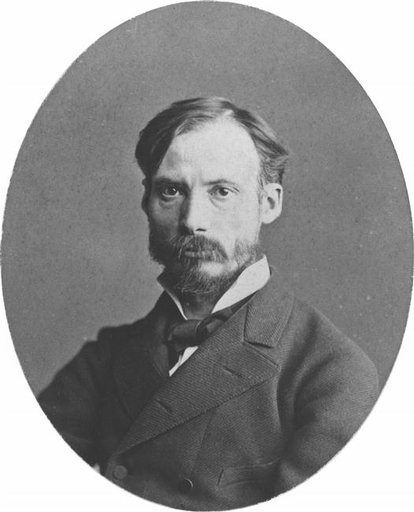
Pierre-Auguste Renoir was a French artist who was a leading painter in the development of the Impressionist style.

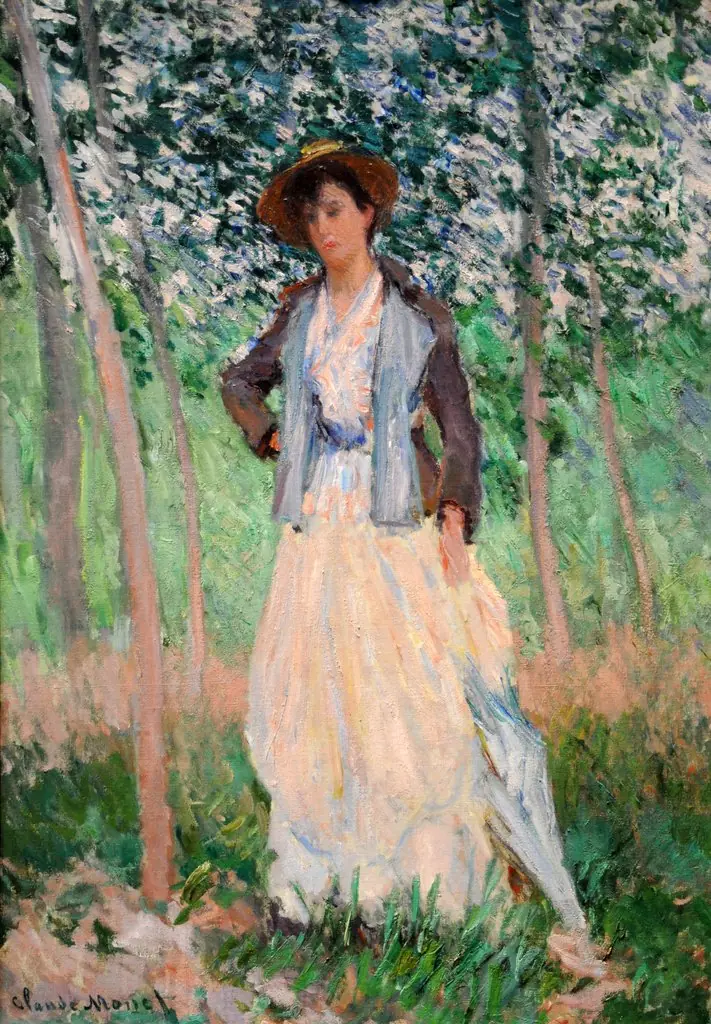
- The Stroller (Suzanne Hoschedé, later Mrs. Theodore Earl Butler, 1868–1899)
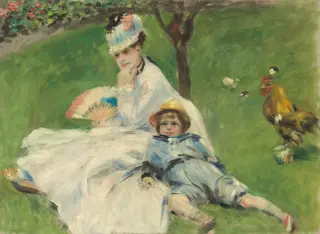 Camille Monet und ihr Sohn Jean in Argenteuil
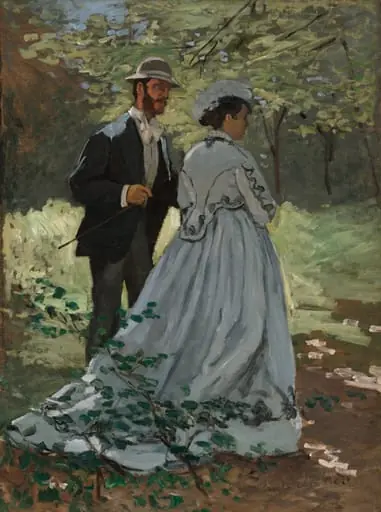 Bazille and Camille (Study for "Déjeuner sur l'Herbe")
 Woman with a Parasol - Madame Monet and Her Son
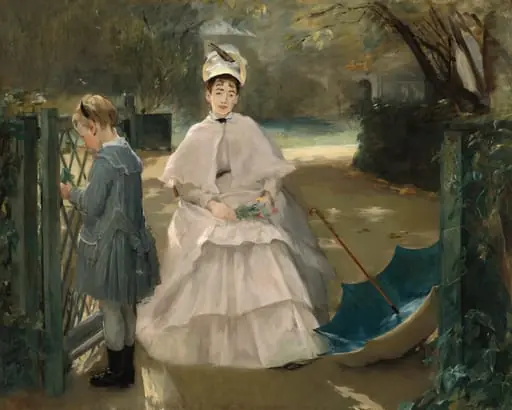 Nanny and Child
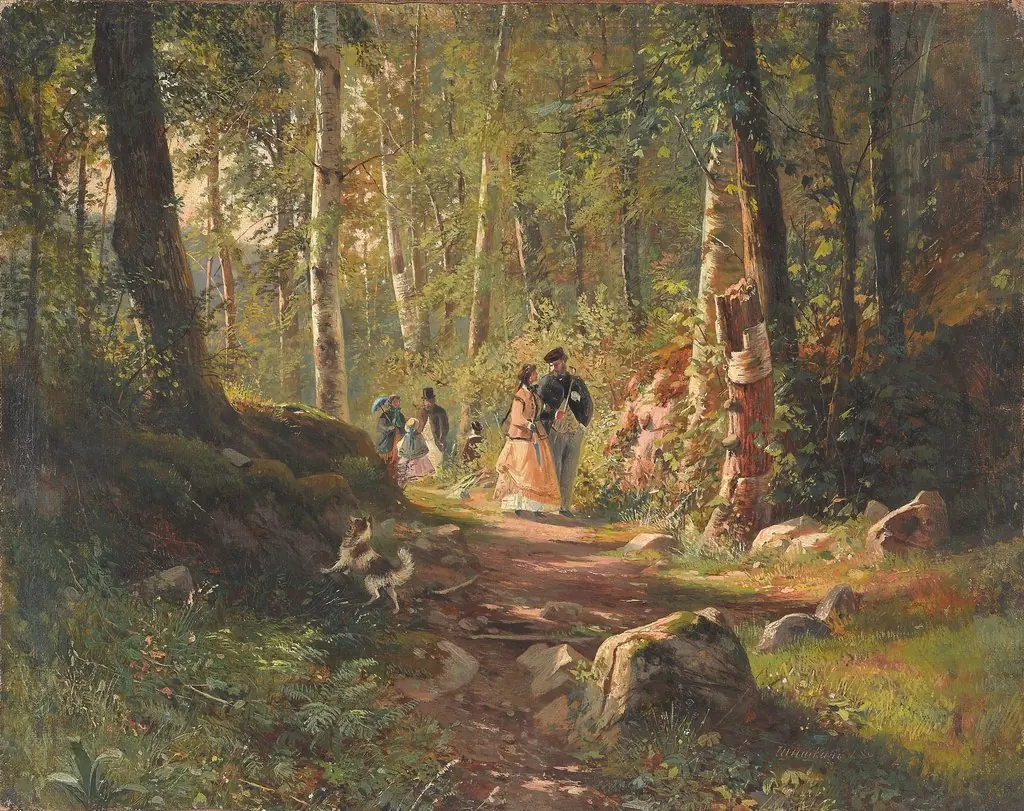 Walk in the Forest
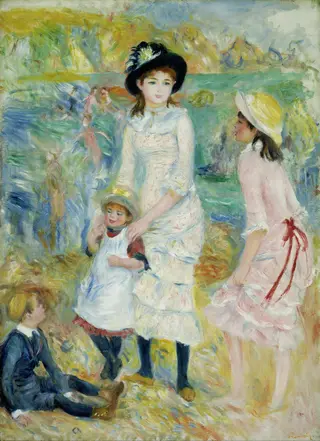 Children on the Seashore, Guernsey
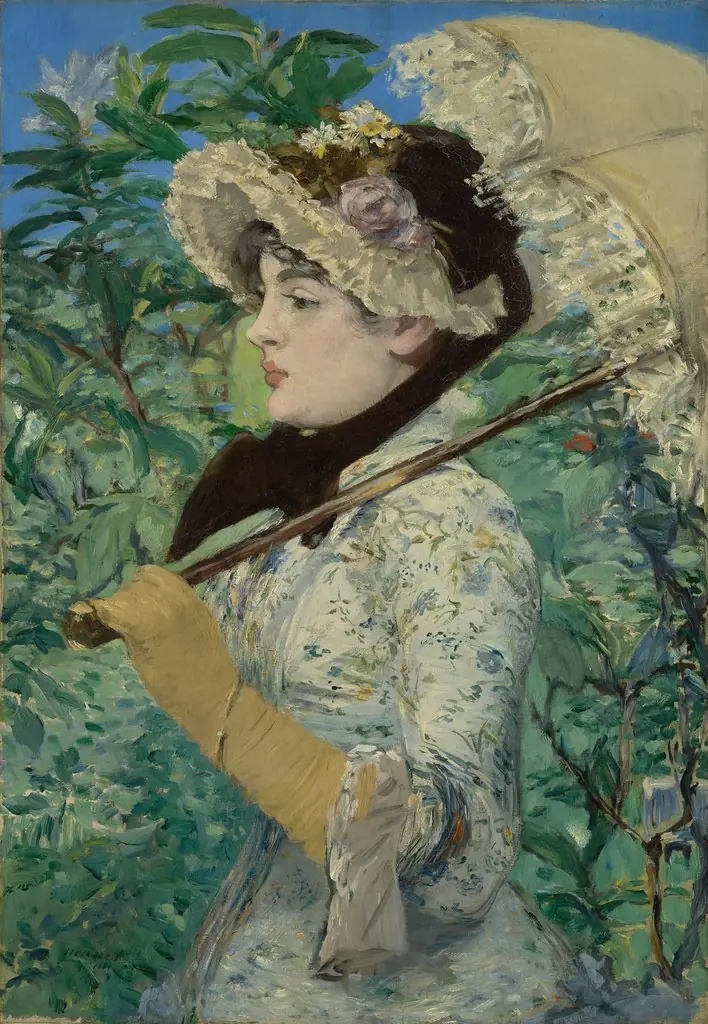 Spring
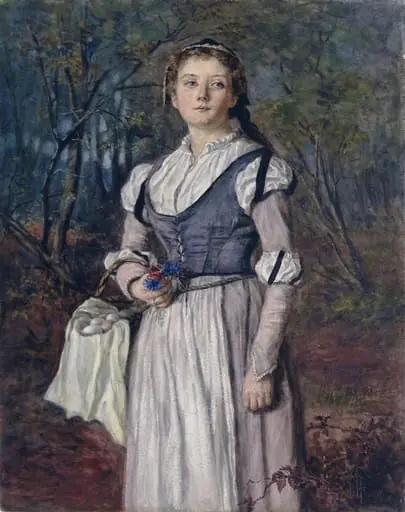 Through the Wood: A Girl with a Basket of Eggs on her Arm
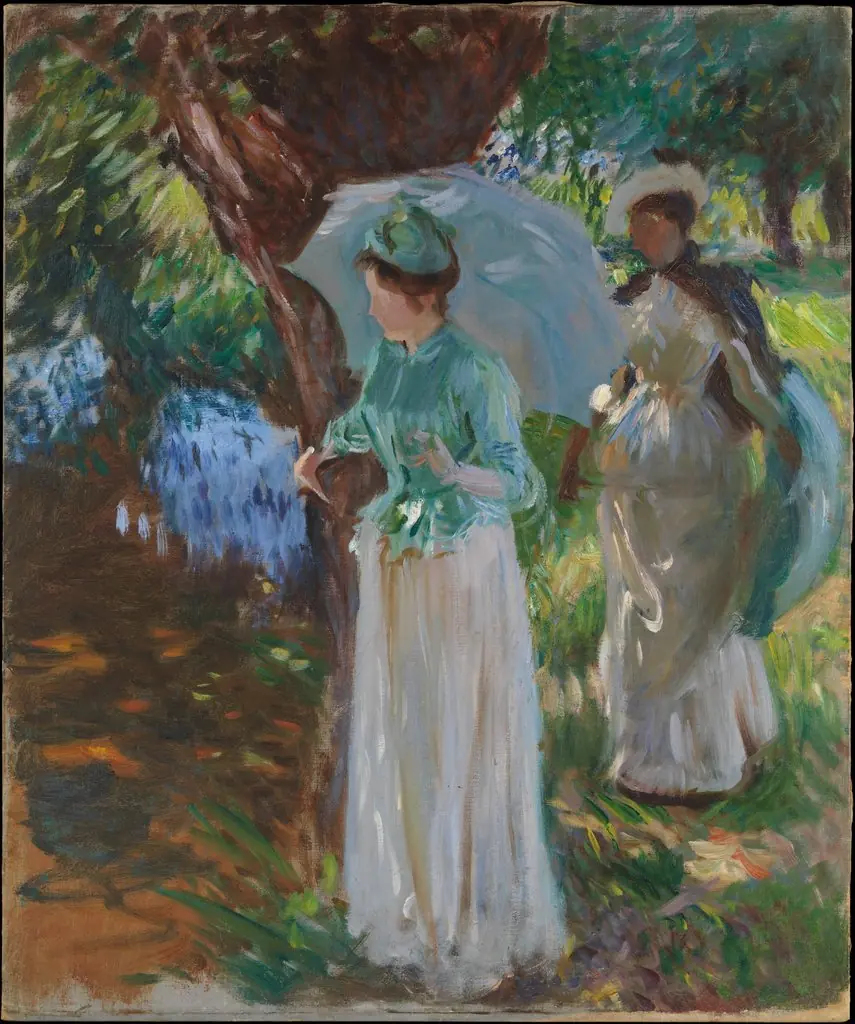 Two Girls with Parasols
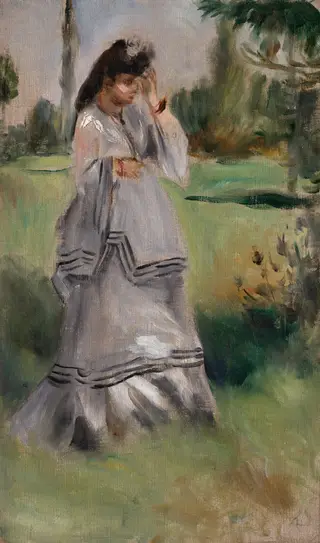 Woman in a Park