Artwork
Bazille and Camille (Study for "Déjeuner sur l'Herbe")
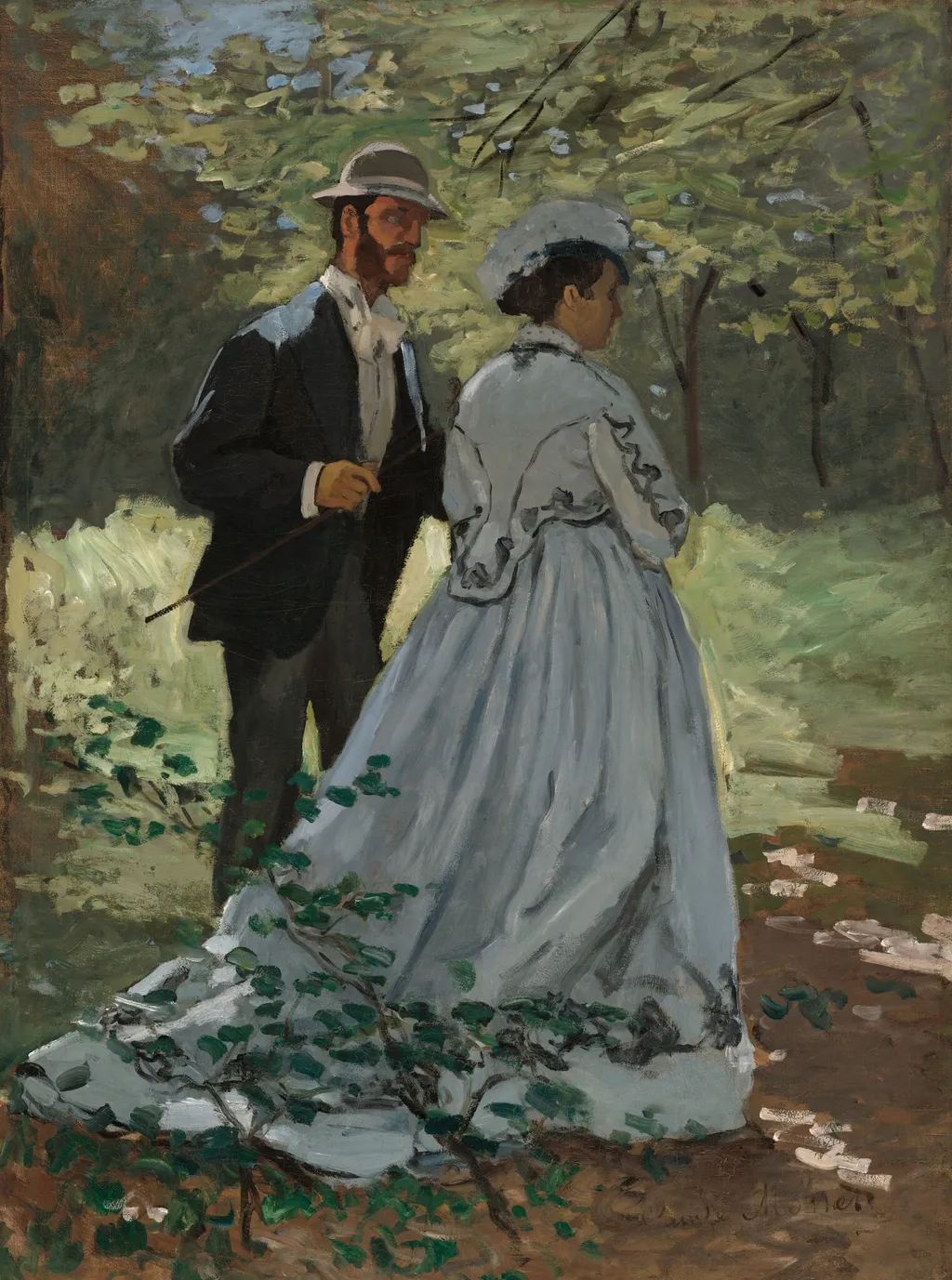
Bazille and Camille (Study for "Déjeuner sur l'Herbe") is an oil painting by the Impressionist artist Claude Monet. It dates from 1865 and is held in the collection of the National Gallery of Art.
- Inscription
- Inscribed:lower right: Claude Monet
About this work
Technique & Style
The work is an oil painting on canvas created in 1865 as a preparatory study for Monet's later piece "Le Déjeuner sur l'Herbe".
The work is an oil painting on canvas created in 1865 as a preparatory study for Monet's later piece "Le Déjeuner sur l'Herbe". It measures 93 cm in height by 68.9 cm in width and is categorized as a portrait within the corpus. The painting was executed in oil paint on canvas, a medium typical of Monet's early practice, and was later owned by Michel Monet before passing to the National Gallery of Art.
History & Provenance
The painting was executed in 1865 by Claude Monet as a preparatory study for Déjeuner sur l'Herbe.
After Monet’s death in 1926, the work passed to his son Michel Monet, who inherited his father’s remaining paintings and later sold individual works. By 1940 the canvas was in Paris with Captain Edward H. Molyneux, who lent it to the 1940 Monet exhibition at the Galerie André Weil. Michel Monet also lent the painting to the 1931 Paris exhibition.
In 1955 Molyneux sold the work to Ailsa Mellon Bruce. Following Bruce’s death in 1969, it entered the collection of the National Gallery of Art, Washington, D.C., as part of her bequest in 1970.
The painting is in the collection of the National Gallery of Art, Washington, D.C., having entered the museum as a bequest from Ailsa Mellon Bruce in 1970. It was lent by Michel Monet to the 1931 Paris exhibition of Monet’s work and later appeared in the 1940 Monet exhibition at the Galerie André Weil, Paris, where it was lent by Captain Edward H. Molyneux. It remains in the museum’s permanent collection.
Overview
Claude Monet created Bazille and Camille (Study for "Déjeuner sur l'Herbe") in 1865, utilizing oil on canvas. This painting functions as a preparatory work for his more expansive composition, Déjeuner sur l'Herbe. It captures two figures, likely models for the final piece, situated within a natural environment, illustrating the artist's initial exploration of light and form in an outdoor setting.
Subject & Meaning
The artwork portrays a man and a woman standing in a wooded landscape. The male figure, attired in a dark suit, white shirt, and hat, holds a cane, suggesting a leisurely moment. Alongside him, the woman is depicted in a long, light blue dress and a hat.
Their presence in this natural environment reflects Monet's burgeoning interest in depicting contemporary life and social interactions outdoors.
Context
Created in 1865, this painting is a preliminary study for Monet's ambitious project, Déjeuner sur l'Herbe (Luncheon on the Grass), which was never fully realized at its intended scale. This study allowed Monet to experiment with figure placement and the effects of natural light on clothing and skin before tackling the larger canvas, reflecting his early aspiration to create modern, large-scale genre scenes.
Own this work as a print
Artist & collection
Artist
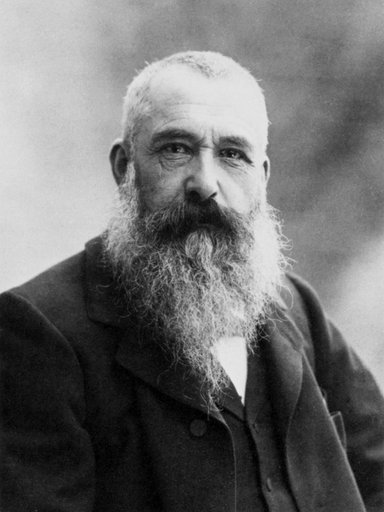
Oscar-Claude Monet was a French painter and founder of Impressionism who is seen as a key precursor to modernism, especially in his attempts to paint nature as he perceived it.

- Portrait of Madame Alice Hoschede
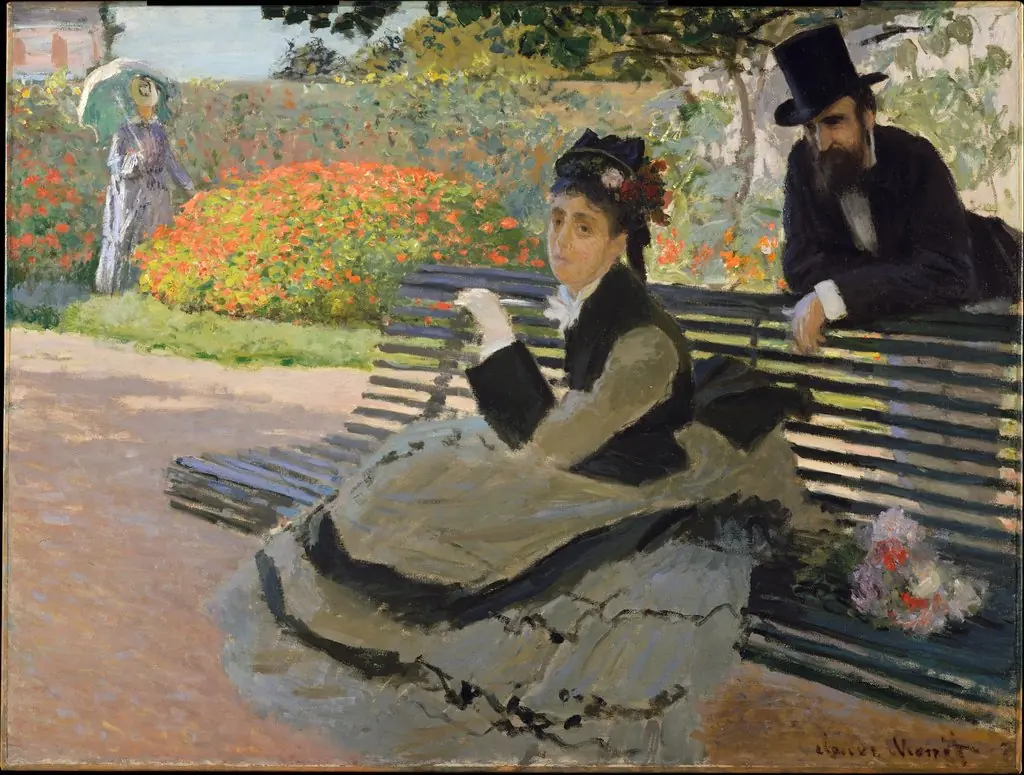 Camille Monet on a Garden Bench
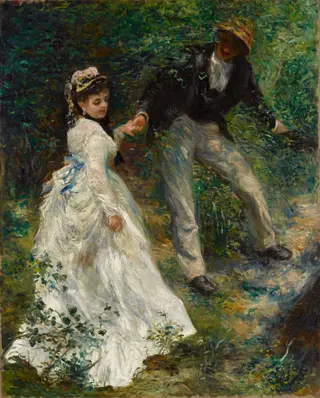 La Promenade
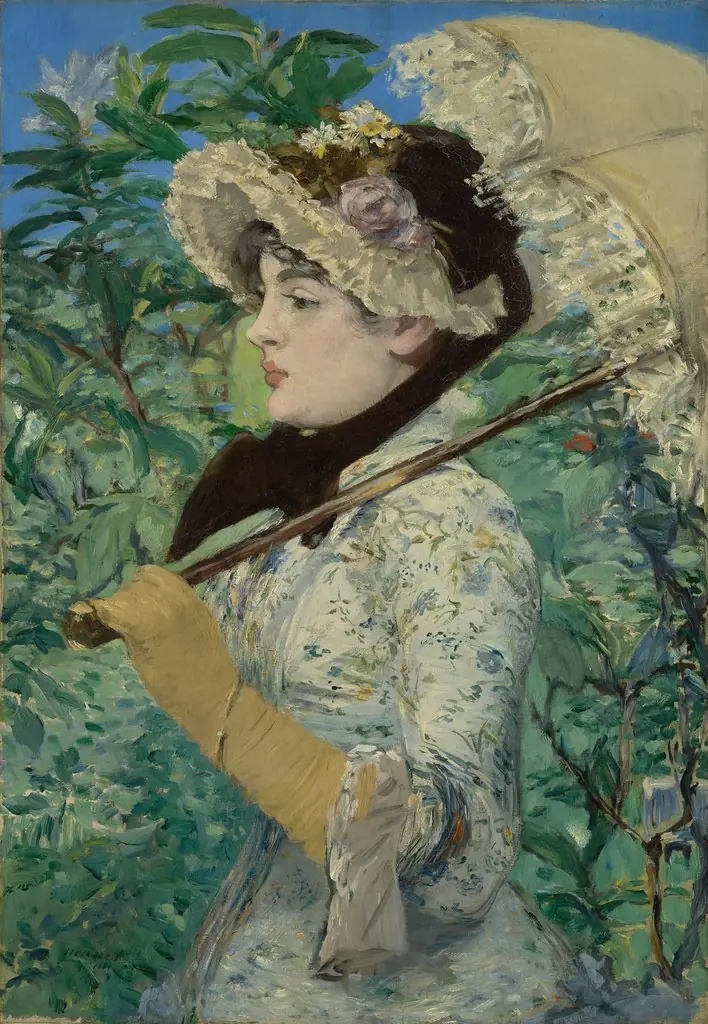 Spring
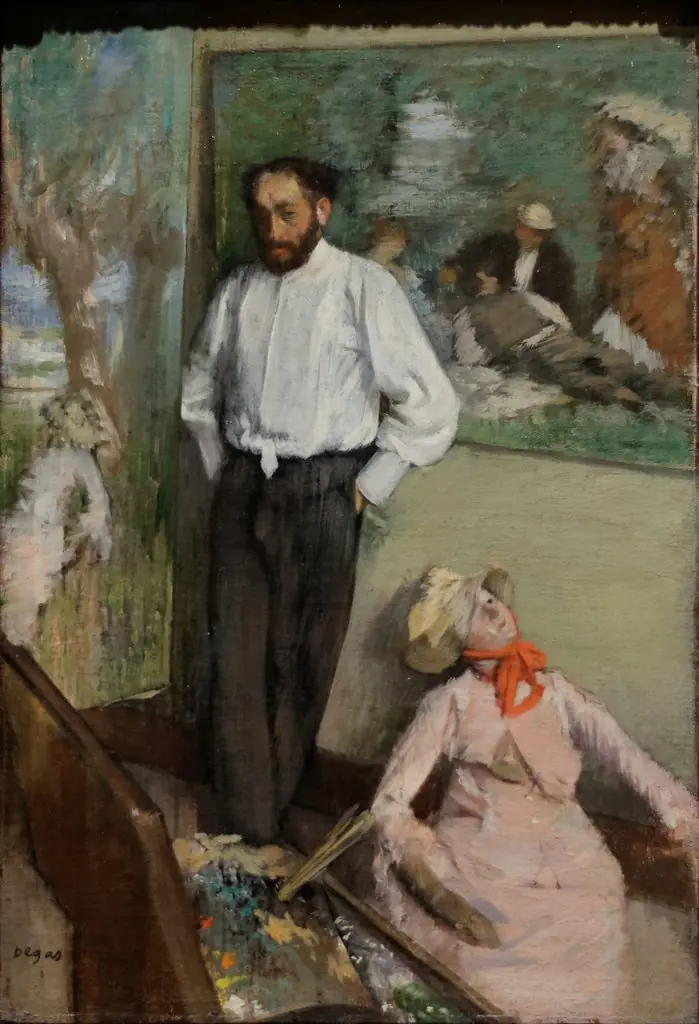 Portrait of Henri Michel-Lévy
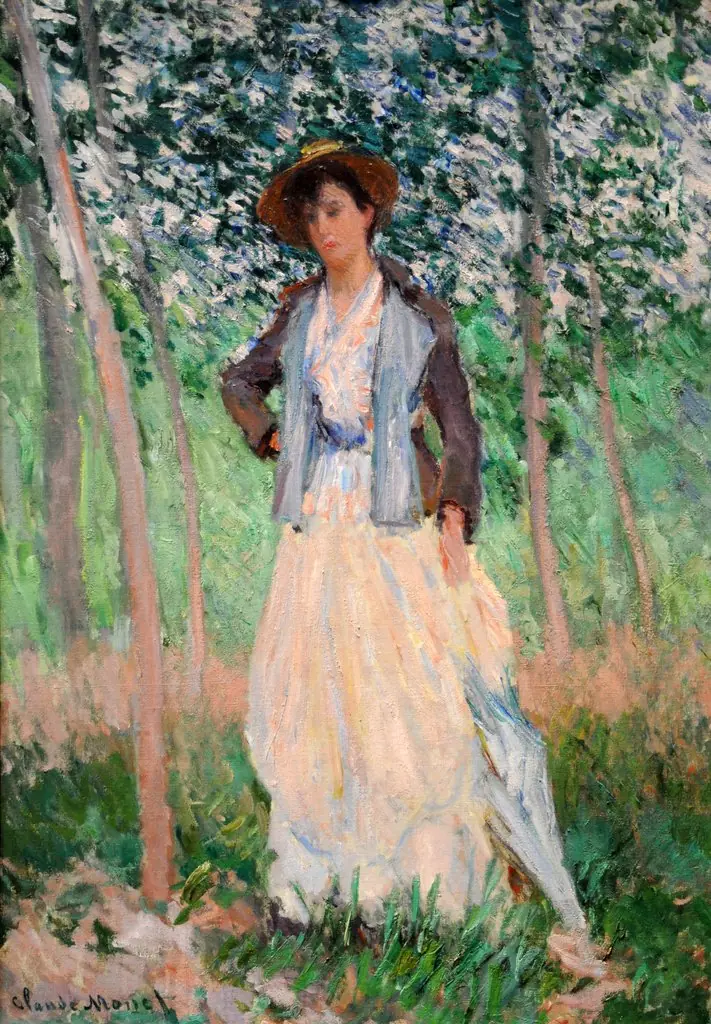 The Stroller (Suzanne Hoschedé, later Mrs. Theodore Earl Butler, 1868–1899)
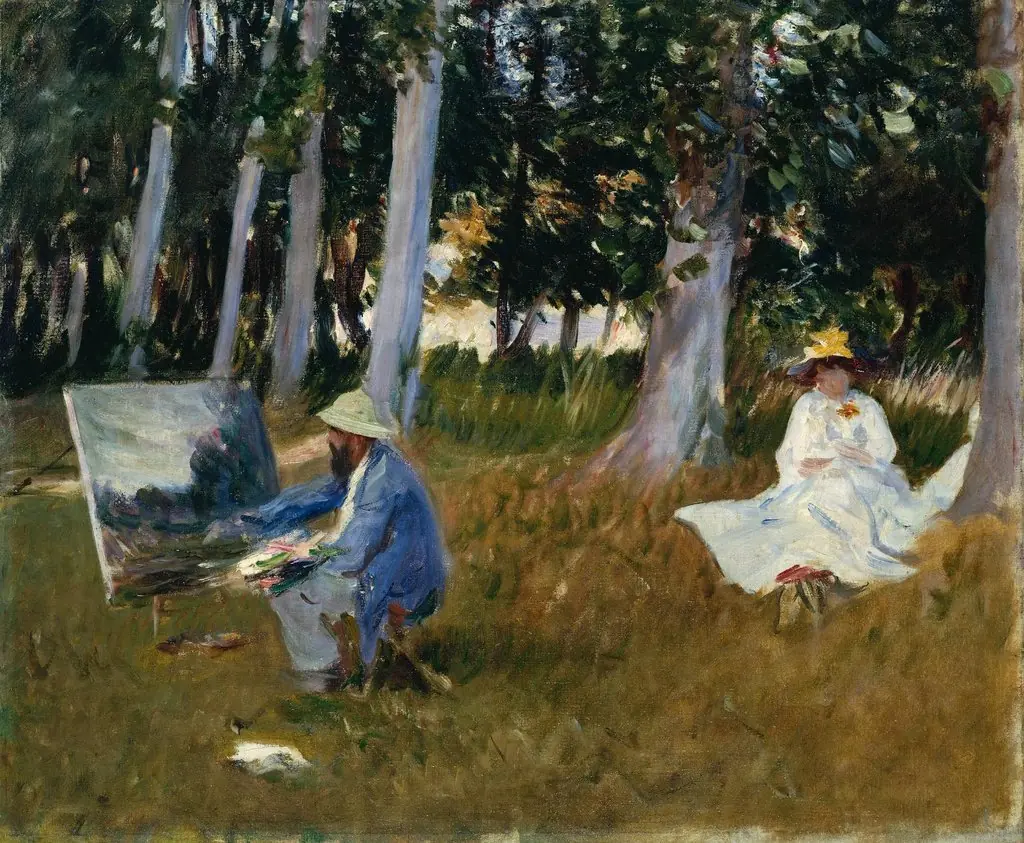 Claude Monet Painting by the Edge of a Wood
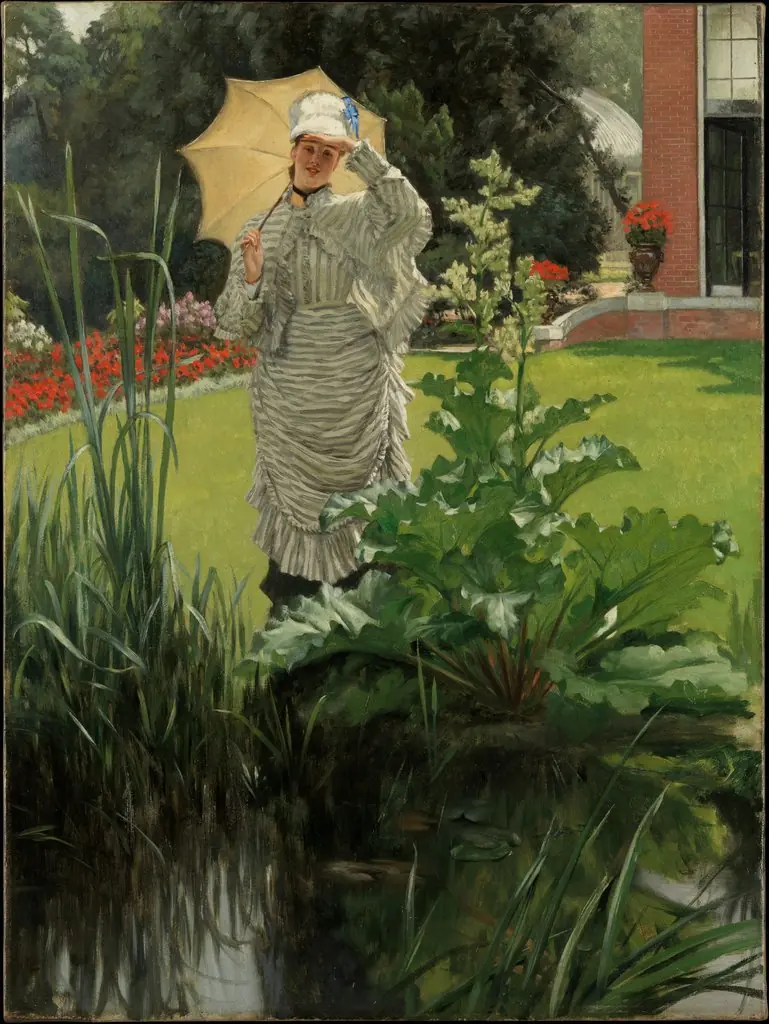 Spring Morning
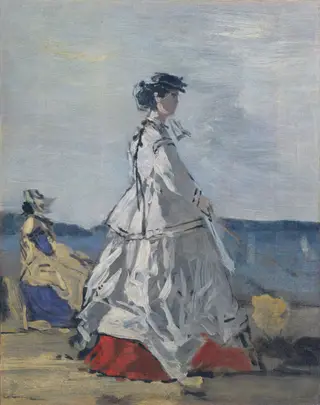 Princess Pauline Metternich (1836–1921) on the Beach
 Woman in a Park
 Two Girls with Parasols