Artwork
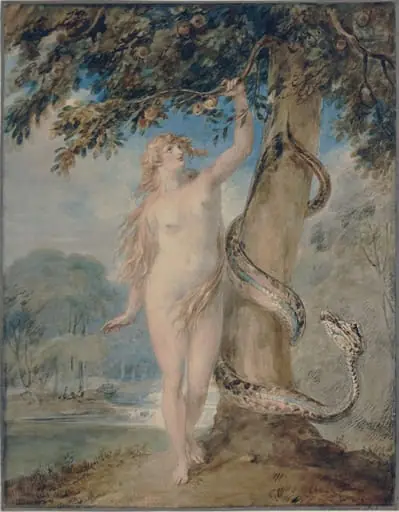
Eva cogiendo la manzana
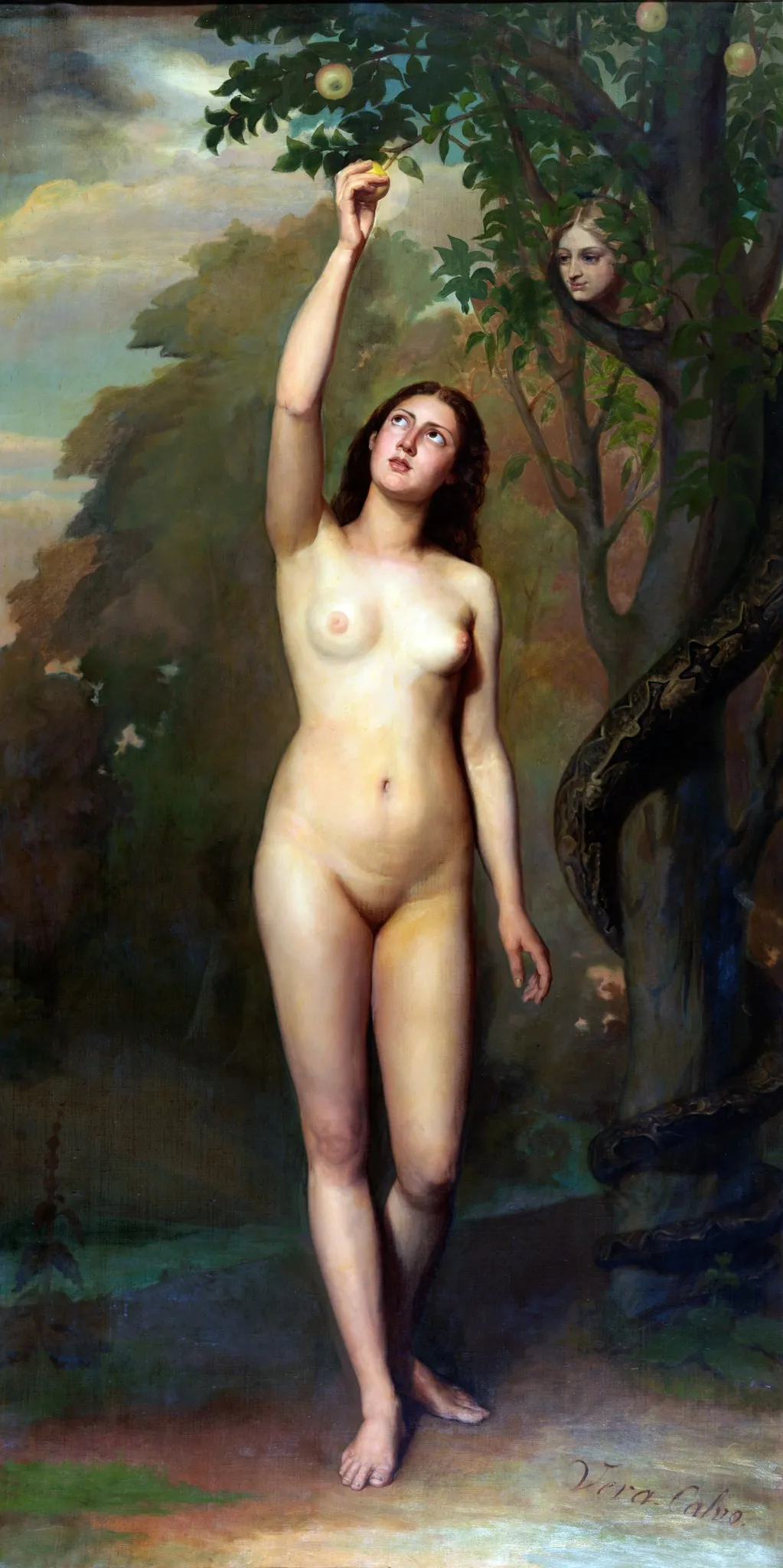
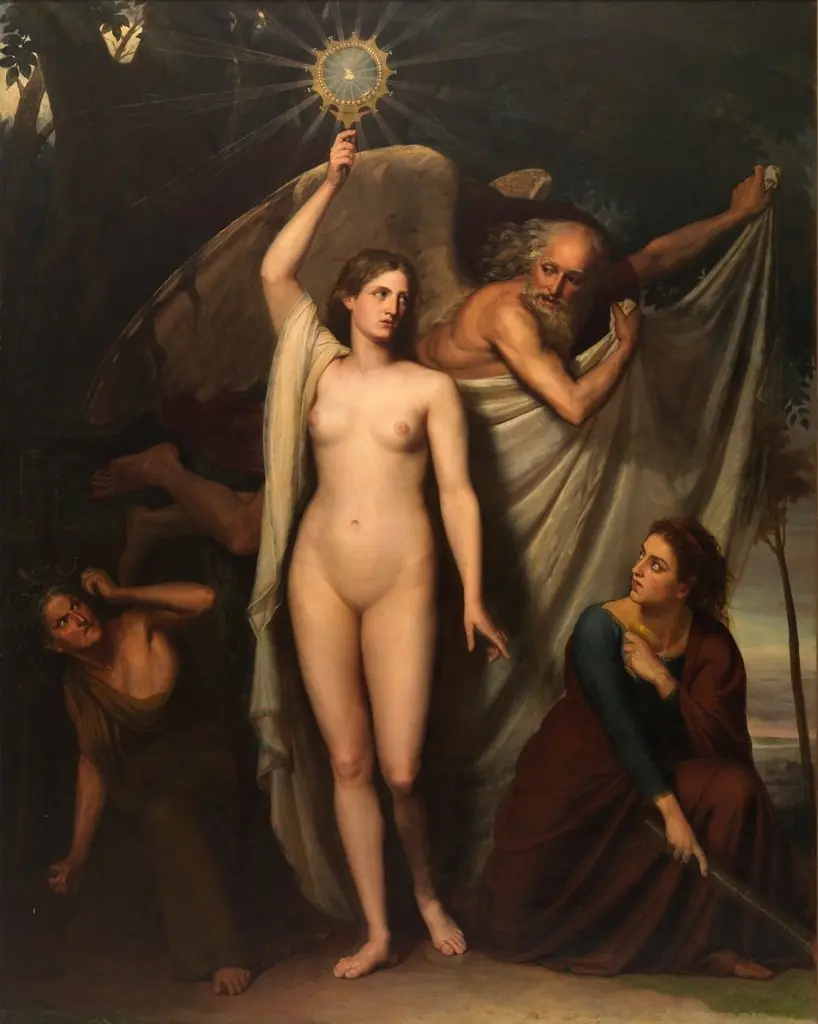
Eva cogiendo la manzana is an oil painting by the Post-Impressionist artist Juan Antonio Vera Calvo. It dates from 1871 and is held in the collection of the Museo del Prado.
About this work
Subject & Meaning
The iconography includes the serpent, the Tree of the Knowledge of Good and Evil, and Eve's nudity, all traditional elements of this Genesis narrative.
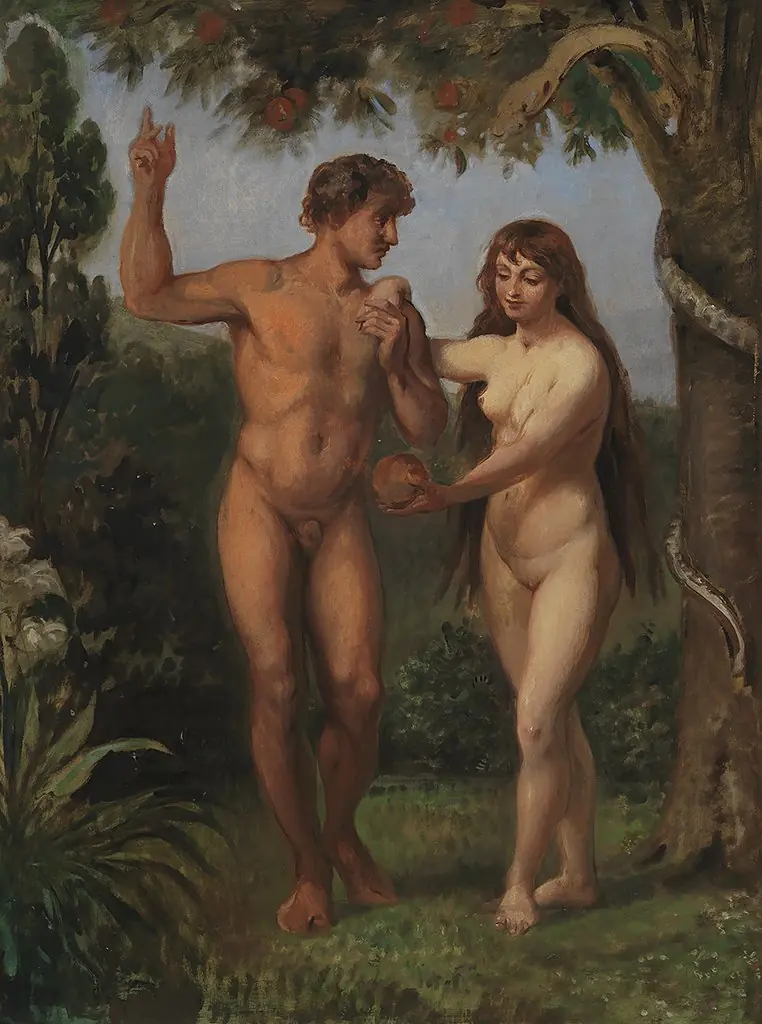
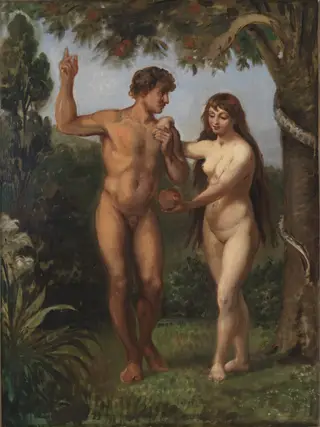
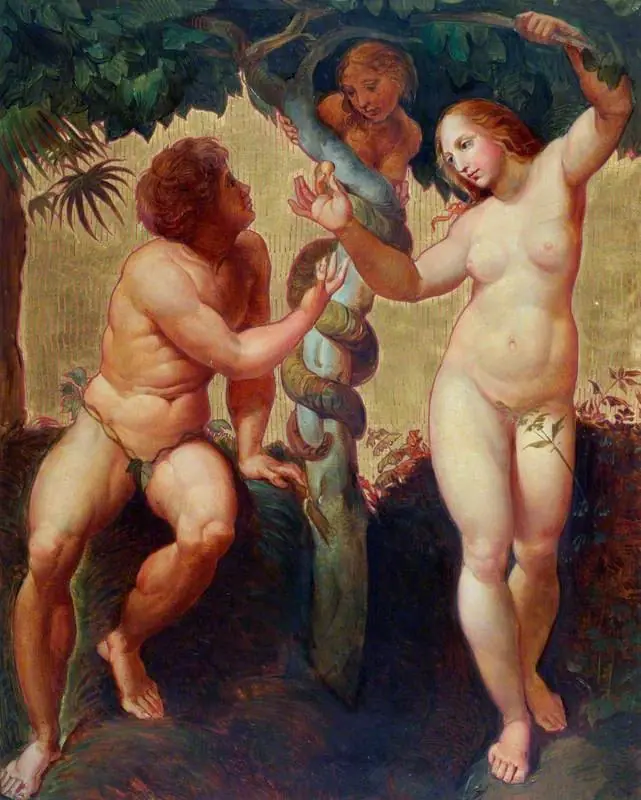
The painting depicts the biblical Fall of Man, centered on Eve at the moment she plucks the forbidden fruit. The iconography includes the serpent, the Tree of the Knowledge of Good and Evil, and Eve's nudity, all traditional elements of this Genesis narrative. Set within a landscape under a cloudy sky, the composition emphasizes the pivotal instant of temptation and transgression.
As religious art with a nude figure, the work engages with a long tradition of representing humanity's first disobedience and its cosmic consequences. The main subject, explicitly identified as the Fall of Man, underscores the painting's function as a moral and theological meditation on original sin and the loss of innocence.
Technique & Style
Juan Antonio Vera Calvo's Eva cogiendo la manzana is a religious painting executed in 1871 using oil paint on canvas. The artwork is a large vertical composition, measuring 244 cm in height and 125 cm in width. Stylistically, the painting belongs to the religious genre and prominently features the nude as a central formal element.
Its main subject, the Fall of Man, is visually constructed through the depiction of Eve alongside the serpent and the tree of the knowledge of good and evil. The composition integrates these foreground figures with a broader landscape setting that includes naturalistic elements such as clouds and sky, situating the biblical narrative within a spacious, natural environment.
History & Provenance
Juan Antonio Vera Calvo painted Eva cogiendo la manzana in 1871, an oil on canvas work that belongs to the religious genre and illustrates the biblical episode of the Fall of Man, featuring Eve, the serpent and the forbidden fruit. The painting was executed as part of the artist’s output of religious subjects and measures 244 × 125 cm. Since its creation it has been held in the collection of the Museo del Prado, which records it as part of the museum’s holdings; no earlier owners or commissioning details are documented. The work’s provenance therefore traces from the artist’s studio to its current ownership by the Museo del Prado.
Overview
“Eva cogiendo la manzana” (Eve Picking the Apple) is an oil painting created by Juan Antonio Vera Calvo in 1871. This religious work depicts the biblical figure of Eve at a pivotal moment, reaching for the forbidden fruit. The artwork is part of the collection at the Museo del Prado, where it is preserved as an example of 19th-century Spanish painting.
Artist & collection