Artwork
Madonna and Child Enthroned with Saints John the Baptist and Sebastian
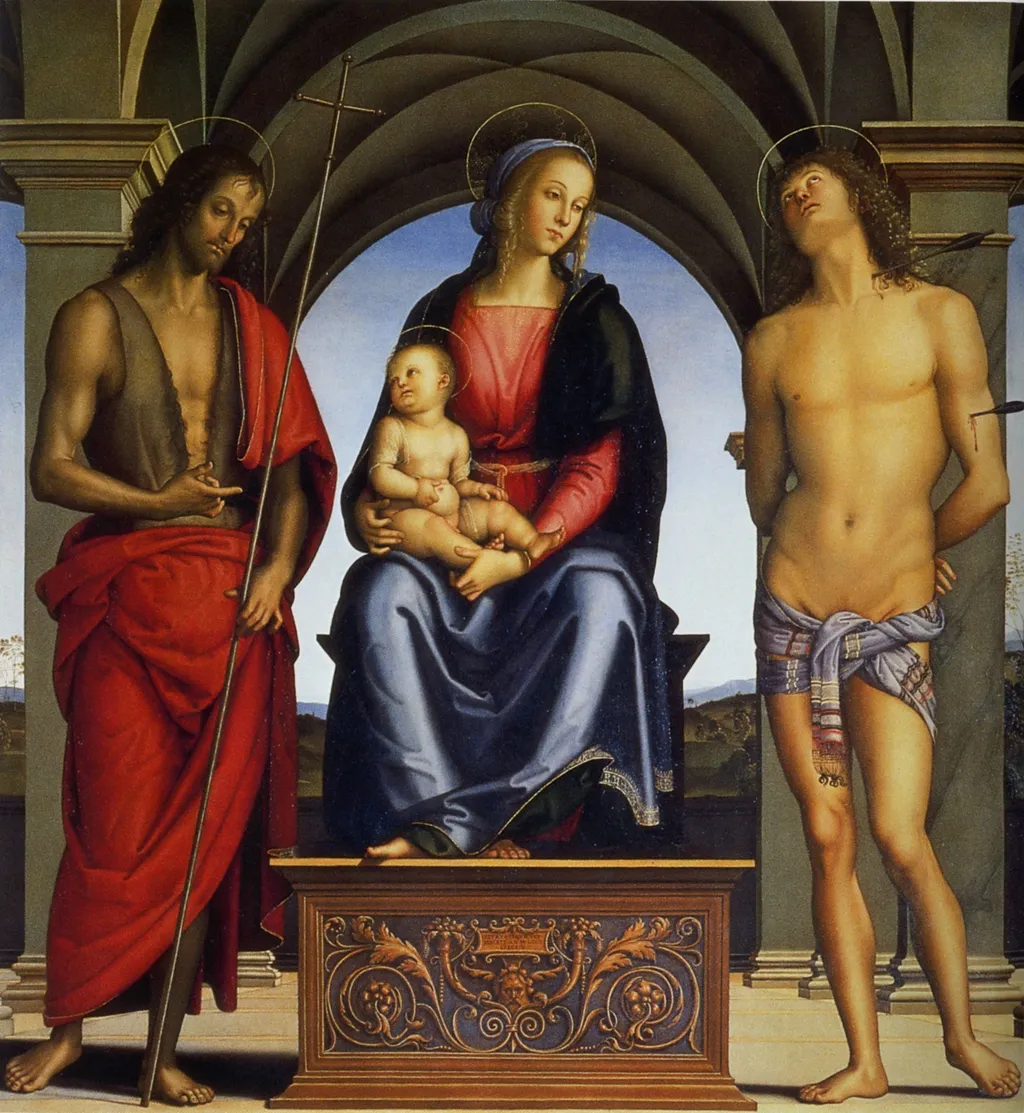
Madonna and Child Enthroned with Saints John the Baptist and Sebastian is an oil painting by the High Renaissance artist Pietro Perugino. It dates from 1497 and is held in the collection of the Uffizi Gallery.
About this work
This is a religious painting from 1493. It shows the Virgin Mary holding the Christ Child while saints flank them. The work uses oil paint on a wooden panel.
Perugino was a leading artist in Renaissance Florence. This picture was made for a church first. Later, it moved to the Uffizi Gallery where it stays today.
Look up the Uffizi Gallery.
Subject & Meaning
The Virgin, identified by her aureole, is portrayed with features resembling Perugino's wife Chiara Fancelli, reflecting contemporary portraiture.
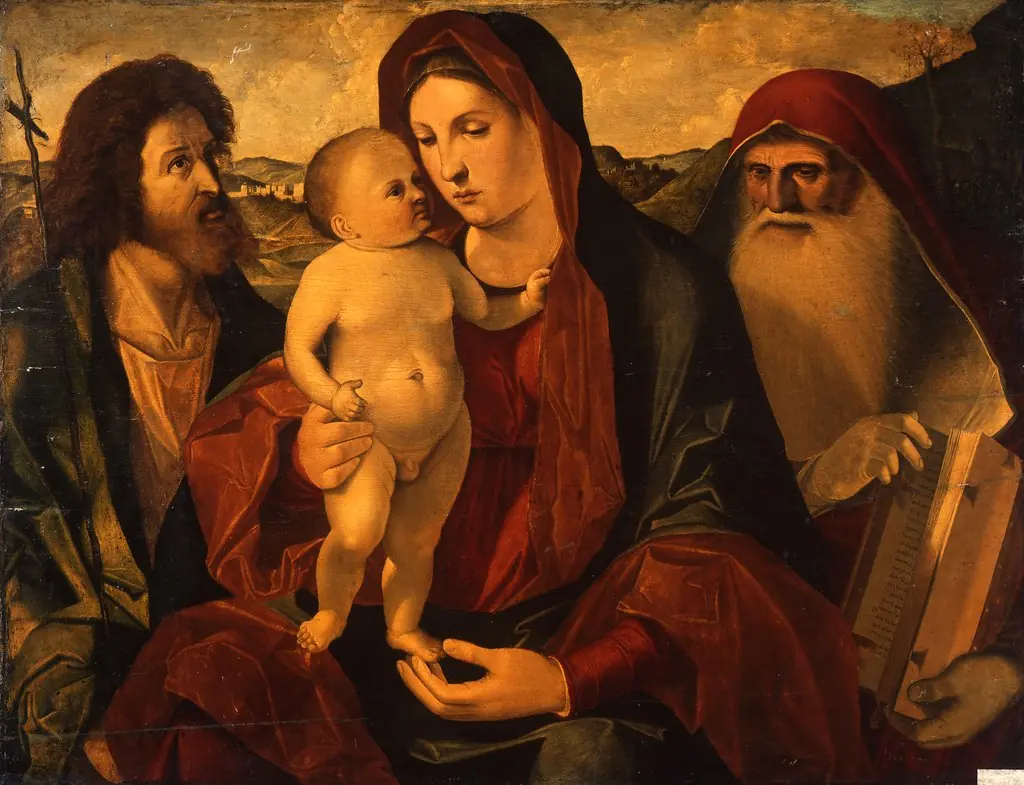
The work depicts the Virgin Mary seated on a high throne with the Christ Child on her lap, flanked by Saints John the Baptist and Sebastian in a sacra conversazione arrangement. The Virgin, identified by her aureole, is portrayed with features resembling Perugino's wife Chiara Fancelli, reflecting contemporary portraiture. John the Baptist gestures toward Jesus, while Sebastian is shown martyred, nude except for a linen cloth, pierced by arrows and gazing heavenward, his column referencing his martyrdom. The composition employs symmetrical perspective centered on the Virgin, characteristic of late 15th-century Florentine sacra conversazione, blending Venetian innovations with Perugino's evolving style. It marks a shift toward a more mature, severe Virgin figure, aligned with the spiritual climate of Savonarola's Florence, and features architectural elements such as grotesque-decorated throne bases and monocular perspective landscapes with atmospheric depth.
Technique & Style
The painting is executed in oil on panel, measuring 178 by 164 centimeters. Perugino employed a refined oil technique that allowed for smooth transitions and subtle modeling, evident in the soft contours of the figures and the delicate rendering of fabrics and flesh tones. The composition is structured around a symmetrical architectural backdrop, a portico with rounded arches, designed to guide the viewer’s gaze into a serene, atmospheric landscape. The figures are arranged in a pyramidal formation, a hallmark of the sacra conversazione style, with the Virgin enthroned at the center. The handling is precise, emphasizing clarity and harmony, while the use of perspective, particularly in the architectural elements, creates a sense of depth. The palette is luminous yet restrained, with vibrant hues softened to enhance the plasticity of forms and the overall tonal unity. Following a 1995 restoration, the work’s original chromatic balance was recovered, revealing finer details such as the veining in the stone columns and the delicate gold leaf of the halos.
History & Provenance
The painting was commissioned in 1493 by Cornelia Salviati, widow of the merchant Giovanni Martini, and her son Roberto. It was created for the chapel of the convent of San Domenico in Fiesole, a site possibly restored by Giuliano da Sangallo shortly before. The work bears the artist's signature and the date 1493 on the base of the Virgin's throne. In 1786, Peter Leopold, Grand Duke of Tuscany, acquired the panel for 1,000 scudi, transferring it to the Royal Galleries which later became the Uffizi Gallery in Florence. The original chapel was subsequently decorated with a replacement painting by Lorenzo di Credi, while a copy by Garibaldo Ceccarelli now occupies the church. The artwork underwent restoration in 1995, which recovered original chromatic balances and clarified fine details.
The painting is currently housed in the Uffizi Gallery in Florence, Italy. It entered the gallery's collection in 1786 after being acquired by Peter Leopold, Grand Duke of Tuscany, for 1,000 scudi. Prior to this purchase, the work resided in the chapel of the convent of San Domenico in Fiesole, where it had been commissioned in 1493 for the Salviati family. The panel was removed from its original location to become part of the future Uffizi holdings. The artwork underwent a significant restoration in 1995, which recovered the original chromatic harmonies and clarified minute details such as stone veining on the architectural elements.
Context
The painting is recognized as one of the first examples in Florence of the new sacra conversazione style, which had been developed in Venice by Antonello da Messina and Giovanni Bellini a few years prior. Its pyramidal composition, centered on the Virgin enthroned, marks a significant formal innovation in Perugino's oeuvre and in Florentine painting more broadly. Scholarship has also identified the work as a pivotal moment in Perugino's depiction of the Madonna. Here, the figure begins to shift from the elegant young woman of his earlier works toward a more mature, severe, and sober type, a transformation linked to the spiritual climate introduced in Florence by Girolamo Savonarola. This evolution is paralleled in other contemporary works by the artist, including the Madonna and Child with Saint Catherine of Alexandria in the Kunsthistorisches Museum, Vienna. The architectural setting, a portico with two bays opening onto a serene, atmospheric landscape, represents a recurring motif in Perugino's production of the 1480s and 1490s, as seen in works such as the Fano Altarpiece and the Pietà.
Legacy
The painting became a key reference for the sacra conversazione genre in Florence, establishing a pyramidal composition centered on the Virgin on a high throne that influenced later works by Perugino and his contemporaries. Its mature portrayal of the Madonna, reflecting the spiritual climate shaped by Savonarola, marked a shift from earlier elegant depictions to a more severe and contemplative style. The work's iconography, particularly the figure of Saint Sebastian, and its architectural setting in a portico with grotesque details, became emblematic of Perugino's mature period, inspiring numerous copies and restorations, including a 1995 restoration that revealed original chromatic harmonies.
Own this work as a print
Artist & collection
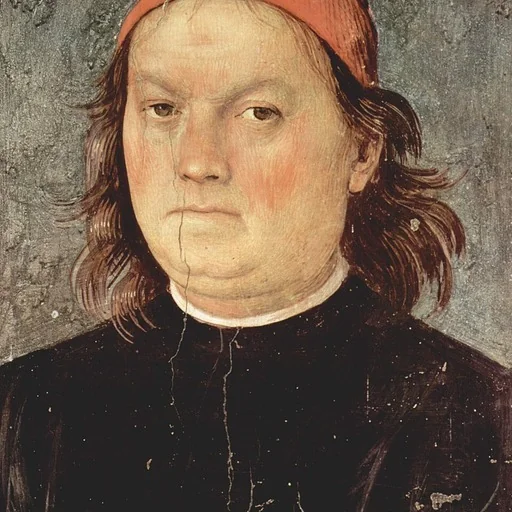
Artist
Pietro Perugino (US: PERR-ə-JEE-noh, -oo-; Italian:; born Pietro Vannucci or Pietro Vanucci; c.

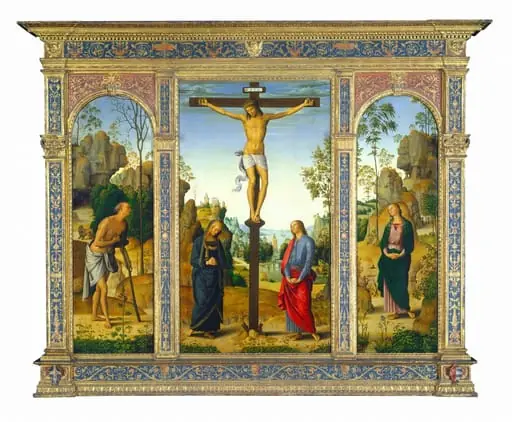 The Crucifixion with the Virgin, Saint John, Saint Jerome, and Saint Mary Magdalene
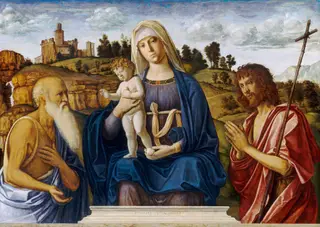
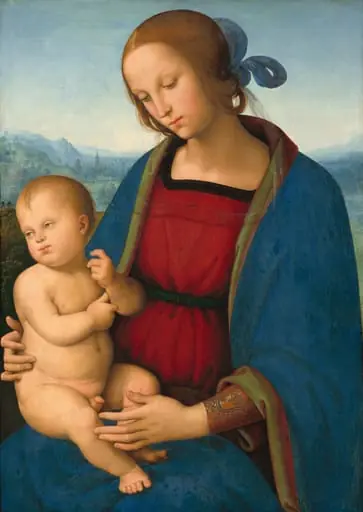 Madonna and Child
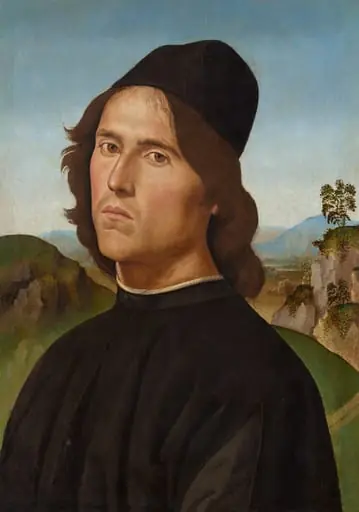 Portrait of Lorenzo di Credi
![The Crucifixion with the Virgin, Saint John, Saint Jerome, and Saint Mary Magdalene [right panel], by Pietro Perugino](https://artifactworldgallery.com/img/pietro-perugino--the-crucifixion-with-the-virgin-saint-john-saint-jerome-and--7d9a2b1f47b9fc9b-w320.webp) The Crucifixion with the Virgin, Saint John, Saint Jerome, and Saint Mary Magdalene [right panel]
The Crucifixion with the Virgin, Saint John, Saint Jerome, and Saint Mary Magdalene [right panel]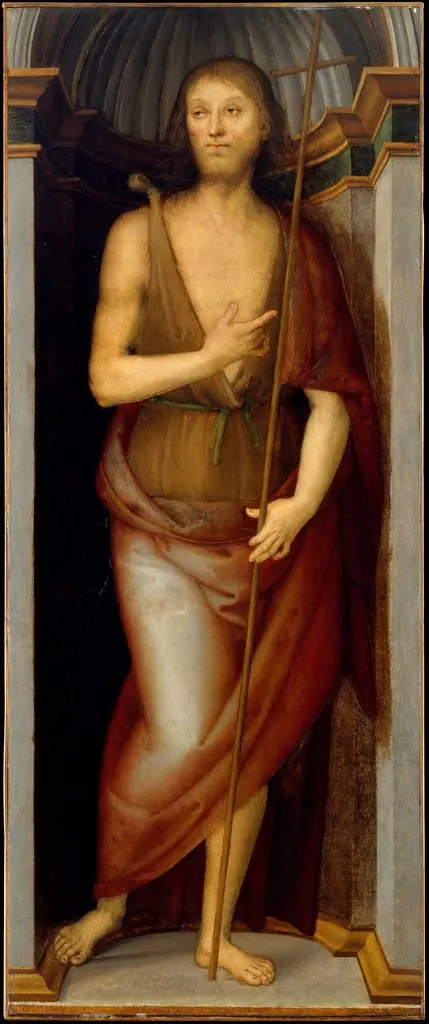 Saint John the Baptist; Saint Lucy
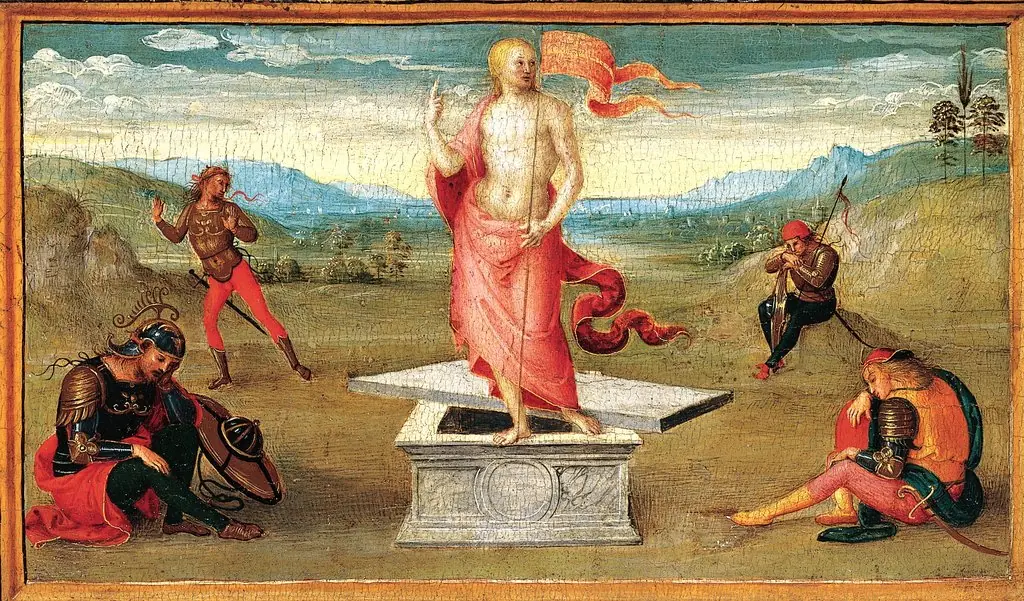 The Resurrection
![The Crucifixion with the Virgin, Saint John, Saint Jerome, and Saint Mary Magdalene [left panel], by Pietro Perugino](https://artifactworldgallery.com/img/pietro-perugino--the-crucifixion-with-the-virgin-saint-john-saint-jerome-and--1017dec17318baa5-w320.webp) The Crucifixion with the Virgin, Saint John, Saint Jerome, and Saint Mary Magdalene [left panel]
The Crucifixion with the Virgin, Saint John, Saint Jerome, and Saint Mary Magdalene [left panel]![The Crucifixion with the Virgin, Saint John, Saint Jerome, and Saint Mary Magdalene [middle panel], by Pietro Perugino](https://artifactworldgallery.com/img/pietro-perugino--the-crucifixion-with-the-virgin-saint-john-saint-jerome-and--a9b4c312771e3f71-w320.webp) The Crucifixion with the Virgin, Saint John, Saint Jerome, and Saint Mary Magdalene [middle panel]
The Crucifixion with the Virgin, Saint John, Saint Jerome, and Saint Mary Magdalene [middle panel]
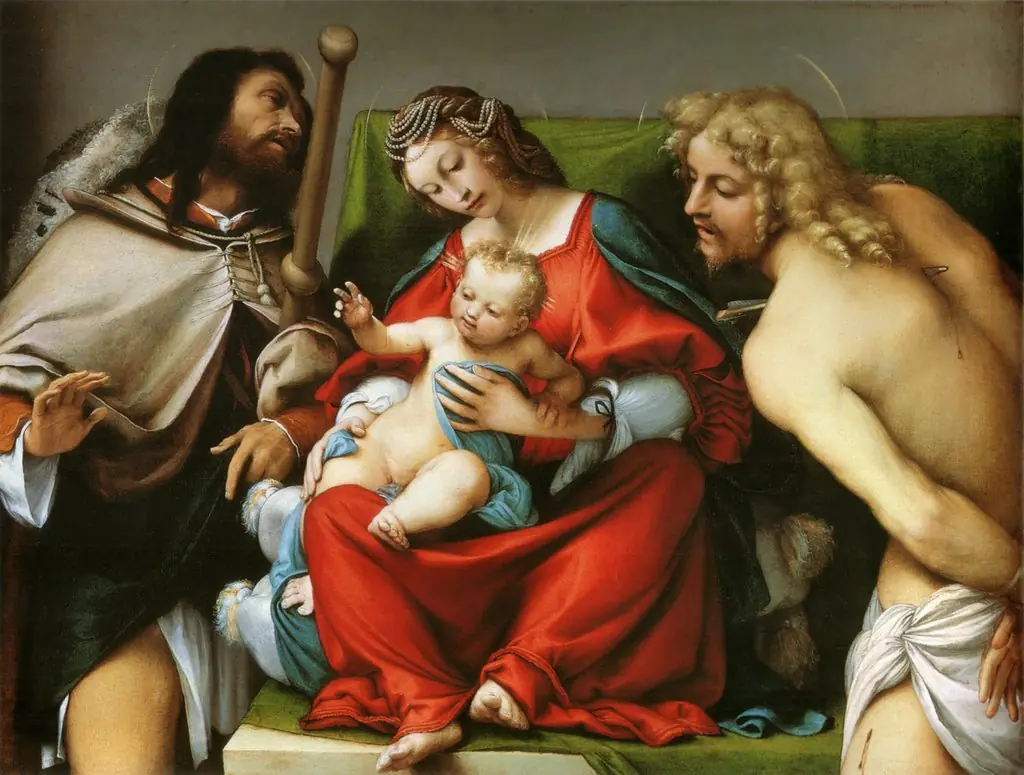 Madonna with the Child and Sts Rock and Sebastian
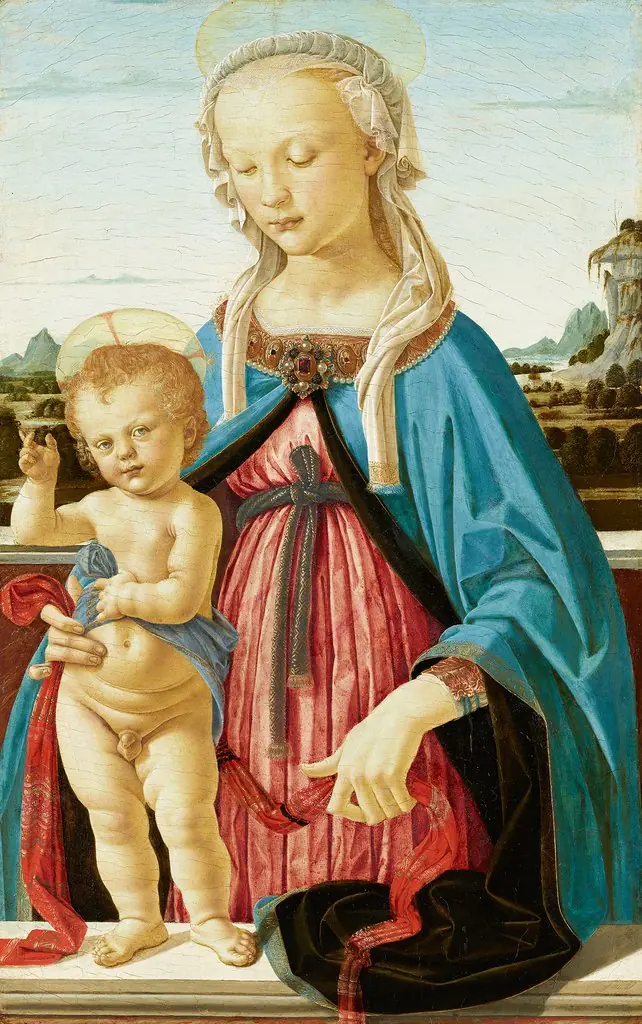 Madonna and Child
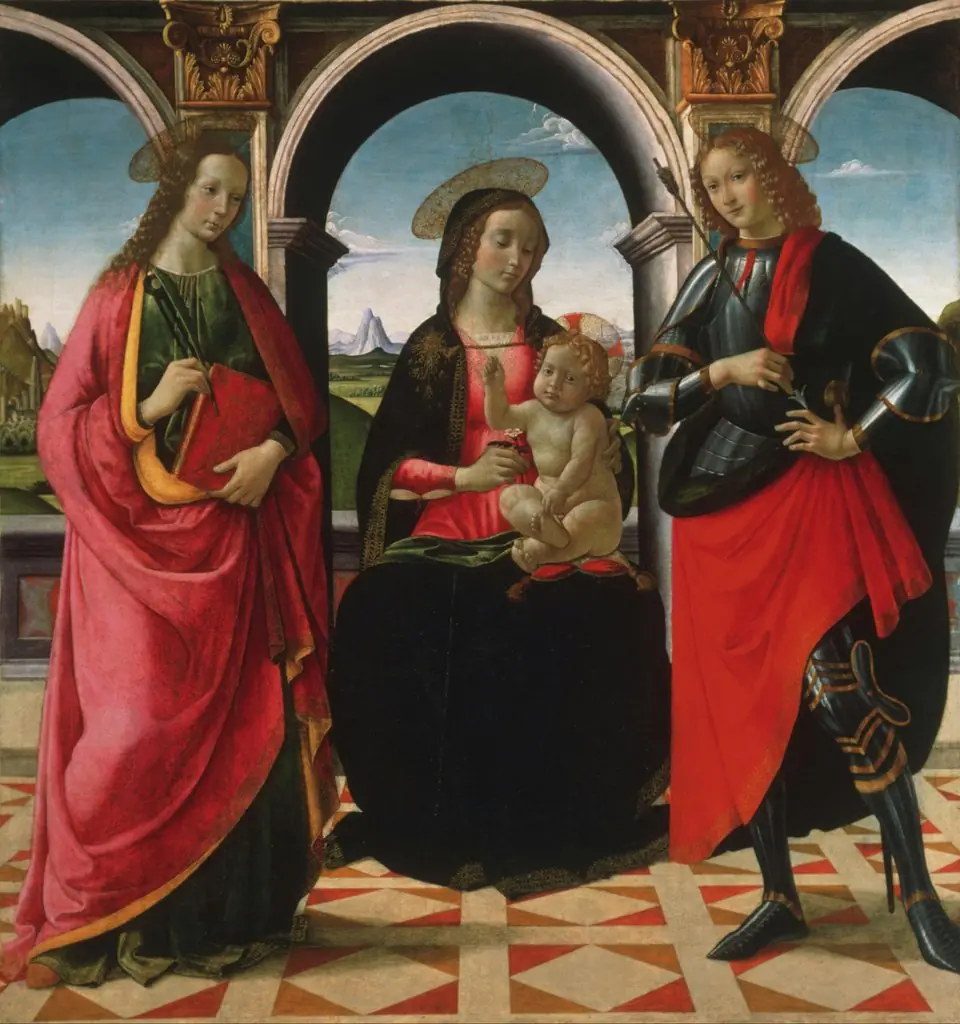 Virgin and Child, with Saints Apollonia and Sebastian
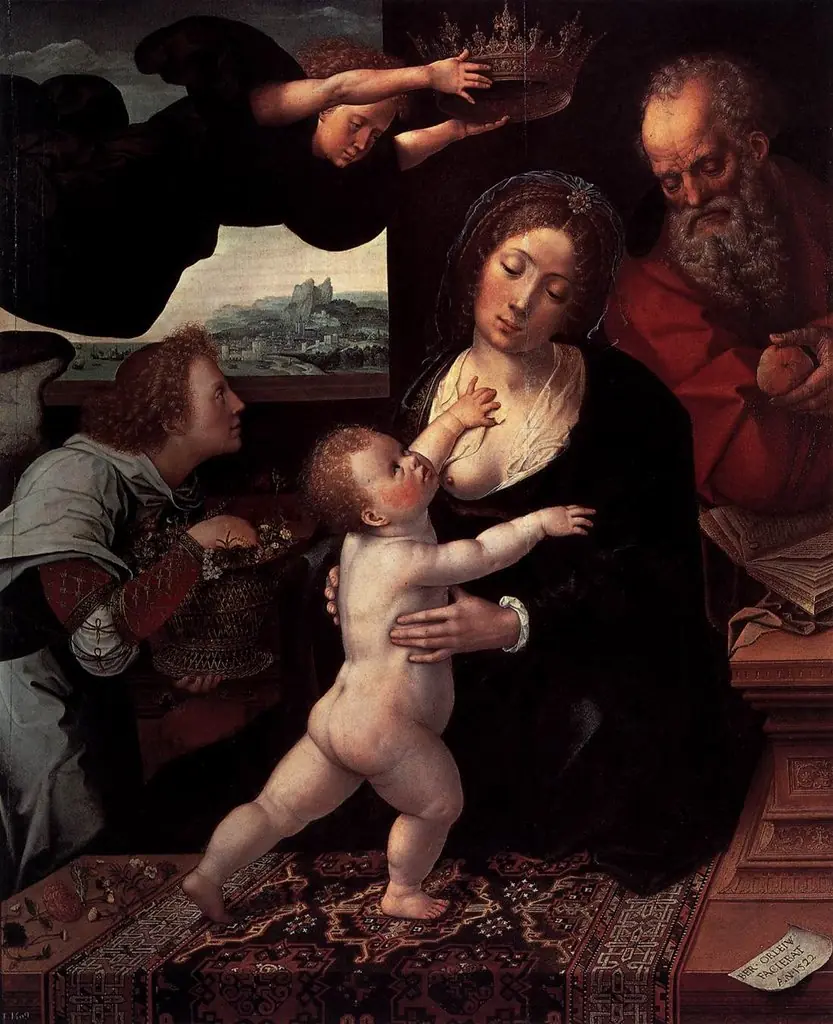 The Holy Family
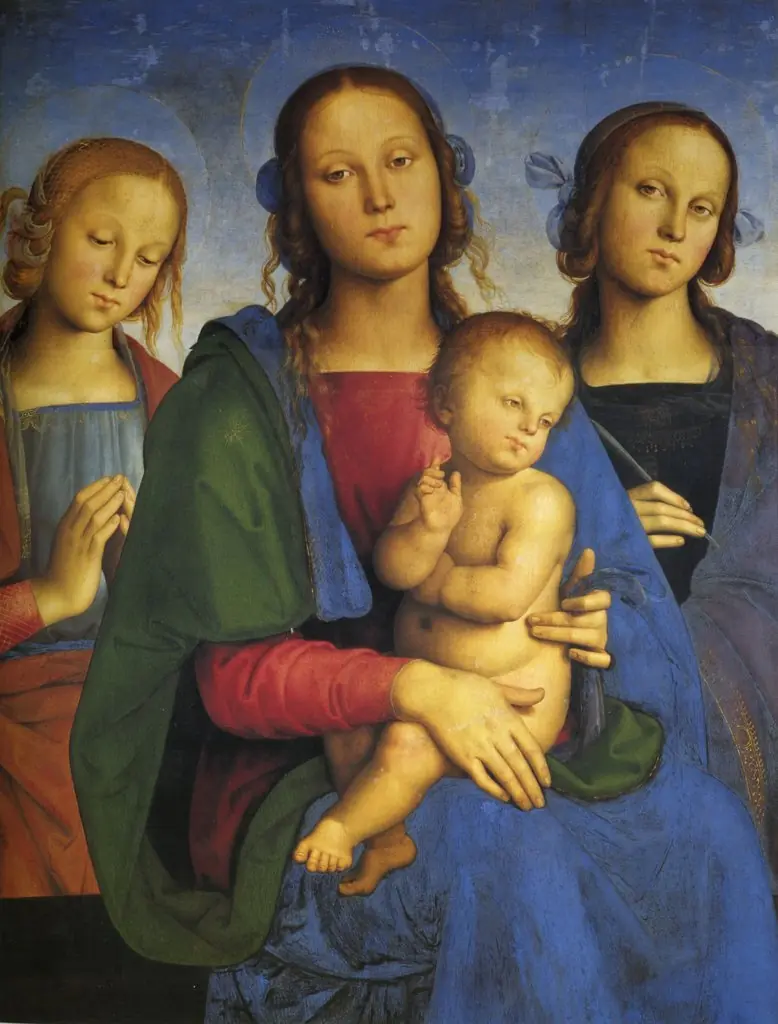 Madonna with child and two female saints
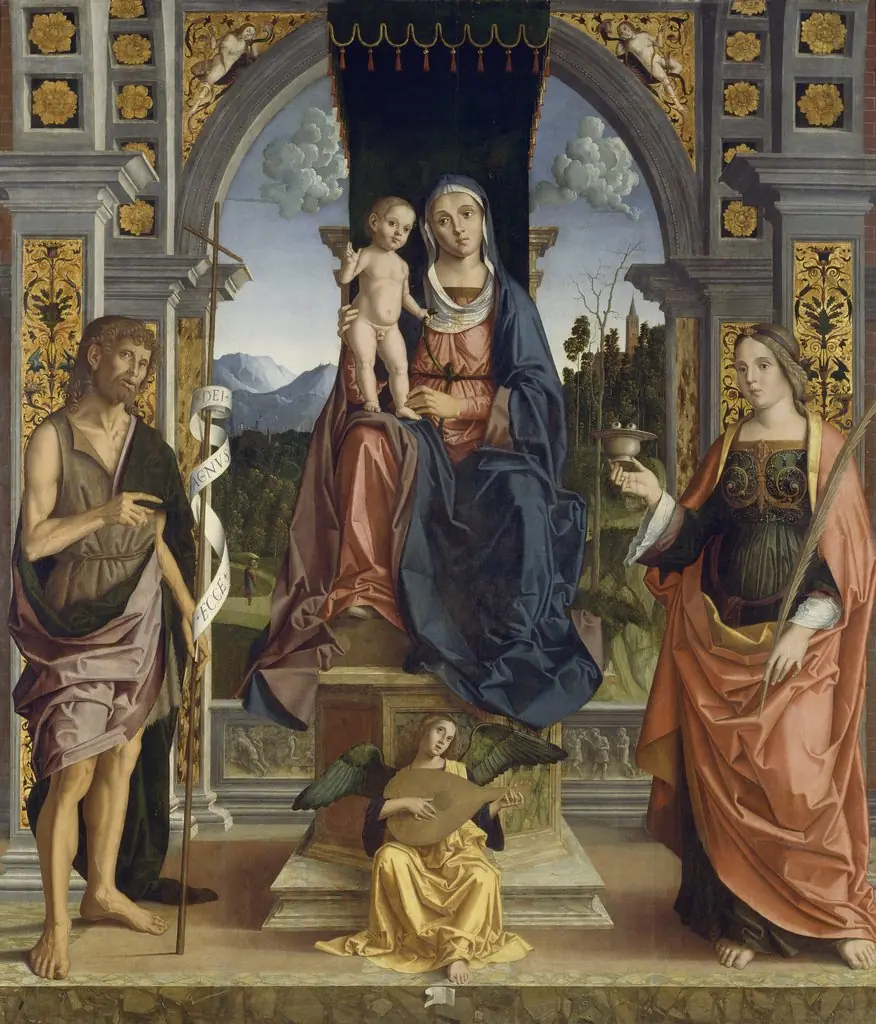 The Virgin and Child Enthroned, with Saints John the Baptist and Lucy
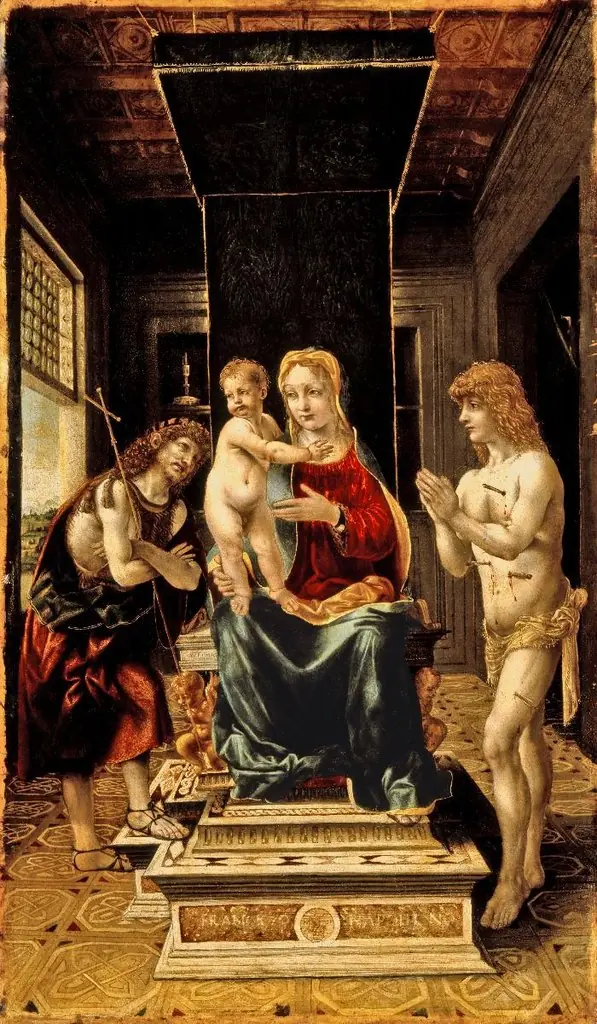 Thronende Madonna mit Johannes dem Täufer und Sebastian
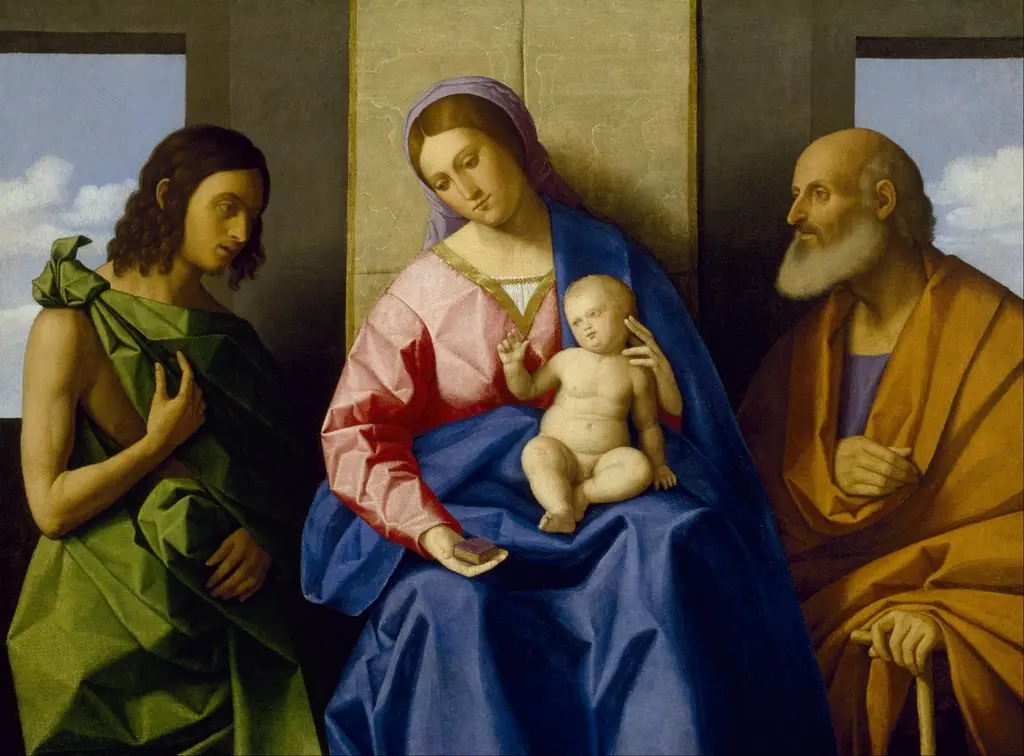 Virgin and Child with Saints John the Baptist and Joseph
 The Virgin and the Child with St. John the Baptist and St. Jerome