Artwork
Madonna with child and two female saints
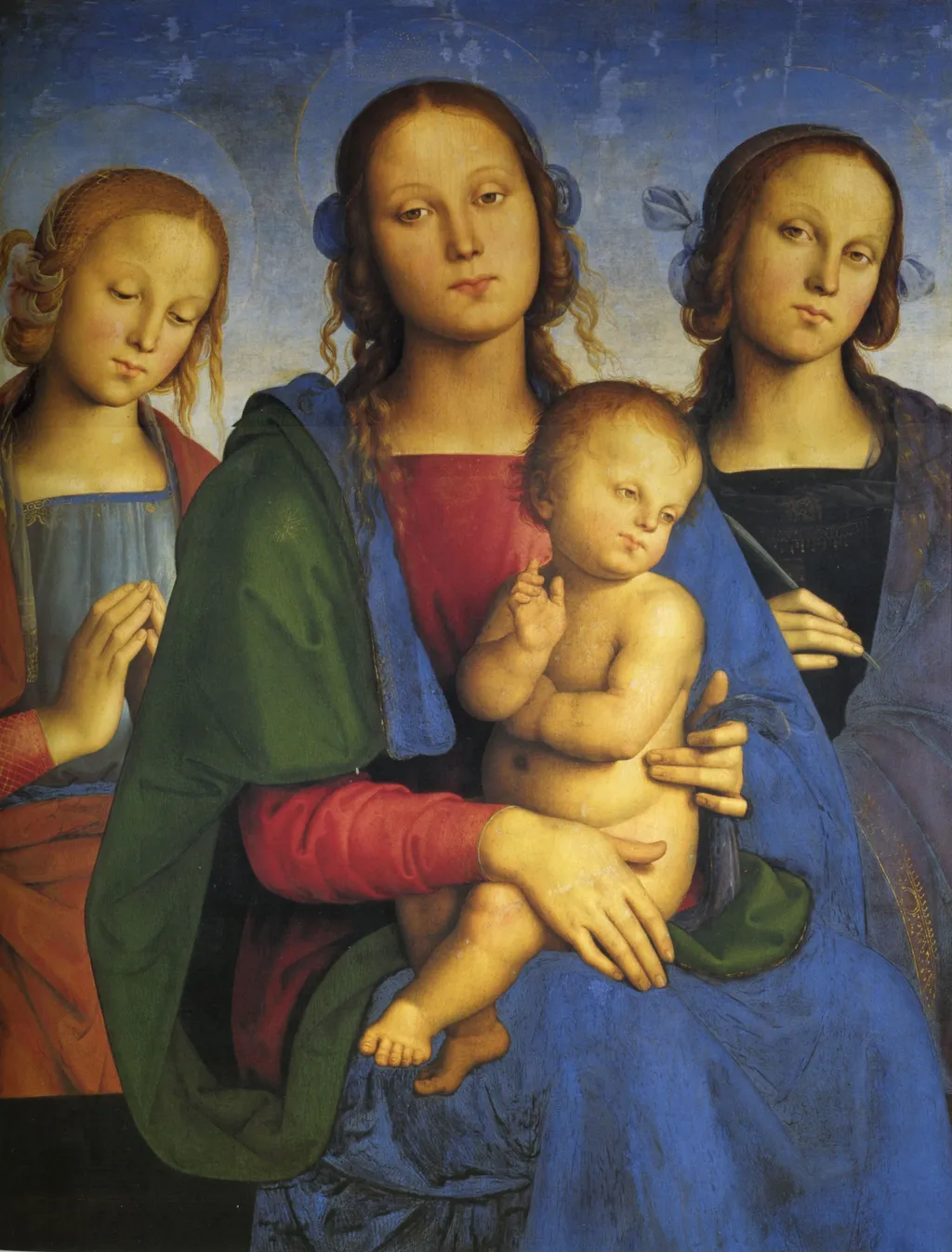
Madonna with child and two female saints is an oil painting by the High Renaissance artist Pietro Perugino. It dates from 1497 and is held in the collection of the Kunsthistorisches Museum.
About this work
Subject & Meaning
The composition follows a harmonious, symmetrical scheme characterized by rhythmic correspondences in the inclination of the figures' heads.
This religious work illustrates the Christian iconographic theme of the Virgin and Child flanked by saints. The central figures are Mary, holding the Christ Child in a blessing gesture, and Catherine of Alexandria, who is identified by the palm of martyrdom she holds as a symbol of victory. A second female saint stands to the left; while her identity remains uncertain, she is suggested to be either Rose of Viterbo or Mary Magdalene, depicted in silent contemplation with downcast eyes.
The composition follows a harmonious, symmetrical scheme characterized by rhythmic correspondences in the inclination of the figures' heads. All sacred figures bear thin golden halos. The depiction of the Virgin reflects Perugino's mature style, presenting a severe, older woman modeled on his wife, Chiara Fancelli, rather than the elegant youths of his earlier career.
This shift in representation aligns with the spiritual climate promoted by Savonarola, which was influential in Florence at the time.
Technique & Style
The work is executed in oil paint on a wooden panel, measuring 86.5 cm in height and 63 cm in width. Stylistically, the composition adheres to a calm and harmonious scheme governed by symmetry and rhythmic correspondences, particularly evident in the inclinations of the figures' heads. The scene derives from a cartoon reused for other Madonnas, such as those in the Louvre and Frankfurt, with only minor variations.
The figures are set against a light blue sky, and each is adorned with a fine golden halo. The depiction of the Virgin reflects Perugino's mature style, portraying a simple, severe woman of advanced age modeled after his wife, Chiara Fancelli, rather than the elegant youth of his earlier works. This stylistic shift aligns with the spiritual climate promoted by Savonarola in Florence at the time.
History & Provenance
Pietro Perugino's Madonna with Child and Two Female Saints was created around 1497, executed in oil on panel measuring 86.5 by 63 cm. The work derives from a preparatory cartoon that Perugino reused for related compositions, including a version in the Louvre and a reversed variant in the Städel in Frankfurt, with only minor variations between them. A copy, held in the Palatine Gallery in Florence, differs slightly from the original and is attributed by some scholars to Perugino's workshop and by others to the master himself. The painting is now housed in the Kunsthistorisches Museum in Vienna, where it remains part of the collection.
The sources do not provide a specific inventory or accession number, and no exhibition history is documented in the available sources.
Context
Painted by Pietro Perugino and dated to 1497, the Madonna with Child and Two Female Saints belongs to the Italian Renaissance and is held in the Kunsthistorisches Museum in Vienna. The composition derives from a preparatory cartoon that Perugino reused for related Madonnas, including the version in the Louvre and a reversed variant at the Städel in Frankfurt, while a closely related copy in the Palatine Gallery in Florence is variously attributed to his workshop or to the master himself. The work illustrates a standard Christian iconographic theme of the Virgin and Child flanked by saints, here Catherine of Alexandria and an unidentified figure, possibly Rose of Viterbo or Mary Magdalene.
The painting is also read as a product of Perugino's mature period, in which the Virgin's face, modeled on his wife Chiara Fancelli, replaces the elegant young woman of his earlier pictures with a simpler, more severe, older type, in keeping with the austere spiritual climate promoted by Savonarola in late-Quattrocento Florence.
Overview
This panel painting, created by Pietro Perugino around 1495, depicts the Madonna with the Christ Child and two female saints. Executed in tempera, the artwork is a devotional image that adheres to traditional Christian iconography. It is currently housed in the Kunsthistorisches Museum in Vienna, where it represents a notable example of late 15th-century Italian Renaissance art.
Own this work as a print
Artist & collection
Artist
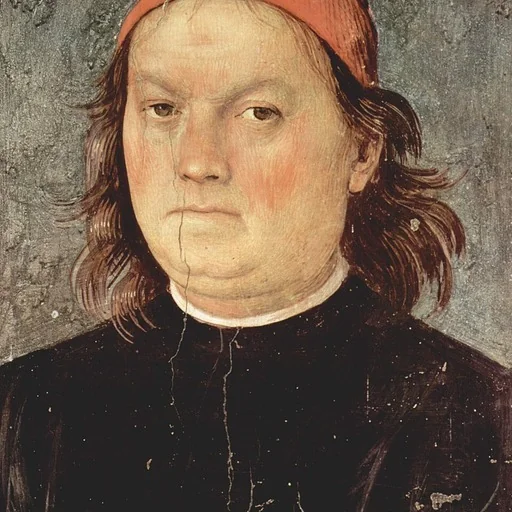
Pietro Perugino (US: PERR-ə-JEE-noh, -oo-; Italian:; born Pietro Vannucci or Pietro Vanucci; c.

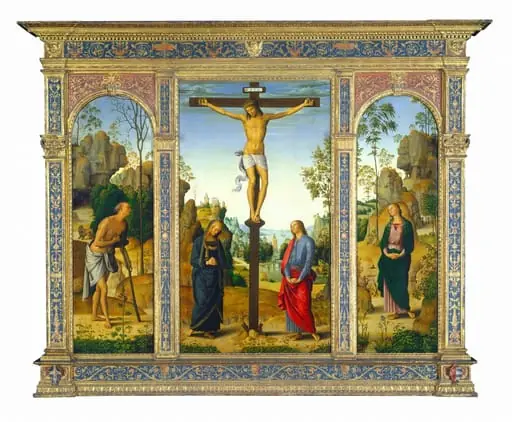 The Crucifixion with the Virgin, Saint John, Saint Jerome, and Saint Mary Magdalene
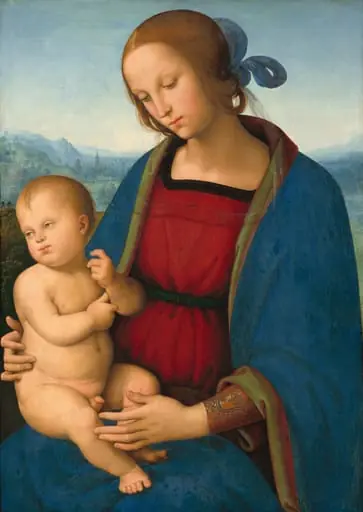 Madonna and Child
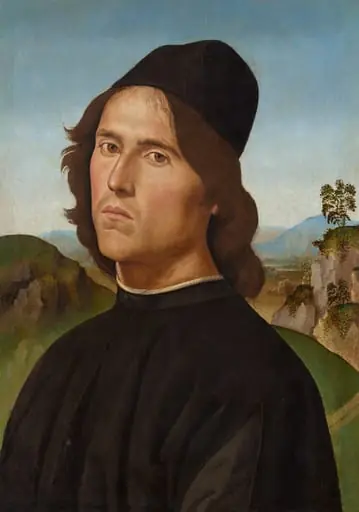 Portrait of Lorenzo di Credi
![The Crucifixion with the Virgin, Saint John, Saint Jerome, and Saint Mary Magdalene [right panel], by Pietro Perugino](https://artifactworldgallery.com/img/pietro-perugino--the-crucifixion-with-the-virgin-saint-john-saint-jerome-and--7d9a2b1f47b9fc9b-w320.webp) The Crucifixion with the Virgin, Saint John, Saint Jerome, and Saint Mary Magdalene [right panel]
The Crucifixion with the Virgin, Saint John, Saint Jerome, and Saint Mary Magdalene [right panel]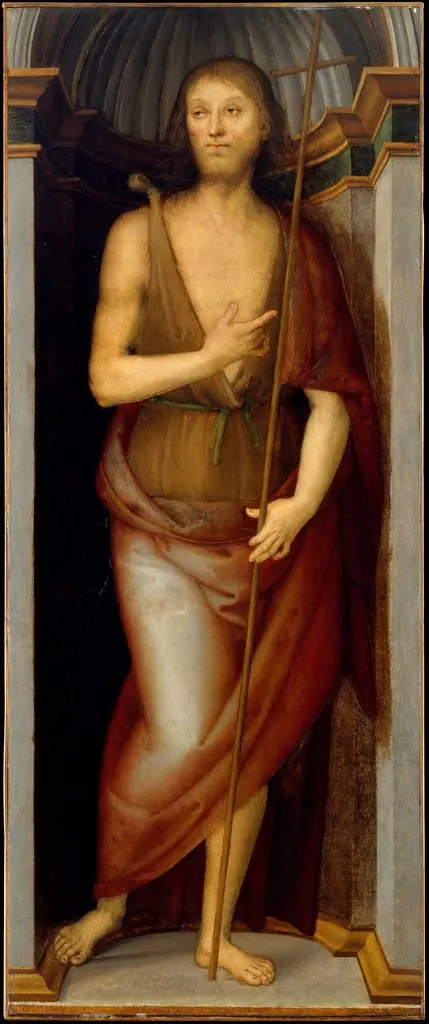 Saint John the Baptist; Saint Lucy
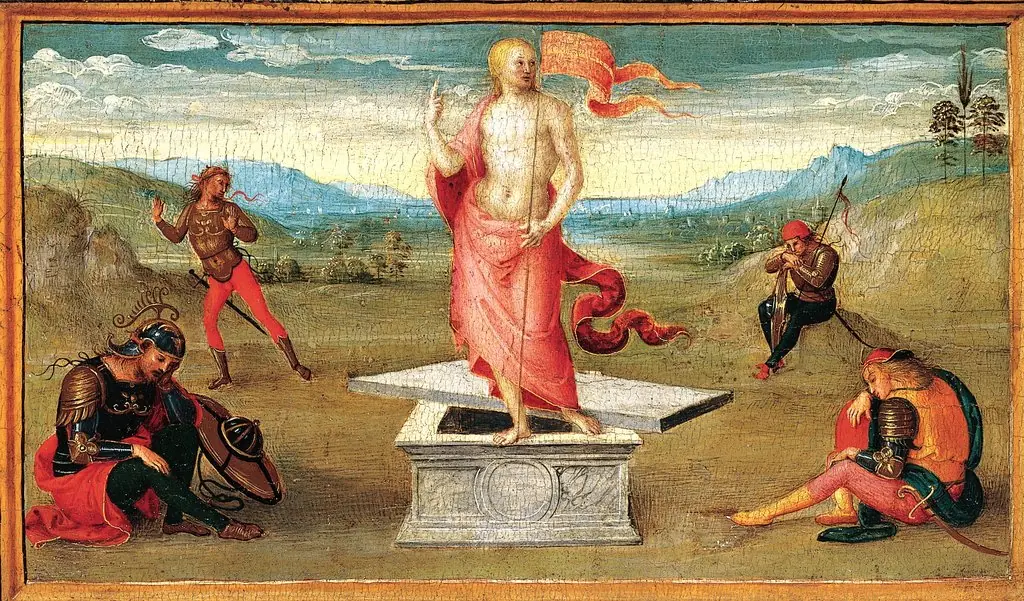 The Resurrection
![The Crucifixion with the Virgin, Saint John, Saint Jerome, and Saint Mary Magdalene [left panel], by Pietro Perugino](https://artifactworldgallery.com/img/pietro-perugino--the-crucifixion-with-the-virgin-saint-john-saint-jerome-and--1017dec17318baa5-w320.webp) The Crucifixion with the Virgin, Saint John, Saint Jerome, and Saint Mary Magdalene [left panel]
The Crucifixion with the Virgin, Saint John, Saint Jerome, and Saint Mary Magdalene [left panel]![The Crucifixion with the Virgin, Saint John, Saint Jerome, and Saint Mary Magdalene [middle panel], by Pietro Perugino](https://artifactworldgallery.com/img/pietro-perugino--the-crucifixion-with-the-virgin-saint-john-saint-jerome-and--a9b4c312771e3f71-w320.webp) The Crucifixion with the Virgin, Saint John, Saint Jerome, and Saint Mary Magdalene [middle panel]
The Crucifixion with the Virgin, Saint John, Saint Jerome, and Saint Mary Magdalene [middle panel]
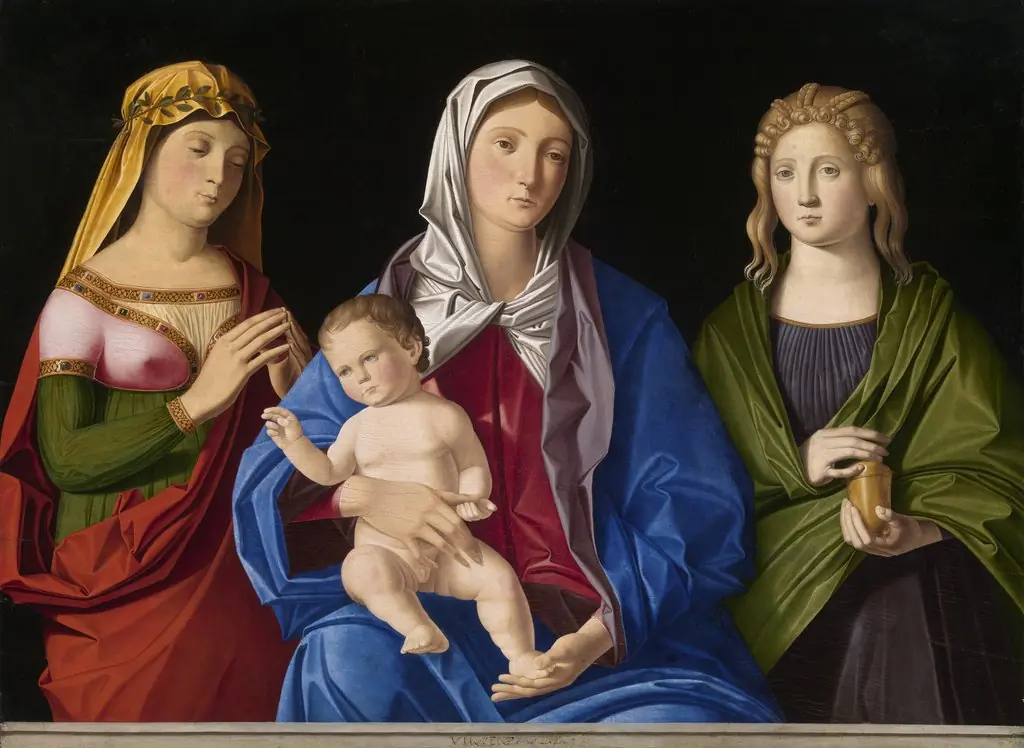 Virgin and Child with Saint Mary Magdalene and Another Female Saint
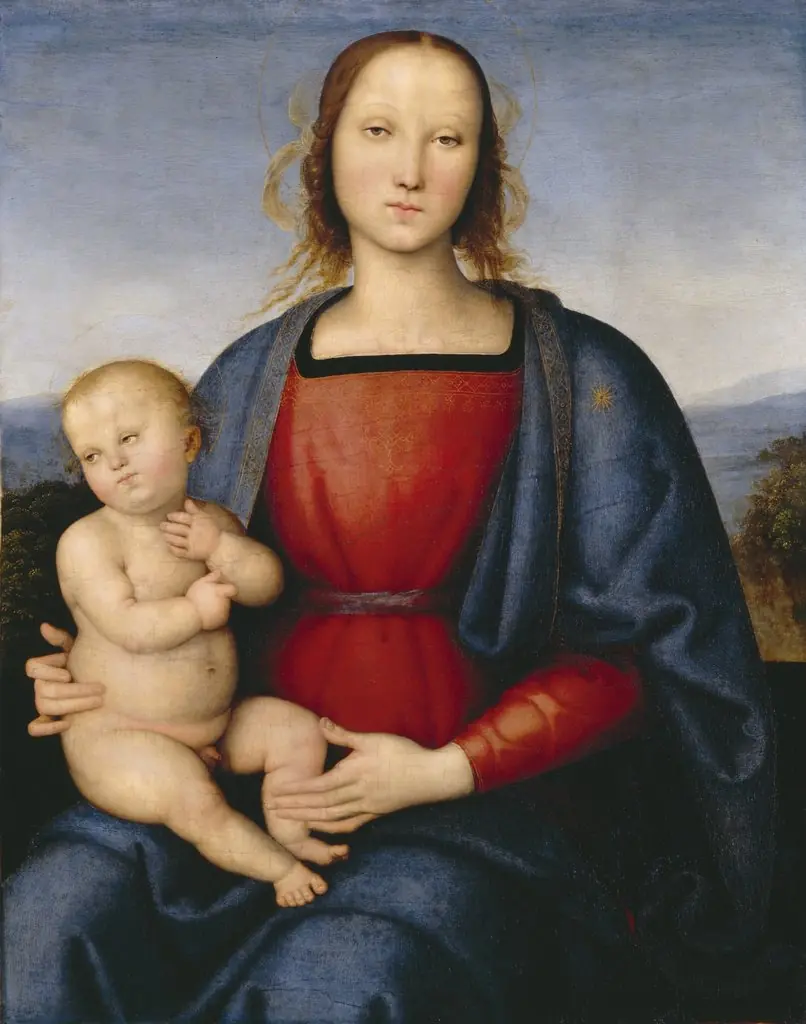 Madonna and Child
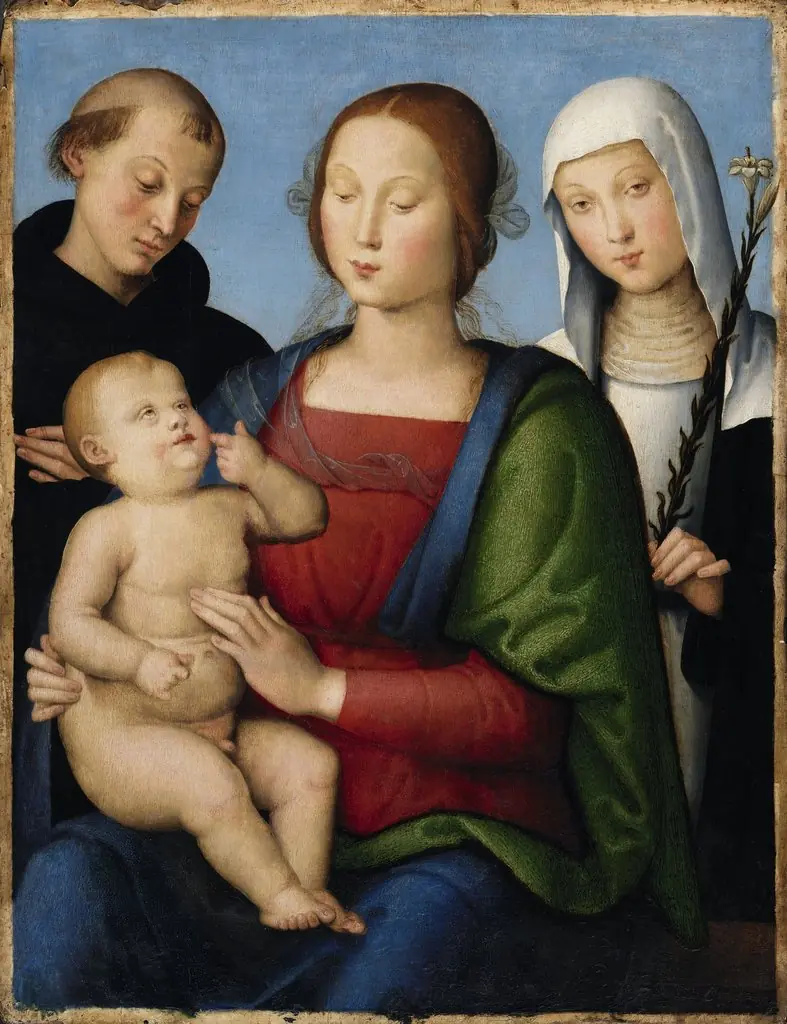 The Virgin and Child with Saints Nicholas of Tolentino and Catherine of Siena
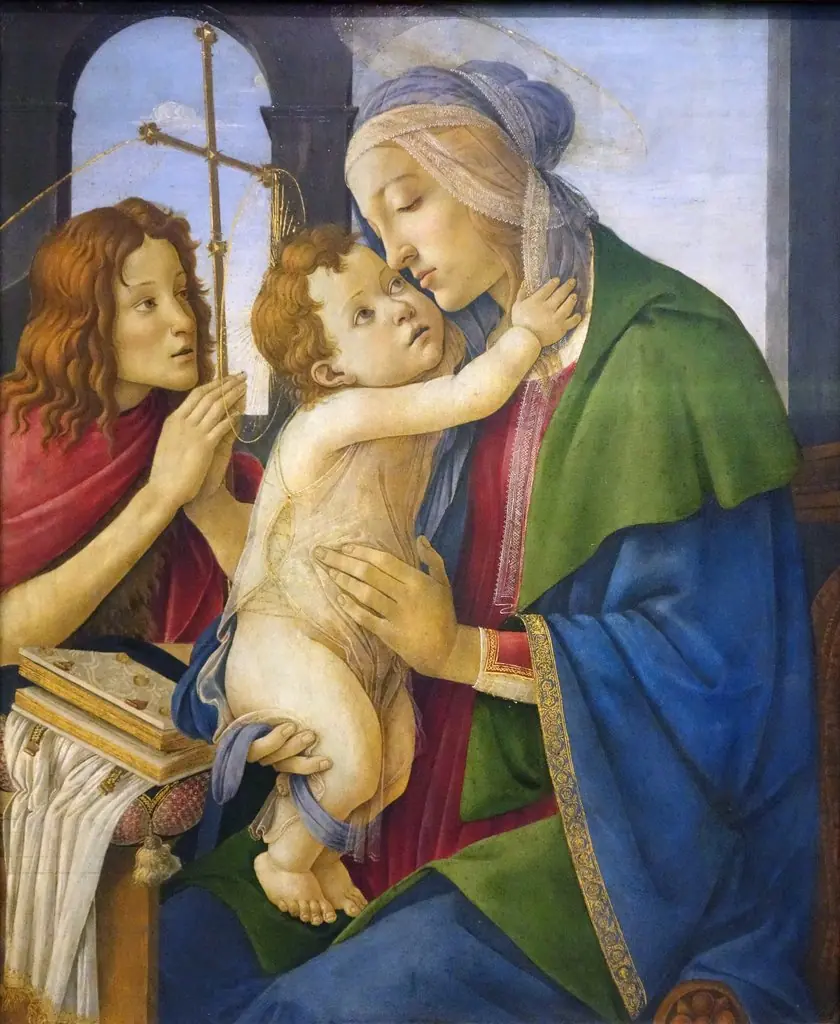 The Virgin and Child with the Young Saint John the Baptist
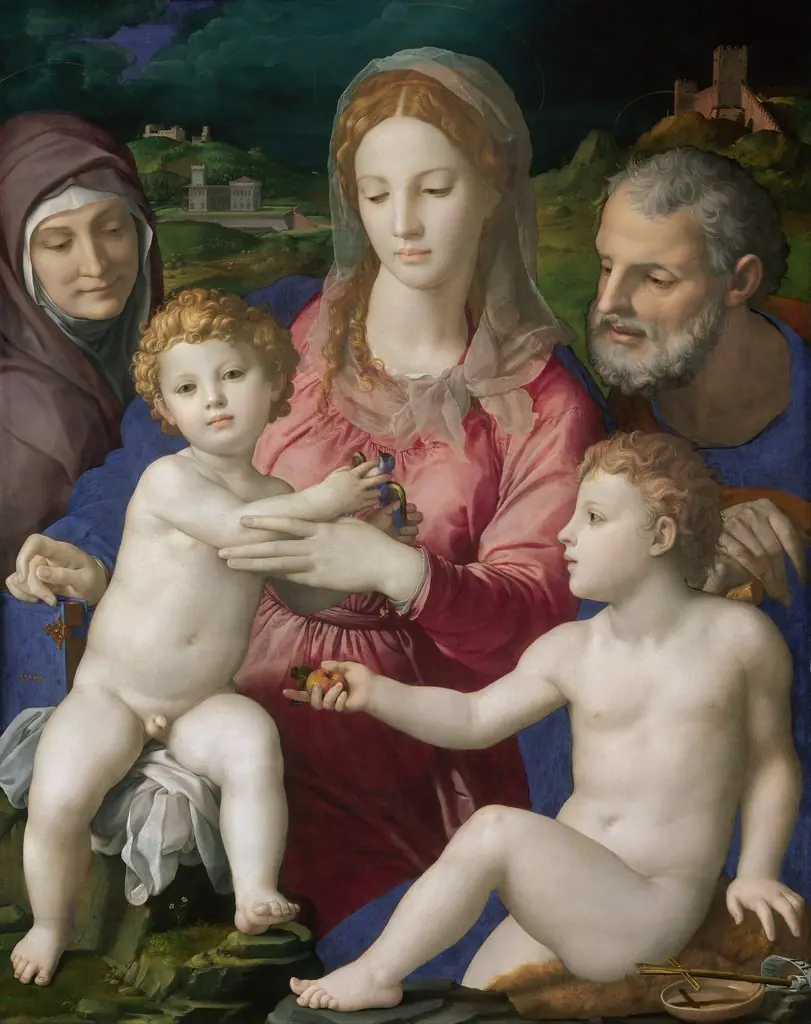 Holy Family with St. Anne and the Infant St. John
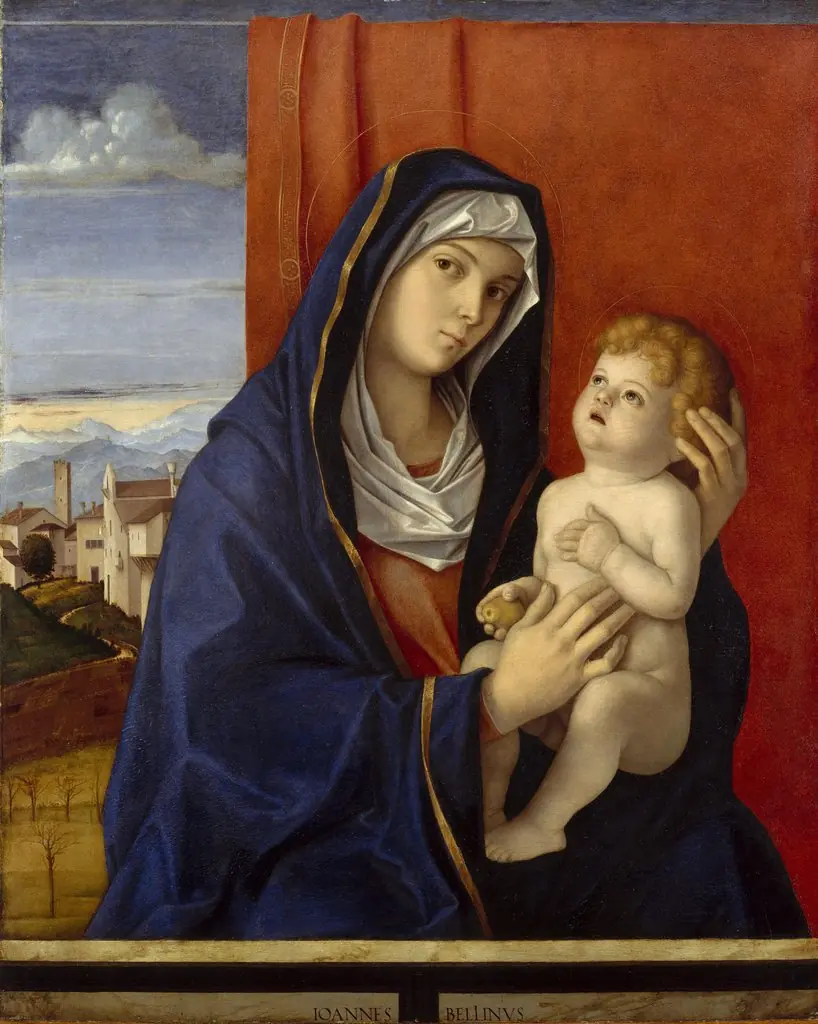 Madonna and Child
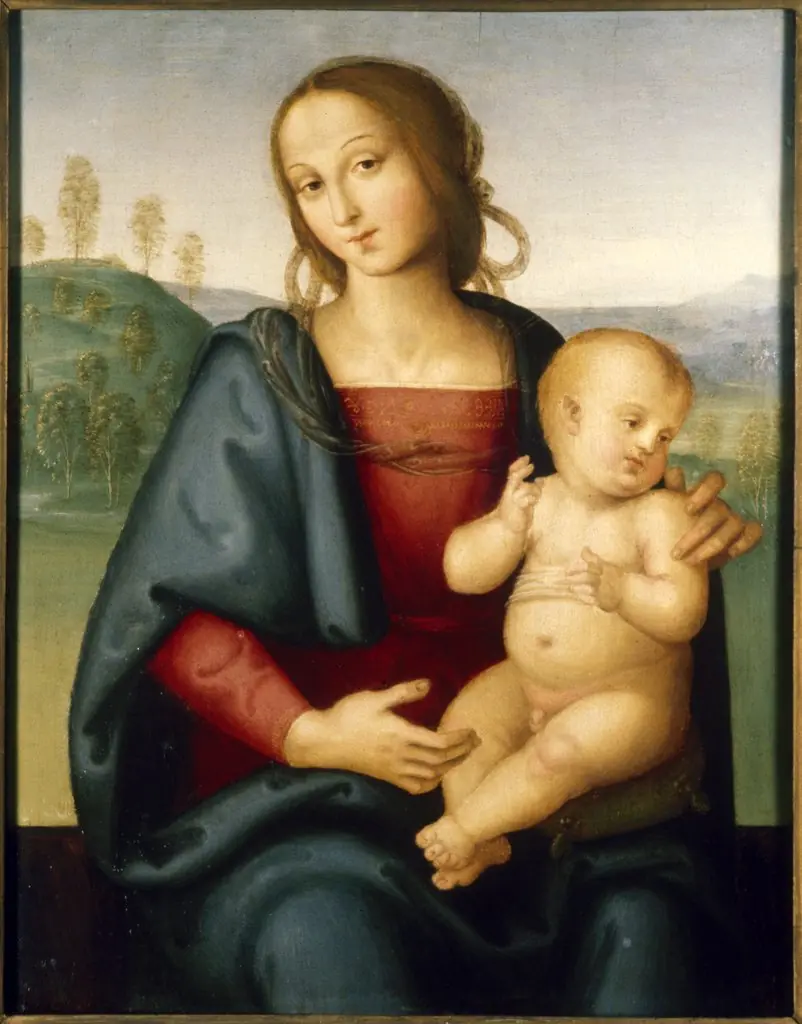 Madonna and Child
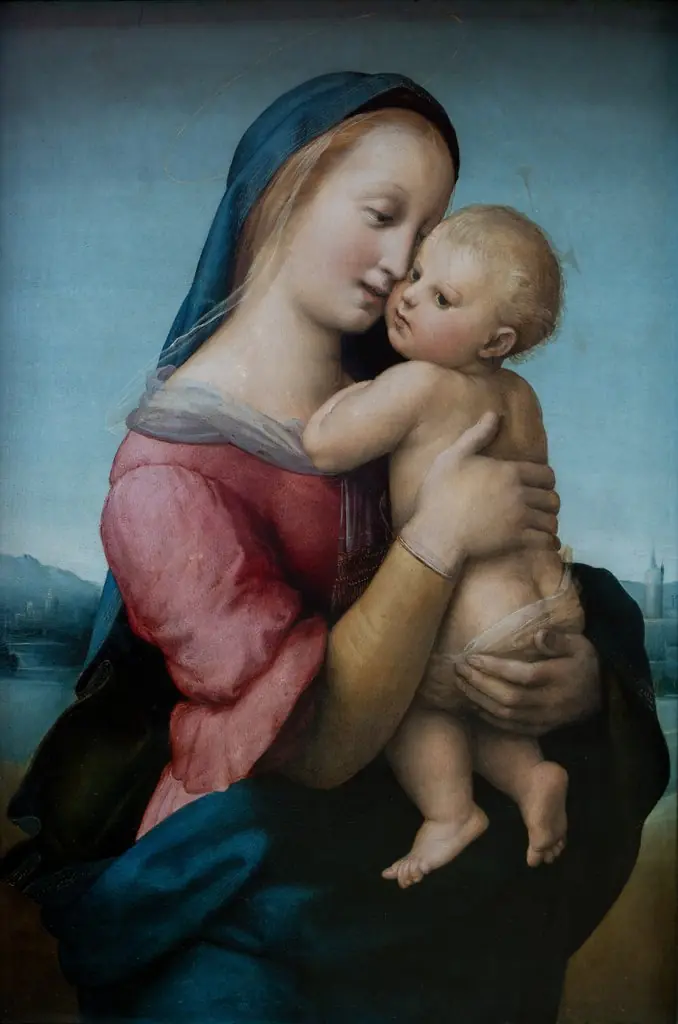 Tempi Madonna
 Madonna and Child
 Madonna and Child with the Infant Saint John
- Madonna and Child with Saints