Artwork
The Continence of Scipio
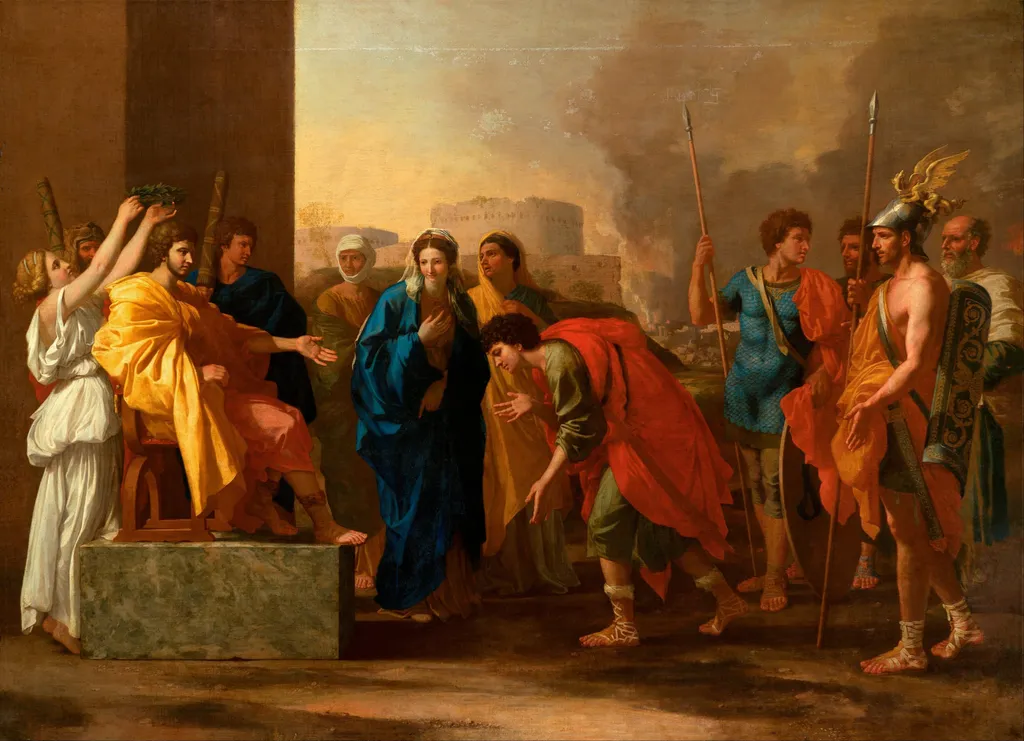
The Continence of Scipio is an oil painting by the Early Baroque Italian artist Nicolas Poussin. It dates from 1640 and is held in the collection of the Pushkin Museum of Fine Arts.
About this work
Overview
The Continence of Scipio is an oil on canvas history painting by the French artist Nicolas Poussin, dated to 1640.
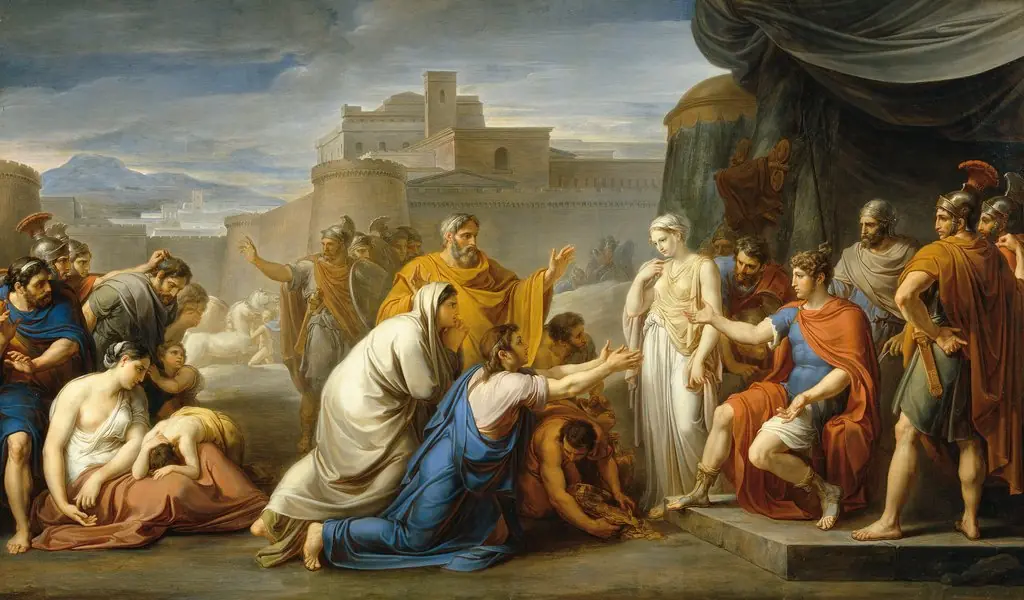
The Continence of Scipio is an oil on canvas history painting by the French artist Nicolas Poussin, dated to 1640. Measuring 114.5 by 163.5 cm, the work exemplifies the Classicist movement's emphasis on order, clarity, and moral philosophy. It is currently held in the Pushkin Museum in Moscow. The painting illustrates a celebrated episode from the Second Punic War, in which the Roman general Scipio Africanus returns a beautiful captive woman to her betrothed rather than claiming her as a prize of war, an act of restraint and generosity that earned him both the captive's gratitude and military allies for Rome.
Subject & Meaning
The painting depicts the Roman general Scipio Africanus seated on an elevated platform, extending his hand toward a young Celtiberian chieftain named Allucius and his affianced bride. Having captured the maiden during the siege of Carthago Nova, Scipio overcomes his passions and refuses the ransom offered by her parents, instead returning her to Allucius along with the treasure as a wedding gift. The composition features twelve figures in total: the noble Roman in a vesture and red mantle, the bowing chieftain, the bride viewed from the front accompanied by three women, a female figure in white holding a chaplet over Scipio's head, two lictors bearing fasces, and a group of four soldiers. The laurel wreath held by the female figure crowns Scipio not merely for military valor but for his wisdom and moral rectitude. The fasces carried by the lictors symbolize Scipio's high proconsular authority, though the absence of axes within the bundles is a historical inaccuracy, as wartime proconsuls outside Rome would have possessed the right to impose death sentences.
Technique & Style
Poussin arranges the figures in a horizontal, frieze-like composition across a shallow, stage-like space, a method he often refined using a perspective device known as the Poussin box, where he arranged wax figures to achieve harmonious spatial solutions. The narrative is conveyed through precise, dignified gestures and clear, saturated colors. The palette is dominated by warm ochres, burnt oranges, and deep blues, with strong chiaroscuro lighting illuminating the central figures against darker edges. The brushwork is smooth and finished, typical of academic history painting, with careful modeling of drapery and flesh. Architectural ruins and a distant round structure set the wartime scene, while the strict order and local color reflect Poussin's mature Classicist style and his theory of the Modes, which dictated that expressive devices must correspond to the content of the work.
History & Provenance
Commissioned in 1640 by Abbe Gian Maria Roscioli, the secretary to Pope Urban VIII, the painting subsequently changed owners several times before entering the Walpole collection in England during the first half of the 18th century. In 1779, Catherine the Great purchased the work for the Hermitage Museum. It remained in the Hermitage until 1930, when it was reassigned to the Pushkin Museum of Fine Arts in Moscow, where it remains today. The painting's time in the Walpole collection is further documented by an engraving made by Francis Legat and published by John Boydell in 1784 for The Houghton Gallery. A differing grisaille version of the composition was formerly housed in the Dusseldorf Gallery.
Context
The episode of Scipio's clemency originates from the historian Livy, who adapted an earlier account by Polybius. While Polybius framed the general's act primarily as one of sexual restraint, Livy introduced the character of Allucius and emphasized Scipio's magnanimity, a diplomatic maneuver that secured fourteen hundred Celtiberian horsemen for Rome. This narrative became a touchstone of the humanist tradition of moral exempla during the Renaissance and reached peak popularity in the 17th and 18th centuries, appearing in literature, operas, and visual arts. Poussin's interpretation perfectly suited his interest in history painting as moral philosophy, created during a pivotal moment in his career. In 1640, he was ordered to Paris by King Louis XIV to produce paintings for Versailles, but he struggled with court life and returned to Italy in 1642, after which his style became increasingly intellectual and restrained.
Legacy
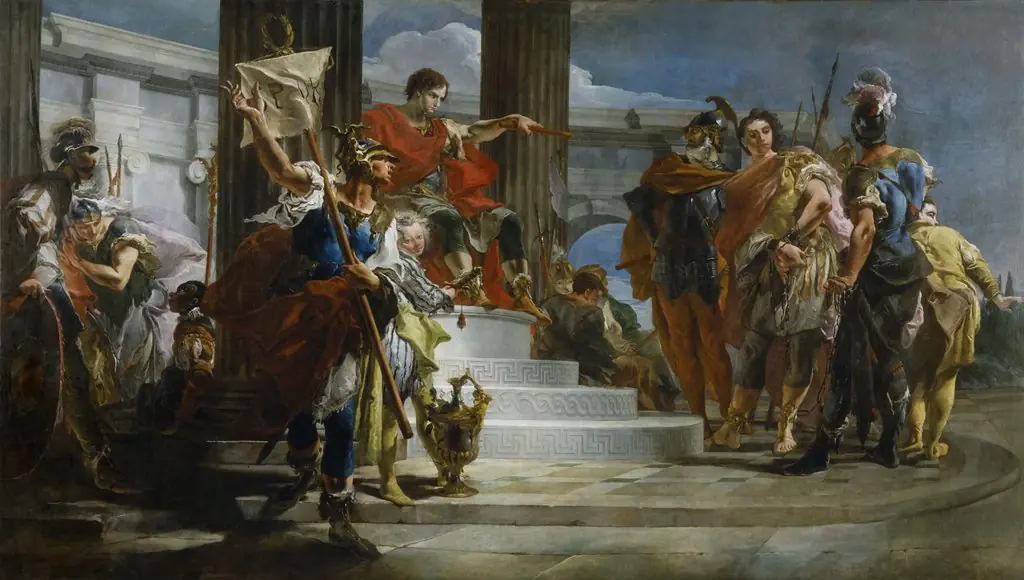
The story of Scipio's continence remained a popular motif in European culture long after Poussin's rendition, inspiring numerous dramatic and operatic treatments, including works by Francesco Cavalli, George Frideric Handel, and Johann Christian Bach. In the visual arts, the subject was frequently reproduced in prints and tapestry series, often paired with other examples of classical clemency such as Alexander the Great's treatment of the family of King Darius. Poussin's composition specifically endured through reproductive engravings, such as the 1784 print by Francis Legat, which circulated the design among collectors and solidified the painting's place in the canon of classical moral exempla.
Own this work as a print
Artist & collection
Artist
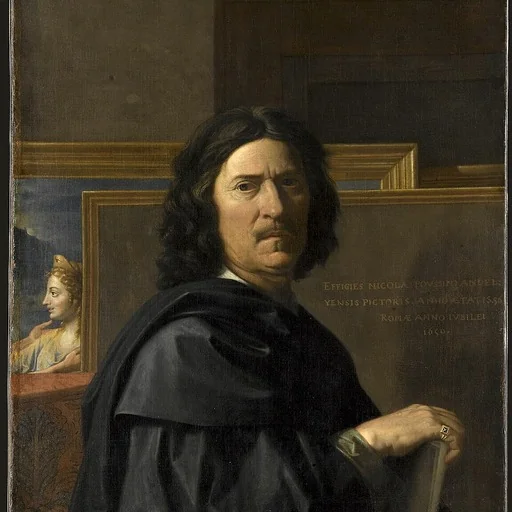
Nicolas Poussin (UK: US: French:; June 1594 – 19 November 1665) was a leading painter of the classical French Baroque style, although he spent most of his working life in Rome.

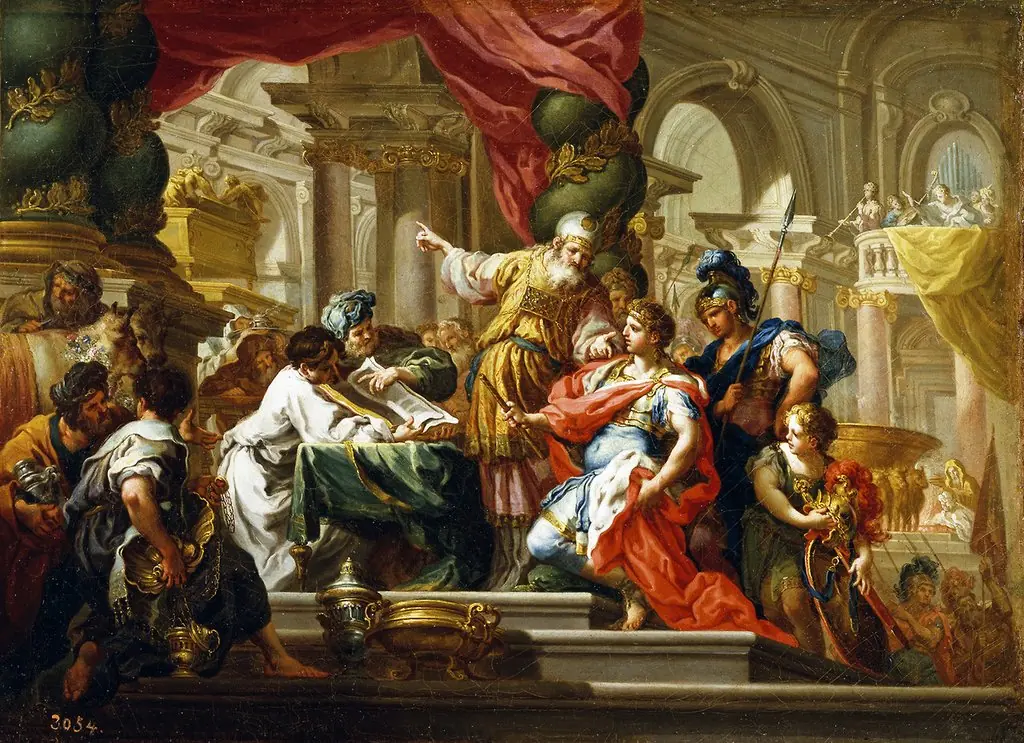 Alexander the Great in the Temple of Jerusalem
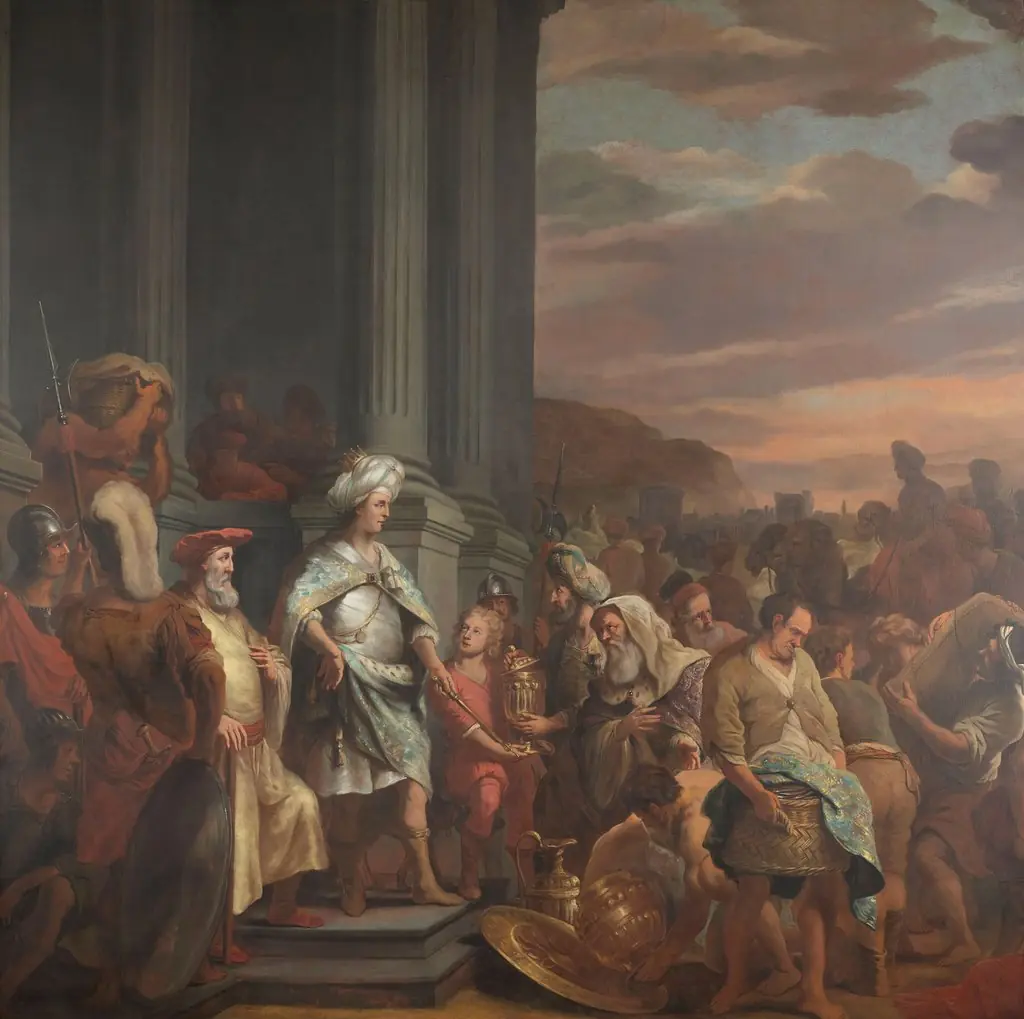 Salomo ontvangt geschenken
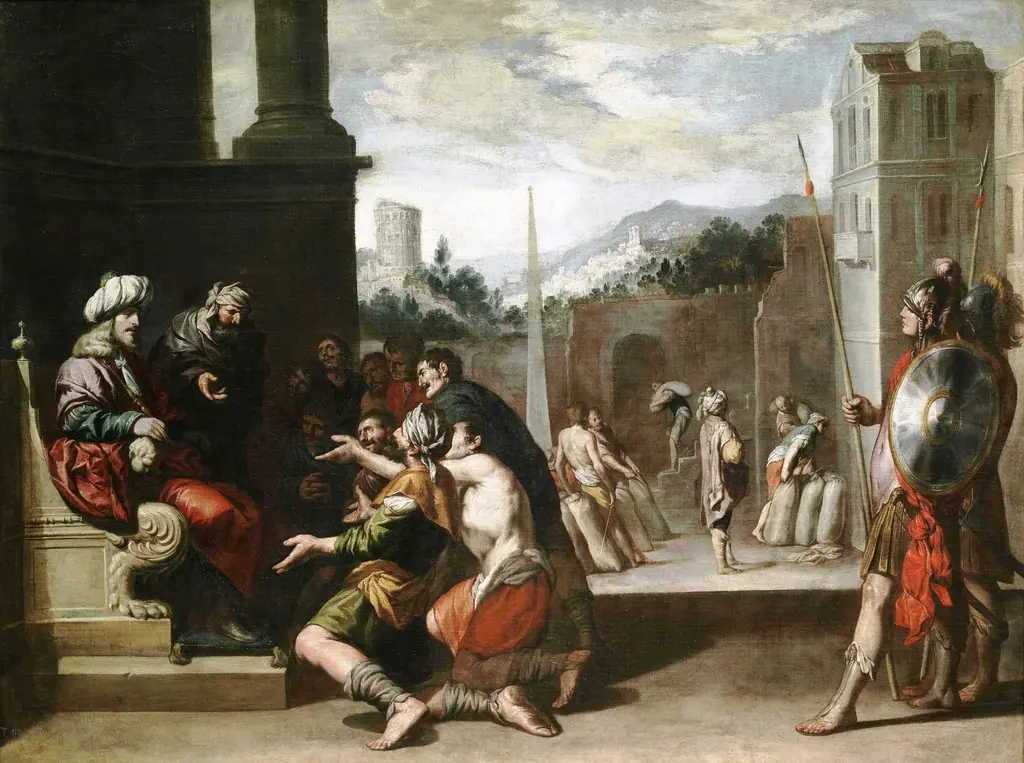 Joseph orders Simeon’s Imprisonment
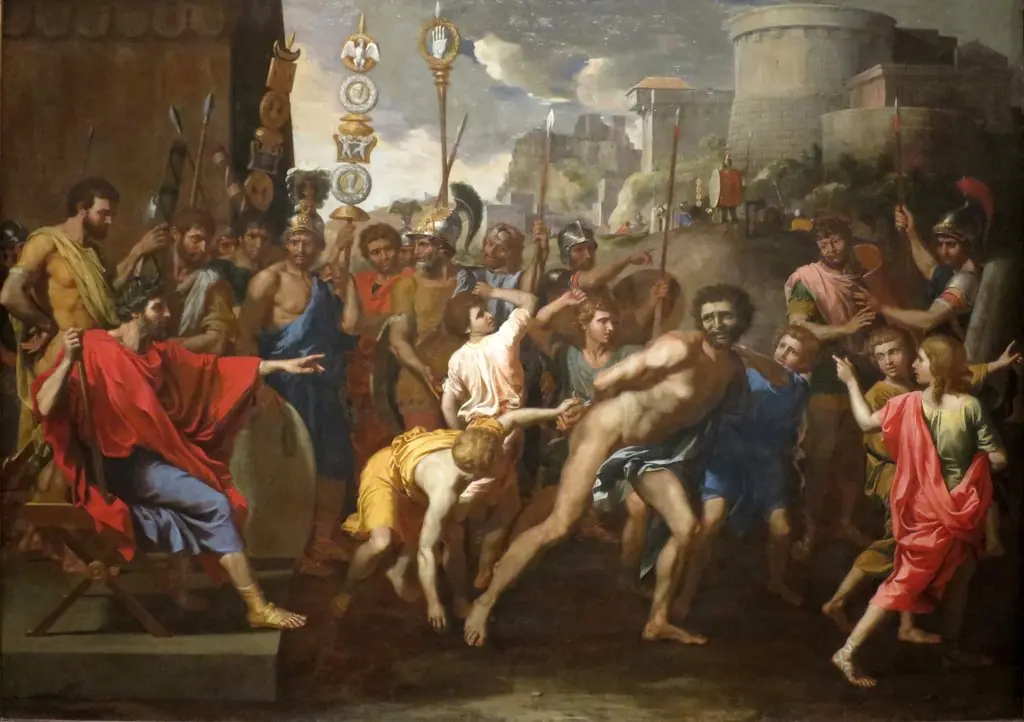 Camillus and the Schoolmaster of Falerii
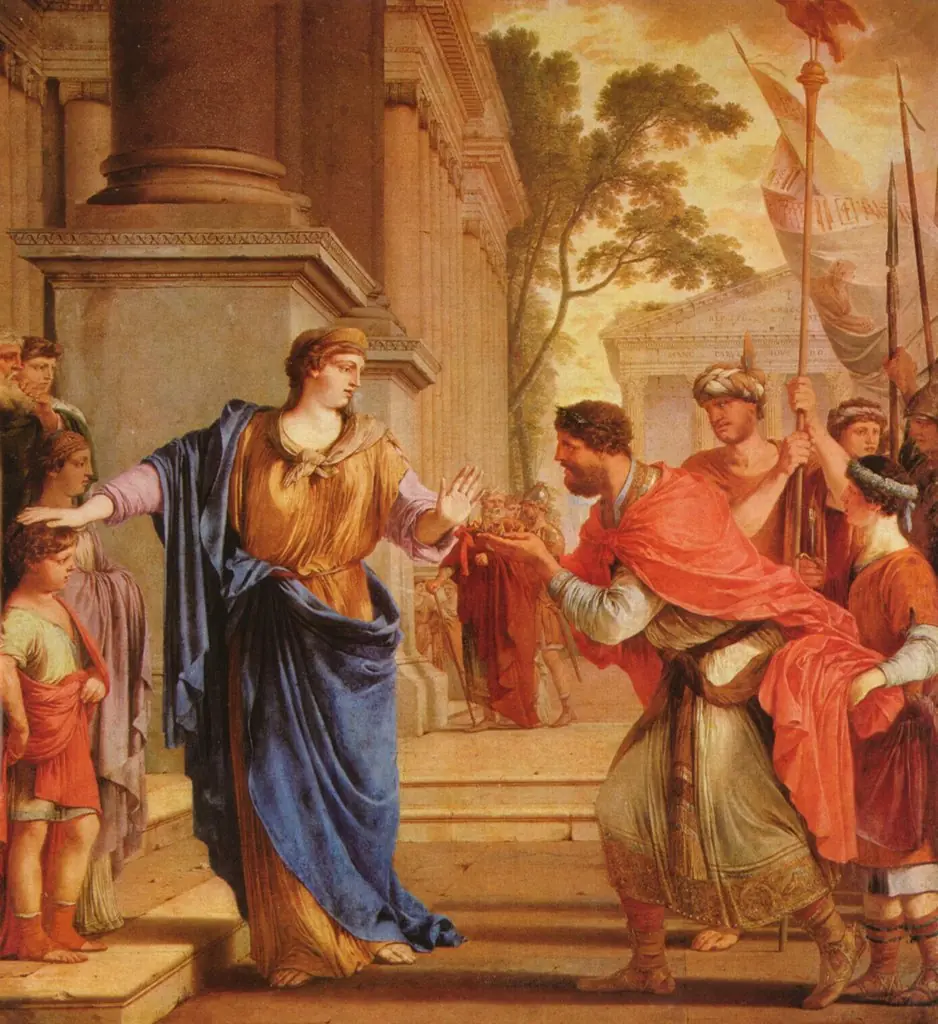 Cornelia rejects the crown of the Ptolemies
 Scipios Mäßigung
 Christ Receiving the Children
 Paul and Barnabas at Lystra
 Susannah accused of adultery
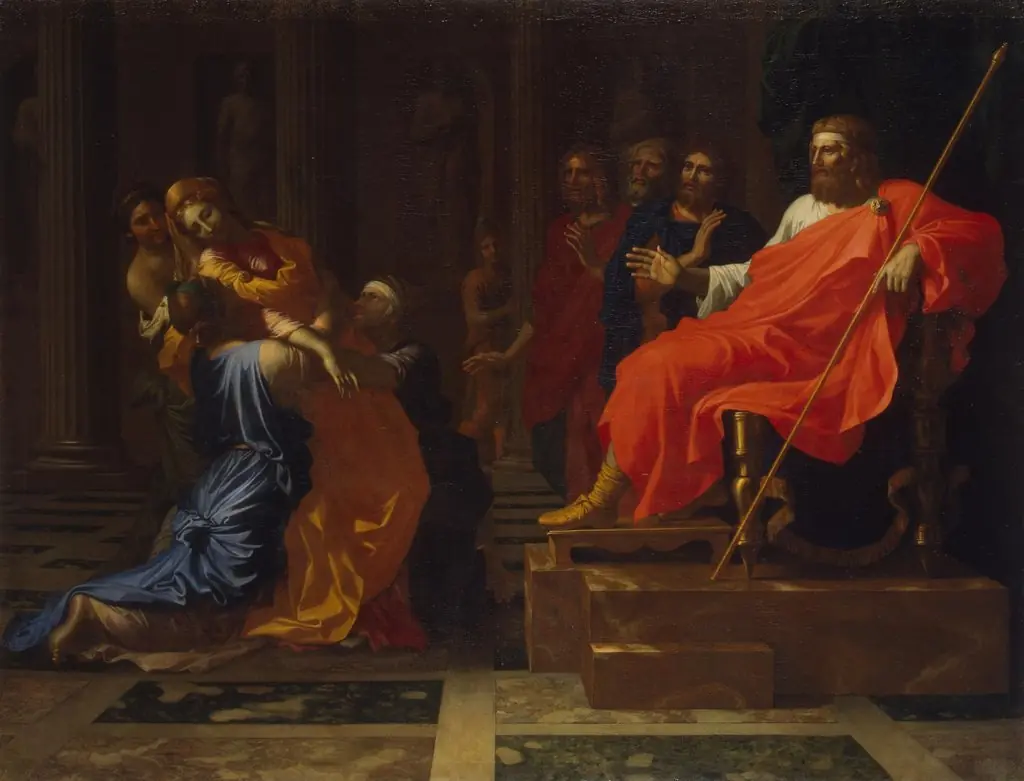 Esther before Ahasuerus
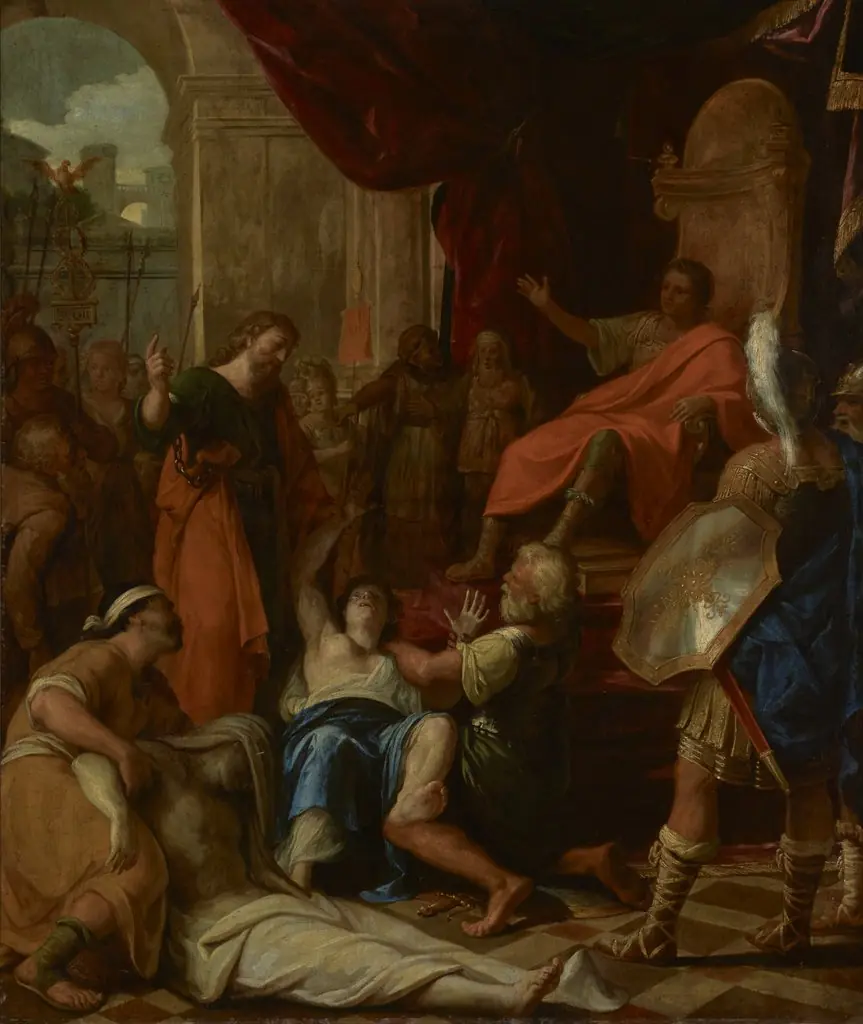 Christ Before Pilate
- Scipio Africanus Freeing Massiva