Artwork
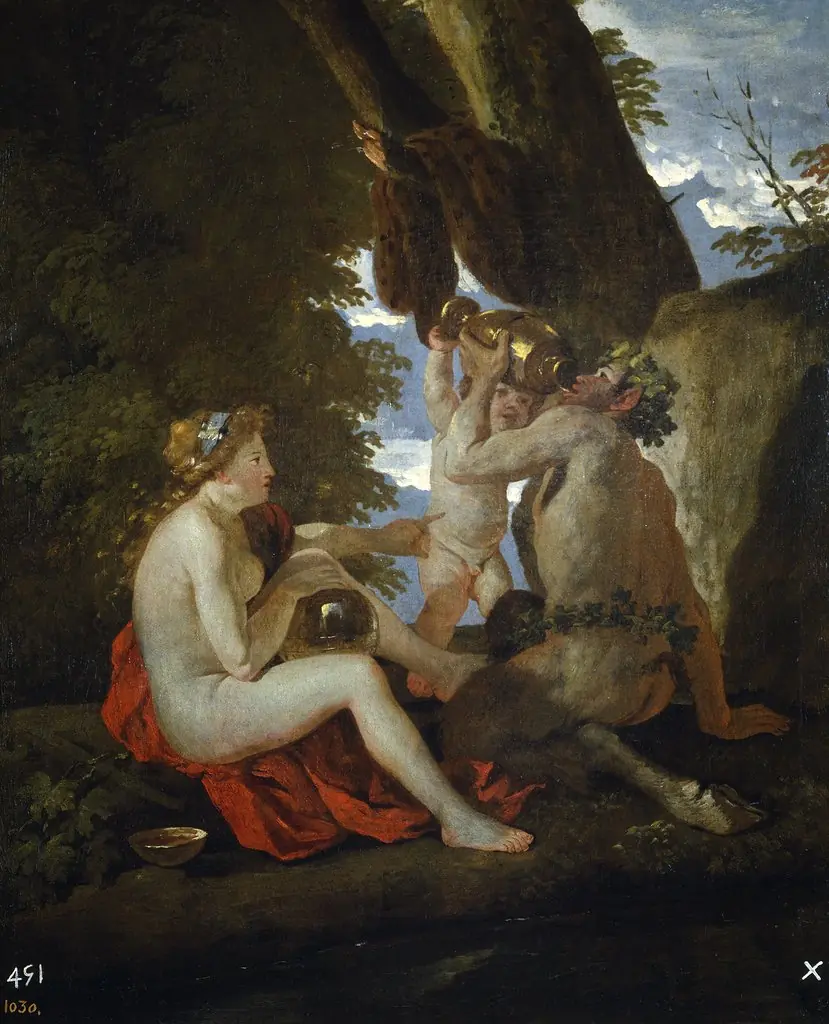
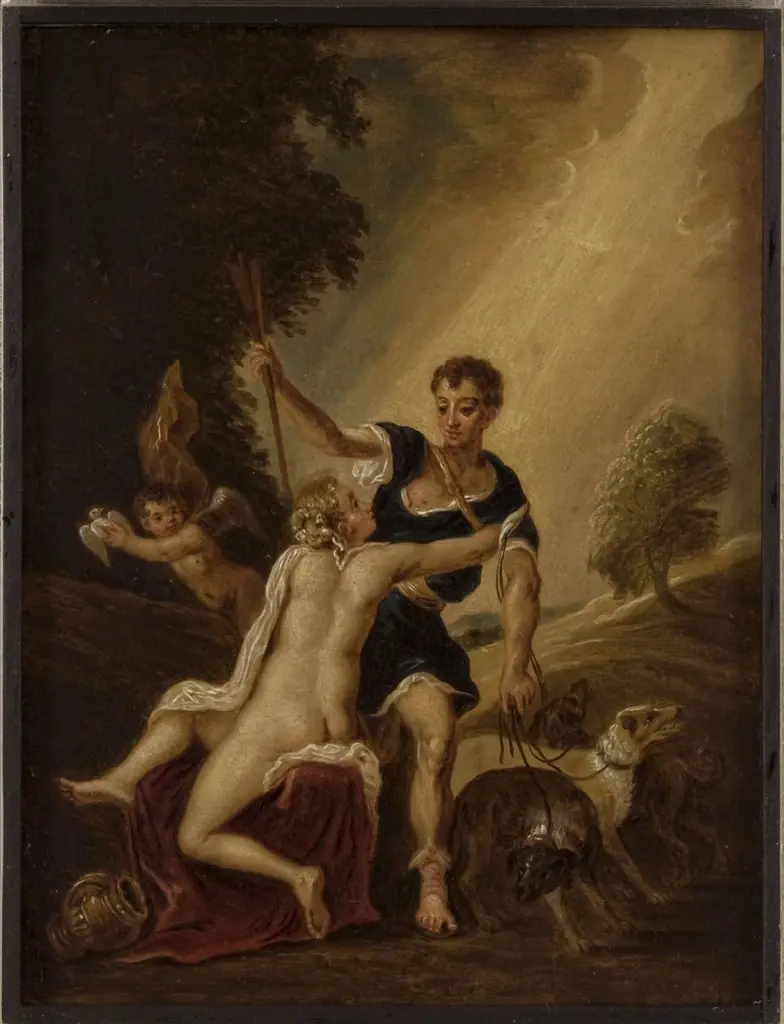
Venus, Faun and Putti
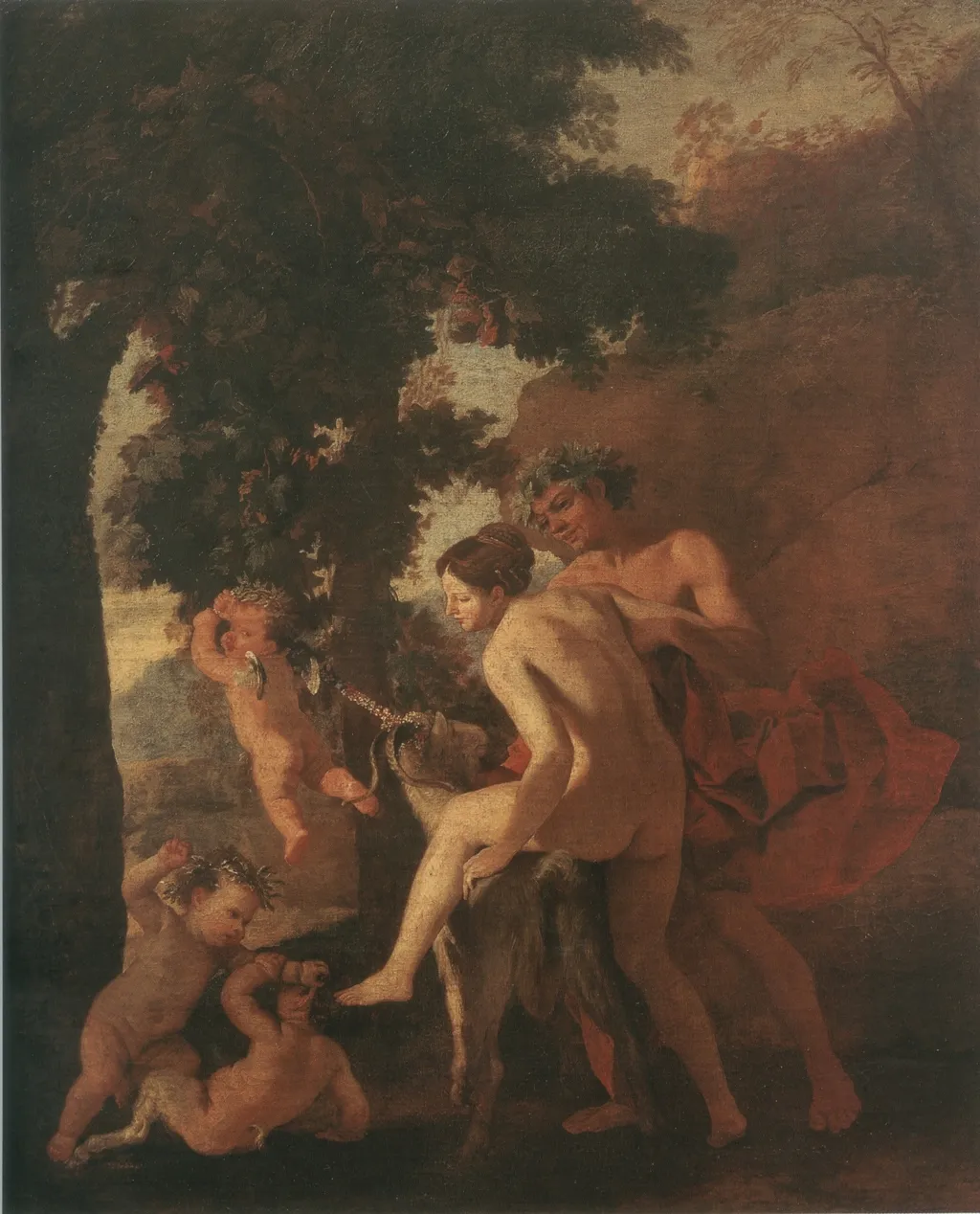
Venus, Faun and Putti is an oil painting by the Flemish Baroque painting artist Nicolas Poussin. It dates from 1631 and is held in the collection of the Hermitage Museum.
About this work
Overview
Venus, Faun and Putti is an oil-on-canvas mythological painting by the French Baroque artist Nicolas Poussin, dated to 1631.
Venus, Faun and Putti is an oil-on-canvas mythological painting by the French Baroque artist Nicolas Poussin, dated to 1631. Measuring 72 by 56 centimeters, the work is held in the collection of the Hermitage Museum in Saint Petersburg, Russia. Painted during Poussin's early Roman period, the picture exemplifies the artist's engagement with classical antiquity and his emerging reputation as the leading proponent of a rational, ordered approach to history painting. The composition belongs to a formative phase in Poussin's career, when he was establishing the classical style that would define French academic painting for centuries.
Subject & Meaning
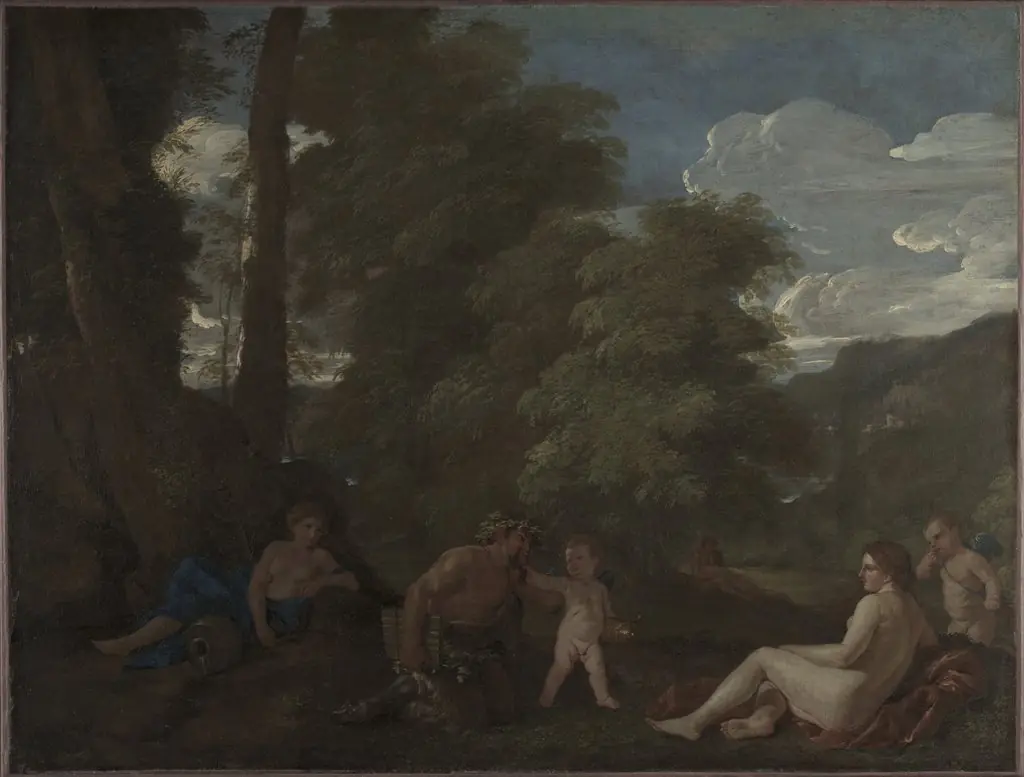
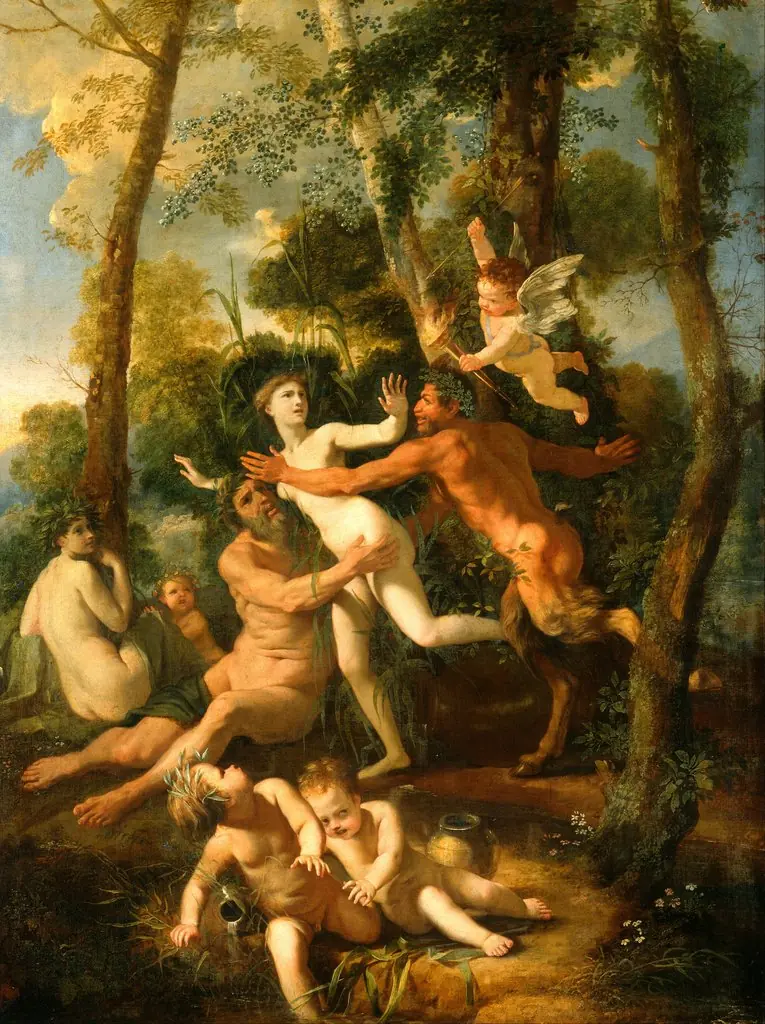
The painting depicts a mythological encounter in a wooded landscape. At center right, Venus sits nude upon a stone ledge, her body turned leftward while her head bows downward. Behind her stands a faun, identifiable by his pointed ears, leafy wreath, and fur-covered lower body, his right arm reaching around the goddess. The presence of this hybrid creature, part human and part goat, signals the painting's engagement with themes of profane love and untamed nature. Three putti occupy the foreground: one stands on a raised stone platform reaching upward, another stands beside it with arms raised, and a third reclines at the bottom. A fourth putto peeks through foliage near the top center. The putti introduce notes of playful innocence and celestial love that complicate the scene's erotic undertones. A garland of flowers or pearls drapes across the stone near Venus, while a striking red drapery behind the central pair punctuates the otherwise earthy palette. The iconography weaves together Venus's traditional associations with beauty and desire, the faun's connection to rustic fertility and animal instinct, and the putti's evocation of Cupidian love, creating a meditation on the varieties of love and the boundary between civilization and wilderness.
Technique & Style
Poussin executed the work in oil on canvas, employing a palette dominated by earthy browns, muted greens, warm flesh tones, and the notable red drapery behind the central figures. Light enters from the upper left, illuminating the figures against a darker background of dense foliage. The brushwork displays the characteristic Poussinian differentiation between figure and setting: smooth, refined handling on the bodies of Venus, the faun, and the putti, with looser, more atmospheric treatment in the surrounding woodland. This technical distinction between the ordered, idealized human forms and the naturalistic, somewhat wild environment reinforces the painting's thematic concerns. The composition is notably compact given the small dimensions of 72 by 56 centimeters, with the figures tightly grouped in the foreground against the enveloping forest. The diffused lighting softens the forms and enhances their three-dimensionality, while the overlapping leaves and obscured sky create a sense of enclosed, intimate space that focuses attention on the interaction between the principal figures.
History & Provenance
The painting was created in 1631, early in Poussin's residence in Rome, where he had settled in 1624 and would remain for most of his life. The work's provenance before its acquisition by the Hermitage Museum is not documented in the available sources. It is currently located in the Hermitage Museum in Saint Petersburg, Russia, where it is held as part of one of the world's most important collections of European painting. The accession history and exhibition record of the painting are not specified in the provided sources.
Context
The painting belongs to Poussin's early Roman period, when the French artist was absorbing the lessons of Italian Renaissance and antique art while developing his distinctive classical manner. The date of 1631 places it shortly after his initial establishment in Rome and before his full maturity as the preeminent painter of historical and mythological subjects for the papal and intellectual elite. The work participates in the broader Baroque interest in classical mythology, yet already displays the structural clarity and intellectual order that would distinguish Poussin's art from the more overtly dramatic Italian Baroque of contemporaries such as Bernini. The subject matter, Venus, Faun and Putti, connects to Poussin's ongoing exploration of erotic and pastoral themes, which would include related compositions such as his Venus and Adonis of circa 1626. The painting's presence in the Hermitage reflects the systematic acquisition of Western European art by Russian collectors and institutions from the eighteenth century onward, securing Poussin's international reputation across European borders.
Legacy
The painting's legacy is inseparable from Poussin's overarching influence on the theory and practice of history painting. While specific later citations or reproductions of Venus, Faun and Putti are not documented in the available sources, the work contributes to the corpus that established Poussin as the touchstone of classical taste. The image's circulation through modern commercial reproduction, including licensed prints distributed by Bridgeman Images, attests to its continued presence in the visual culture market. The painting's residence in the Hermitage ensures its visibility within one of the world's most visited museums, sustaining its role in public understanding of seventeenth-century French art. As with much of Poussin's oeuvre, the work's influence operates less through direct imitation than through its exemplification of principles, order, clarity, and classical reference, that shaped academic painting until the nineteenth century.
Own this work as a print
Artist & collection
Artist
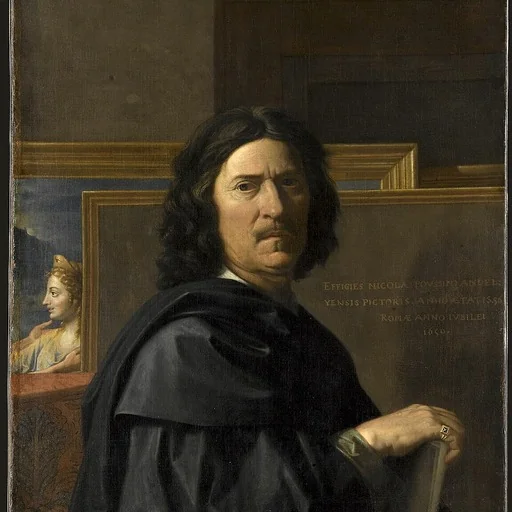
Nicolas Poussin (UK: US: French:; June 1594 – 19 November 1665) was a leading painter of the classical French Baroque style, although he spent most of his working life in Rome.