Artwork
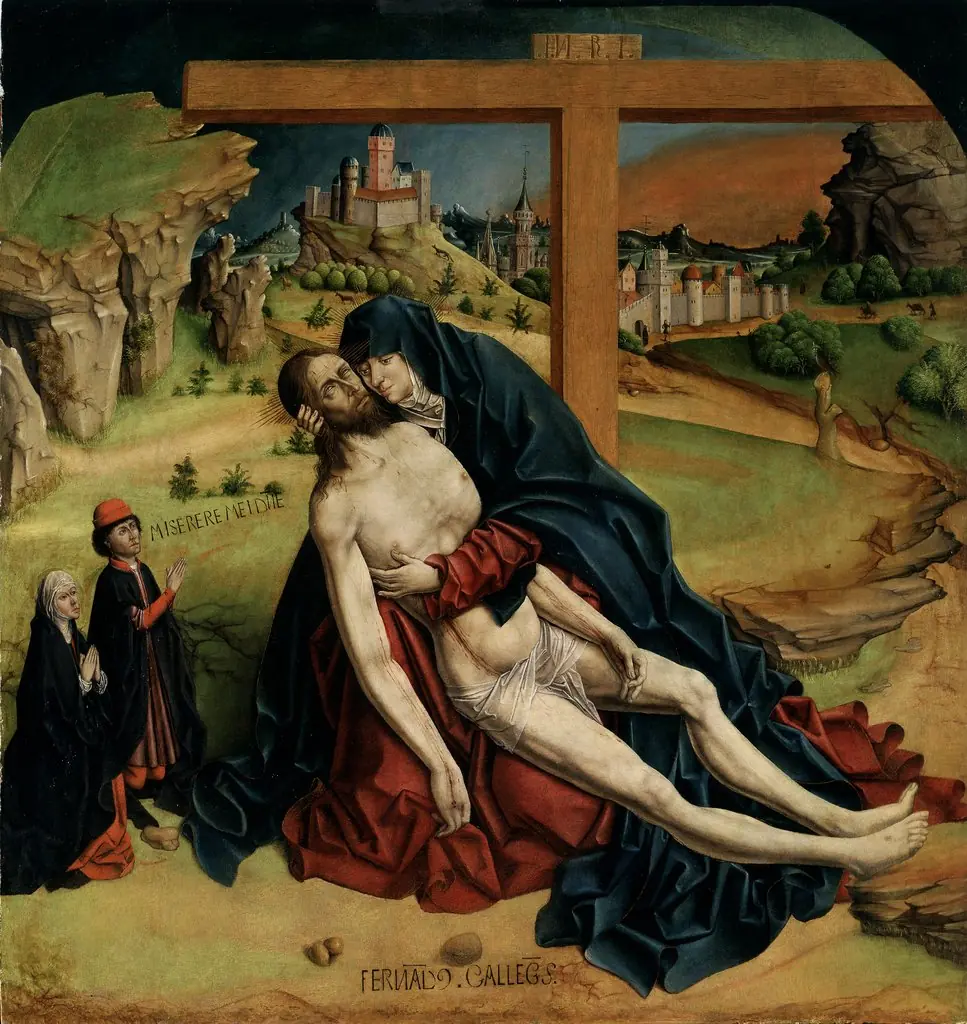
The lamentation over the dead Christ

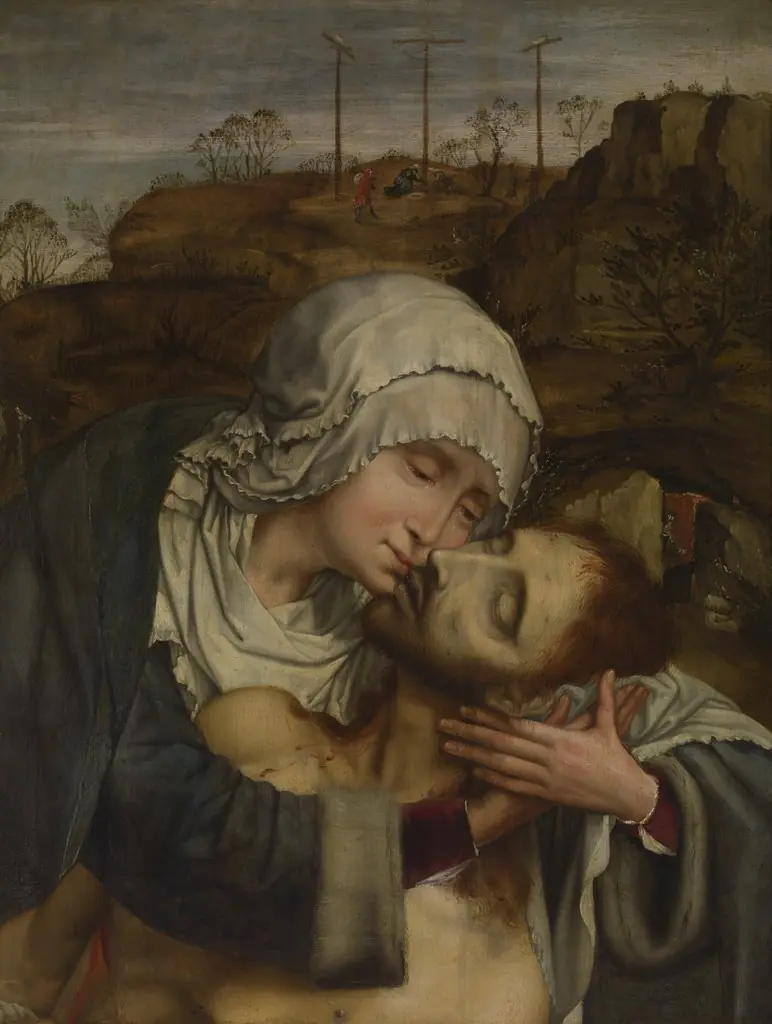
The lamentation over the dead Christ is an oil painting by the Northern Renaissance artist Quinten Metsys. It is held in the collection of the Bavarian State Painting Collections.
About this work
Subject & Meaning
This subject draws on traditional iconography of the Deposition, emphasizing themes of sacrifice and compassion within a religious context.
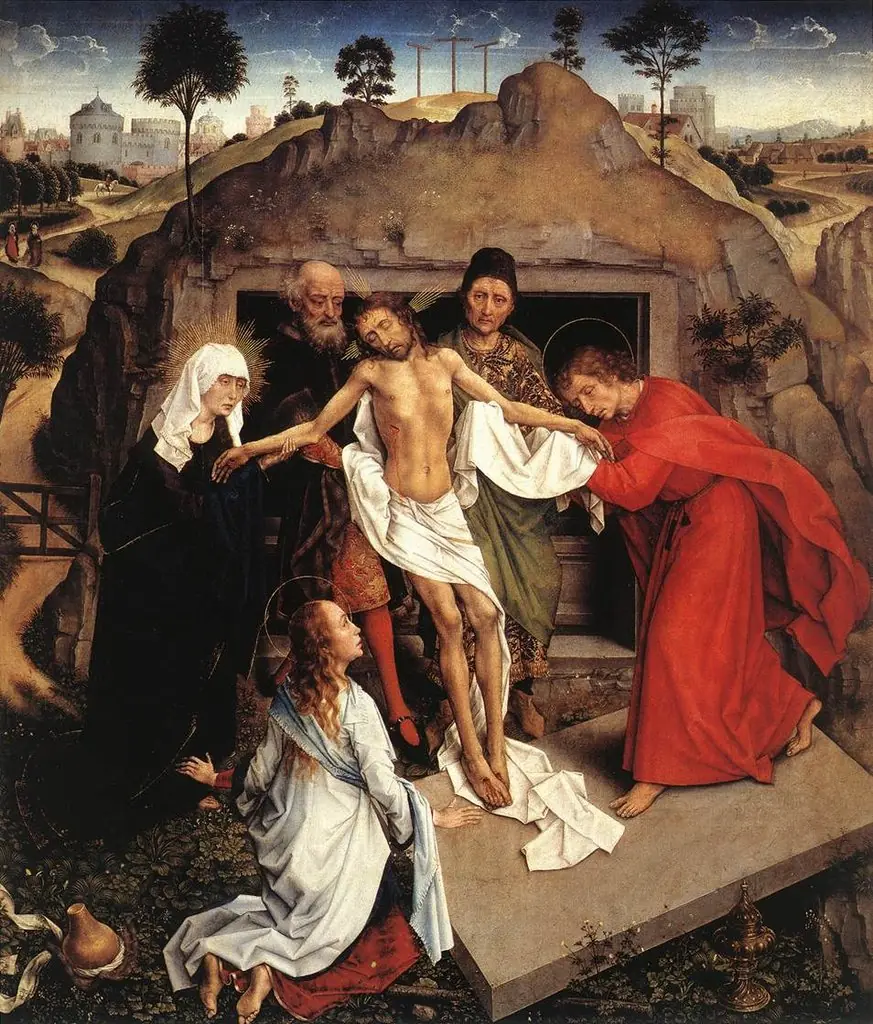
The painting portrays the Lamentation of Christ, showing the mournful scene of the dead Christ surrounded by grieving figures. This subject draws on traditional iconography of the Deposition, emphasizing themes of sacrifice and compassion within a religious context. The work is part of the Bavarian State Painting Collections and is housed in the Alte Pinakothek.
The composition reflects Counter-Reformation devotional practices, using emotive detail to invite contemplation of Christ's suffering. Its oil on panel format and dimensions of 112 cm by 103 cm underscore the material and scale typical of 16th‑century devotional art.
History & Provenance
The Lamentation over the Dead Christ was painted by Quinten Metsys in 1550 as an oil work on panel measuring 112 by 103 centimeters. It entered the Bavarian State Painting Collections and has been displayed at the Alte Pinakothek in Munich since its acquisition. The composition shows the mournful scene of Jesus Christ after the Crucifixion, reflecting the religious art conventions of the period.
Its creation history is documented through stylistic analysis and contemporary records linking the piece to Metsys' workshop in Antwerp.
The Lamentation over the Dead Christ is held by the Bavarian State Painting Collections and is located at the Alte Pinakothek. No specific inventory or accession number is recorded in the available sources.
No exhibition history is documented in the provided sources.
Overview
Created circa 1550 by the Flemish artist Quinten Metsys, this oil painting presents a somber Lamentation scene. Executed in the Northern Renaissance idiom, the work now belongs to the collection of Munich’s Alte Pinakothek, where it exemplifies the early Antwerp school’s approach to religious narrative.
Technique & Style
Metsys employs a restrained palette and careful modeling of flesh to convey the physicality of the dead body, while the woman’s drapery is rendered with subtle folds that suggest softness. The background features a rocky hillside, sparse trees and a distant city, rendered with atmospheric perspective that recedes into muted tones, typical of Northern Renaissance spatial treatment.
Context
Metsys, initially trained as an ironsmith, transitioned to painting and became a leading figure in Early Netherlandish art. His oeuvre frequently combined devotional subjects with moralizing undertones, reflecting the broader cultural climate of post‑Reformation Flanders, where visual art served both liturgical and didactic purposes.

Own this work as a print
Artist & collection
Artist
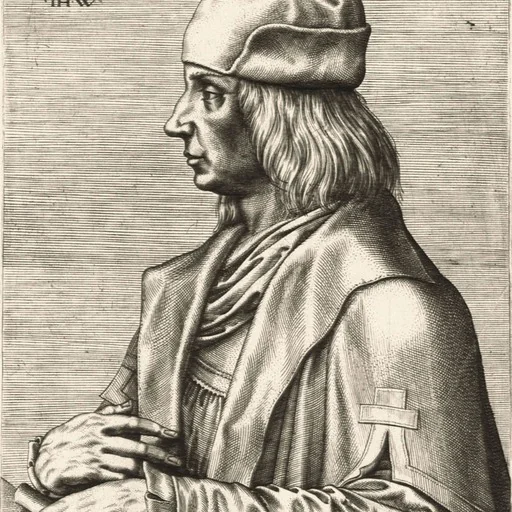
Quentin Matsys (UK: MAT-sysse, US: MAHT-sysse; also Massys or Metsys; Flemish: Quinten Matsijs; 1466–1530) was a Flemish painter in the Early Netherlandish tradition.