Artwork
Portrait of a Cardinal
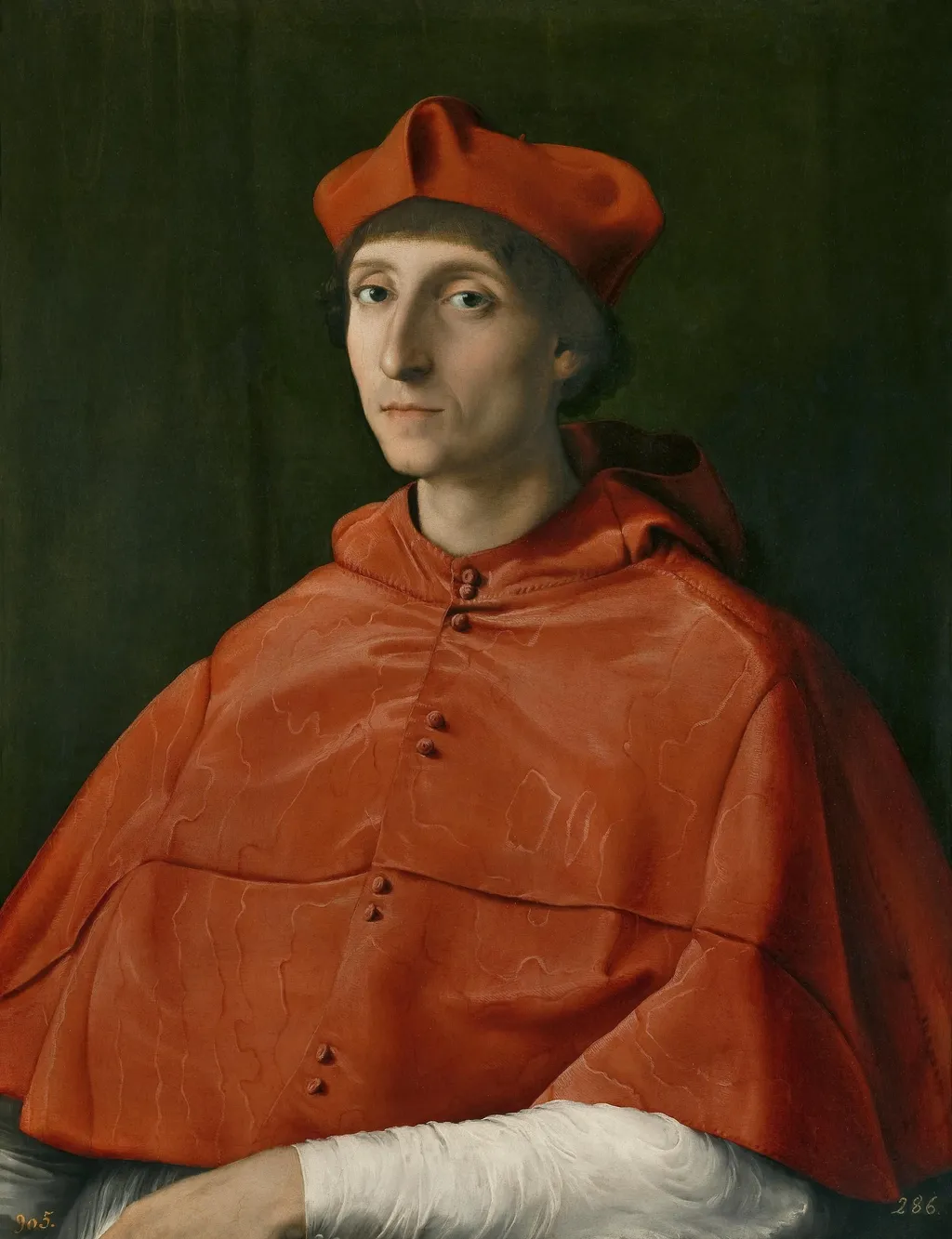
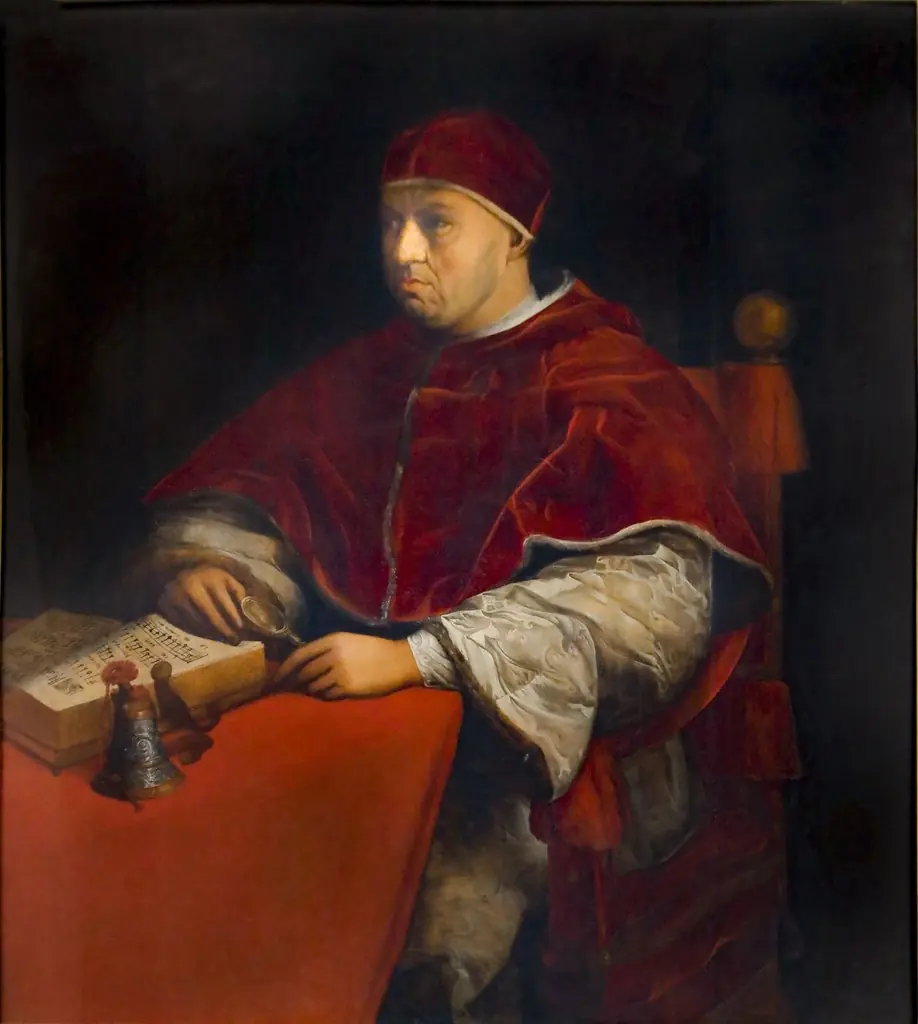
Portrait of a Cardinal is an oil painting by the High Renaissance artist Raphael. It dates from 1510 and is held in the collection of the Museo del Prado.
About this work
Technique & Style
The cardinal is shown half-length, turned three-quarters toward the viewer's left against a dark, nearly black background.
The painting is executed in oil on panel (table), measuring 79 by 61 centimeters. The cardinal is shown half-length, turned three-quarters toward the viewer's left against a dark, nearly black background. His upright torso and horizontally resting left arm form a triangular composition derived from Leonardo's Mona Lisa. Strong directional lighting isolates the figure, producing sharp chromatic contrasts between the brilliant red of the silk mozzetta and biretta, the white sleeve, and the pale flesh tones of the face. Meticulous brushwork gives the subject a sculptural three-dimensionality, reflecting Raphael's contemporary engagement with sculpture under Michelangelo's influence. Pentimenti revealed by X-ray show that Raphael shortened the hair and adjusted the position of the eyes. The silken sheen of the red garments is rendered with carefully observed, iridescent highlights. The background bears some signs of restoration.
History & Provenance
The Portrait of a Cardinal is held by the Museo del Prado in Madrid. Its inventory number is P00784, recorded in the museum’s catalog. The work entered the Spanish royal collection after being purchased in Rome by Charles IV of Spain in 1803, was displayed at the Royal Palace of Aranjuez, and was transferred to the Prado in 1818. It was first attributed to Antonio Moro before its Raphael authorship was re‑established. Exhibition records show its presence in the 1818 catalog of the Royal Palace of Aranjuez and in subsequent Prado displays of High Renaissance portraiture.
Context
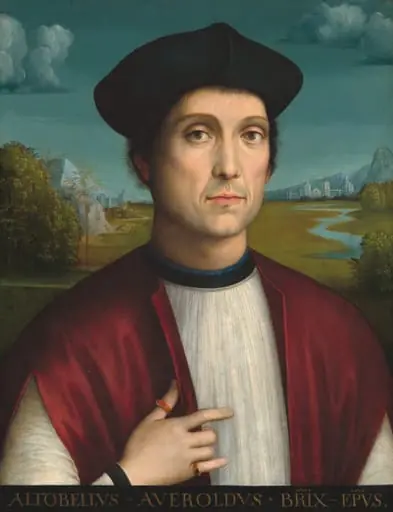
Painted during the papacy of Julius II, the portrait belongs to Raphael's early Roman period, when he produced likenesses of numerous members of the papal curia. Its triangular composition, derived from Leonardo's Mona Lisa, and the sculptural handling of light reflect Raphael's engagement with Leonardo and with Michelangelo at the papal court. The painting's meticulous technique initially led Spanish collectors to attribute it to Antonio Moro, since Raphael's work as a portraitist was then little known in Spain; the attribution was later reassessed and the work re-dated to the early Roman years by the scholar Adolfo Venturi, a chronology subsequently accepted by later critics. The Prado considers Francesco Alidosi the most likely sitter, while other candidates proposed by scholars include Bernardo Dovizi da Bibbiena, Innocenzo Cybo, Scaramuccia Trivulzio, Alessandro Farnese, Ippolito d'Este, Silvio Passerini, Antonio Ciocchi, Matthäus Schiner, Luigi d'Aragona, and Bandinello Sauli. The portrait is regarded as a high point of Raphael's portraiture and is noted to have influenced later artists such as Titian and other Venetian painters.
Legacy
The painting's distinctive approach to portraiture influenced later artists, particularly Titian and other painters of the Venetian school, who drew on its model of psychological depth and sober composition. Its meticulous technique, however, initially puzzled viewers unfamiliar with Raphael's range as a portraitist, leading to a long-standing misattribution to Antonio Moro before the work was correctly reassigned to the Italian master.
Held today as one of the most recognized works by Raphael, the painting entered the Spanish royal collection after being purchased in Rome by Charles IV of Spain while still Prince of Asturias. It was catalogued at the Royal Palace of Aranjuez in 1818 and later transferred to the Museo del Prado, where it remains a touchstone of High Renaissance portraiture.
Own this work as a print
Artist & collection
Artist
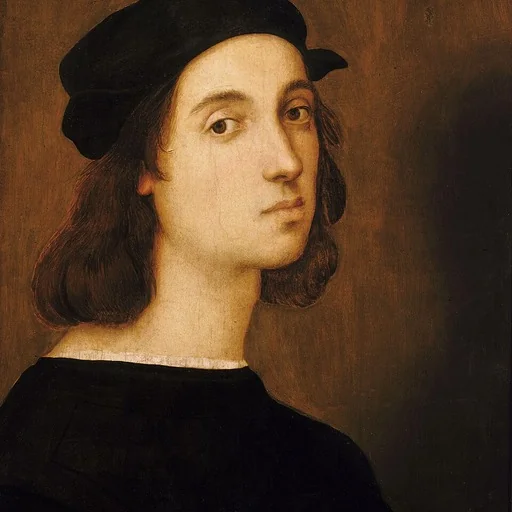
Raphael was born Raffaello Sanzio in Urbino on April 6, 1483, the son of Giovanni Santi, a painter and poet attached to the ducal court.