Artwork
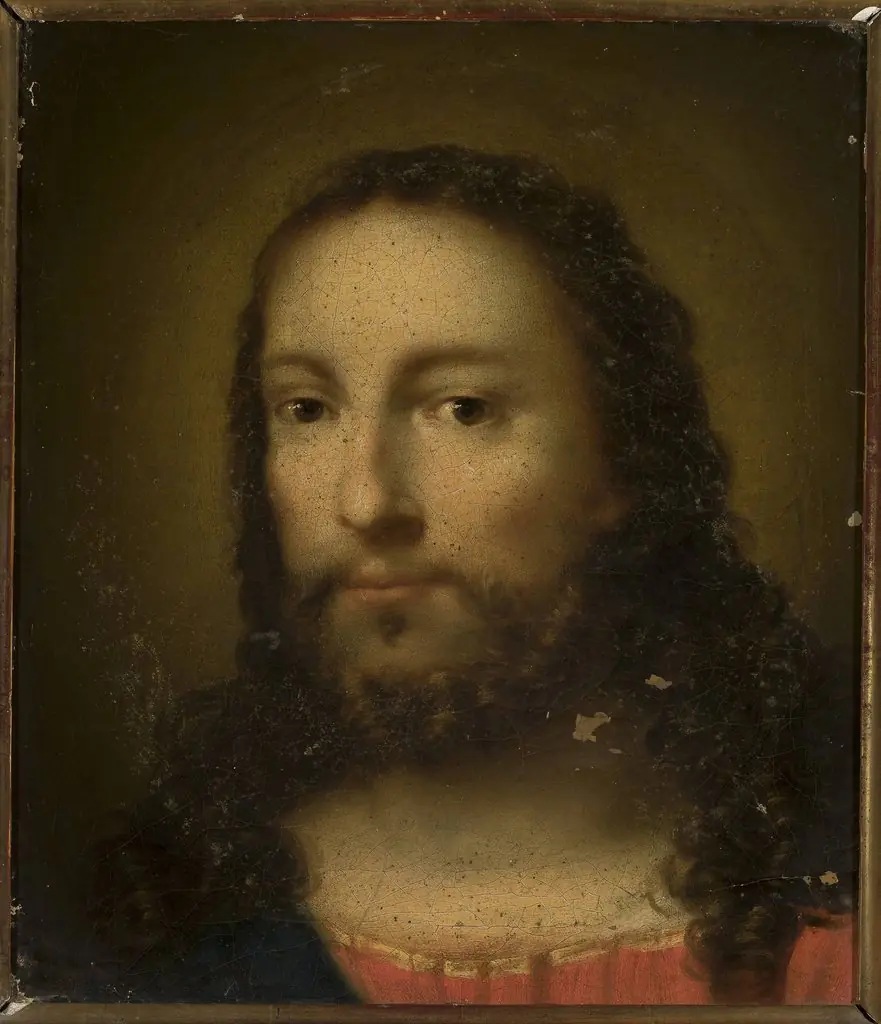
Head of Christ
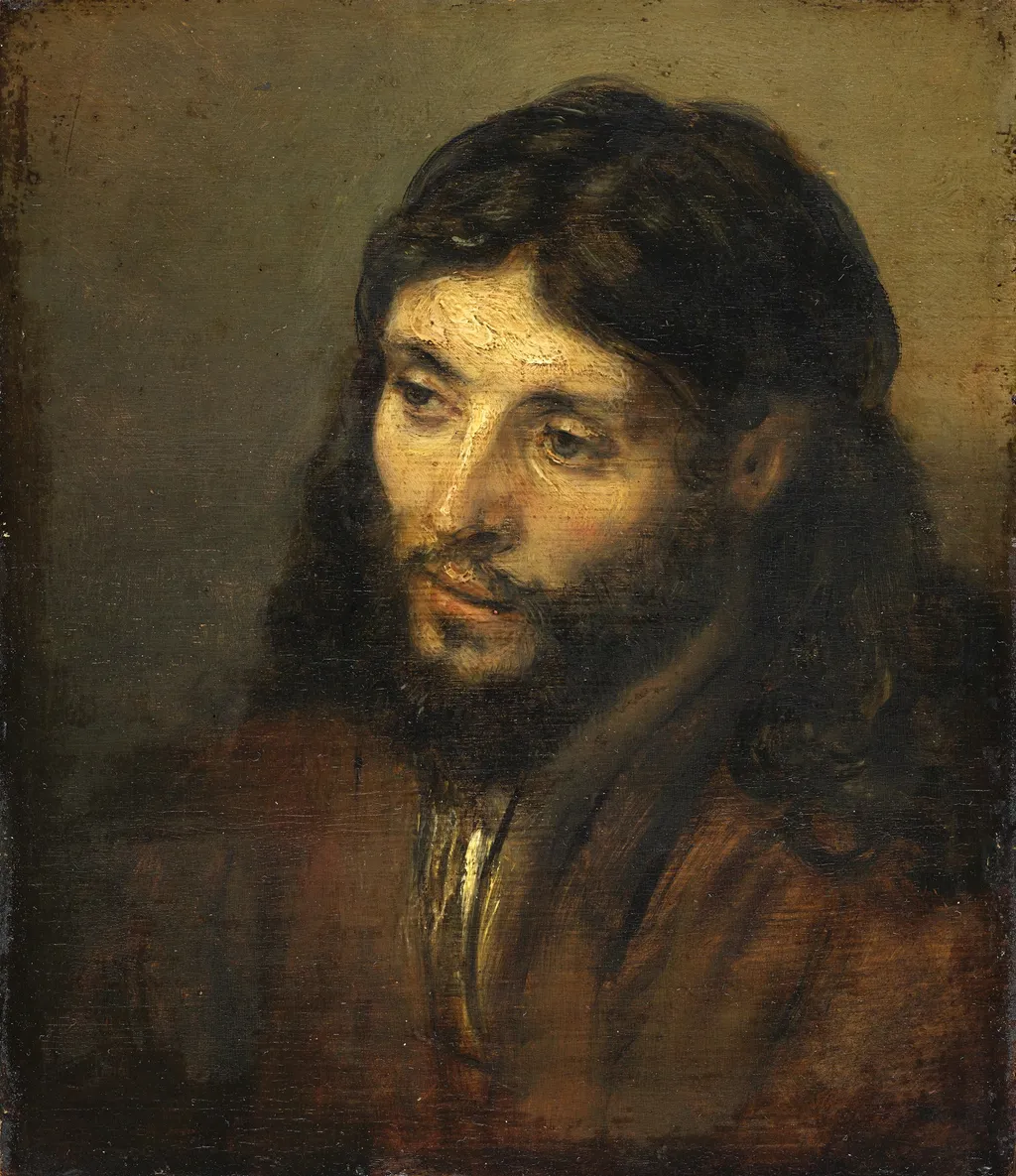
Head of Christ is an oil painting by the Dutch Golden Age artist Rembrandt van Rijn. It dates from 1647 and is held in the collection of the Bode Museum.
About this work
Subject & Meaning
The painting depicts Jesus Christ, identified as the subject and main figure.
The painting depicts Jesus Christ, identified as the subject and main figure. Iconographically, it shows Christ in half-length format, turned three-quarters left with a slight head tilt, long dark curls, a short full beard, and wearing a reddish-brown cloak, reflecting traditional attributes while incorporating realistic physiognomy. Symbolically, the work represents a devotional study of Christ's face, created during Rembrandt's engagement with Jewish models in Amsterdam, marking a shift in his portrayal of Jewish subjects from negative stereotypes to individualized representation, as noted in scholarly analyses of the piece's context and development.
Technique & Style
The Head of Christ is an oil painting executed on an oak panel support, measuring 25 cm in height and 21.7 cm in width. Dendrochronological analysis indicates the wood originates from the same tree as that used for a self-portrait in Leipzig, dating the panel's creation to between 1645 and 1648. The artist employed a varied handling of the medium to distinguish facial features from the background; paint is applied thinly in the dark areas but thickly in impasto across the illuminated parts of the face.
This technique enhances the immediacy of the depiction, which portrays a Jewish model with long dark curls, a short full beard, and a reddish-brown cloak. The head is turned three-quarters to the left with a slight inclination, maintaining traditional iconographic elements while grounding the figure in observed reality.
History & Provenance
Dated to between 1645 and 1648 on the basis of dendrochronological analysis of its oak panel, the painting was created as a study from a Jewish model in Amsterdam’s Jewish quarter, marking a shift in Rembrandt’s approach to representing Christ. After first appearing in a London sale of John Henderson’s collection on 13 February 1882, it entered the Paris trade with Charles Sedelmeyer and later Rodolphe Kann. In 1907 the entire Kann collection was purchased by Duveen Brothers and shortly thereafter given to the Kaiser-Friedrich-Museum in Berlin by Martin Bromberg and his wife.
During the Second World War the work was evacuated to salt mines in Thuringia and recovered by U.S. forces in 1945. It passed through the Wiesbaden Collecting Point before restitution to Berlin in 1956. Stolen in 1959 from the Berlin-Dahlem gallery, it was recovered in 1961 and subsequently displayed in the new Gemäldegalerie at the Kulturforum from 1998.
The Head of Christ is held in the Gemäldegalerie, Berlin, where it is accessioned under the inventory number listed in the collection records. Its provenance traces from John Henderson's 1882 sale, through Charles Sedelmeyer and Rodolphe Kann, to Martin Bromberg, who bequeathed it to the Kaiser-Friedrich Museum (now Bode Museum) in 1907. During World War II the painting was moved to a salt mine, recovered by American forces, and returned to Berlin in 1956.
It was stolen in 1959 and recovered in 1961. The work was included in the 2011 exhibition "Rembrandt and the Face of Jesus" shown in Detroit, Philadelphia, and Paris.
The painting was documented by Hofstede de Groot in 1914 and appears in the Rembrandt Research Project catalog as the only version regarded as executed by Rembrandt himself.
Context
The painting commonly known as Head of Christ was created by Rembrandt in 1647–1648 and is now housed in the Gemäldegalerie in Berlin. It depicts Jesus Christ as a man with long dark curls, a short full beard, and wearing a reddish-brown cloak, shown in three-quarter view with a slight leftward turn and downward tilt. The work is executed in oil on oak panel, measuring 25 cm by 21.7 cm, and was painted no earlier than 1645 and no later than 1648, according to dendrochronological analysis.
Rembrandt’s use of a Jewish model marked a significant shift in his representation of Judaism, moving from negative stereotypes to a more realistic and respectful portrayal. This study reflects his broader engagement with Jewish physiognomy in Amsterdam during the late 1640s and early 1650s, a period when Jewish residents, though integrated and exempt from distinctive markings, maintained distinct cultural traits such as language. The attribution to Rembrandt himself, rather than his workshop, is widely accepted, though the piece has been discussed in relation to other versions and studies within his oeuvre.
It was documented by Hofstede de Groot in 1914 and featured in the 2011 exhibition Rembrandt and the Face of Jesus at the Detroit Institute of Arts, Philadelphia Museum of Art, and the Louvre. The work’s provenance includes ownership by John Henderson, Charles Sedelmeyer, Rodolphe Kann, Martin Bromberg, and Joseph Duveen, with wartime displacement to Merkers and postwar recovery through the Wiesbaden Collecting Point. It was stolen in 1959 and recovered in 1961.
Legacy
The Berlin Head of Christ holds a unique reputation as the only version of Rembrandt's multiple studies of Jesus recognized by the Rembrandt Research Project as an autograph work by the master. While approximately a dozen similar heads exist in various collections, this specific panel is grouped with workshop copies yet distinguished as the sole surviving original. Its legacy is deeply tied to a shift in art historical understanding; 19th-century speculation that these images relied on a "Jewish model" initially led to unfounded theories about the artist's own heritage, a concept later validated by the painting's use of a Jewish sitter from Amsterdam.
The work gained significant scholarly attention in the 20th century, appearing in most major Rembrandt catalogs before its exclusive status was confirmed. It was a centerpiece of the 2011 international exhibition "Rembrandt and the Face of Jesus," which traveled through Detroit, Philadelphia, and Paris. Despite surviving theft in 1959 and recovery in 1961, its enduring influence lies in its role as a definitive study of Christ's physiognomy based on direct observation rather than traditional iconography.
Overview
Created in 1648, the Head of Christ is an oil painting on panel by the Dutch artist Rembrandt. The work measures a close‑up portrait of a bearded figure, rendered against a dark background that isolates the face. Currently, the painting is part of the collection of the Gemäldegalerie in Berlin, where it is displayed among the museum’s Dutch Baroque holdings.

Own this work as a print
Artist & collection

Artist
Rembrandt Harmenszoon van Rijn, known mononymously as Rembrandt, was a Dutch Golden Age painter, printmaker, and draughtsman.