Artwork
Man Wearing a Plumed Beret and Gorget
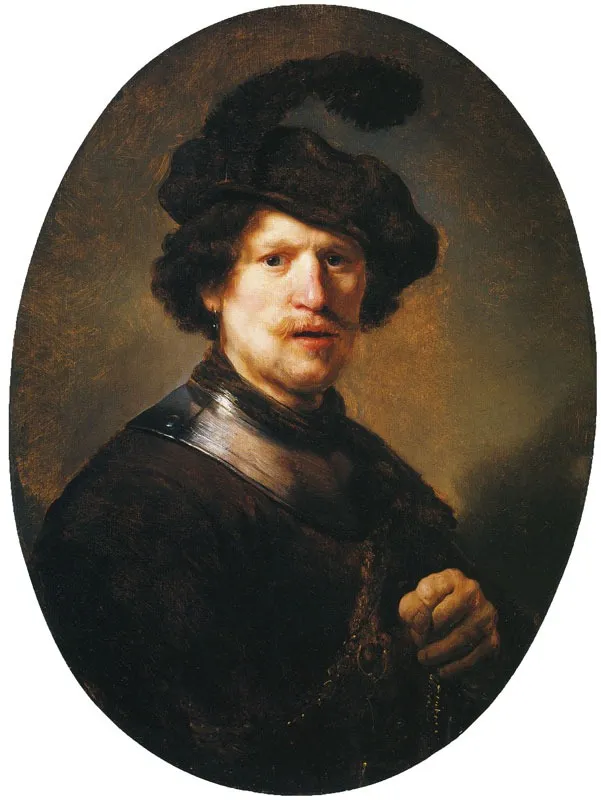
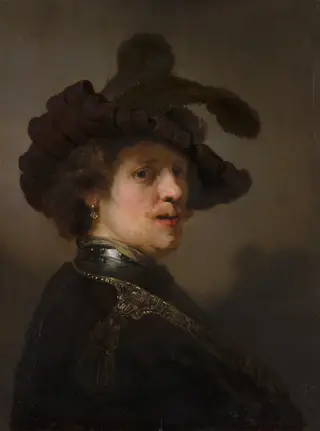
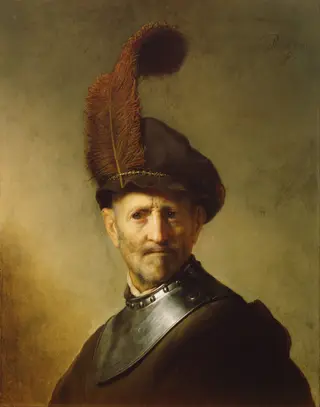
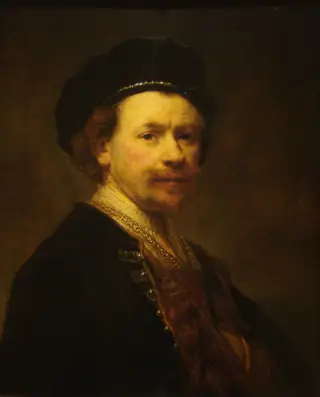
Man Wearing a Plumed Beret and Gorget is an oil painting by the Dutch Golden Age artist Rembrandt van Rijn. It dates from 1635 and is held in the collection of the Detroit Institute of Arts.
About this work
Subject & Meaning
The painting shows a man in a plumed beret and gorget, a type of collar often linked to military or civic rank in 17th-century portraiture. The attire and accessories suggest a figure of status, possibly representing a member of the Dutch militia or a prosperous burgher, reflecting themes of authority and civic identity in the Dutch Golden Age.
Technique & Style
As a portrait, the piece depicts a male figure distinguished by a plumed beret and a gorget, utilizing oil paint to render the subject's attire and presence.
Created in 1635, Man Wearing a Plumed Beret and Gorget is an oil painting executed on an oak panel support. The work measures 61 cm in height and 44.5 cm in width. As a portrait, the piece depicts a male figure distinguished by a plumed beret and a gorget, utilizing oil paint to render the subject's attire and presence. The composition falls within the portrait genre, focusing on the formal representation of the individual.
History & Provenance
Man Wearing a Plumed Beret and Gorget is an oil painting on oak panel created in 1635 by Rembrandt. It entered the collection of the Detroit Institute of Arts, where it remains displayed.
The work’s provenance traces its ownership from its original creation to its acquisition by the museum, reflecting continuous stewardship by the institution since its acquisition.
Man Wearing a Plumed Beret and Gorget is held at the Detroit Institute of Arts. Its accession number is not specified in the provided sources. The work was exhibited in the exhibition "Dutch and Flemish Paintings, 1600-1800" at the same institution.
Context
The work is recognized as a key portrait from Rembrandt's early Leiden period, reflecting his focus on psychological depth and detailed characterization. Scholars emphasize its significance within his broader development of group and individual portraiture, showcasing his innovative use of light and texture to convey status and identity. This painting exemplifies his mastery of Dutch Golden Age portraiture, where formal attire like the plumed beret and gorget served as markers of civic pride and social standing.
Its acquisition by the Detroit Institute of Arts has cemented its role in contextualizing Rembrandt's influence on 17th-century European art narratives.
Overview
Created in 1635, this oil on canvas portrait belongs to the Dutch Golden Age and is attributed to Rembrandt van Rijn. The work presents a solitary figure dressed in a distinctive hat adorned with an oversized feather and a metallic collar, or gorget. Its composition follows the period’s conventions for individual portraiture, and the painting is currently part of the Detroit Institute of Arts collection.
Artist & collection

Artist
Rembrandt Harmenszoon van Rijn, known mononymously as Rembrandt, was a Dutch Golden Age painter, printmaker, and draughtsman.