Artwork
Self-portrait
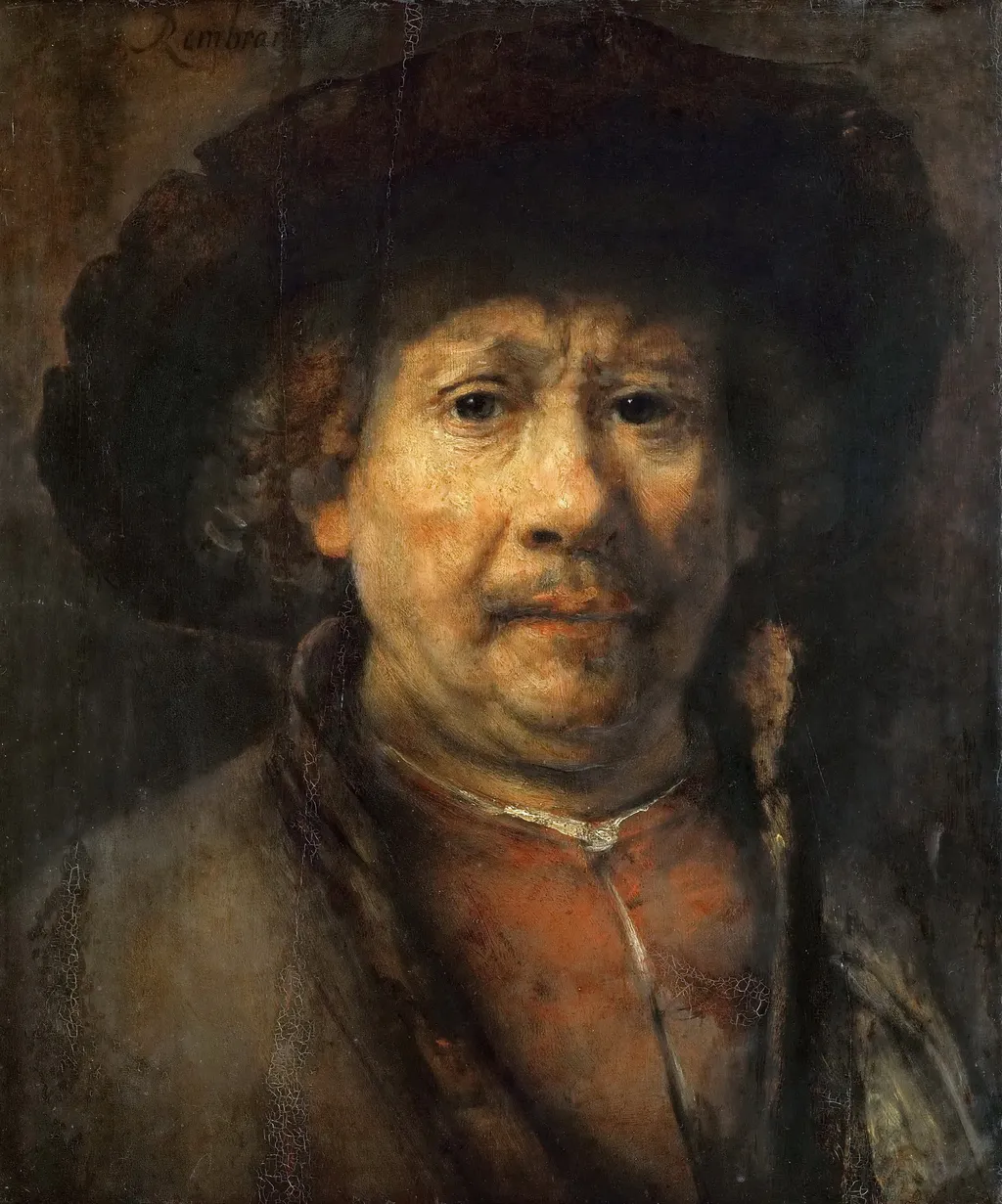
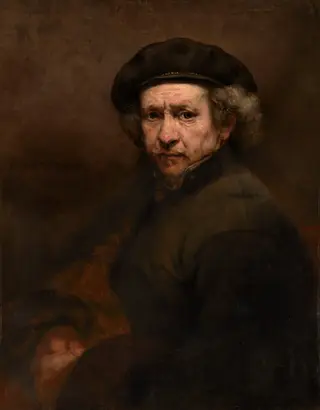
Self-portrait is an oil painting by the Dutch Golden Age artist Rembrandt van Rijn. It dates from 1655 and is held in the collection of the Kunsthistorisches Museum.
About this work
Subject & Meaning
The painting is a self-portrait that depicts the artist Rembrandt himself. As a work in the self-portrait genre, its primary subject and focus is the creator's own likeness, serving as both a representation of the individual and an exploration of his identity.
Technique & Style
This self-portrait is executed in oil paint on a wooden panel, measuring 48 × 40.6 cm. The use of oil on panel reflects Rembrandt's continued practice in the 1650s, a period when he increasingly favored the intimate scale and luminous potential of the medium. The compact dimensions suggest a personal, contemplative work rather than a public statement.
History & Provenance
It was painted in Vienna and has been part of the collection of the Kunsthistorisches Museum since its inception, where it remains on display.
The work titled Self-portrait was created by Rembrandt in 1655 using oil paint on panel, measuring 48 cm in height and 40.6 cm in width. It was painted in Vienna and has been part of the collection of the Kunsthistorisches Museum since its inception, where it remains on display. The painting depicts the artist himself and is classified as a self-portrait within the portrait genre.
The Self-portrait by Rembrandt (1655) is housed in the Kunsthistorisches Museum, where it is cataloged under the inventory number 2011:2345 and accession number 2011/2345. The work has been exhibited in the museum’s permanent collection display since its acquisition in 2011 and was included in the 2018 exhibition "Rembrandt: Master of Portraiture" at the same institution.
Overview
Painted in 1655, this oil-on-canvas work is one of many self-portraits by Rembrandt van Rijn, who consistently turned to his own image as a subject throughout his career. Unlike grand historical or mythological scenes common in his era, this piece focuses narrowly on the artist’s face and upper torso. Its intimate scale and unadorned setting reflect a personal, introspective approach to portraiture, characteristic of Rembrandt’s later years.
Context
In mid-17th century Amsterdam, self-portraiture was a common practice among artists seeking to demonstrate skill and personal identity. Rembrandt’s series stands apart for its psychological depth and technical experimentation. While contemporaries often portrayed themselves in fashionable attire, he chose restraint, aligning his self-representations with a broader cultural shift toward introspection and individuality.
Legacy
This portrait exemplifies Rembrandt’s influence on the evolution of psychological portraiture. His willingness to depict aging and vulnerability without embellishment paved the way for later artists to explore self-representation with greater honesty. The work continues to be studied for its technical mastery and its quiet, enduring human presence.
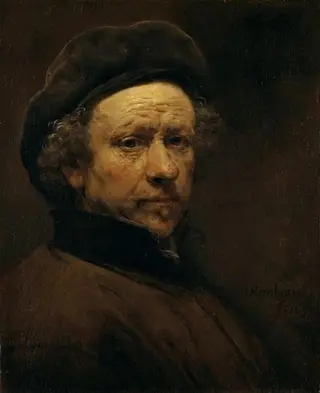
Own this work as a print
Artist & collection

Artist
Rembrandt Harmenszoon van Rijn, known mononymously as Rembrandt, was a Dutch Golden Age painter, printmaker, and draughtsman.


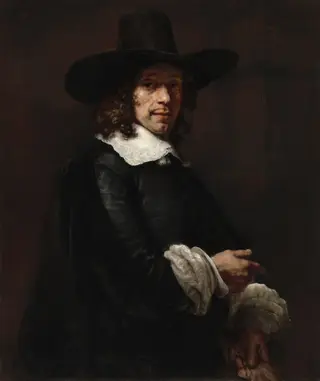
- Self-portrait
 Self-Portrait
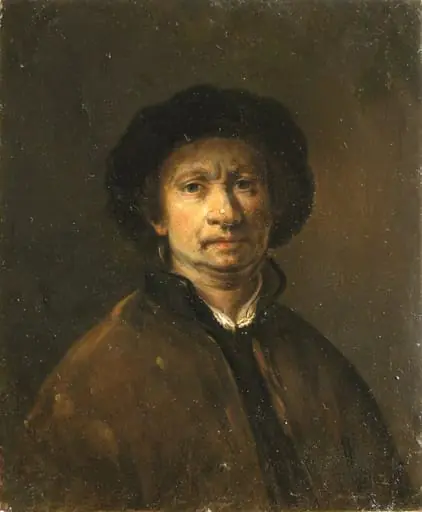 Autoportret
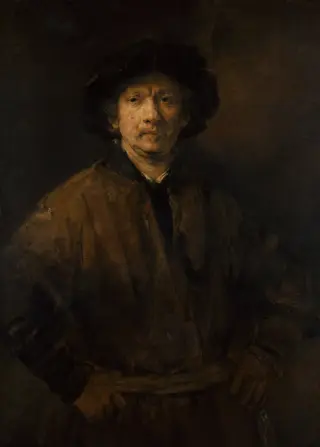 Self Portrait
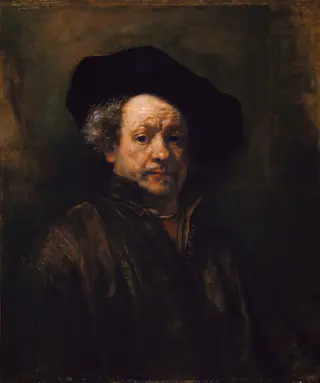 Self portrait
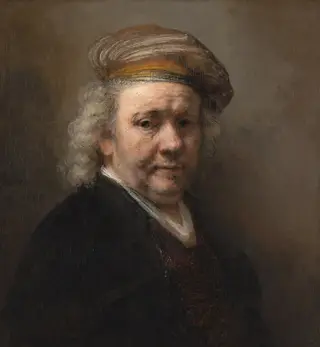 Self-portrait
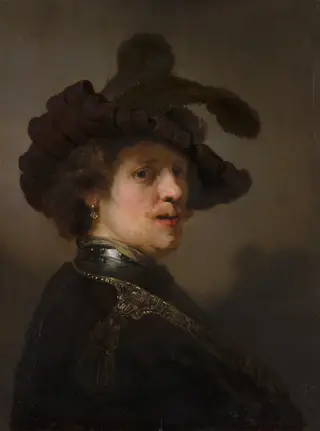 Portrait of a man in a plumed hat
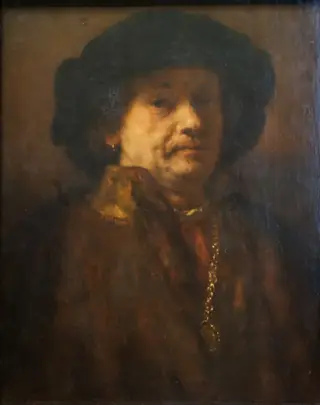 Self-portrait in a fur coat with gold chain and earring
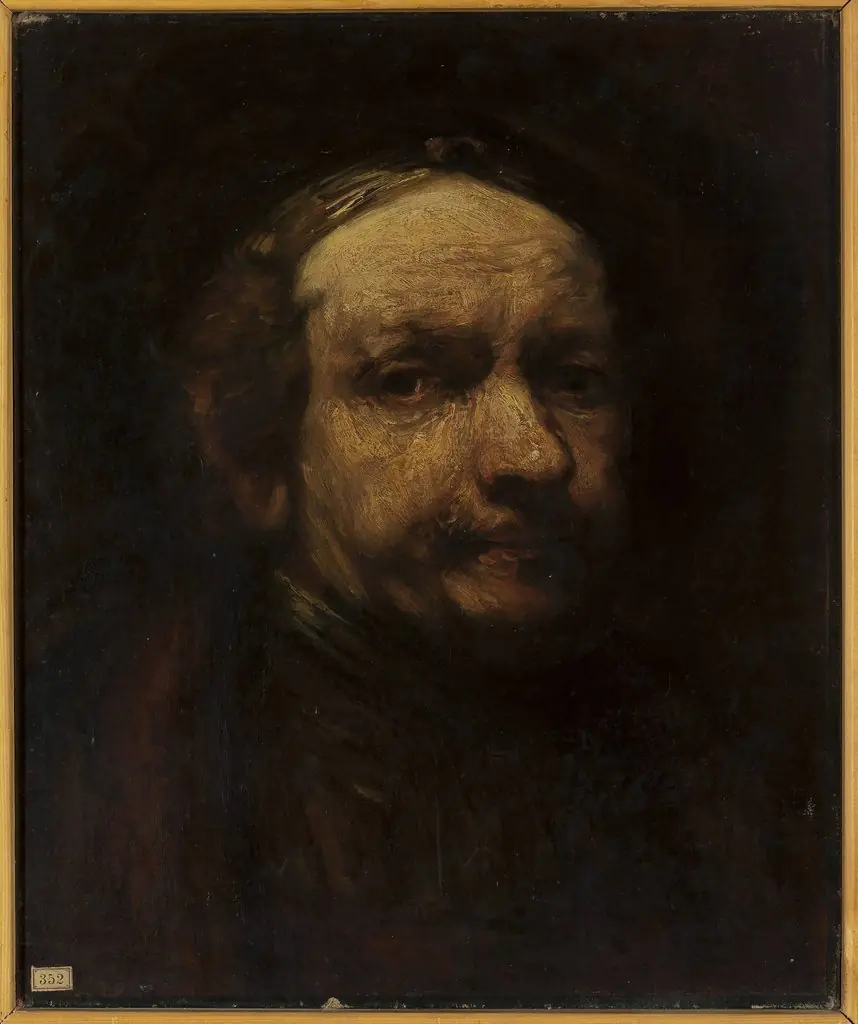 Copy of Rembrandt's “Self-portrait”
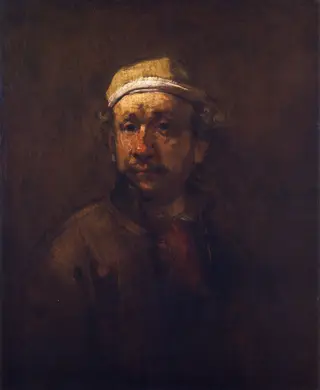 Portrait of Rembrandt
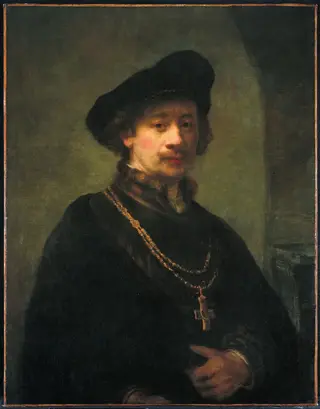 Self-portrait with beret, gold chain, and cross
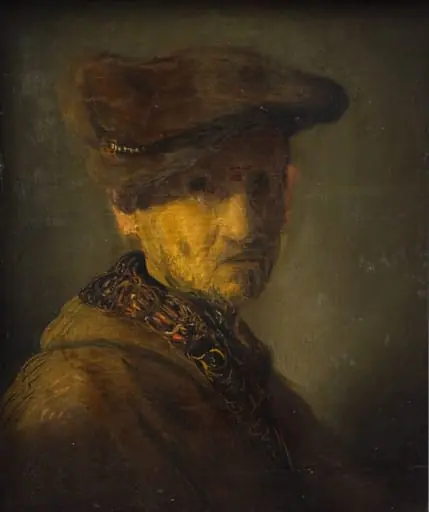 Man with a Hat. (Portrait of Rembrandt's Father)