Artwork
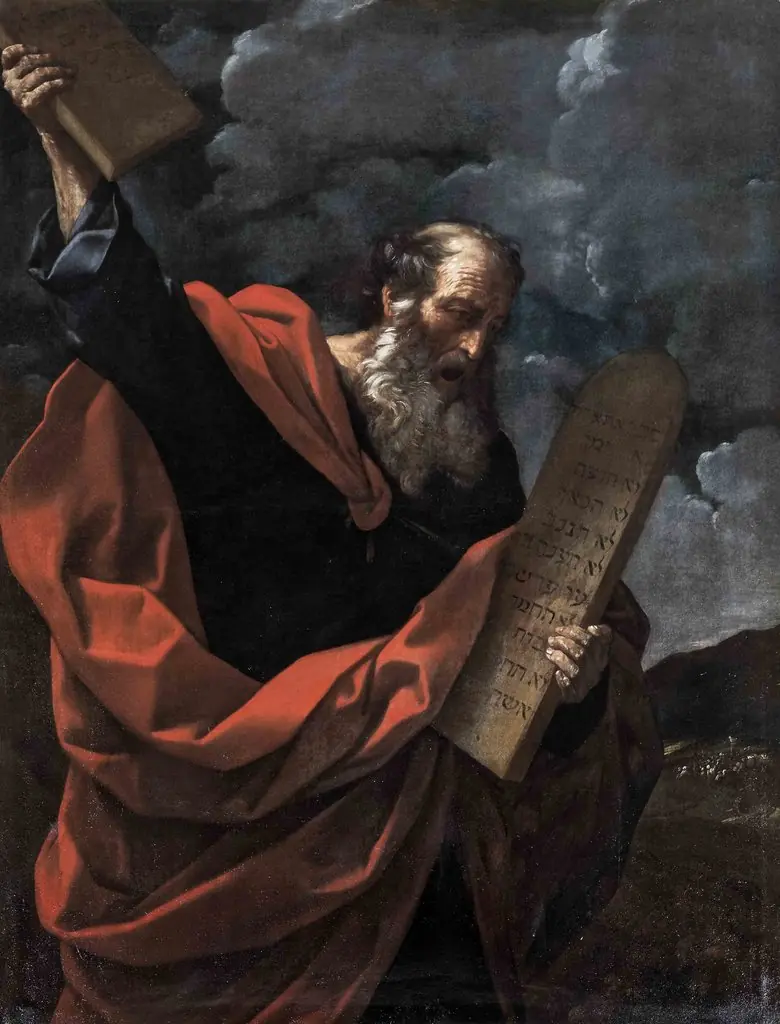
Moses Smashing the Tablets of the Law
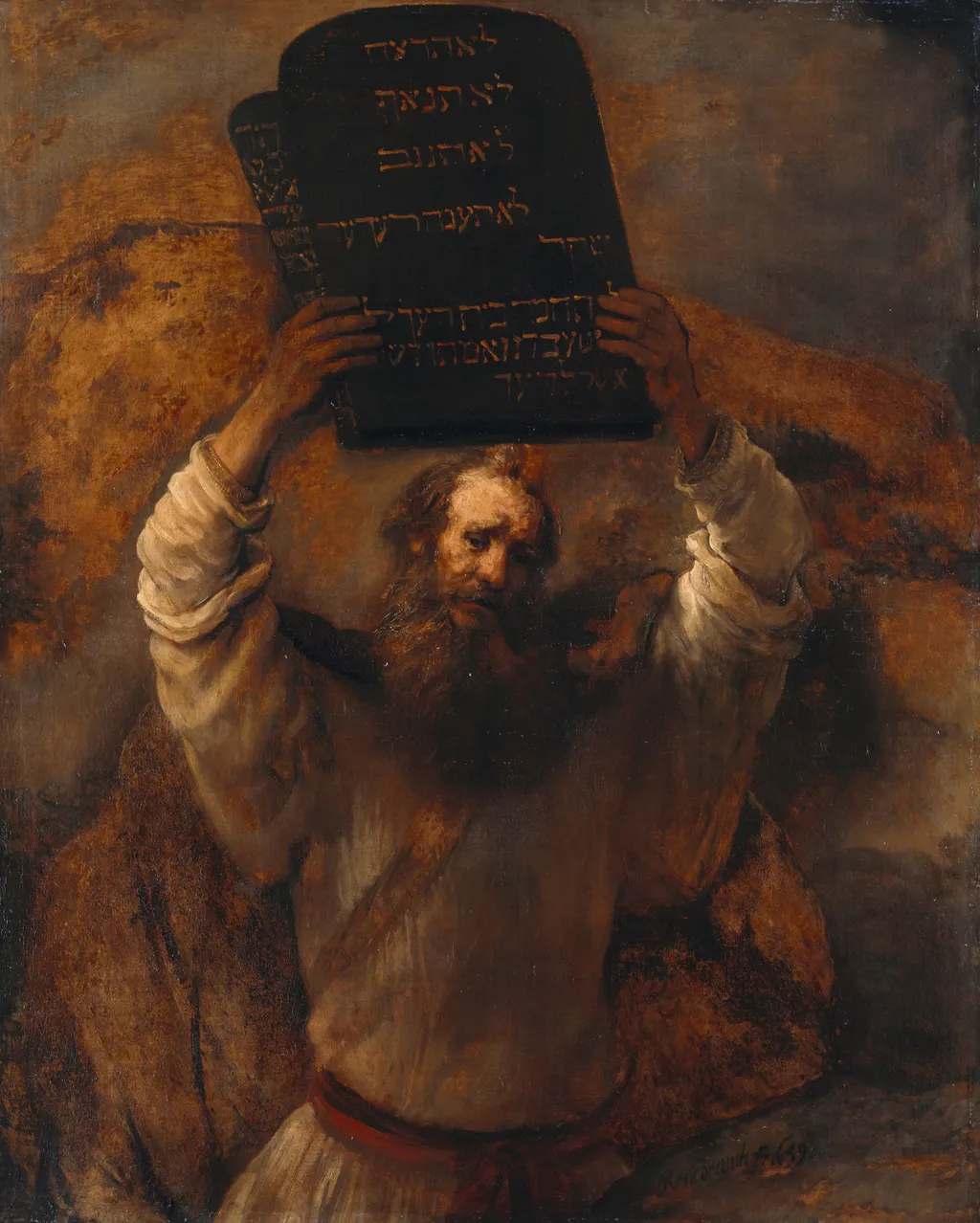
Moses Smashing the Tablets of the Law is an oil painting by the Dutch Golden Age artist Rembrandt van Rijn. It dates from 1659 and is held in the collection of the Gemäldegalerie Berlin.
About this work
Moses had just come down from Mount Sinai to find the Israelites worshipping a golden calf.
Rembrandt painted Moses Smashing the Tablets of the Law around 1659. It shows Moses about to break the stone tablets with the Ten Commandments. The scene captures a moment of anger and frustration.
This wasn’t just any breaking. Moses had just come down from Mount Sinai to find the Israelites worshipping a golden calf. The tablets were God’s law, he shattered them in response.
Look up the artist Rembrandt next.
Overview
Moses Smashing the Tablets of the Law is a 1659 oil-on-canvas painting by the Dutch master Rembrandt van Rijn, now held in the Gemäldegalerie, Berlin. Measuring 168.5 by 136.5 centimetres, it is an uncharacteristically large work from the artist's late period, depicting the biblical prophet at the climactic moment of destroying the stone tablets bearing the Ten Commandments. The painting exemplifies Rembrandt's mature handling of dramatic religious narrative, combining intense psychological penetration with the bold chiaroscuro that defines his Baroque style.
Subject & Meaning
The painting illustrates the episode from Exodus 32:19, when Moses descends from Mount Sinai and, witnessing the Israelites' worship of the Golden Calf, smashes the tablets of divine law in righteous fury. Rembrandt isolates Moses as the sole figure, shown from the hips up with arms raised, the tablets hoisted above his head. The Hebrew letters inscribed on the tablets are rendered with notable precision, a detail that has prompted scholarly discussion about the artist's access to Jewish knowledge in Amsterdam. Moses' face is illuminated against darkness, his downward gaze and furrowed brow suggesting a complex emotional state beyond mere anger, incorporating sorrow and disillusionment. The white of his garment and the red sash at his waist punctuate the otherwise somber palette of browns and ochres, directing focus to the prophet's physical and spiritual crisis. The composition captures the instant before destruction, the terrible pause between intention and irrevocable act, making the viewer complicit in the tension of the narrative.
Technique & Style
The work is executed in oil on canvas with dimensions of 168.5 by 136.5 centimetres, though sources vary slightly, with some recording 169 by 137 centimetres. The paint handling is notably varied: the face, sleeves to the elbows, and the tablets with their Hebrew inscription are worked with precision, while the hands, background, and broader passages appear more summarily treated, leading some scholars to suggest the painting may be unfinished. The background is rendered in warm brown and golden tones with loose, gestural brushwork that implies rocky or atmospheric forms without defining them. Light is concentrated on the figure's face, hands, and sleeves through dramatic chiaroscuro, creating the tenebrist effects characteristic of Rembrandt's late religious works. The flesh is smoothly blended, contrasting with thicker, more textured strokes in the clothing and background. This differential finish, painterly rather than polished, contributes to the work's immediacy and emotional rawness.
History & Provenance
The painting's commission history remains debated. Some scholars have proposed it was ordered in 1655 for Amsterdam's new city hall and delivered in 1659, but this theory is generally rejected in current scholarship. X-ray examination has confirmed the canvas was not reduced from a larger composition, contrary to earlier speculation. The Elector of Brandenburg acquired the painting directly from Rembrandt's workshop, hanging it in his private apartments rather than as part of the dowry of Luise Henriette of Orange. It entered the Gemäldegalerie collection and was displayed from 1830 in the Altes Museum. During the Second World War, the painting was evacuated with other Rembrandts to the salt mine at Kaiserroda in Thuringia for safekeeping. Discovered by American soldiers at war's end, it was taken to the United States and toured with the exhibition of 202 works through various American cities before being returned to the Collecting Point in Wiesbaden. It was restituted to Berlin-Dahlem in 1955 and has been displayed in the new Gemäldegalerie at the Kulturforum since 1998.
Context
Painted during Rembrandt's final decade, the work belongs to a period of profound artistic maturity and personal difficulty, including his bankruptcy. The Dutch Republic's identification with the Children of Israel gave Moses particular political resonance, with Exodus interpreted as both prophecy and celebration of Dutch nationhood. This cultural context may explain the unusual scale of the canvas, perhaps originally intended for a civic commission. The painting has been discussed in relation to Rembrandt's broader exploration of biblical light, where divine illumination becomes a vehicle for psychological and spiritual truth rather than theatrical effect. Scholars have noted how the work abandons the grandeur of Rembrandt's earlier Moses with the Tablets of the Law in favor of something more visceral and human. The artist's connections to Amsterdam's Jewish community have been examined as a possible source for the accurate Hebrew inscription, contributing to ongoing debates about Rembrandt's engagement with Jewish culture and learning.
Legacy
Moses Smashing the Tablets of the Law occupies a significant place in Rembrandt's oeuvre as a powerful late statement on divine law and human failure. Its dramatic lighting and emotional intensity exemplify the artist's enduring influence on the visual treatment of biblical narrative. The painting's wartime odyssey and subsequent restitution underscore its importance within the Gemäldegalerie collection, where it remains a key work for understanding Rembrandt's late style. The unresolved questions about its finish and commission continue to generate scholarly attention, while its psychological complexity and technical boldness affirm its status among the most compelling religious paintings of the Dutch Golden Age. The work is regularly cited in discussions of Rembrandt's mature religious art and his treatment of Old Testament subjects, contributing to the broader understanding of how biblical narrative was reinterpreted through the lens of Baroque emotionalism and individual spiritual experience.
Own this work as a print
Artist & collection

Artist
Rembrandt Harmenszoon van Rijn, known mononymously as Rembrandt, was a Dutch Golden Age painter, printmaker, and draughtsman.