Artwork
Old Man with a Gold Chain
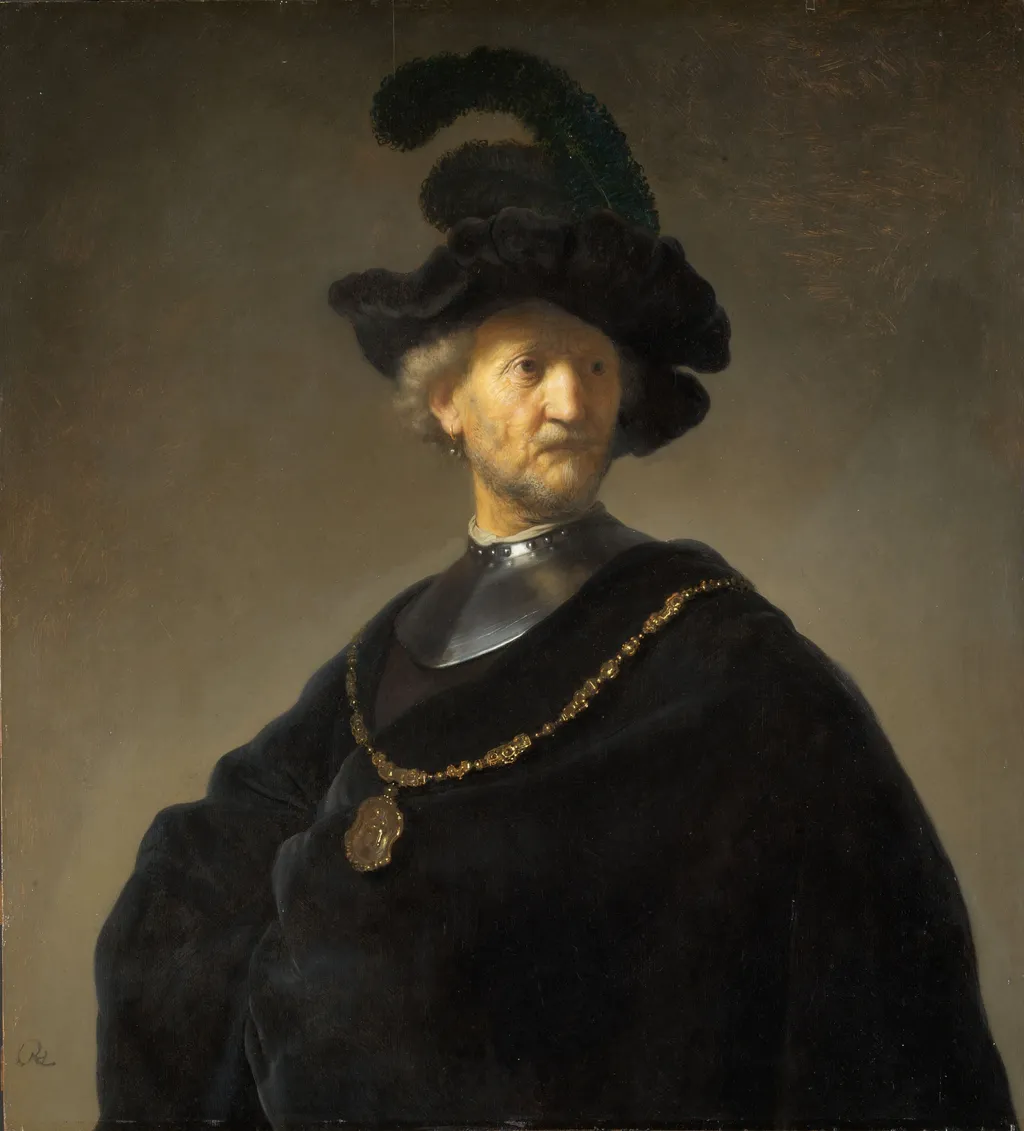
Old Man with a Gold Chain is an oil painting by the Dutch Golden Age artist Rembrandt van Rijn. It dates from 1631 and is held in the collection of the Art Institute of Chicago.
About this work
Subject & Meaning
The subject is portrayed in a half-length format, wearing a dark purple cloak and a broad-brimmed black hat adorned with two dark ostrich feathers.
The work depicts an elderly man, historically identified by scholars such as Hofstede de Groot as Rembrandt's father, Harmen Gerritsz van Rijn. The subject is portrayed in a half-length format, wearing a dark purple cloak and a broad-brimmed black hat adorned with two dark ostrich feathers. His attire includes specific elements of status and identity: a gold chain with a medallion, a close-fitting steel gorget around his neck, and a pearl in his right ear.
These accessories, particularly the chain and gorget, suggest a figure of dignity or military association, while the pearl and feathers add a layer of personal adornment. The painting captures the sitter with a short greyish beard and curly hair, his head and eyes turned to the right despite his body inclining to the left, creating a dynamic engagement with the viewer.
Technique & Style
Old Man with a Gold Chain is an oil painting executed on an oak panel support, created around 1631. The work measures 83.1 cm in height by 75.7 cm in width, though historical records indicate the canvas was likely trimmed by approximately 7 cm in height after 1767. The portrait is signed with the monogram "RHL" in the lower left corner.
Stylistically, the painting depicts a half-length figure almost life-size, characterized by a dark purple cloak, a gold chain with a medallion, a close-fitting steel gorget, and a broad-brimmed black hat adorned with two dark ostrich feathers. The subject, identified as Rembrandt's father, features a short greyish beard, curly hair, and a pearl earring, with his head and eyes turned to the right while the body inclines to the left.
History & Provenance
Painted in oil on panel around 1631, this portrait is signed with the monogram "RHL" in the lower left corner. Hofstede de Groot documented the work in 1915 as a depiction of the artist's father, Harmen Gerritsz van Rijn. The painting's dimensions were likely reduced by approximately 7 cm in height after 1767, as earlier sale catalogs recorded a larger format of roughly 90 by 75 cm.
The ownership history includes sales involving Beresford Hope in London (1886) and Marczell von Nemes in Paris (1913), where it fetched 516,000 francs. Between transactions, the work passed through the hands of dealers such as C. Sedelmeyer, Julius Böhler, and P. and D. Colnaghi. Following a period in a private Chicago collection, the artwork entered the holdings of the Art Institute of Chicago in 1922.
The painting is held at the Art Institute of Chicago, where it has been since 1922. Its acquisition followed a notable provenance through collectors and dealers including C. Sedelmeyer in Paris, W. H. Beers in New York, S. Neumann in London, and Julius Böhler in Munich.
The work was exhibited at Düsseldorf in 1912. Earlier in its history, it appeared in several sales: the Beresford Hope sale in London (May 1886), the Martineau sale in London (March 10, 1902), the Causid-Brück sale in Frankfurt (February 10, 1914), and the Marczell von Nemes sale in Paris (June 17, 1913), where it fetched 516,000 francs.
Overview
Created around 1631, this oil on canvas portrait is attributed to Rembrandt van Rijn and is part of the Art Institute of Chicago’s collection. The work measures roughly 32 by 30 inches and depicts a middle‑aged man turned slightly to the viewer’s right, set against a dark, unadorned background.
Context
The portrait belongs to Rembrandt’s early period, when he was establishing his reputation for realistic, psychologically nuanced likenesses. Its composition, half‑length, hands omitted, and a focus on facial expression, reflects contemporary Dutch portrait conventions while hinting at the artist’s developing personal style.
Legacy
Scholars such as Gary Schwartz have identified a second, near‑identical version as an autograph replica by Rembrandt himself, underscoring the work’s significance in studies of the master’s studio practices and the circulation of his images in the 17th‑century art market.
Own this work as a print
Artist & collection

Artist
Rembrandt Harmenszoon van Rijn, known mononymously as Rembrandt, was a Dutch Golden Age painter, printmaker, and draughtsman.


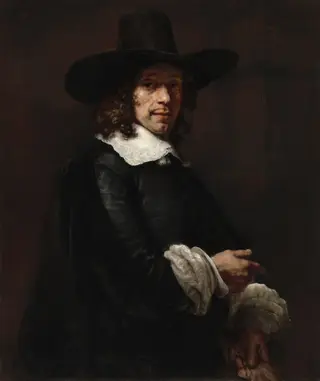
- Old Man with a Gold Chain
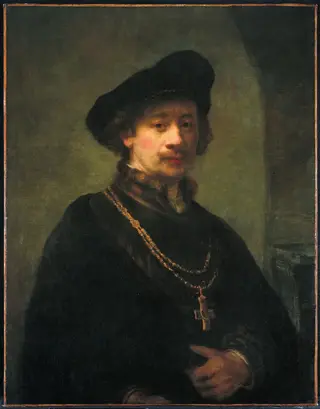 Self-portrait with beret, gold chain, and cross
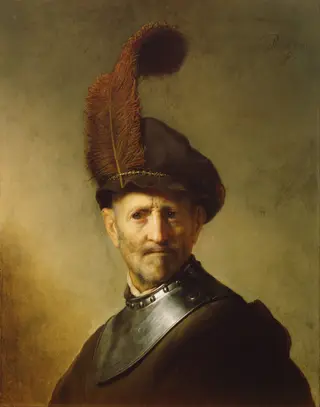 An Old Man in Military Costume
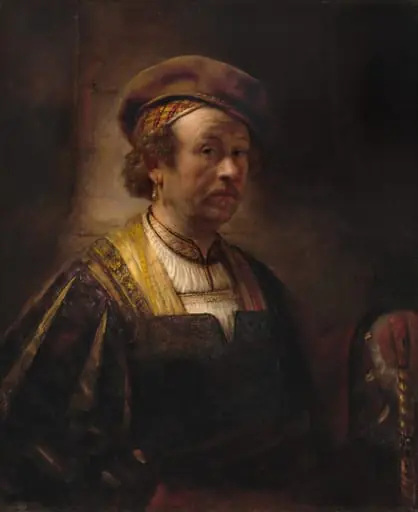 Portrait of Rembrandt
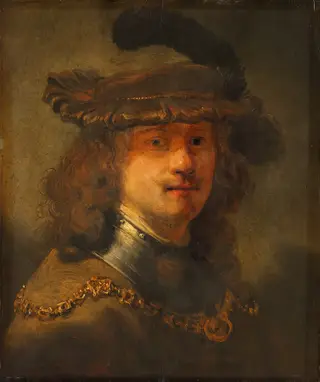 Self portrait with a velvet beret and gold chain
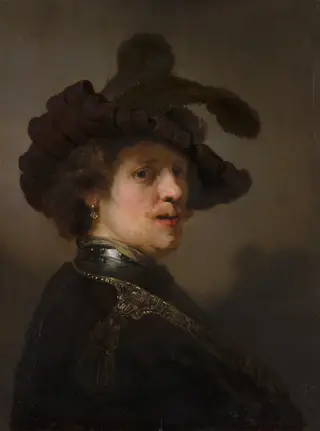 Portrait of a man in a plumed hat
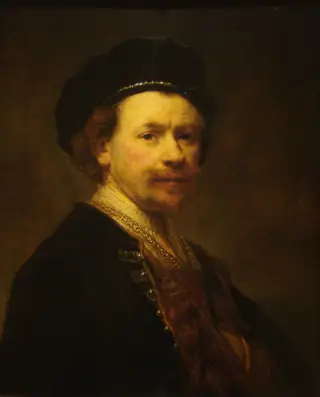 Self-portrait wearing a beret
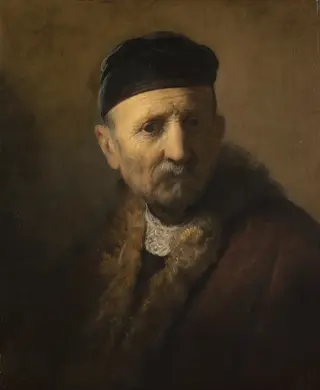 Study of an old man (Rembrandt's father)
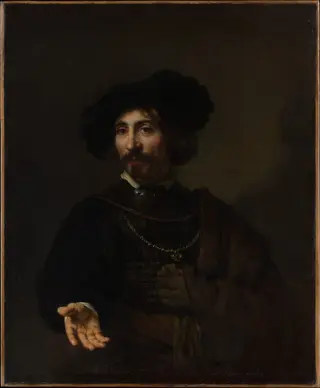 Man with a Steel Gorget
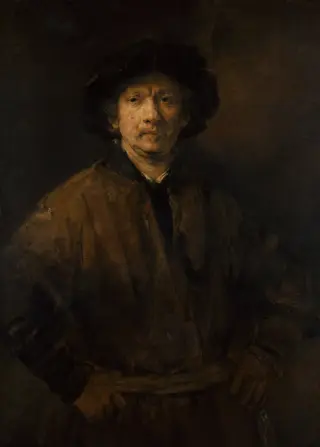 Self Portrait
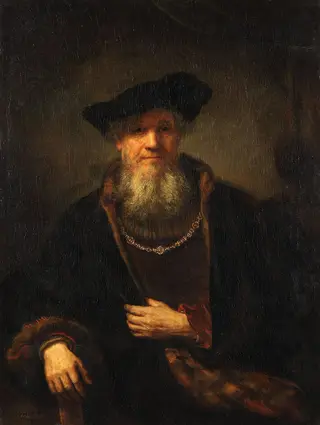 Old Man with Fur Coat
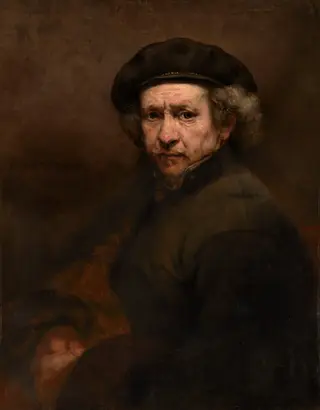 Self-Portrait